Meta Launches Standalone ‘Seller’ App to Bolster Facebook Marketplace Ecosystem and Empower Power Users with Advanced E-commerce Tools

Facebook, a platform that for some evokes nostalgia for a bygone online era, has demonstrably reinvented its utility for a significant user base, particularly through the robust growth of Facebook Marketplace, which has evolved into a modern-day digital classifieds powerhouse akin to a reimagined Craigslist. Recognizing the immense value and activity generated by its dedicated seller community, Meta, the parent company, has officially released a standalone application specifically designed for these "power users" who are pivotal to the platform’s sustained vitality and expansion. The new app, aptly named "Seller," was launched on Friday, offering a specialized suite of tools aimed at streamlining the entire selling process, from product listing to transaction management.
A Strategic Move to Empower the Marketplace Community
The introduction of the Seller app marks a significant strategic move by Meta, underscoring its commitment to nurturing specific, high-engagement segments within its vast ecosystem. Unlike many e-commerce platforms that charge commissions or listing fees, Meta’s Facebook Marketplace operates on an advertising-supported model, meaning the Seller app, much like Marketplace itself, is entirely free for users. This approach allows sellers to retain 100% of their earnings, a compelling incentive that has contributed significantly to Marketplace’s rapid adoption and high volume of listings. Users are now able to download the app and seamlessly log in using their existing Facebook credentials, integrating their new specialized tools with their established Marketplace presence.
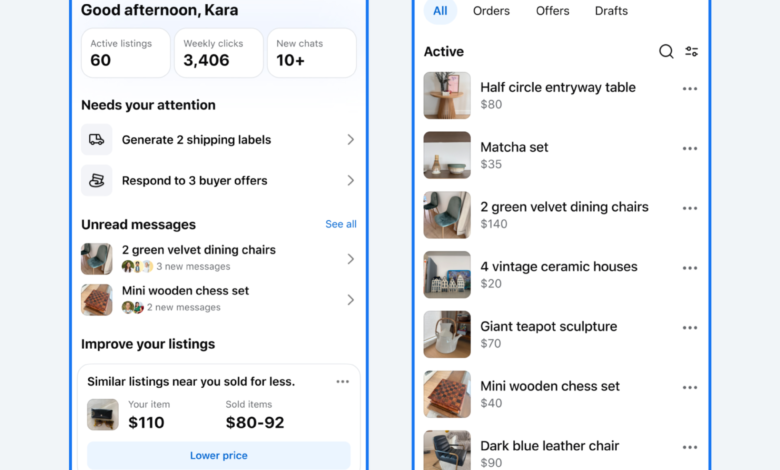
The Seller app is not merely a repackaging of existing functionalities but introduces a suite of advanced features designed to enhance efficiency and provide deeper insights for dedicated sellers. Key among these are a dedicated interface for posting new listings, a comprehensive dashboard for managing current inventory, an integrated in-app inbox to facilitate direct communication with prospective buyers, and detailed analytics for all historical listings. This centralized hub aims to transform the often fragmented and time-consuming process of online selling into a more cohesive and manageable experience.
Innovation in Listing: AI-Powered Assistance
A standout innovation within the Seller app is the introduction of an AI-powered product scanning feature. According to Facebook, sellers will be able to utilize their smartphone cameras to scan products, allowing artificial intelligence to automatically populate various listing details. This capability promises to drastically reduce the manual effort involved in creating new listings, accelerating the process and minimizing potential data entry errors. For sellers dealing with large inventories or frequently changing stock, this AI assistance could represent a substantial improvement in operational efficiency, allowing them to focus more on sales and less on administrative tasks.
Tom Allison, the head of Facebook, elaborated on the strategic vision behind the Seller app in an interview with the New York Times. Allison likened the app’s purpose for Marketplace sellers to that of advanced video editing tools for professional content creators, emphasizing Meta’s broader strategy of developing specialized standalone products for its "power users." This category extends beyond Marketplace sellers to include administrators of Facebook Groups, another highly engaged segment within the platform. This approach signals a shift towards unbundling core functionalities into dedicated applications, providing tailored experiences that cater to the unique needs of specific user groups, thereby fostering deeper engagement and loyalty.
Facebook Marketplace: A Phoenix from the Ashes
Facebook Marketplace was initially launched in October 2016, positioning itself as a direct competitor to established classifieds platforms like Craigslist. At its inception, it leveraged Facebook’s massive user base and its inherent social graph, allowing users to discover items listed for sale by people within their local communities, often linked by mutual connections. This social layer provided a level of trust and familiarity that traditional classifieds platforms often lacked, mitigating some of the anonymity concerns prevalent in online transactions.
In the years following its launch, Marketplace has experienced exponential growth. While Facebook itself has faced challenges in retaining younger demographics against the backdrop of emerging platforms like TikTok and Meta’s own Instagram, Marketplace has found new life as a vibrant e-commerce hub. Meta reports compelling statistics that underscore its significance: one-third of young adults who use Facebook also engage with Marketplace, and a staggering 420 million items are listed on the platform every month. These figures demonstrate its critical role in Meta’s ecosystem, not just as a feature but as a standalone economic engine. The platform’s success is rooted in its accessibility, the absence of seller fees, and the vast, ready-made audience it provides, making it an attractive venue for both casual sellers and small businesses.
Meta’s Broader Unbundling Strategy: A New Era for Power Users

The launch of the Seller app is not an isolated event but part of a discernible pattern in Meta’s evolving product strategy. In May [Current Year – 1], Facebook introduced "Forum," a standalone app specifically designed for the administrators of Facebook Groups. This move was similarly aimed at empowering a dedicated segment of power users by providing them with enhanced moderation tools, analytics, and community management features that were previously integrated, and sometimes buried, within the main Facebook application.
This unbundling strategy reflects a broader trend in the tech industry, where companies with expansive platforms opt to create specialized applications to cater to distinct user needs more effectively. For Meta, this strategy serves several critical objectives. Firstly, it enhances the user experience for power users by offering tailored tools that are more intuitive and efficient than a one-size-fits-all approach. Secondly, it helps to retain these highly engaged users who contribute significantly to the platform’s content and activity. Thirdly, it allows Meta to experiment with new features and monetization models within these specialized environments without disrupting the core Facebook experience.
Detailed Breakdown of Seller App Functionalities and Benefits
The Seller app is designed to provide a comprehensive toolkit, addressing common pain points for online sellers:
- Posting New Listings: The app streamlines the creation process with an intuitive interface, allowing sellers to quickly upload multiple photos, add detailed descriptions, set prices, and categorize items. The AI product scanning feature, as mentioned, is expected to revolutionize this step, significantly cutting down on listing time.
- Listing Management Dashboard: Sellers gain access to a centralized dashboard where they can view all their active, pending, and sold listings. This dashboard allows for easy editing of existing listings, adjusting prices, marking items as sold, or renewing expired posts, ensuring their inventory is always up-to-date.
- In-App Inbox: Communication is critical in C2C e-commerce. The dedicated inbox consolidates all messages from prospective buyers, ensuring sellers don’t miss inquiries and can respond promptly. This feature helps to separate Marketplace communications from personal Facebook messages, improving organization and responsiveness.
- Performance Analytics: For the first time, sellers will have access to detailed analytics on their listings. This could include views, inquiries, save rates, and potentially conversion data. Such insights are invaluable for understanding market demand, optimizing pricing strategies, and identifying best-selling items, allowing sellers to make data-driven decisions to improve their sales performance.
- New Tools and Features: Beyond the core functionalities, the app’s promise of "a few new tools" suggests ongoing innovation. The AI scanning is a prime example, but Meta may also introduce features like enhanced scheduling for listings, bulk editing capabilities, or even integration with shipping solutions, further professionalizing the selling experience.
Monetization and the Future of Marketplace
Meta’s decision to keep the Seller app free and to abstain from taking a percentage of sales reinforces its long-standing ad-based monetization model for Marketplace. This strategy allows Meta to attract and retain a vast number of sellers by offering an incredibly low barrier to entry. The immense volume of transactions and user engagement on Marketplace generates significant data that Meta can leverage for targeted advertising across its platforms. By fostering a thriving seller community, Meta increases the overall traffic and time spent on its properties, which in turn drives advertising revenue. This indirect monetization strategy has proven highly effective and differentiates Marketplace from commission-heavy competitors.
The C2C e-commerce market is highly competitive, with players ranging from global giants like eBay to local platforms and specialized niche marketplaces. Facebook Marketplace holds a unique advantage by being embedded within one of the world’s largest social networks. Its seamless integration with user profiles, groups, and local communities provides an unparalleled reach and a degree of social trust that many standalone platforms struggle to replicate. The Seller app aims to solidify this position by providing professional-grade tools, thereby attracting more serious sellers and enhancing the overall quality and reliability of listings.
Broader Implications and Future Outlook
The launch of the Seller app carries several significant implications. For individual sellers, it promises enhanced efficiency, better organization, and potentially increased sales through improved listing quality and data-driven decision-making. For small businesses, it offers a powerful, free channel to reach local customers with professional tools.
For Meta, this move signals a continued evolution of Facebook from a singular social network into a diversified ecosystem of specialized applications. By empowering its power users, Meta aims to strengthen the foundational pillars of its platform, ensuring that even as mainstream social media trends shift, its core communities and utility features remain vibrant and indispensable. This strategy could lead to further unbundling, with Meta potentially developing standalone apps for other highly engaged user groups, such as event organizers, community builders, or even specific content creators.
In an increasingly fragmented digital landscape, Meta’s investment in specialized tools like the Seller app demonstrates a clear understanding that generalized platforms, while powerful, often require tailored experiences to truly unlock the potential of their most dedicated users. As the digital economy continues to grow, empowering sellers with advanced, free tools positions Facebook Marketplace not just as a convenient place to buy and sell, but as a critical platform supporting countless small economies and individual entrepreneurs. The Seller app is a testament to Meta’s ongoing efforts to adapt, innovate, and solidify its position as a multifaceted digital powerhouse in the years to come.