The Russian Nuclear-Powered Missile Cruiser Admiral Nakhimov Nears Operational Return After Extensive, Multi-Decade Refit

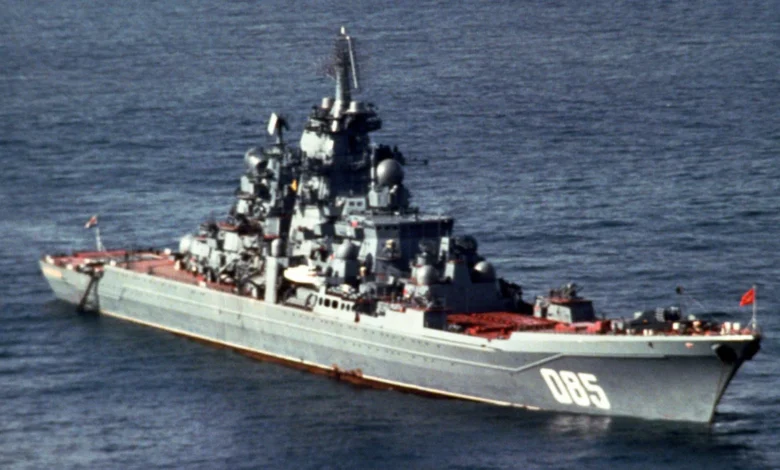
The long-dormant Russian nuclear-powered missile cruiser Admiral Nakhimov, a behemoth of Soviet-era naval design, is reportedly on the cusp of rejoining the operational fleet. Satellite imagery captured on June 25, 2026, showing the Kirov-class warship undergoing sea trials in Kola Bay, strongly suggests its imminent return to service. This monumental undertaking, involving a refit estimated to have cost in excess of $5 billion, has been a protracted affair, extending for nearly three decades and profoundly reshaping the capabilities of what is anticipated to become the new flagship of Russia’s Northern Fleet. The sheer duration of its absence from active duty, a staggering 27 years, dwarfs the construction timelines of even the most advanced modern warships; for context, the U.S. Navy’s state-of-the-art aircraft carrier, the USS Gerald R. Ford, took 12 years from conception to commissioning.
A Storied Past and a Prolonged Hiatus
Originally commissioned in 1988 and known then as the Kalinin, the cruiser was renamed Admiral Nakhimov in 1992. This colossal vessel, weighing approximately 28,000 tons and measuring 823 feet in length, holds the unique distinction of being the world’s only nuclear-powered surface warship outside of the aircraft carrier class. However, its active service life was remarkably brief. By 1997, just nine years after its initial deployment, the ship was withdrawn from service. It spent two years moored at Severomorsk, the primary base of the Russian Northern Fleet, before being towed to the Severodvinsk Shipyard and placed into dry dock. The subsequent years were characterized by a protracted period of inactivity, with significant modernization efforts only truly gaining momentum much later.
The Genesis and Evolution of a Massive Modernization Project
The ambitious project to modernize the Admiral Nakhimov did not commence in earnest until 2014. Initially conceived as a relatively modest refit, with an initial completion target of 2018, the program was beset by a series of persistent delays. These setbacks, stemming from a confluence of technical challenges, funding fluctuations, and the sheer complexity of updating a vessel of this magnitude, contributed to its near three-decade absence from operational duties. This extended period of inactivity has allowed for a comprehensive overhaul, transforming the aging cruiser into a platform equipped with cutting-edge weaponry and sensor systems, potentially making it one of the most formidable surface combatants in global naval inventories.
Unpacking the Refit: Propulsion, Armament, and Systems
While the complete specifics of the Admiral Nakhimov‘s refit remain classified, available information and observations from its sea trials provide a comprehensive overview of the extensive upgrades.
Propulsion and Performance:
The ship’s formidable propulsion system, a hallmark of its Kirov-class design, has been meticulously refurbished. The two nuclear reactors, which generate an impressive 140,000 horsepower, were not replaced but underwent comprehensive overhaul and refueling. These reactors, identified as pressurized water reactors (PWRs) – the most common type globally – were reported to be back online by February 2025. This nuclear power plant enables the Admiral Nakhimov to achieve a top speed estimated to be around 32 knots (approximately 36.8 mph), a velocity that surpasses that of most large warships, including the U.S. Navy’s aircraft carriers, and provides it with virtually unlimited operational range. The refurbishment of these reactors ensures sustained high performance and extended deployment capabilities.
A Revolution in Armament:
Perhaps the most significant transformation lies in the ship’s offensive and defensive capabilities, particularly its missile systems. The original P-700 Granit anti-ship missile launchers have been entirely removed. In their place, the Admiral Nakhimov has been fitted with ten eight-cell, universal vertical launch system (VLS) modules, totaling an impressive 80 launch cells. These UKSK VLS modules are designed for maximum versatility, capable of deploying a wide array of modern Russian missiles. This includes anti-submarine missiles, advanced anti-ship missiles, and land-attack cruise missiles. Critically, the refit positions the Admiral Nakhimov to carry the formidable 3M22 Zircon hypersonic missile, renowned as the world’s fastest hypersonic weapon, offering unprecedented strike capabilities against even the most heavily defended targets.
Enhanced Sensors and Defensive Systems:
Beyond its offensive missile suite, the Admiral Nakhimov is understood to have received substantial upgrades to its sensor and electronic warfare capabilities. This includes the integration of more advanced radar systems, providing enhanced target acquisition and tracking across greater distances and in challenging environmental conditions. Furthermore, it is believed to have been equipped with more sophisticated air defense missile systems, bolstering its ability to intercept a wide spectrum of aerial threats, from aircraft and cruise missiles to potentially even ballistic missiles. These enhancements are crucial for the survivability and effectiveness of such a large and valuable asset in modern combat scenarios.
Strategic Significance and Evolving Threat Landscape
The return of the Admiral Nakhimov is poised to significantly bolster Russia’s naval power, particularly within the strategic Arctic theater. As the anticipated flagship of the Northern Fleet, its primary mission will be to support and protect Russia’s highly valued ballistic missile submarine force, a cornerstone of its nuclear deterrent. The Northern Fleet operates as a critical component of Russia’s "bastion" defense strategy, designed to safeguard its operations in the Barents Sea. The Admiral Nakhimov‘s combination of speed, virtually unlimited range, and potent long-range offensive and defensive armament is intended to solidify this protective posture.
However, the operational environment into which the Admiral Nakhimov is re-entering is dramatically different from the one it left. The proliferation of advanced drone technology, particularly in asymmetric warfare scenarios, has fundamentally altered naval doctrine and operational effectiveness. The conflict in Ukraine serves as a stark illustration. Despite Russia’s overwhelming material superiority in the Black Sea, Ukrainian forces have effectively utilized drones to neutralize and damage numerous high-value Russian naval assets, forcing a more defensive posture and severely curtailing the operational freedom of larger surface warships.
This evolving threat landscape presents a significant challenge for the Admiral Nakhimov. While hailed as potentially the most heavily armed surface warship in existence, its sheer size and concentration of advanced weaponry make it a high-value target. In an era where naval doctrine increasingly emphasizes distributed lethality and the avoidance of concentrating critical assets, questions linger about the survivability and ultimate effectiveness of such a platform. The U.S. Navy’s own exploration of long-range drone ships, for instance, reflects a broader recognition of the need to adapt to these changing paradigms.
Looking Ahead: Relevance in a New Era of Warfare
The successful return of the Admiral Nakhimov to operational status represents a significant technological and logistical achievement for the Russian Navy. It demonstrates a sustained commitment to maintaining and modernizing its strategic naval assets. However, its long-term relevance will depend on its ability to adapt to the dynamic nature of modern naval warfare. The lessons learned from recent conflicts, particularly concerning the pervasive threat posed by unmanned systems and precision-guided munitions, will undoubtedly inform how the Admiral Nakhimov is deployed and employed.
The vessel’s integration into the Northern Fleet is expected to provide a substantial boost to Russia’s presence and power projection capabilities in the Arctic. Its advanced armament, including the potential to deploy hypersonic missiles, offers a formidable deterrent and strike option. Yet, the naval world is in constant flux, driven by rapid technological advancements and evolving geopolitical considerations. Whether the Admiral Nakhimov, a product of a previous era of naval thinking, can maintain its status as a decisive asset in the face of emerging technologies and doctrines remains a subject of keen observation by international defense analysts. Its journey from a lengthy refit to active service will be closely watched as a barometer of Russia’s naval ambitions and its capacity to adapt to the challenges of 21st-century maritime conflict. The coming years will reveal whether this resurrected leviathan can truly fulfill its strategic potential in a rapidly transforming global security environment.