After nearly three hours of witnessing Odysseus’s arduous journey home, a significant portion of The Odyssey’s audience is emerging from cinemas with a visceral sense of having shared the legendary hero’s struggles. This profound, and at times punishing, immersion is largely thanks to the 4DX cinematic format, which synchronizes the onscreen epic with a barrage of physical effects, transforming a passive viewing into an active experience. Social media platforms are now awash with accounts of viewers battling moving seats, wind, rain, and even flying popcorn, catapulting The Odyssey in 4DX into an unexpected viral sensation and sparking a fervent debate about the ultimate way to experience Christopher Nolan’s latest masterpiece.
The Genesis of a Cinematic Phenomenon: The Odyssey and 4DX
Christopher Nolan, a director renowned for his dedication to practical effects and large-format filmmaking, conceived The Odyssey as a spectacle demanding the grandest screens. Filmed entirely with IMAX cameras, the film’s visual fidelity and scope were intended to be paramount, leading to a scramble for tickets in the extremely rare IMAX 70mm format, available in only 41 theaters worldwide. Yet, as the film premiered on July 21, 2026, an alternative, intensely physical viewing option began to capture public imagination: 4DX.
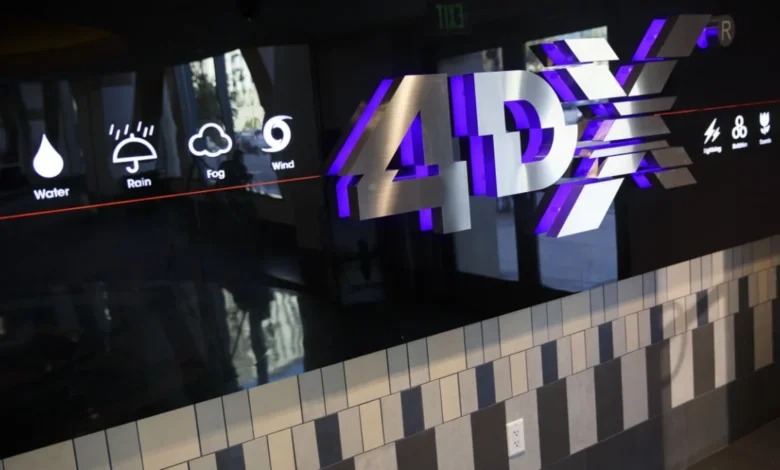
While IMAX focuses on visual and auditory purity, 4DX, developed by South Korean entertainment company CJ 4DPLEX in 2009, offers a multi-sensory assault. It introduces dynamic elements directly into the auditorium, including motion-enabled seats that tilt, vibrate, and jostle, alongside environmental effects such as wind gusts, water sprays, fog, smoke, scents, flashing lights, and even simulated snow. For The Odyssey, these effects translate directly into the narrative: audiences feel the rocking of Odysseus’s ship on stormy seas, the sharp bursts of air simulating arrows whistling past, and the jolting impacts of combat. This unexpected fusion of Nolan’s epic with 4DX’s immersive technology has created a unique viewing proposition that, despite some calling it "torture," is undeniably drawing crowds and generating immense online buzz.
An Unconventional Choice for Nolan’s Epic
Christopher Nolan’s cinematic philosophy has long championed the unadulterated theatrical experience, particularly through the lens of IMAX 70mm film. His previous works, such as Dunkirk and Oppenheimer, have seen audiences flock to specialized venues to witness the full grandeur of his vision, often requiring extensive travel and early morning screenings. The scarcity of IMAX 70mm projectors, coupled with the technical demands of handling such large film reels, has made these showings exclusive and highly sought after.
Therefore, the emergence of 4DX as a popular alternative for The Odyssey presents an interesting counterpoint to Nolan’s purist approach. While IMAX seeks to expand the visual and auditory canvas to its absolute maximum, 4DX shrinks the sensory distance between the audience and the screen, making the viewer a participant rather than a mere observer. This distinction has ignited a fresh debate among cinephiles: should one prioritize the filmmaker’s intended visual and aural presentation, or embrace an enhanced, albeit potentially distracting, physical immersion? The unprecedented social media engagement surrounding The Odyssey in 4DX suggests that for many, the allure of the latter is proving irresistible.
Decoding the 4DX Experience: Technology and Craft

At its core, 4DX is a sophisticated blend of engineering and artistic programming. CJ 4DPLEX’s patented technology allows for a synchronized interplay of up to 21 distinct effects. The motion seats are the most prominent feature, capable of three basic movements (heave, pitch, roll) which translate into intricate sequences of tilting, swaying, shaking, and vibrating. Beyond motion, the environmental effects are strategically deployed: water jets, often located in the seat backs, can spray fine mists or more direct bursts; air jets near the ears or feet create startling sensations; wind machines simulate breezes or gales; and fog and smoke generators add atmospheric depth. The theaters are also equipped with scent diffusers, capable of releasing a range of aromas to match onscreen environments.
The integration of these effects into a film like The Odyssey is a meticulous process. Unlike passively generated effects, each 4DX program is custom-designed for the specific movie. CJ 4DPLEX’s specialized programmers, often referred to as "4DX editors," spend weeks, sometimes months, analyzing the film frame by frame. They choreograph every seat movement, every burst of air, and every atmospheric cue to enhance the narrative without overwhelming it. Paul Kim, an executive at CJ 4DPLEX, previously highlighted this nuanced approach, stating, "If the seats are moving the entire two hours of a film, I don’t think it really takes advantage of what 4DX is. We want to make sure that it’s the right scene and we want to make sure that it makes sense when we use particular effects." This philosophy ensures that the effects are impactful during key action sequences – such as the intense sea battles or mythological encounters in The Odyssey – but subside during quieter, dialogue-driven moments, preventing viewer fatigue during the film’s nearly three-hour runtime.
For The Odyssey, this programming expertise is particularly evident. Storms translate into relentless seat movements and heavy water sprays; naval combat scenes feature violent jolts and sudden air blasts; and the journey through various mythical lands could potentially incorporate subtle atmospheric effects and scents, enhancing the sense of traversing ancient, perilous landscapes. The intricate coordination means that even seemingly minor details, like the impact of an arrow or the crackle of a fire, are rendered tangible, drawing viewers deeper into Odysseus’s perilous saga.
Audience Reactions: A Tempest of Opinions
The social media landscape is currently a vibrant tapestry of reactions to The Odyssey in 4DX. Across platforms like TikTok, Twitter (now X), and Reddit (with specific threads on r/RegalUnlimited, r/TheOdysseyMovie, and r/ChristopherNolan), viewers are sharing their often-exhilarating, sometimes exasperating, experiences.
The overwhelming sentiment leans towards positive, with many describing it as an unforgettable, adrenaline-fueled adventure. Enthusiastic proponents highlight how the effects amplify the film’s epic scale and action sequences. One Reddit user, who experienced a full spectrum of 4DX effects – smoke, wind, air bursts, and water – noted that the seats went "absolutely wild" during a pivotal late-film sequence. They praised how the effects "complemented this particular movie," particularly during the extensive boat scenes, preventing the extended runtime from feeling exhausting. Another attendee emphasized the strategic pauses in the effects, confirming that seats didn’t move continuously, allowing for moments of respite between the chaos. This strategic deployment of effects seems to be key to the positive reception, transforming potentially fatiguing gimmicks into impactful storytelling enhancements. Many have declared it "totally worth doing," especially for the nautical segments.
The immersive nature has even had an inspirational effect, with one viewer humorously stating it reinforced their determination to "fight for my life just like everyone on the ship did." Others have lauded it as the "wildest cinema experience ever," with one TikTok creator even reporting a standing ovation in her packed 4DX theater after the showing. Such fervent reactions underscore the format’s capacity to create a collective, highly memorable event.
However, not all feedback has been glowing. A segment of viewers found the experience less enjoyable, describing the constant movement and environmental effects as an "annoyance." One Reddit user complained that outside a few rough-sea sequences, the effects were distracting, and the film’s climactic battle "absolutely wrecked my back." This highlights a potential physical toll for some, especially during a film with such prolonged action. Furthermore, there have been reports of inconsistent experiences, with one TikTok creator, whose video garnered 5 million views, issuing a stark warning: "whatever you do, DO NOT watch The Odyssey in 4DX!!!" This disparity in experience could be attributed to variations in theater maintenance, equipment functionality, or simply individual tolerance for the intense physical engagement. Another Reddit user reported "ZERO effects other than seats moving," suggesting that technical issues or poorly calibrated theaters can significantly detract from the intended immersion.
Despite these caveats, even some critics of the discomfort admit to the unique appeal. One commenter likened 4DX to a theme park ride, acknowledging the potential for "physical discomfort" but still desiring to experience "the wind, the rain, the mist, and wet popcorn" as part of the cinematic adventure. This sentiment encapsulates the curious draw of 4DX: it’s not just a movie, but a full-body event, where the struggle for comfort becomes part of the shared narrative.

The Broader Implications for Cinema Exhibition
The surging popularity of 4DX for The Odyssey underscores a broader trend in the film industry: the increasing demand for premium, experiential cinema. In an era where streaming services offer unparalleled convenience, traditional movie theaters are innovating to provide unique attractions that cannot be replicated at home. Formats like IMAX, Dolby Cinema, ScreenX (which expands the film onto side walls), and 4DX are leading this charge, each offering a distinct enhancement to the movie-going experience.
Globally, CJ 4DPLEX has expanded its footprint significantly since its inception, operating in over 70 countries with more than 800 screens worldwide. This growth reflects a strategic investment by cinema chains to diversify their offerings and attract audiences willing to pay a premium for a differentiated experience. While standard movie ticket prices have seen incremental increases, premium format tickets often command a significantly higher price point, contributing substantially to a theater’s revenue.
The success of The Odyssey in 4DX also highlights the power of social media as a driver for niche cinematic experiences. The organic spread of "reaction videos" and anecdotal accounts has created a self-sustaining marketing loop, enticing curious viewers to try the format for themselves. This digital word-of-mouth is particularly potent for experiential offerings, where the feeling of the experience is as important as the visual content itself. For a film like The Odyssey, which already benefits from Nolan’s brand and an epic narrative, the 4DX buzz adds another layer of intrigue, transforming a potentially standard cinematic release into a cultural talking point.
The Future of Immersive Storytelling
As audiences continue to seek novel forms of entertainment, the future of cinema exhibition appears to be a multi-faceted landscape. While purists may continue to champion the artistic integrity of formats like IMAX 70mm, the growing appetite for visceral, interactive experiences offered by 4DX and similar technologies cannot be ignored. The phenomenon surrounding The Odyssey in 4DX is a testament to this evolving preference, demonstrating that for many, cinema is no longer just about watching a story unfold, but about living it.
Ultimately, viewers of The Odyssey are presented with an unusual array of choices, each promising a distinct encounter with Nolan’s epic vision. They can pursue the elusive IMAX 70mm for unparalleled visual fidelity, opt for Dolby Cinema for its refined audio and visual clarity, or plunge into the turbulent world of 4DX for an unforgettable, full-body journey. The lively debate sparked by The Odyssey in 4DX confirms that whether it’s the purity of film projection or the thrill of a theme-park-like adventure, the quest for the ultimate cinematic experience remains as compelling as Odysseus’s own legendary voyage.