The AI Filmmaker’s Odyssey: A New Dawn for Cinema or a Provocative Challenge?

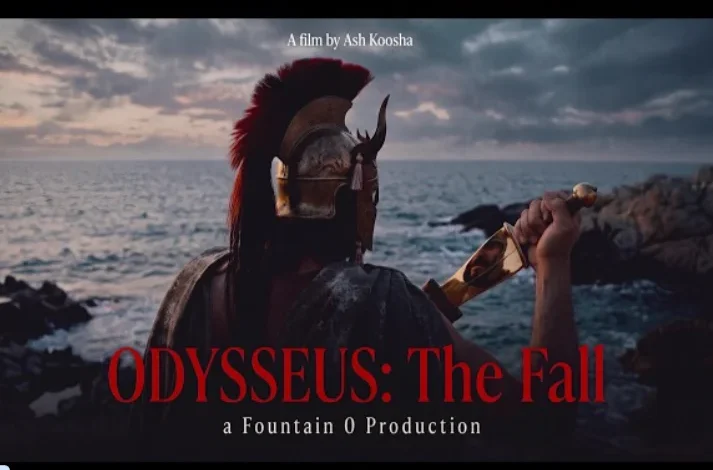
The announcement of an Artificial Intelligence (AI) filmmaker creating a 135-minute feature film inspired by Homer’s The Odyssey has sent ripples through the cinematic world, sparking debate and intrigue. The project, titled Odysseus: The Fall, is the brainchild of Ash Koosha, an Iran-born, England-raised engineer whose previous AI-driven film, Dreams of Violet, garnered attention at the Tribeca Film Festival for its exploration of the Iranian democracy protests. This new endeavor, however, has ignited a more contentious discussion, particularly as it coincides with the release of Christopher Nolan’s highly anticipated, large-scale adaptation of The Odyssey, a project reportedly costing $250 million and starring Matt Damon.
Koosha, a millennial engineer, has stated his intention to hold off on releasing Odysseus: The Fall for several more weeks, a decision that has done little to quell the immediate backlash. Critics and industry observers alike are questioning the motivations behind this AI-generated interpretation of a public domain work, especially given its parallel timing with Nolan’s epic. The stark contrast in production methods—Koosha’s film reportedly costing a fraction of Nolan’s and featuring no human actors—amplifies the central tension: is this a genuine artistic exploration of new cinematic frontiers, or a deliberate provocation aimed at challenging the very foundations of traditional filmmaking?
The timing of Koosha’s announcement has been particularly poignant. It emerged in the wake of a public disagreement between Christopher Nolan and Matt Damon regarding the future of large-scale, analogue filmmaking. Damon expressed a sense of finality, suggesting his role in Nolan’s film might be a "last chance" for such productions. Nolan, however, countered this sentiment, labeling Damon’s view as "defeatist." This exchange, widely reported, painted a picture of an industry grappling with its own evolution, with some fearing an impending "end-of-cinema" moment. Koosha’s AI-driven Odyssey has, for many, inadvertently become a symbol of this predicted shift, utilizing the very narrative that Nolan’s film seeks to champion in a traditional format.
To gain clarity on their intentions and the broader implications of their work, The Hollywood Reporter spoke with Ash Koosha, his brother and collaborator Pooya Koosha, and their producer Tom Rogers. Rogers, the founder of CNBC, has partnered with the Koosha brothers to establish Fountain 0, a film production banner focused on AI-driven cinema. Together, they articulate a vision for the future of filmmaking that is both coherent and, to some, undoubtedly provocative and unsettling.
Addressing the Controversy: Not a Competition, but a New Frontier
Ash Koosha acknowledged the intensity of the past few days since his announcement, describing the public reaction as a mix of "excitement, and a lot of questions, and a lot of confusion." He was quick to emphasize that their project is not intended as a direct challenge or competition to Christopher Nolan’s film. "We’re not going against Christopher Nolan," Koosha stated. "He’s doing what he’s doing in the old world of cinema. And he does it brilliantly. But there’s room for something in the new world."
Koosha revealed his long-standing admiration for The Odyssey, dating back to his childhood. His awareness of Nolan’s project, he noted, came through a Reddit community focused on Homer. "I’ve been immersed in all the questions about all the details, like Agamemnon’s outfits and everything else," he explained. "My goal is not to make a movie that is the same as his. It’s to use the tools to make my own version of the story."
Thematic Resonance: From Protest to Epic Journeys
The comparison between Odysseus: The Fall and Dreams of Violet was a recurring theme in the discussion. While Dreams of Violet was met with a degree of public sympathy due to the humanitarian urgency of its subject matter and the practical impossibility of filming in Tehran, Odysseus: The Fall appears to have struck a more sensitive chord. Koosha, however, sees a conceptual link between the two projects. "I see them as related," he asserted. "Dreams of Violet raised questions and this raises deeper questions—questions that are important for the industry."
He elaborated on these deeper questions, posing them as central to the evolving landscape of filmmaking: "Can we have stories at the speed of news? Can other people paint with tools besides people like Christopher Nolan? What can be created if they can?" These questions, he believes, are fundamental to understanding the potential and accessibility of AI in creative expression.
Tangential Filmmaking: A New Genre of Discourse
When pressed about whether Odysseus: The Fall could be perceived as a derivative work, akin to "knockoff direct-to-video movies," Koosha firmly rejected this notion. Instead, he framed his approach as a form of "tangential filmmaking." He explained, "Before these AI tools, if I had a theory about Odysseus, I could write a Substack about him. And some people would read it, but how many? Now I can put my take into a film. I can paint my opinion with images and sound and light. And a lot more people can see it."
This perspective positions the AI-generated film not as a replacement for existing narratives, but as a new medium for discourse and artistic expression, existing alongside traditional cinematic offerings. Producer Tom Rogers echoed this sentiment, acknowledging the undisputed quality of Nolan’s work while advocating for the recognition of AI filmmaking as a distinct and emerging art form. "Obviously, it’s hard to be in the same arena as Christopher Nolan; everyone agrees his Odyssey is the superior film. And we want people to see that film. But hopefully, they see ours too. Christopher Nolan is the ultimate in physical filmmaking, and what we’re trying to do is be the ultimate in AI filmmaking."
Rogers further elaborated on the potential of AI filmmaking, highlighting the absence of budget constraints. "We’re just trying to show what’s possible when you don’t have to worry about budgets. We want people to see it’s not all slop." This freedom from financial limitations, he suggested, allows for a different kind of creative exploration.
A Personal Interpretation of Odysseus
Koosha offered insight into his specific take on the character of Odysseus, suggesting that the epic hero is often misunderstood. Drawing from his own life experiences, he stated, "I don’t think he’s well-understood. I don’t want to say too much, but I think as someone who came from Iran and moved to the West as a child, I can understand something about his story, about what it means to be far from home. How it wasn’t just about ego motivating him." This personal connection imbues his AI interpretation with a unique emotional and thematic depth.
Release Strategy and the Future of Cinematic Co-existence
Regarding the release of Odysseus: The Fall, Pooya Koosha indicated a strategic delay. "We want to wait a while, at least until late summer. We don’t want people to feel overloaded and confused. That’s important to us." Tom Rogers added that while an immediate release was feasible, their intention is to allow for a clear comparison between their work and Nolan’s. "We could have released it now, but we’re not trying to trick people. We want them to be able to clearly compare."
The concept of "tangential filmmaking" was further explored, drawing parallels to the early days of the internet. "It’s a novel view and almost calls to mind the early days of the Web, when everyone started blogging and people said, ‘but why would you want to read anything that isn’t from these big media outlets?’ And of course, we did, and they co-exist," the interviewer observed.
Ash Koosha readily agreed with this analogy, stating, "Yes, exactly. There is room for all kinds of cinema, and AI finally makes that possible." He elaborated on the historical barriers to entry in filmmaking, noting, "We’ve had so many years when making cinema was dependent on having enough money, and unless you’re Christopher Nolan, you couldn’t make a movie of a certain scale, and even he couldn’t sometimes. The concentration of revenue became a barrier to entry. All of that is going to go away. That’s what we’re trying to bring about."
Pooya Koosha expressed hope that this development would encourage widespread participation in filmmaking. "We hope a lot of other people come in and do this. This is about something very broad and democratic." Tom Rogers reaffirmed this vision as the core mission of Fountain 0: "Yes, that’s the whole goal of Fountain 0—to look for the best use of the tools."
The Role of Actors in an AI-Dominated Landscape
A significant implication of AI filmmaking, particularly in projects like Odysseus: The Fall, is the potential exclusion of human actors. When asked about this aspect, Tom Rogers offered a perspective that suggests a symbiotic rather than adversarial relationship. "I think this will make actors more valuable, whether it’s in an old-world movie or live theater. People will want to see them too, maybe even more than they do now."
This vision posits a future where traditional filmmaking, with its reliance on human performance, coexists with AI-generated content. Ash Koosha summarized this outlook: "That’s all we’re trying to do. To show you can make great films in the manner that Christopher Nolan does. But you can make gorgeous films using AI models too."
Broader Implications for the Film Industry
The emergence of AI-generated films like Odysseus: The Fall signals a profound shift in the potential accessibility and diversity of cinematic creation. Historically, filmmaking has been an industry heavily reliant on substantial capital investment, concentrating power and creativity within a select few. The ability of AI to generate complex visual narratives with minimal financial outlay challenges this paradigm.
Supporting Data and Context:
- Cost Disparity: While Christopher Nolan’s The Odyssey is reported to have a budget in the hundreds of millions of dollars, Odysseus: The Fall is estimated to have cost only a few thousand dollars. This dramatic difference highlights the economic accessibility that AI tools offer.
- AI Advancement: The rapid progress in AI technologies, particularly in generative AI for video and visual effects, has made sophisticated content creation more feasible than ever before. Tools are becoming more powerful and user-friendly, lowering the technical barrier to entry.
- Tribeca Film Festival Recognition: The inclusion of Dreams of Violet at Tribeca indicates a growing acceptance and interest from established film festivals in AI-driven narratives, suggesting that the industry is beginning to acknowledge this new form of artistic expression.
- Historical Precedents: The comparison to the early days of blogging and the internet’s democratization of content creation offers a useful historical lens. Just as personal websites and blogs became a significant part of the media landscape alongside traditional news outlets, AI-generated films may carve out their own distinct niche.
Analysis of Implications:
The implications of this development are far-reaching:
- Democratization of Filmmaking: AI tools have the potential to empower a new generation of creators who may lack the financial resources or traditional industry connections to produce films. This could lead to an explosion of diverse voices and perspectives in cinema.
- Rethinking of Creative Roles: The rise of AI filmmaking necessitates a re-evaluation of the roles of directors, writers, cinematographers, and actors. While some roles may be augmented or transformed, new roles focused on AI prompt engineering, curation, and ethical oversight are likely to emerge.
- Economic Disruption: The significantly lower production costs associated with AI filmmaking could disrupt established studio models and impact the economic viability of traditional film production. This may force a re-evaluation of talent compensation and distribution strategies.
- Artistic Evolution: AI offers new creative possibilities, enabling filmmakers to realize visions that were previously impossible or prohibitively expensive. This could lead to entirely new aesthetic styles and narrative forms.
- Ethical Considerations: The use of AI in filmmaking also raises significant ethical questions regarding authorship, intellectual property, bias in AI models, and the potential for misuse, such as deepfakes.
The advent of AI filmmaking, as exemplified by Ash Koosha’s Odysseus: The Fall, is not merely a technological novelty; it represents a fundamental challenge to the established order of the film industry. Whether it heralds a new era of boundless creativity and accessibility or poses an existential threat to traditional cinema remains to be seen. What is clear is that the conversation has begun, and the cinematic landscape is poised for significant transformation. The "tangential filmmaking" proposed by Koosha and his collaborators suggests a future where multiple forms of cinema can not only co-exist but also enrich one another, pushing the boundaries of storytelling and artistic expression in unprecedented ways.