The Strategic Push: Addressing the AI Gender Gap
The impetus behind this targeted marketing is rooted in compelling demographic data. A 2026 Pew Research Center survey revealed that only 20 percent of women reported using chatbots daily, compared to 27 percent of men. Furthermore, men were significantly more likely to utilize AI for work-related tasks and perceived a greater boost in productivity from the technology. This disparity was echoed by Lean In, the workplace-empowerment nonprofit founded by former Meta executive Sheryl Sandberg, whose 2013 book helped define the original "girlboss" ethos. Their 2026 survey found that 33 percent of men used AI daily or constantly at work, versus 27 percent of women, with men also receiving more encouragement and opportunities to experiment with AI tools.
For AI companies, this gender gap represents a vast, untapped market. The strategy is clear: instead of marketing AI as a technical innovation, present it as an enhancement to activities women already embrace. This involves packaging AI within familiar, desirable products and experiences, transforming it from a niche tech tool into an indispensable part of a modern, aspirational lifestyle. The success of this approach is already evident in various high-profile campaigns and product launches.
Meta’s Fashion-Forward AI: The Kylie Jenner Edition
One of the most prominent examples of this "girlbossification" is Meta’s June 2026 campaign for its "Kylie Edition" AI-powered glasses. These smart glasses, which Meta and Ray-Ban have been co-developing and selling since 2021, were repositioned not as a complicated gadget but as a must-have fashion accessory. The campaign, featuring beauty mogul and reality television star Kylie Jenner, depicted an unusually glamorous morning routine: touching up her manicure, browsing her closet, drinking green juice, and inspecting home renovations, all while subtly integrating the AI-powered eyewear. The campaign culminated with Jenner spray-painting "XO Kylie" across a billboard bearing her own image, signifying a blend of self-expression and technological integration.
Meta’s marketing strategy extended far beyond the digital ad. The company unveiled 26 combinations of frames, colors, and lenses, launched a dedicated Instagram account (@metaglasses), and plastered Jenner’s face on billboards in major cultural hubs like New York and Los Angeles. A star-studded launch event drew fashion heavyweights and creators such as Law Roach, Nara Smith, and Peggy Gou, further cementing the glasses’ status as a lifestyle item rather than a mere tech device.
The immediate response to the Kylie Edition was overwhelmingly positive, underscoring the effectiveness of this influencer-driven approach. Early demand outstripped supply; at a creator event shortly after the release, every colorway of the Kylie glasses reportedly sold out before many reporters even arrived, with attendees specifically asking for the frames by name. Data reported by Glossy from Dash Social revealed that in the week surrounding the launch, Meta Glasses generated an astounding 275 million social media impressions, 9 million engagements, and 97,000 mentions. Kylie Jenner’s three dedicated Instagram posts promoting the collection garnered a combined 5.5 million likes, and the @metaglasses account rapidly approached 100,000 followers within 11 days of its launch.
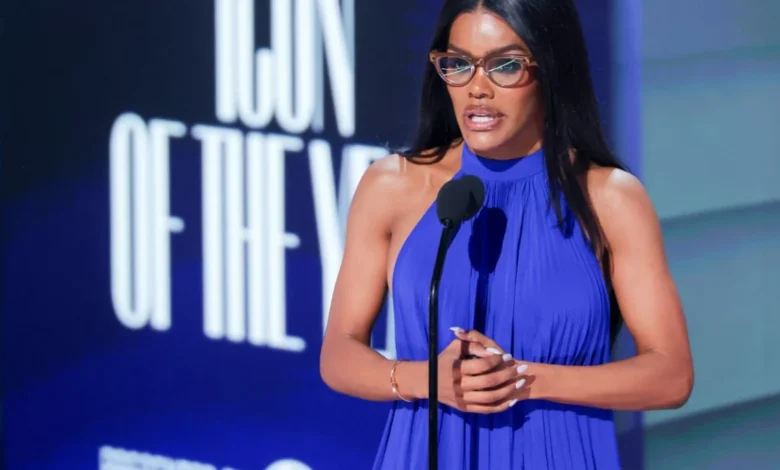
Beyond Jenner, other prominent figures have lent their influence to Meta Glasses, including model Alexandra Saint Mleux, Blackpink’s Jennie, performer Doja Cat, and Oscar-nominated actress Teyana Taylor. These endorsements place the glasses squarely in front of audiences who prioritize aesthetic appeal and celebrity association, fostering online circulation similar to any other trending fashion item.
Swan Beauty: AI in the Aspiration Economy

Another compelling case study in this trend is Swan Beauty, an AI-powered beauty company. Since its launch in 2023, Swan Beauty has offered a $795 smart mirror capable of analyzing a user’s skin, recommending products, guiding makeup application, and recording content. However, the company’s surge to internet fame came in April 2026 through an ingenious influencer marketing stunt.
Swan AI sponsored content creator Brigette Pheloung, known as Acquired Style, and 16 of her closest friends on a lavish bachelorette weekend dubbed "Acquired A Husband" in St. Barth’s. Pheloung and her twin sister, fellow influencer Danielle, meticulously documented the trip across social media platforms. The Swan smart mirror was strategically featured amidst coordinated outfits, elaborate makeup routines, friendship content, and even a private jet. Several guests, including creators Lauren Wolfe and Kit Keenan, boasted substantial followings, amplifying the campaign’s reach.
The exposure proved to be a resounding success. Swan Beauty reported a staggering 140,000 percent increase in its TikTok profile views, a 650 percent week-over-week surge in mirror sales, a 4,535 percent increase in iOS app downloads, and a 4,900 percent increase in subscriptions following the bachelorette trip. Like Meta’s Kylie campaign, this partnership presented the AI product as both aspirational—a luxury item associated with an enviable lifestyle—and accessible, framing it as a tool that enhances personal beauty and content creation.
Phia: Entrepreneurial AI for the Modern Woman
Phoebe Gates, daughter of Bill Gates, and Sophia Kianni, former Stanford roommates, have found a different yet equally effective way to market their AI shopping platform, Phia, to female consumers: through a combination of a practical tool and a compelling personal brand narrative. Launched in April 2025, Phia offers a browser extension and app that assists shoppers in comparing prices, discovering secondhand alternatives, and estimating an item’s resale value. The platform has rapidly grown to 1.5 million users and partnered with 9,600 brands.
Beyond the utility of the shopping tool, Gates and Kianni cultivate a strong public identity through their weekly podcast, The Burnouts. This podcast delves into the realities of building a company in their twenties, navigating the complexities of friendship, dating, money, and the eponymous challenge of burnout. The duo’s forward-facing, founder-focused approach has made them an integral part of Phia’s appeal, allowing listeners to follow their journey, the company’s growth, and the personal challenges of entrepreneurship. Their rising profiles, marked by recognition on the TIME100 Next list and Forbes 30 Under 30, have undoubtedly contributed to the startup’s cultural resonance.
Phia’s cultural reach has translated into significant financial backing. In 2026, the company secured a $35.5 million Series A round, bringing its total funding to $43.5 million. Notably, its investors include a formidable list of famous women: Khloé Kardashian, Mindy Kaling, Sydney Sweeney, Paris Hilton, Alix Earle, Jessica Alba, Priyanka Chopra Jonas, and Rachel Zoe. Gates explicitly stated to Vogue that Phia deliberately sought out cultural figures who "reflected the customers it wanted to reach," demonstrating a clear strategy to embed the AI platform within a network of influential female voices.
The Celebrity Chorus: "Evolve or Get Left Behind"
The trend of celebrity endorsement for AI extends beyond specific products to a broader advocacy for AI adoption among women. In April 2026, Reese Witherspoon, a vocal proponent, told her 30 million Instagram followers in a now-deleted post that only three of the ten women in her book club had tried AI, with just one feeling confident in its use. Critics swiftly accused her of "repackaging pressure to adopt the technology as empowerment," especially given her company, Hello Sunshine, partnered with Purdue University on AI courses for young women. Witherspoon further elaborated in a September 2025 interview with Glamour, stating, "It’s so, so important that women are involved in AI because it will be the future of filmmaking…you can be sad and lament it all you want, but the change is here."
Similarly, motivational speaker Mel Robbins entered a paid partnership with Microsoft Copilot, encouraging women via a now-deleted Instagram post to use the chatbot for financial organization, including uploading sensitive bank statements, bills, and debt information. She also dedicated a podcast episode, "How to Use AI to Make Money, Save Time, and Be More Productive," featuring AI leader Allie K. Miller. This advocacy quickly drew warnings from privacy experts and social media users about the risks of sharing sensitive data without proper understanding, prompting Robbins to later clarify her message regarding privacy considerations.

Other celebrities have framed AI as an unavoidable aspect of modern life. Sandra Bullock has urged people to understand and constructively engage with the technology. At the Cannes Film Festival, Demi Moore made a similar argument: "AI is here. To fight it is a battle that we will lose," encouraging proactive engagement. Paris Hilton has deeply integrated AI into her brand, serving as Android’s first "icon-in-residence," utilizing Gemini Canvas for her "Iconic Ideas," and employing an AI model trained on her past work to develop new content. She also hosted an Android Innovation Challenge, empowering young women to create AI-powered apps. Even Sophia Amoruso, who popularized the term "girlboss," has called for more women to embrace AI.
Across these diverse endorsements, a consistent message emerges: AI is presented not just as a tool, but as a crucial skill for women to work faster, manage finances, create content, and safeguard societal progress. As Sheryl Sandberg articulated to Fast Company in April, these existing "smallish" differences in AI adoption "will compound over time, which is why we think it’s so important for people to understand them and acknowledge them." The underlying philosophy is clear: "Evolve or get left behind."
The Unsettling Undercurrents: Caution, Privacy, and Trust
Despite the polished marketing and celebrity endorsements, the push to "girlbossify AI" has not entirely quelled significant concerns, particularly among women. A 2026 study highlighted that women were approximately twice as likely to anticipate personal harm from AI as they were to expect benefits. These reservations are not hypothetical and manifest in concrete issues associated with the very products being promoted.
Meta Glasses, for instance, have ignited considerable privacy concerns. Their ability to record photos and videos from the wearer’s point of view has led to documented instances of male creators secretly filming women in public and uploading the footage online. Reports have also surfaced of users intentionally obscuring the small white light that indicates recording, a critical privacy feature. While Meta has responded with a July 2026 software update to disable the camera if the light is damaged or tampered with, persistent concerns about covert surveillance continue to shadow the product.
Phia, despite its celebrity backing, faced a significant scandal in the week of July 9, 2026. A Bloomberg investigation revealed that the browser extension could, in some cases, insert Phia’s affiliate tracking information into purchases it had not originated. This meant Phia could potentially replace the referral codes of publishers or advertisers who actually drove the sale, thereby claiming commissions for transactions it didn’t facilitate. Impact.com, one of Phia’s affiliate platforms, promptly suspended the company for review. Phia’s leadership attributed the behavior to a code error introduced in a recent update, claiming it affected only a subset of users and was swiftly rectified upon notification. However, the revelation rapidly disseminated across social media, leading to widespread user skepticism and a debate over whether Phia’s explanation was sufficient to restore trust, even as some users defended Phoebe Gates as a young, first-time founder.
Swan Beauty has also drawn criticism beyond its high price point. An Allure reviewer noted that the smart mirror’s analysis, which counted smile lines and under-eye lines as "wrinkles" to lower her skin score before suggesting products, inadvertently "lowered her self-esteem." The app’s own disclosures about collecting personal information, photographs, videos, and other user data add another layer of concern for a device that integrates facial analysis, personalized advertising, shopping, and content creation.
These concerns underscore broader ethical dilemmas surrounding AI, including data privacy, potential job displacement, the spread of misinformation, and inherent biases in algorithms. When AI is packaged in "prettier and more familiar ways" for women, the crucial question remains: are these products genuinely improving women’s lives, or are they simply more sophisticated mechanisms for commercialization? The "girlbossification of AI" signifies a powerful marketing trend, but its ultimate impact on women’s empowerment and well-being remains a complex and evolving narrative.