SideFX Unveils Houdini 22 with Production-Ready Gaussian Splats, Enhanced Animation, USD Workflow, and Advanced VFX Capabilities

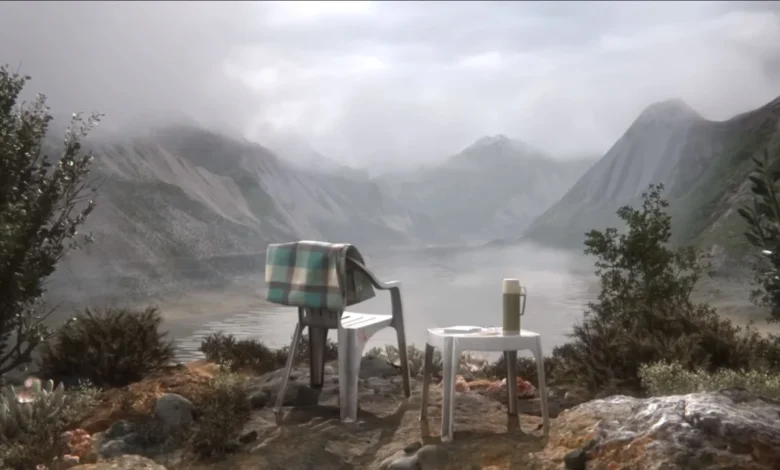
SideFX, a global leader in procedural 3D software, has officially unveiled the latest iteration of its flagship product, Houdini 22, introducing a suite of transformative features designed to redefine workflows across visual effects, animation, game development, and virtual production. The update, detailed through a sneak peek video and comprehensive information on SideFX.com, focuses on delivering production-ready Gaussian Splats, significant advancements in character animation and rigging, sophisticated retargeting and grooming tools, enhanced USD (Universal Scene Description) world-building and rendering capabilities, innovative texture synthesis, and powerful new VFX tools within its real-time viewport, Copernicus. This release underscores SideFX’s commitment to pushing the boundaries of procedural content creation, offering artists and studios unparalleled control, efficiency, and creative freedom.
A Leap in Real-time Graphics: Production-Ready Gaussian Splats
Among the most significant additions in Houdini 22 is the integration of production-ready Gaussian Splats. This cutting-edge 3D representation technology has rapidly gained traction in the computer graphics community for its ability to render photorealistic scenes in real-time with remarkable fidelity. Unlike traditional polygon meshes, Gaussian Splats represent objects and environments as a collection of 3D Gaussians, each with properties like position, scale, rotation, color, and opacity. This allows for incredibly detailed and accurate capture of real-world scenes, often derived from photogrammetry data.
The "production-ready" designation by SideFX is crucial, indicating that these tools are not merely experimental but are robust enough for integration into professional pipelines. Houdini 22 provides artists with the necessary toolsets to import, manipulate, optimize, and render Gaussian Splats within their existing workflows. This includes functionalities for cleaning up noisy data, merging different scans, artistic manipulation of splat properties, and preparing them for final output. The implications are far-reaching: studios can now more easily integrate real-world captures into virtual sets, create highly detailed digital doubles, or generate expansive environments with unprecedented speed and realism. This advancement is particularly beneficial for virtual production, architectural visualization, and game development, where the demand for photorealistic real-time assets is continuously growing. The emergence of Gaussian Splats in the broader CG landscape, with other software solutions beginning to adopt similar capabilities, positions Houdini 22 at the forefront of this technological shift, providing a robust and flexible procedural framework for artists to leverage this powerful new medium.
Empowering Character Artists: Animation, Rigging, and Grooming Enhancements
Houdini has long been celebrated for its robust procedural capabilities, particularly in simulation and effects. However, with Houdini 22, SideFX significantly bolsters its offerings for character artists, addressing a segment that traditionally relied more heavily on other dedicated animation packages. The new tools for character animation and rigging represent a concerted effort to provide a comprehensive solution within Houdini’s environment, streamlining workflows and reducing the need for extensive back-and-forth between different software.
The enhancements likely build upon and expand the capabilities of Houdini’s KineFX rigging system, introduced in earlier versions, which provides a node-based, procedural approach to character rigging. These updates would include more intuitive tools for creating complex character rigs, improving deformation controls, and enhancing the overall interactivity of the rigging process. Retargeting, a critical component of character animation, sees substantial improvements. This allows animators to more efficiently transfer animation data from one character to another, regardless of skeletal differences, saving countless hours in production. Such advancements are invaluable for studios dealing with large libraries of motion capture data or needing to apply animations across diverse character models within a project.
Furthermore, the dedicated grooming tools in Houdini 22 are poised to elevate the realism of character and creature work. Grooming, which encompasses the creation and styling of hair, fur, and feathers, is a highly specialized and often time-consuming task. The new tools promise greater control, speed, and artistic flexibility, enabling artists to create more intricate and natural-looking grooms. This includes improved brush tools, procedural generation options for hair attributes, and enhanced simulation capabilities to ensure realistic movement and interaction. These comprehensive character-focused updates position Houdini as an increasingly viable all-in-one solution for character design, rigging, animation, and final rendering, appealing to a broader range of artists and studios.
Streamlining Large-Scale Productions: USD World Building and Karma Rendering
The Universal Scene Description (USD) framework, developed by Pixar Animation Studios, has become an indispensable open-source standard for scene interchange and collaborative workflows in large-scale 3D productions. Houdini 22’s significant enhancements in USD world building and rendering further solidify its position as a central hub for complex digital asset creation and scene assembly. These improvements focus on providing artists with more robust tools for authoring, editing, and managing USD stages, which are crucial for virtual production, massive environment creation, and collaborative pipelines involving multiple departments or studios.
The updates likely include more efficient ways to manipulate USD layers, improved performance for handling vast amounts of data, and advanced tools for managing scene variations and overrides. This level of integration allows for truly non-destructive workflows, where changes can be made at any stage without affecting upstream or downstream assets, facilitating parallel development and iterative design. Complementing these USD enhancements are improvements to Karma, SideFX’s physically-based renderer built natively to leverage USD. Karma is designed for high-quality, photorealistic rendering, and its tighter integration with the updated USD workflows in Houdini 22 means faster scene loading, more efficient rendering of complex USD assets, and potentially new features that take advantage of USD’s structure for lighting, shading, and look development. The ability to seamlessly build and render large, complex worlds using an industry-standard framework within Houdini is a game-changer for studios working on blockbuster films, high-end episodic content, and ambitious game projects, enabling greater scalability, consistency, and collaboration across global teams.
Innovation in Asset Creation: Texture Synthesis and Real-time VFX
Houdini 22 also introduces innovative features aimed at streamlining asset creation, particularly in the realm of textures and real-time visual effects. Texture synthesis, a process of generating new textures from existing samples or through procedural algorithms, receives a significant boost. In an era where efficiency and variety in asset generation are paramount, especially for open-world games and large-scale environments, procedural texture synthesis within Houdini provides artists with powerful tools to create an infinite array of surfaces without manual painting. These new tools likely leverage Houdini’s node-based approach, allowing for complex procedural generation, blending, and iteration of textures, potentially incorporating machine learning techniques for even more sophisticated and realistic outputs. This capability dramatically reduces the time spent on texture creation, offers greater creative control, and ensures a non-destructive workflow where textures can be easily modified and adapted throughout a project’s lifecycle.
Furthermore, the update brings substantial enhancements to VFX capabilities within Copernicus, Houdini’s real-time viewport and engine. Copernicus is designed to provide an interactive, real-time environment for artists to prototype, iterate, and finalize visual effects, bridging the gap between offline rendering and game engine development. The new VFX tools in Copernicus suggest improved real-time simulation capabilities, more interactive manipulation of effects, and better integration with virtual production pipelines. This could include faster feedback on particle systems, fluid simulations, or destruction effects directly within the viewport, allowing artists to make creative decisions and adjustments on the fly. For game developers, virtual production teams, and artists requiring immediate visual feedback, these Copernicus advancements accelerate the creative process, facilitate collaboration, and enable more complex real-time effects to be realized with greater ease and efficiency.
SideFX’s Vision: A Legacy of Procedural Innovation
SideFX has cultivated a formidable reputation over decades, establishing Houdini as the industry benchmark for procedural workflows and complex visual effects. From its origins in the early 1990s as a powerful tool for animation and compositing, Houdini evolved into the node-based procedural powerhouse it is today, revered for its flexibility, scalability, and ability to tackle challenges deemed impossible by other software. The core philosophy of Houdini—everything is a node, and every operation is non-destructive—has empowered artists to build intricate systems, simulate natural phenomena with unparalleled realism, and rapidly iterate on designs. This approach has made Houdini indispensable in major film studios for blockbuster visual effects, in game development for environment generation and asset creation, and increasingly in motion graphics and virtual production.
The release of Houdini 22 is not an isolated event but a continuation of SideFX’s strategic vision to continually evolve its software in response to industry demands and emerging technologies. Following the focus on AI tools in Houdini 21, which explored areas like machine learning-driven asset generation and simulation enhancements, H22 demonstrates a pivot towards practical implementation of cutting-edge research (like Gaussian Splats) and significant improvements in core areas like character animation and USD integration. These updates reflect a deep understanding of the challenges faced by modern production pipelines, such as the need for faster real-time rendering, more efficient large-scale scene management, and streamlined character workflows. SideFX’s consistent investment in research and development ensures that Houdini remains at the forefront of 3D content creation, providing artists with the tools necessary to innovate and push creative boundaries.
Broader Implications for the 3D Industry
The release of Houdini 22 carries significant implications for the broader 3D industry. Firstly, the "production-ready" status of Gaussian Splats indicates a maturation of this technology, signaling its transition from academic curiosity to a viable tool for professional content creation. This could accelerate its adoption across various sectors, potentially revolutionizing how real-world data is captured, processed, and integrated into virtual environments. The enhanced capabilities for character animation, rigging, and grooming could lead to a broader adoption of Houdini in animation studios that traditionally relied on other software for these tasks, fostering more integrated and efficient pipelines.
Secondly, the strengthened USD world building and rendering capabilities underscore the growing importance of open standards and collaborative workflows in large-scale productions. As projects become increasingly complex and globally distributed, robust USD integration is critical for seamless asset exchange and parallel development. Houdini 22’s advancements in this area further solidify USD’s role as the backbone of modern virtual production and large-scale environment creation.
Finally, the innovations in texture synthesis and real-time VFX within Copernicus highlight the industry’s continuous drive towards efficiency and immediacy. Artists can iterate faster, generate diverse assets more rapidly, and achieve higher fidelity real-time results, directly impacting production schedules and creative output. These developments collectively contribute to a landscape where creativity is less constrained by technical limitations, empowering artists and studios to achieve more ambitious visions with greater ease and speed. The ongoing evolution of Houdini, exemplified by version 22, reinforces its position as a pivotal tool for driving innovation across the entire spectrum of digital content creation.
Availability and Future Outlook
Houdini 22 is available in various editions, catering to individual artists, small studios, and large enterprises. SideFX offers flexible licensing models, including perpetual licenses for long-term ownership and rental options for project-based needs or smaller budgets. Educational licenses are also typically available, ensuring that the next generation of artists can access these powerful tools. Further details on pricing, editions (such as Houdini FX, Houdini Core, and Houdini Indie), and system requirements can be found on the official SideFX website.
The immediate future will likely see artists and studios integrating these new features into their existing workflows, exploring the full potential of Gaussian Splats, and leveraging the enhanced character and USD tools for upcoming projects. As SideFX continues its development cycle, feedback from the community will undoubtedly play a crucial role in shaping future updates and identifying new areas for innovation. Houdini 22 represents a significant milestone, reinforcing SideFX’s leadership in procedural graphics and providing a robust platform for the next wave of digital content creation. The official release video and detailed feature breakdown on SideFX.com offer comprehensive insights for those eager to explore the new capabilities of this powerful software.