
After Lebron James Broke His Scoring Record Kareem Abdul Jabbar Dropped Thoughts On Why Hed Couldve Played Longer In Todays Nba
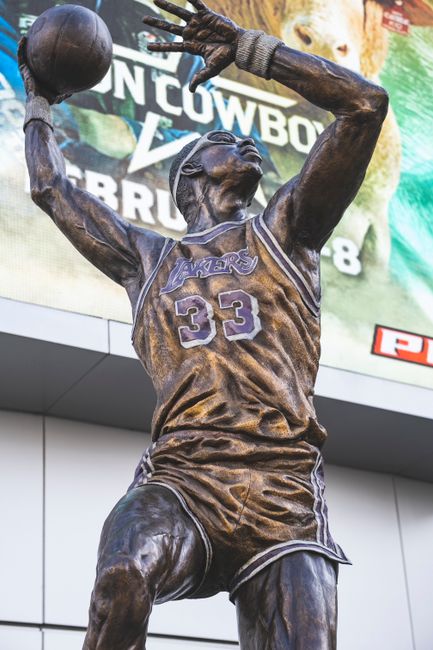
Kareem Abdul-Jabbar’s Post-LeBron Record Reflection: The "What Ifs" of an Extended NBA Career in Today’s Game
The echo of LeBron James eclipsing Kareem Abdul-Jabbar’s seemingly insurmountable scoring record reverberated not just through basketball arenas, but through the historical narrative of the sport itself. While James’s achievement was met with widespread adulation and a deep dive into his statistical supremacy, it also prompted a natural curiosity: what if Kareem Abdul-Jabbar had continued his career into the modern NBA, a league vastly different from the one he dominated for two decades? Abdul-Jabbar, a figure of intellectual depth and keen observation, has offered nuanced perspectives on this very question, not necessarily in a spirit of regret, but as a fascinating theoretical exploration of longevity and adaptation in professional basketball. His thoughts often touch upon the evolving game, player development, and the physical and mental toll of an extended career, offering a compelling lens through which to re-examine his own remarkable tenure and the potential for even greater statistical accumulation in today’s environment.
One of the primary factors Abdul-Jabbar has alluded to when considering his hypothetical continued play in the modern NBA is the sheer advancement in sports science and player care. In his era, the understanding of conditioning, injury prevention, and rehabilitation was nascent compared to today’s sophisticated protocols. Players now benefit from personalized nutrition plans, cutting-edge physiotherapy, and advanced recovery techniques that were simply unavailable during Abdul-Jabbar’s playing days. Imagine if the "Big Fella," with his legendary work ethic and commitment to self-improvement, had access to the same level of scientific support that modern athletes take for granted. The toll of 20 seasons, six MVP awards, six championships, and an unprecedented scoring record was immense, and it’s plausible that with the enhanced recovery and preventative measures available today, he could have significantly mitigated the physical wear and tear that eventually led to his retirement. His mention of the rigorous travel schedules of his time, the less advanced medical interventions, and the overall less holistic approach to player well-being, paints a picture of a player who achieved his historic feats through sheer grit and an innate physical resilience, amplified by a profound understanding of his own body.
Furthermore, Abdul-Jabbar has implicitly acknowledged the evolution of the game’s pace and offensive strategies. While his skyhook was an unstoppable force, a weapon that transcended eras, the modern NBA often features a faster tempo and a greater emphasis on perimeter scoring and three-point shooting. However, Abdul-Jabbar was an exceptionally skilled and intelligent player. His understanding of spacing, his ability to draw double teams and create opportunities for teammates, and his defensive prowess were all hallmarks of his game. In today’s league, his offensive versatility, particularly his exceptional post-up game, would still be a significant advantage. He was not a one-dimensional scorer; his passing vision and ability to initiate offense from the low post would translate effectively. The narrative often focuses on how players of today might adapt to older eras, but the reverse is equally compelling. Abdul-Jabbar’s innate basketball IQ, coupled with the modern emphasis on analytics and strategy development, would likely have allowed him to refine his game even further. He might have embraced a more varied offensive repertoire, perhaps developing a more consistent mid-range jumper or even adapting to the spacing demands of the three-point line, albeit with his signature efficiency.
The role of the center has also dramatically shifted since Abdul-Jabbar’s playing days. While centers were once the undisputed focal points of offenses, the league has seen a rise in "positionless basketball" and the increased prevalence of smaller, more agile lineups. This presents an interesting hypothetical for Abdul-Jabbar. His defensive impact as a rim protector and rebounder was immense. In today’s league, where protecting the paint remains crucial, his presence would be invaluable. Moreover, his ability to guard multiple positions, a trait that belies the traditional "center" label, would make him a highly sought-after commodity. He wasn’t a lumbering big man; he was athletic, mobile, and possessed a keen defensive understanding. The evolution of offensive schemes, such as the pick-and-roll, would undoubtedly be something he would have mastered defensively, using his length and timing to disrupt plays and alter shots. His willingness to adapt and learn, evident throughout his career, suggests he would have embraced these new challenges.
Abdul-Jabbar’s reflections also touch upon the mental fortitude required for prolonged success in the NBA. He has spoken about the pressures of superstardom, the constant scrutiny, and the emotional exhaustion that can accompany a long career. In today’s NBA, with the increased media attention and the 24/7 news cycle, the mental demands are arguably even greater. However, Abdul-Jabbar was always a thoughtful and introspective individual, often engaging with philosophy and literature. This intellectual depth provided him with a unique perspective and coping mechanisms that would likely have served him well in the modern media landscape. His ability to remain grounded, to focus on the game, and to manage external pressures would be a significant asset. The mental resilience that allowed him to overcome obstacles and maintain his elite performance for two decades is a timeless quality, and it’s not difficult to imagine him navigating the complexities of the modern NBA with that same unwavering resolve.
The sheer volume of games played in a season, coupled with the playoff intensity, has always been a significant factor in player longevity. While the number of regular-season games has remained relatively consistent, the intensity of each contest, the focus on advanced metrics, and the increased coaching sophistication have arguably made each game more taxing. However, Abdul-Jabbar was a player who understood the importance of pacing himself, of conserving energy when necessary, and of being in peak condition for the moments that mattered most. His ability to deliver consistently, game after game, season after season, speaks to a profound understanding of his physical limitations and how to push them. In today’s league, with the emphasis on load management and strategic resting, it’s plausible that a player with Abdul-Jabbar’s intellect and discipline could have optimized his playing time and workload to extend his career even further, prioritizing peak performance in crucial stretches.
Ultimately, Kareem Abdul-Jabbar’s musings on his hypothetical extended career in the modern NBA are not about what might have been in terms of personal accolades, but rather an insightful exploration of the forces that shape athletic achievement. His perspective highlights the significant advancements in sports science, the evolving nature of basketball strategy, and the enduring importance of mental fortitude. While LeBron James’s record is a testament to sustained excellence in the current era, Abdul-Jabbar’s thoughtful considerations offer a valuable historical counterpoint, underscoring the profound challenges and triumphs of a legend who defined his era and whose enduring legacy continues to inspire contemplation and admiration within the ever-evolving landscape of professional basketball. His hypothetical extension serves as a compelling thought experiment, demonstrating that the "what ifs" of basketball history are as rich and complex as the game itself, and that the very definition of longevity and greatness is a dynamic, ever-shifting narrative.
