Elon Musk Reflects on Strategic Missteps Following Republican Defeat in 2026 Midterm Elections

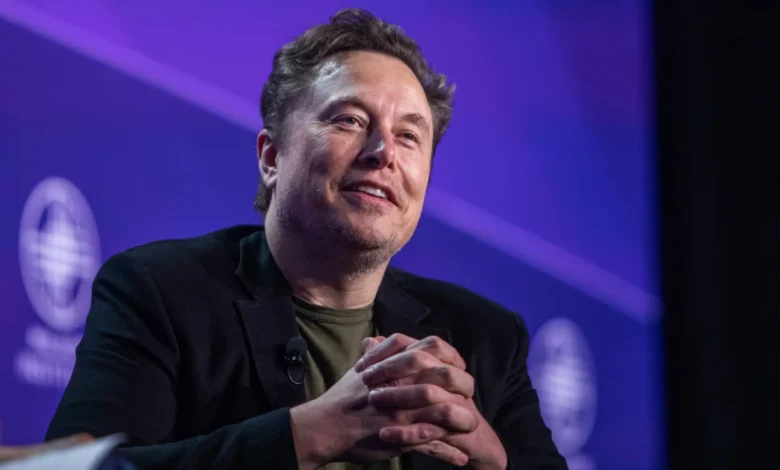
The landscape of American politics underwent a seismic shift during the 2026 midterm elections, resulting in a decisive victory for the Democratic Party and the reclaiming of both the House and Senate. At the center of the pre-election discourse was billionaire entrepreneur Elon Musk, who deployed nearly $500 million in capital to support Republican candidates. Despite this unprecedented financial intervention, the GOP suffered a sweeping defeat, leaving Musk to grapple with the efficacy of his political expenditures. Speaking virtually from China—where he is currently accompanying President Donald Trump as part of an official American delegation—Musk addressed the outcome during the 2026 New York Times DealBook Summit, hosted by Andrew Ross Sorkin.
Reflecting on the election cycle, which saw him contribute a staggering $200 million in a failed attempt to unseat Senator-elect James Talarico in Texas, Musk expressed a rare sense of professional introspection. "I feel pretty foolish about having spent so much money and not seeing much for it," Musk admitted. He briefly weighed whether his involvement had mitigated a potentially worse outcome for the party, though he offered no definitive conclusion. This admission marks a stark departure from the aggressive political posture he maintained throughout the 2025 and 2026 cycles.
The Political Landscape and the Texas Pivot
The 2026 midterms were framed by high inflation, debates over federal efficiency, and the legacy of the Trump administration’s economic policies. Musk’s involvement was characterized by his leadership role in the Department of Government Efficiency (DOGE), an ad-hoc body tasked with identifying federal spending cuts. However, his tenure as a "special government employee" ended in 2025 following public friction with the White House.
Despite his heavy backing of Republican candidates, Musk’s rhetoric during the DealBook Summit indicated a desire to distance himself from the "MAGA" brand. When asked about his political identity, he maintained, "I’m not MAGA." He characterized the movement as a rigid adherence to party dogma, contrasting it with his own desire for a more pragmatic approach. "I think there are positives and negatives in both parties," he stated. "But politics is very tribal. People cannot see any good in the other party and they cannot see any bad in their own party because they are invested in it like it’s their hometown sports team."
Musk specifically addressed the electoral win of Texas Governor Gina Hinojosa, offering a conciliatory assessment. "I think she is going to be quite moderate," he suggested, dismissing concerns that her administration would veer toward the far-left. "Based on everything I’ve heard about her, I think things will be fine in Texas."
Chronology of Influence: From DOGE to the DealBook Stage
The trajectory of Musk’s political engagement over the last 24 months has been turbulent.
- Early 2025: Musk is appointed to lead DOGE, spearheading aggressive audits of federal agencies.
- Mid-2025: Tensions rise between Musk and the Trump administration regarding the scope of his authority and proposed budget cuts.
- Late 2025: Musk resigns from his government role, citing irreconcilable differences, but continues to influence the GOP through high-profile PAC donations.
- November 2026: Midterm elections result in a Democratic sweep of Congress.
- December 2026: Musk appears at the DealBook Summit, analyzing his $500 million investment and pivoting toward corporate strategy discussions.
Corporate Consolidation and Industry Shifts
While politics dominated the headlines, the DealBook Summit also provided a platform for Musk to discuss the future of his conglomerate. David Ellison, CEO of Skydance—the entity formed by the merger of Paramount and Warner Bros. Discovery—confirmed that Musk is an investor in the new media giant. While the topic was not the focus of Musk’s segment, the disclosure highlights the billionaire’s growing influence in the entertainment and media sectors.
Of greater significance to market analysts was Musk’s commentary regarding a potential merger between SpaceX and Tesla. For years, the two companies operated in distinct silos—aerospace and automotive, respectively. Musk now suggests that the technological overlap has reached a threshold where a merger might offer significant synergies. "If you’d asked me five years ago, do I ever think there’s any purpose in SpaceX and Tesla getting together? I would have said no," he remarked. "It’s just a question of: do they execute better together and create more value than if they’re apart? That would be up to the shareholders."
Global Stability and the Starlink Controversy
A significant portion of the conversation focused on the role of Starlink in the ongoing conflict in Ukraine. Musk has faced persistent criticism for his decision to limit satellite internet access for the Ukrainian military. During the interview, he clarified his philosophical and operational stance, emphasizing the distinction between civilian and military utility.
"From the beginning, I’ve said that Starlink is a civilian system," Musk stated. "It is not meant to be used for offensive drone strikes that kill people." He proposed that for lethal operations, the U.S. government should utilize "Starshield," a specialized, state-controlled satellite architecture. "Do not ask me, as a private individual, to make kill decisions that sometimes result in the loss of innocent lives, not just soldiers." This stance underscores the complex reality of a private citizen controlling critical military infrastructure on a global scale.
The Nvidia Crisis: A Leadership Vacancy
The summit also touched upon the sudden resignation of Nvidia CEO Jensen Huang. The departure followed revelations of personal misconduct, including alleged entanglements with a foreign intelligence operative. Musk’s assessment was characteristically blunt, likening the loss of Huang to "kicking Michael Jordan off your team." Despite acknowledging the "mistakes" made by Huang, Musk argued that the company’s internal stability and market position were better served by his reinstatement. His comments echo a broader sentiment among some shareholders who view Huang’s technical vision as irreplaceable, regardless of his personal controversies.
Analysis of Implications
The 2026 midterms represent a clear rebuke of the political strategy favored by the nation’s wealthiest donors. Musk’s $500 million gamble serves as a case study in the limitations of individual wealth in swaying democratic outcomes during periods of intense polarization. By attempting to influence the electorate through massive funding, Musk may have inadvertently galvanized opposition rather than suppressing it.
Moving forward, the business community will be watching to see if Musk’s "foolish" feeling regarding his political spending leads to a complete withdrawal from partisan activism. If he follows through on a pivot toward industrial consolidation—such as the potential integration of SpaceX and Tesla—it would signal a return to the "first principles" engineering focus that defined his early career.
Ultimately, Musk’s appearance at the 2026 DealBook Summit reflects a man navigating the intersection of immense private power and public scrutiny. Whether he is debating the ethics of satellite warfare, analyzing the geopolitical implications of leadership at firms like Nvidia, or lamenting his electoral losses, Musk remains a polarizing figure whose corporate and political maneuvers will continue to dictate the rhythm of global markets and national policy. As the dust settles on the 2026 election, the tech mogul appears to be recalibrating, signaling a potential shift from the role of a political kingmaker to a more focused, albeit still controversial, industrialist.
Related posts: