Sylvain Chomet and Dior producers address controversy regarding alleged generative AI use in hand-drawn holiday campaign


The luxury fashion industry’s foray into traditional animation has hit a significant hurdle as allegations of generative artificial intelligence (AI) usage have cast a shadow over a high-profile holiday campaign. Sylvain Chomet, the celebrated French director renowned for his distinct, whimsical animation style in films like The Triplets of Belleville, has found himself at the center of a growing debate regarding the authenticity of his recent work for Dior. The short film, which features actor Robert Pattinson, was originally marketed as a masterclass in hand-drawn artistry, yet eagle-eyed viewers and online commentators have raised pointed questions about visual inconsistencies that critics argue are hallmark signatures of AI-generated content.
The controversy underscores a growing tension in the creative arts: as luxury brands pivot toward nostalgic, artisanal aesthetics to bolster their brand image, the technical reality of modern production pipelines is increasingly under public scrutiny. The discrepancy between the marketing narrative of "hand-drawn" craftsmanship and the technical reality of modern animation tools has left both the audience and industry professionals seeking clarity.
A Chronology of the Controversy
The campaign, which debuted to much fanfare, was initially positioned as a tribute to traditional animation techniques reminiscent of the 1940s. In an exclusive interview with Women’s Wear Daily (WWD), Dior’s creative director Jonathan Anderson explicitly stated that the film was crafted through traditional hand-drawing methods. This narrative of "artisanal heritage" was a core component of the brand’s promotional strategy, designed to align the house of Dior with the painstaking labor of classic animation.
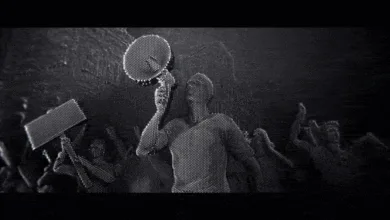
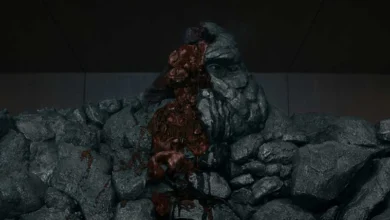
However, shortly after the film’s release, social media platforms and animation forums became hubs of critical analysis. Viewers pointed to specific visual anomalies—extra fingers on characters, blurring artifacts, morphing shapes in background elements, and inconsistent anatomical proportions—as evidence that the project may have utilized generative AI tools. These visual artifacts, often referred to as "hallucinations" in the context of machine learning, are frequently cited by critics as telltale signs of AI-driven frame generation.
By early November 2026, the discourse reached a boiling point, prompting a response from the production team. Chomet and producer Aton Soumache issued a rebuttal via Variety, categorically denying the use of generative AI and reaffirming the human labor involved in the project.

The Technical Defense: Defining Interpolation
The core of the filmmakers’ defense rests on the distinction between generative AI and "automated interpolation." According to Aton Soumache, the film was the result of a seven-month production cycle involving a dedicated team of 20 artists, including six core animators. Soumache acknowledged that the team utilized an automated interpolation system, but he firmly distinguished this from the generative AI tools that have become a point of contention across the creative industries.
In the lexicon of animation, interpolation (or "tweening") is the process of generating intermediate frames between two images to create the illusion of smooth motion. Historically, this was done by hand. In the modern era, software tools can assist in this process. However, the term "automated interpolation" is broad. In some professional pipelines, this refers to traditional rotoscoping or vector-based assistance; in others, it involves neural networks designed to "fill in" the gaps between keyframes.
The lack of specificity regarding the exact software tools used has fueled further skepticism. Critics argue that if the process was purely traditional, the visual artifacts identified by the public—such as the morphing dog collar or the "uncanny" movement of characters—would be uncharacteristic of a professional studio of Chomet’s stature, which typically employs rigorous quality control to avoid such errors.
The Context of Traditional Animation vs. AI
To understand the weight of the allegations, one must look at the current state of the animation industry. The "hand-drawn" label carries significant prestige in the luxury sector, signaling a commitment to time-intensive, human-centric labor that justifies high price points and cultural exclusivity. When a brand like Dior markets a project as "hand-drawn using techniques from the 1940s," it is selling a promise of human fallibility, character, and artistic intent.
Generative AI, by contrast, operates on probabilistic modeling. When these models are used to generate video, they often struggle with spatial consistency over time, leading to the "morphing" and "glitching" effects that viewers observed in the Dior ad. While Chomet has attributed these anomalies to established techniques—such as the use of exaggerated or overlapping shapes to convey kinetic energy—the public remains unconvinced. The defense that these are simply "stylistic choices" is a common trope in animation, but it is one that is increasingly difficult to defend when the final product exhibits behaviors that mirror the known weaknesses of AI diffusion models.
Industry Implications and the Demand for Transparency
The situation highlights a broader crisis of trust in the intersection of luxury advertising and digital technology. As AI tools become more integrated into professional workflows, the definition of "hand-drawn" is becoming increasingly blurred. For a major brand like Dior, the reputational risk of being perceived as "fake" or "AI-generated" is substantial, as it undermines the very value proposition of luxury goods—which is rooted in the perceived value of human craftsmanship.

Experts in the field of animation suggest that the industry is at a crossroads. Without a clear standard for labeling, brands are finding themselves in a "transparency vacuum." When producers provide vague explanations about their workflows, they inadvertently create space for misinformation and conspiracy.
Furthermore, the impact on the labor force cannot be ignored. The animation industry has been vocal about its concerns regarding AI displacement. By marketing a project as fully hand-drawn, brands are essentially taking a political stance that supports human labor. If that claim is later qualified as "partially automated by unspecified tools," it can be viewed by the artistic community as a breach of contract with the audience.
The Path Forward for Luxury Marketing
The controversy surrounding the Chomet-Dior collaboration will likely serve as a case study for future marketing campaigns. To mitigate such risks, brands and production studios must prioritize radical transparency. This includes:
- Clear Documentation: Providing behind-the-scenes footage that shows the actual frame-by-frame production process, rather than curated promotional reels.
- Defining Terminology: Moving away from broad terms like "hand-drawn" if the production includes automated software, and instead utilizing more accurate descriptions such as "digitally-assisted animation" or "hybrid production."
- Third-Party Verification: For campaigns that lean heavily on the "hand-crafted" narrative, some industry observers suggest that having a transparent log of software usage could prevent public backlash.
As the dust settles on the Dior campaign, the underlying question remains: can the luxury industry maintain its commitment to the "human touch" while simultaneously adopting the efficiency of new, automated tools? For now, the audience is clearly signaling that they are no longer willing to accept promotional narratives at face value. They are looking for, and increasingly capable of identifying, the seams in the digital fabric.
Whether or not the Chomet-Dior film technically qualifies as AI-generated is, in some ways, secondary to the fact that the marketing failed to account for a sophisticated, technologically literate audience. Until studios and brands provide a granular breakdown of their production pipelines, these controversies will likely continue to recur, challenging the integrity of artistic work in the digital age. The industry must decide if the convenience of automation is worth the potential erosion of the "artisanal" brand equity that defines the luxury market.