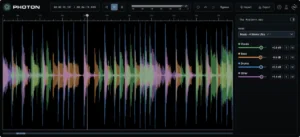
IZotope Photon GPU-powered audio processing software is now available as a major advancement in local machine learning for post-production workflows.

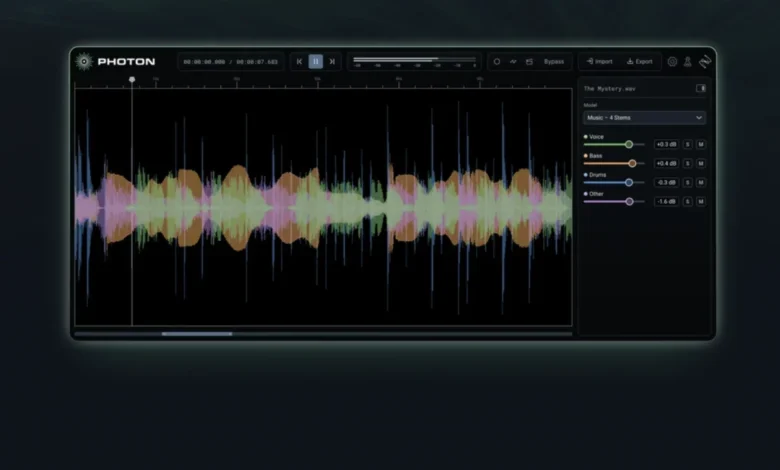
The launch of Photon marks a significant milestone in the evolution of digital audio workstation (DAW) technology, representing the first collaborative research and development effort between industry titans iZotope and Boris FX. Designed to address the increasingly complex demands of modern content creators, Photon utilizes GPU-accelerated machine learning to provide high-speed audio cleanup, stem separation, and voice isolation. By leveraging the processing power of the user’s own hardware rather than relying on cloud-based computation, the software offers a paradigm shift in how professional editors handle problematic audio in high-pressure post-production environments.
The Technological Architecture of Photon
At the core of the Photon ecosystem are 12 custom-trained machine learning models specifically architected to run locally on a workstation’s graphics processing unit (GPU). This architectural choice is deliberate, aimed at mitigating the latency and data security concerns associated with cloud-based AI tools. Because the processing remains entirely local, users are not required to upload sensitive intellectual property or unreleased media to third-party servers, a feature that aligns with the stringent security protocols required by major film and television studios.
The software functions as both a standalone application and an ARA (Audio Random Access) plugin. The inclusion of ARA2 support is particularly noteworthy, as it allows the software to integrate directly into the timelines of major DAWs such as Pro Tools, Cubase, REAPER, Sequoia, and Samplitude. This integration eliminates the need for time-consuming round-tripping, where audio must be exported, processed in an external app, and re-imported into the project. Instead, the plugin reads the audio directly from the host application, allowing for a non-destructive workflow that preserves the original media while applying sophisticated AI-driven enhancements.
Addressing the Modern Audio Crisis
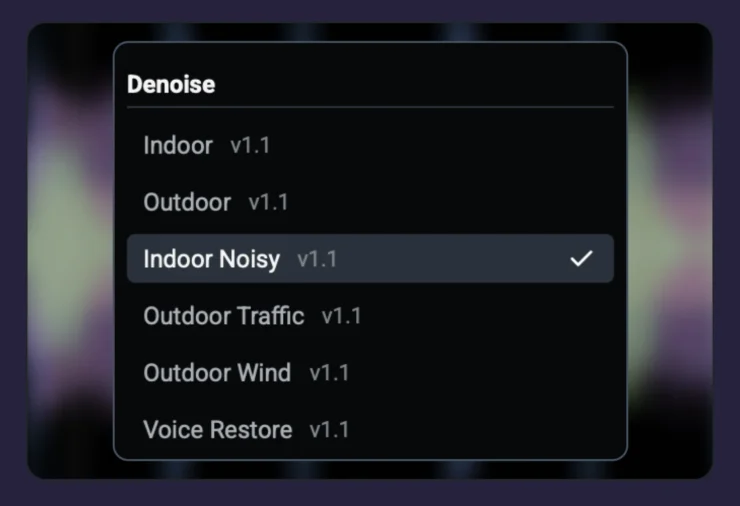
In an era where remote interviews, field recordings, and multi-speaker podcasts have become standard, the demand for "fix-it-in-post" tools has skyrocketed. Traditional noise reduction methods, such as spectral subtraction or dynamic EQ, often introduce unwanted artifacts or hollow out the frequency response of the target dialogue. Photon’s machine learning models are designed to circumvent these issues by "understanding" the difference between desirable audio—such as human speech—and unwanted noise, such as background hums, traffic, or electrical interference.
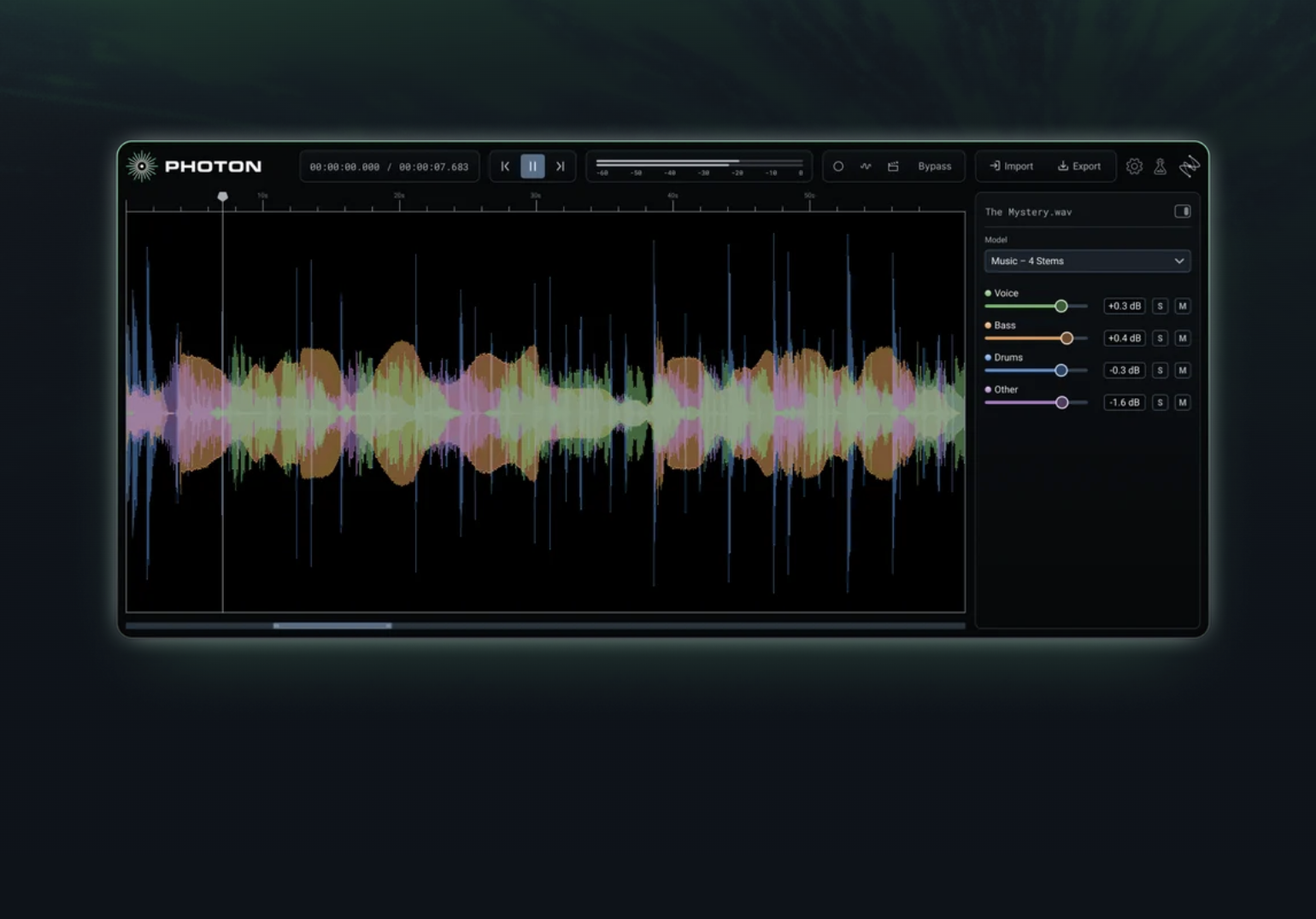
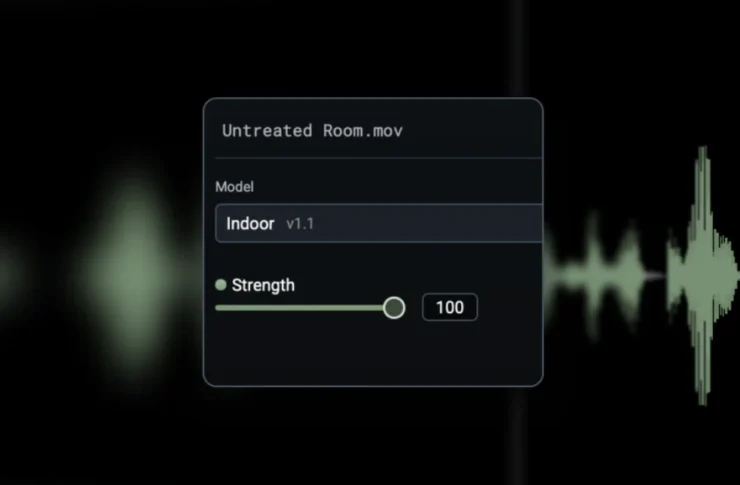
One of the standout features of the platform is its ability to separate up to six distinct speakers recorded onto a single track. This capability is transformative for editors dealing with poorly recorded multi-person interviews where bleed-through or unequal mic levels are present. By isolating individual voices, editors gain granular control over the mix, enabling them to apply specific compression, EQ, or spatial effects to one speaker without affecting the others. Furthermore, the "Voice Restore" module targets echo and room reflections, common issues in home-studio or location recording, effectively creating a "dry" studio sound from compromised audio.
Chronology and Development Background
The development of Photon follows a period of rapid consolidation and technical convergence within the audio-visual software industry. iZotope, known for its RX suite, and Boris FX, a leader in visual effects and compositing tools, have long operated within the same professional creative ecosystem. The announcement of a joint venture suggests a strategic alignment aimed at creating a unified "suite" of post-production tools that bridge the gap between visual and auditory processing.
While the specific timeline of the partnership remains internal, the release on November 5, 2026, follows years of incremental advancements in neural network-based audio processing. The shift toward GPU-bound audio processing reflects a broader industry trend where the immense computational overhead required by modern AI models is finally being met by the widespread availability of high-performance consumer and workstation-grade GPUs. Previously, such tasks would have required dedicated server farms; today, a standard editing workstation equipped with a modern NVIDIA or AMD graphics card can perform these operations in a fraction of real-time.
Data-Driven Efficiency and Workflow Impact
For the average post-production professional, time is the most expensive commodity. The current industry standard for audio restoration often involves multiple passes through various plugins, each of which can be CPU-intensive and slow to render. By shifting the workload to the GPU, Photon optimizes the data pipeline. Because GPUs are inherently parallel processors—designed to handle thousands of concurrent calculations—they are uniquely suited for the mathematical heavy lifting required by machine learning models.
Initial benchmarks suggest that users can expect significant reductions in processing time compared to CPU-only alternatives. Furthermore, the support for direct video file input and output (WAV, FLAC, and MP3 for audio; native video wrappers for video files) means that editors can drop raw footage directly into the Photon app for a quick pass before moving it into their NLE (Non-Linear Editor). This "pre-mix" workflow is expected to become a standard step in the ingest process for many professional workflows, ensuring that editors start their edit with clean, intelligible dialogue.
Industry Implications and Market Analysis
The release of Photon enters a competitive marketplace where tools like Adobe’s Enhance Speech and various cloud-based stem-separation services have already set consumer expectations. However, Photon differentiates itself through its professional-grade feature set, local-only processing, and seamless DAW integration.
From an economic perspective, the $259 introductory price point (discounted from the $349 MSRP) positions Photon as a professional-tier investment. While free or low-cost cloud alternatives exist, they often come with limitations regarding file size, resolution, and, crucially, data privacy. By choosing a dedicated, locally-run application, production companies can satisfy the security requirements of high-budget projects, where leaks or third-party data handling are strictly prohibited.
Furthermore, the integration with ARA2 hosts indicates that iZotope and Boris FX are targeting the "power user" demographic—editors who work in high-stakes environments such as broadcast television, documentary filmmaking, and feature film post-production. The ability to perform high-speed, high-quality audio restoration within the timeline is likely to reduce the reliance on dedicated audio post-houses for minor technical issues, potentially shifting the workflow balance toward the lead editor.
Future Perspectives on AI in Post-Production
The launch of Photon is a clear signal that the "AI revolution" in media production is moving away from experimental, cloud-reliant gimmicks and toward deeply integrated, high-performance professional tools. The reliance on 12 distinct machine learning models suggests a modular future for the software. As these models are refined, iZotope and Boris FX will likely release updates that target specific new scenarios—perhaps addressing specific microphone signatures, room acoustics, or even specific acoustic environments like urban noise or industrial settings.
Moreover, the cross-company collaboration between iZotope and Boris FX could be a precursor to a more comprehensive suite of tools that unify visual and audio AI. If the performance gains observed in Photon can be applied to visual effects or color grading, the industry may see a new class of software that treats the audio-visual stream as a singular, unified data set rather than two separate tracks.
Conclusion
iZotope Photon represents a sophisticated, timely, and technically robust solution to one of the most enduring problems in post-production: the limitations of the source recording. By combining the strengths of local GPU acceleration with the proven efficacy of machine learning in audio cleanup and voice separation, iZotope and Boris FX have provided a tool that offers both immediate practical utility and long-term workflow efficiency.
For editors, sound designers, and podcasters, the ability to rapidly clean, isolate, and manipulate audio without leaving their primary NLE or DAW is a significant advancement. As the industry continues to move toward higher-quality output with tighter production schedules, the integration of tools like Photon will likely become a prerequisite for maintaining competitive standards in the global content market. Prospective users are encouraged to take advantage of the current trial period to evaluate how the software’s local-processing capabilities align with their specific hardware configurations and production requirements. With its focus on speed, quality, and data security, Photon sets a new benchmark for what is possible in the modern digital audio suite.