The Resurgence of Branded Gaming: WendyQuest and the Evolution of Corporate Marketing


If you had told me a decade ago that Wendy’s would release one of the most talked-about indie RPGs of 2026, I would have assumed your burger had some dodgy mushrooms, but the landscape of corporate marketing has shifted into a realm where brand loyalty is increasingly forged through digital entertainment rather than traditional television spots. The world’s third-largest hamburger fast-food chain has officially unveiled WendyQuest: Legend of the Four Corner Stones, a turn-based, pixel-art adventure that marks a significant pivot in how major corporations engage with their consumer base. This is not a fleeting social media stunt or a parody; it is a fully playable, substantial gaming experience designed to compete in a crowded digital marketplace.
The Anatomy of WendyQuest: A New Strategy
WendyQuest: Legend of the Four Corner Stones serves as an immersive narrative where the company’s iconic red-haired mascot leads a party of fast-food-themed adventurers through a kingdom in peril. Developed by 81monkeys, an independent studio based in Port Moody, British Columbia, the game features a sophisticated aesthetic that mirrors the "Golden Age" of 16-bit RPGs. Unlike many corporate-backed projects that feel like thinly veiled commercials, WendyQuest integrates its branding into the game’s mechanics and world-building.
The game is not shy about its competitive positioning. Players encounter enemies such as "Frydusa," a mythological carton of snake-like French fries, and face off against the "Golden Archers," a clear, albeit humorous, jab at McDonald’s. By embracing a meta-commentary on the fast-food industry, Wendy’s is leveraging the internet’s penchant for brand-war rivalry to generate organic buzz. The decision to launch on Steam rather than a private, proprietary website signals that the brand is treating this as a legitimate gaming product, aiming for high engagement rather than just quick impressions.

A Chronology of Corporate Tie-ins
The history of branded gaming is long, complex, and often misunderstood. To understand the significance of this 2026 development, one must look at the evolution of "advergames" over the last four decades.
The genesis of the genre is widely attributed to the 1989 release of Domino’s Avoid the Noid, which set the precedent for fast-food entities utilizing video games as promotional tools. This was followed by a golden era of branded platformers in the 1990s. Global Gladiators (1992), featuring the McDonald’s branding, remains a technical standout from the era, frequently cited by retro-gaming enthusiasts as a genuinely competent platformer that could stand on its own merits without the commercial baggage. Similarly, Cool Spot (1993), starring the red dot from 7 Up’s logo, proved that a mascot-driven game could achieve critical success if the gameplay loop was tight and enjoyable.
The mid-90s reached a zenith with Pepsiman (1999), a PlayStation title released exclusively in Japan. The game followed a chrome-clad hero sprinting through urban environments to deliver Pepsi products. Its high-energy gameplay and absurdist premise transformed it into a global cult classic. In 2006, Burger King attempted a bold expansion into the console market, releasing three Xbox titles: Sneak King, Big Bumpin’, and PocketBike Racer. By selling these games for $3.99 alongside value meals, Burger King successfully moved over 3.2 million copies, proving that a physical entry point could generate massive reach.
The shift toward modern, self-aware marketing arrived in 2019 with KFC’s I Love You, Colonel Sanders! A Finger Lickin’ Good Dating Simulator. By leaning into irony and the absurd, KFC captured the attention of a younger demographic, earning a 91% positive rating on Steam despite its unconventional premise. WendyQuest appears to be the next logical step in this progression, combining the self-awareness of the KFC era with the technical polish of 90s-era classics.

Market Drivers and Changing Consumer Habits
Why are corporations returning to gaming after a period of relative dormancy in the early 2010s? The primary driver is the decline of traditional advertising effectiveness. With the rise of ad-blockers, premium ad-free subscription tiers on streaming platforms, and the general "banner blindness" experienced by digital natives, brands are finding it increasingly difficult to reach their target audience through passive channels.
Data indicates that the gaming demographic has matured significantly. The primary consumers of fast-food brands today are millennials and Gen Z, both of which grew up as "digital natives" for whom video games are a primary form of entertainment. By creating a game that provides value—rather than just an advertisement—brands can capture hours of attention, a metric that is far more valuable than a 30-second television spot.
Furthermore, the rise of the "indie" aesthetic—pixel art and low-poly graphics—has lowered the barrier to entry for high-quality production. WendyQuest utilizes a "100% human-made" marketing angle, which acts as a direct response to the current industry anxieties surrounding generative AI. In an era where AI-generated content is increasingly viewed with skepticism, the "handcrafted" label serves as a premium quality marker. This alignment with the values of the gaming community—which generally prizes artisan, human-led development—is a shrewd branding maneuver.
The Role of Nostalgia and Accessibility
The democratization of game distribution is the second major factor in this resurgence. In 2006, Burger King needed a massive logistical operation to manufacture and distribute physical discs to thousands of restaurant locations. Today, a brand only needs a developer, a publisher, and a Steam store page. The infrastructure for global distribution is now available to anyone with a stable internet connection and a budget for development.
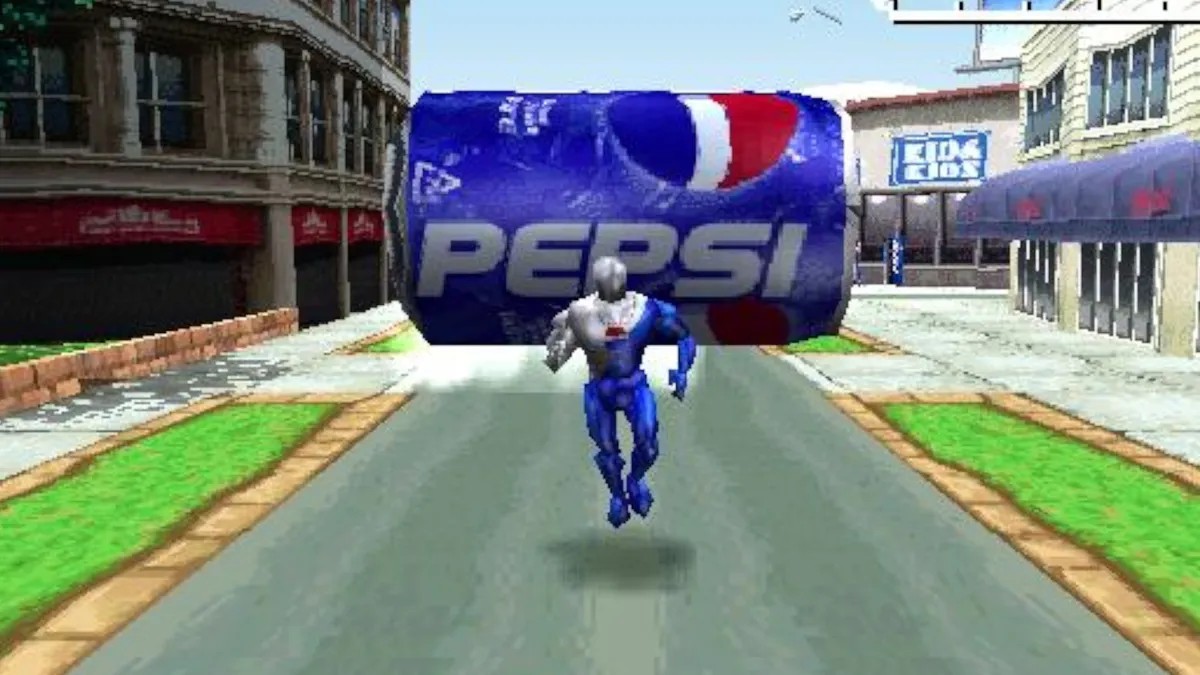
Additionally, nostalgia is a powerful economic force. The generation that played Cool Spot or Pepsiman on consoles in the 90s now has significant disposable income and a penchant for buying products that evoke their childhood experiences. The fact that original copies of Pepsiman now fetch hundreds of dollars on secondary markets like eBay highlights the enduring value of these "branded artifacts." Corporations are recognizing that a well-made game can become a collector’s item or a piece of internet history, thereby cementing brand identity in a way that a billboard never could.
Industry Reactions and Future Implications
While the gaming community is notoriously critical of corporate encroachment, the initial response to WendyQuest has been one of curiosity rather than hostility. The consensus among early observers is that as long as the game functions well and provides a genuine player experience, the "corporate" origin becomes secondary.
The potential for this strategy is evident in the recent social media discourse surrounding Pepsi. Last summer, the company inquired on social media about whether they should enter the gaming space, leading to an outpouring of support from fans of the original Pepsiman. Kotaro Uchikoshi, a prominent figure in the visual novel industry, publicly offered to facilitate a reconnection with the original Pepsiman team. This interaction underscores a critical reality: consumers are no longer just passive recipients of brand messaging; they are active participants who are willing to collaborate with, and even guide, the marketing strategies of the brands they consume.
The long-term implications for the marketing industry are clear: the future of brand advertising will likely be interactive. We are moving toward a model where "advergames" function as content platforms rather than promotional vehicles. If Wendy’s proves that this model is scalable and profitable, we should expect to see a surge in "AAA-lite" branded content hitting digital storefronts over the next five years.

Conclusion: A New Frontier for Brand Identity
As the release of WendyQuest approaches, the industry watches with baited breath. Will it be remembered as a hallmark of creative marketing, or will it be relegated to the bargain bin of corporate history?
The answer likely rests on the quality of the gameplay. The brands that succeed in this space are those that prioritize the player’s experience over the brand’s messaging. Treating the audience as "players" rather than "targets" is the essential requirement for success in this new frontier. If WendyQuest succeeds, it will not be because of the burger brand’s reach, but because 81monkeys successfully crafted a compelling, entertaining world that players want to inhabit. The barrier between commerce and art is thinning, and in this new, pixelated landscape, the best advertisement is, simply, a great game. Whether other brands have the courage and the creativity to follow suit remains to be seen, but one thing is certain: the era of the passive advertisement is rapidly drawing to a close.