SCTV: The Greatest Show You’ve Never Heard Of chronicles the legacy of an era-defining comedy powerhouse

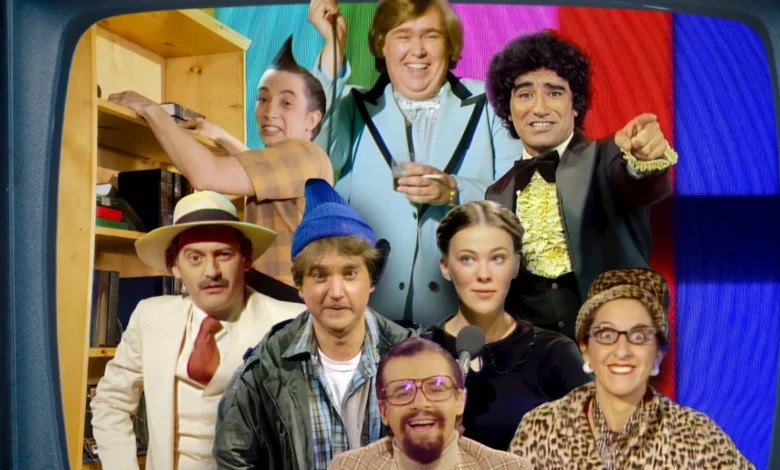
If one were to quantify the recent surge in retrospective interest regarding the legendary Canadian sketch series Second City Television (SCTV), the output of two major documentary projects within a single calendar year serves as a significant cultural marker. Following the release of the intimate, Martin Short-focused film Marty, Life Is Short this past summer, the arrival of the comprehensive feature SCTV: The Greatest Show You’ve Never Heard Of provides a definitive historical record of the program that served as the foundational bedrock for some of the most influential comedic careers in North American history. Directed by Jason Hehir, the documentary arrives at a poignant moment, utilizing rare archival footage and final interviews with key cast members—including the late Catherine O’Hara—to contextualize the show’s enduring impact on television history.
The Genesis and Evolution of SCTV (1976–1984)
The trajectory of Second City Television began in 1976, emerging from the burgeoning improvisational comedy scene in Toronto. The series was designed as a surreal, satirical meta-commentary on the television landscape of the 1970s and 1980s. Unlike its contemporary, Saturday Night Live, which operated as a variety show featuring rotating hosts, SCTV committed to a narrative format set within a fictional, low-budget television station. This conceit allowed the writers and performers to craft an interconnected universe where the "programming" of the station—commercials, low-rent game shows, and derivative genre films—was subject to constant, biting parody.
The production history of the series is marked by significant instability and eventual triumph. Initially conceived as a Canadian alternative to American sketch comedy, the show faced persistent financial hurdles. A critical turning point occurred when the production was rescued by the late billionaire Dr. Charles Allard. Allard’s investment facilitated the move to a dedicated studio in Edmonton, Alberta, which provided the production team with the autonomy required to refine their unique voice. This era saw the emergence of breakout characters such as the dim-witted but endearing cable access duo Bob and Doug McKenzie, portrayed by Rick Moranis and Dave Thomas. The characters’ unexpected cultural ubiquity eventually culminated in the 1983 feature film Strange Brew, a testament to the show’s ability to generate intellectual property that resonated far beyond the confines of a regional sketch show.
A Chronology of Artistic Transition
The timeline of SCTV is divided by its shifting network affiliations and creative mandates. Between 1976 and 1981, the show operated under the Global Television Network in Canada, establishing a cult following. By 1981, the series gained international recognition, leading to a high-profile acquisition by NBC. This transition introduced the show to a wider American audience but simultaneously introduced the pressures of network executives who sought to standardize the format.
The documentary captures the internal friction that occurred when NBC executives requested the show move from a 30-minute to a 90-minute format, accompanied by pressure to adopt more "family-friendly" content. For a cast defined by subversive, edgy humor—often bordering on the nihilistic—these corporate mandates became untenable. The eventual departure of the core cast marked the end of an era, but it simultaneously allowed the show’s alumni to pivot toward individual projects that would dominate cinema and television for the next four decades. From John Candy’s filmography to the creative ingenuity behind Schitt’s Creek, the DNA of SCTV remains visible in the modern entertainment landscape.
Archival Significance and Final Reflections
A focal point of the documentary is a rare, collaborative session filmed in July 2025. The production brought together Martin Short, Catherine O’Hara, Eugene Levy, Dave Thomas, and Andrea Martin to view restored footage and behind-the-scenes material. The inclusion of this session is of profound historical importance, as it predates the passing of Catherine O’Hara, providing viewers with a final, candid look at the camaraderie that sustained the group.
The documentary also features retrospective interviews with the late Joe Flaherty and Rick Moranis. These segments provide a bridge between the youthful exuberance of the 1970s and the measured, often regretful, introspection of the current day. Moranis, in particular, offers an honest account of the internal rivalries that plagued the cast during the height of their success, specifically noting the period where he and Thomas leveraged their stardom to distance themselves from their peers—a youthful misstep that he addresses with contemporary maturity.
The Analytical Perspective: Influence and Comedy Theory
Beyond the sentimentality, the documentary provides a scholarly look at why SCTV remains a subject of intense study among comedy writers. Comedians such as Bill Hader and Bob Odenkirk provide analytical commentary on the show’s technical brilliance. Hader’s assessment of the "Johnny LaRue" character—portrayed by John Candy—highlights the show’s willingness to push the boundaries of dark comedy. The sketch involving LaRue, a convict who committed acts of violence that were nonetheless framed within a comedic context, serves as a prime example of the show’s refusal to treat the audience with kid gloves.
Odenkirk, a titan of the sketch medium himself, describes the series as "fucking brilliant," noting how the character of Sammy Maudlin, the perpetually desperate talk show host played by Flaherty, served as a blueprint for the modern television presenter. The documentary argues that SCTV functioned as a "Lernaean Hydra" of comedy; it was a self-sustaining ecosystem that nurtured talent through a rigorous, collaborative process that is rarely replicated in the current media landscape.
The Decline of the Sketch Medium
The film concludes with an analysis of the current state of sketch television. The genre, once a staple of broadcast and cable networks, has faced a sharp decline in recent years. The cancellation or conclusion of acclaimed series such as I Think You Should Leave and A Black Lady Sketch Show has left a void in the television ecosystem. While the digital landscape has seen a rise in short-form, improv-heavy content via platforms like YouTube and Dropout, the documentary suggests that the traditional, high-production-value sketch show is an endangered species.
Industry analysts observe that the consolidation of media power has led to an increased reliance on established brands and established formats, such as Saturday Night Live, which functions as a monolithic entity in the American sketch space. The loss of a diverse range of sketch programming limits the opportunities for writers and performers to experiment with the format in the way the SCTV troupe did during their tenure. The documentary suggests that the current reliance on algorithms and viral short-form content may not be an adequate replacement for the collaborative, writer-room-heavy environment that fostered the careers of the SCTV generation.
Legacy and Cultural Impact
SCTV: The Greatest Show You’ve Never Heard Of serves not merely as a nostalgic exercise, but as a critical document of a specific period of creative explosion. By providing a platform for the survivors of the SCTV era to recount their history, the film ensures that the nuances of their creative process—the long nights in the studio, the battles with network executives, and the genuine, lifelong bonds between the performers—are preserved for future generations.
The film successfully highlights that the "greatest show you’ve never heard of" is, in reality, the source code for much of what is considered high-quality comedy today. For viewers interested in the mechanics of television production, the history of Canadian media, or the evolution of the sketch format, the documentary offers a comprehensive look at how a group of young, ambitious, and often reckless performers changed the face of television.
As the series is currently available on major streaming platforms, the release of this documentary provides an ideal entry point for new audiences. It serves as both an educational primer and a heartfelt tribute, contextualizing the sketches that have lived "rent-free" in the minds of comedy aficionados for decades. By positioning SCTV within its rightful historical context—as a precursor to the modern era of television—the documentary asserts that the legacy of these performers is not merely a memory, but a living, breathing influence on every comedy writer currently working in the field. It is a sobering, funny, and essential look at the fragility of artistic success and the endurance of creative partnership.
Related posts: