The Optimal Timing for Facebook Engagement: A Data-Driven Analysis of 14 Million Posts

Every few years, market analysts and digital skeptics prematurely declare the death of Facebook. Yet, the platform persists as a digital titan, boasting a staggering 3 billion active monthly users. This figure represents nearly one-third of the global population, confirming that despite the rise of newer, trend-driven social media outlets, Facebook remains an essential pillar of the modern digital landscape. For businesses, content creators, and marketing professionals, the platform is not merely a social network but a critical engine for audience acquisition, brand authority, and revenue generation.
However, the sheer volume of content circulating on the platform—often referred to as the “noise”—presents a significant challenge. To cut through this clutter, understanding the mechanics of the Facebook algorithm is essential. Engagement, defined by reactions, comments, shares, and likes, acts as a primary signal to the algorithm that content holds value. When engagement metrics are high, the algorithm rewards the content with increased reach. Conversely, failing to align publishing schedules with audience habits can lead to stagnation. To provide clarity on this, a comprehensive data analysis of 14 million Facebook posts has identified clear, statistically significant trends regarding when to post for maximum impact.
The Dynamics of Audience Behavior and Algorithm Trends
The Facebook algorithm is fundamentally designed to prioritize content that fosters meaningful social interaction. Unlike platforms that prioritize viral entertainment or short-form video discovery, Facebook’s architecture is heavily influenced by the Pew Research Center’s findings: 93% of users cite keeping up with friends and family as their primary reason for using the platform. This behavioral motivation fundamentally shifts the "best" times to post compared to competitors like TikTok or Instagram.
Demographically, the largest cohort of Facebook users falls within the 25–44 age range. This demographic typically engages with the platform during distinct windows: the morning routine, the start of the workday, and the post-work relaxation period. Because users are primarily checking in to connect with their personal networks, the mid-morning surge—specifically between 8 a.m. and 11 a.m.—consistently yields higher engagement than afternoon or late-night windows.
A Chronological Breakdown of Engagement Peaks
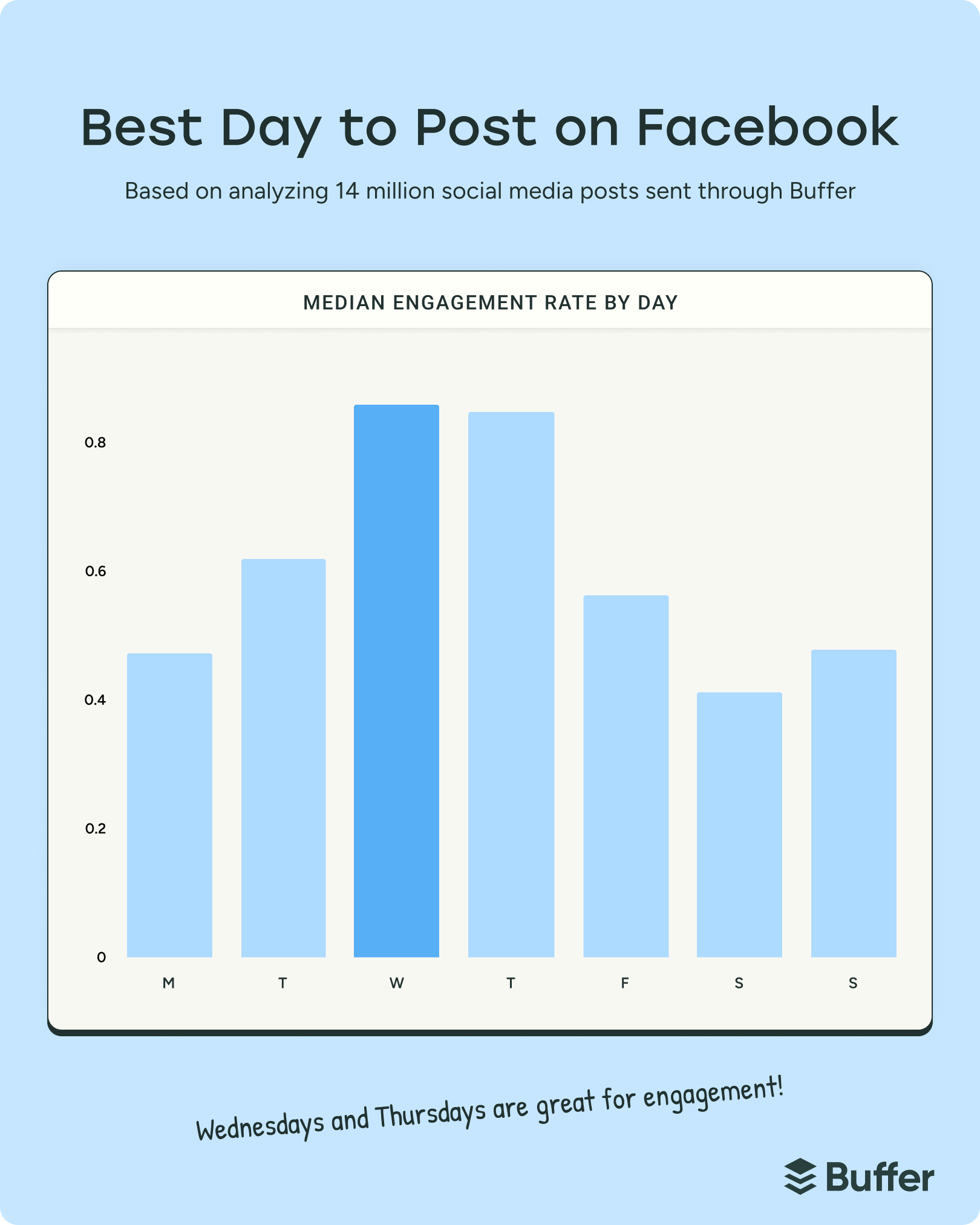
The data collected from 14 million posts indicates that there is no universal "magic hour" that guarantees virality; however, there are definitive "hot zones." The mid-week period, specifically Wednesday and Thursday, acts as the peak of the weekly engagement curve.
The Mid-Week Dominance
Wednesday has been identified as the most effective day for overall engagement. Mid-week posts benefit from the rhythm of the work week, where users are active and seeking brief distractions from professional tasks. Thursday follows closely, with the 9 a.m. slot emerging as the statistically strongest moment for interaction across the entire seven-day cycle.
The Morning vs. Evening Divide
The data reveals a consistent trend regarding weekday mornings:
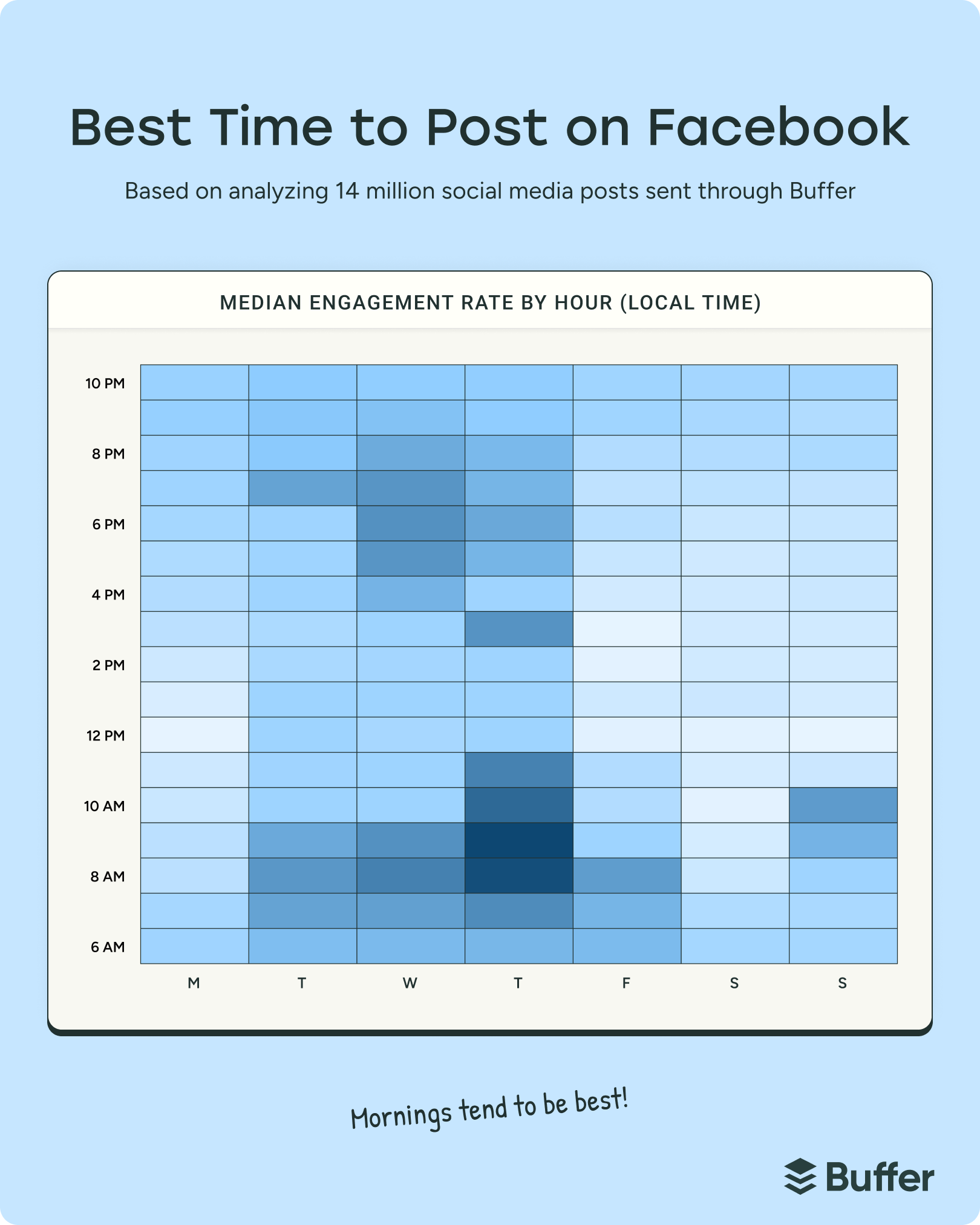
- 6 a.m. – 11 a.m.: These hours consistently capture the "commuter" and "early-desk" audiences. This period exhibits the most sustained engagement levels.
- 12 p.m. – 5 p.m.: This window represents the lowest point for engagement. During these hours, professional and personal responsibilities likely distract users from their news feeds, causing organic reach to taper off significantly.
The Weekend Performance Paradox
While one might expect weekends to be prime time for social media, the data indicates the opposite for Facebook. Saturday is consistently the lowest-performing day of the week, with a sharp drop in organic engagement. While Sunday shows a slight recovery—peaking around 10 a.m.—it still fails to match the reach of a standard Tuesday or Wednesday. This suggests that during weekends, the primary user base is either disconnected from digital platforms or engaged in offline activities that do not prioritize the social feed.
Strategic Implications for Content Scheduling
For a marketing strategy to be effective, it must evolve from a reactive to a proactive model. The utilization of scheduling software has become a standard industry practice to bridge the gap between content creation and peak audience availability.
By leveraging automated scheduling, creators can ensure that content is injected into the Facebook feed at the precise moments when the highest volume of their specific audience is active. This is not merely about convenience; it is about "working smarter." When a post is published during a high-engagement window, the initial burst of likes and comments signals to the algorithm that the content is worthy of broader distribution, creating a positive feedback loop that can extend the post’s lifespan by several hours or even days.
Analysis of Global Time Zone Synchronization
A common point of confusion for global organizations is the application of time zones. The data analysis of these 14 million posts was normalized to account for local time. This is a critical distinction: the "best time" to post is relative to the user’s local clock. Whether a brand is operating in Eastern Standard Time (EST), Pacific Standard Time (PST), or Indian Standard Time (IST), the behavioral patterns remain consistent relative to the local waking hours of the target demographic. This eliminates the need for complex, manual conversion spreadsheets and allows for a streamlined, global content strategy.
Developing a High-Performing Content Strategy
While the "when" is a technical prerequisite for success, it is not the sole determinant. The "what" remains the ultimate driver of engagement. To maximize the effectiveness of these optimal time slots, creators must adhere to a multi-faceted content strategy:
- Value-First Creation: As Facebook emphasizes, the goal is to provide content that users find valuable—whether that is educational, emotional, or community-driven.
- Iterative Testing: The recommended times serve as a baseline. Every brand has a unique audience footprint. Utilizing internal page analytics to compare performance against these benchmarks is essential for long-term refinement.
- Cross-Platform Adaptation: Content that performs well on Instagram (such as short-form video) often requires minor adjustments to tone and captioning to suit the more conversation-oriented environment of Facebook.
- Data Monitoring: Regularly auditing the engagement rates of scheduled posts allows for the identification of shifting trends. If a 9 a.m. post on Thursday underperforms for a specific niche, the brand should pivot to the second or third-best slot to see if the engagement improves.
Broader Impact and Future Outlook
The persistence of Facebook as a primary marketing channel despite the diversification of the social media ecosystem highlights a fundamental truth about digital communication: platforms that facilitate real-world human connection maintain long-term relevance. The data suggests that as long as Facebook remains the digital "town square" for families and friends, the morning engagement peaks will remain a staple of the user experience.
For businesses currently ignoring or underutilizing their Facebook presence, the implications are clear: the platform is not dead, it is merely crowded. Success in this environment requires a disciplined approach to timing and a deep understanding of the audience’s daily rhythm. By aligning publishing schedules with the documented peaks in activity—specifically the 8 a.m. to 10 a.m. window on mid-week days—organizations can ensure their message is heard above the noise.
In conclusion, the data is not a substitute for high-quality content, but it is the essential catalyst that allows great content to achieve its full potential. By adopting a data-driven scheduling framework, creators can move away from the guesswork of manual posting and focus their energy on the creative work that builds community, drives traffic, and achieves measurable business objectives. As the platform continues to evolve, the ability to analyze, adapt, and refine one’s posting schedule will remain a fundamental skill for any digital professional.
Related posts: