Taylor Swift Makes History as the Youngest Inductee Ever into the Nashville Songwriters Hall of Fame

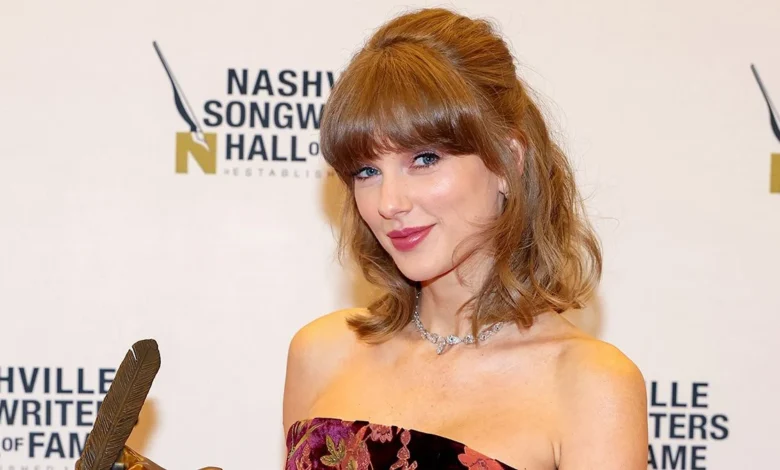
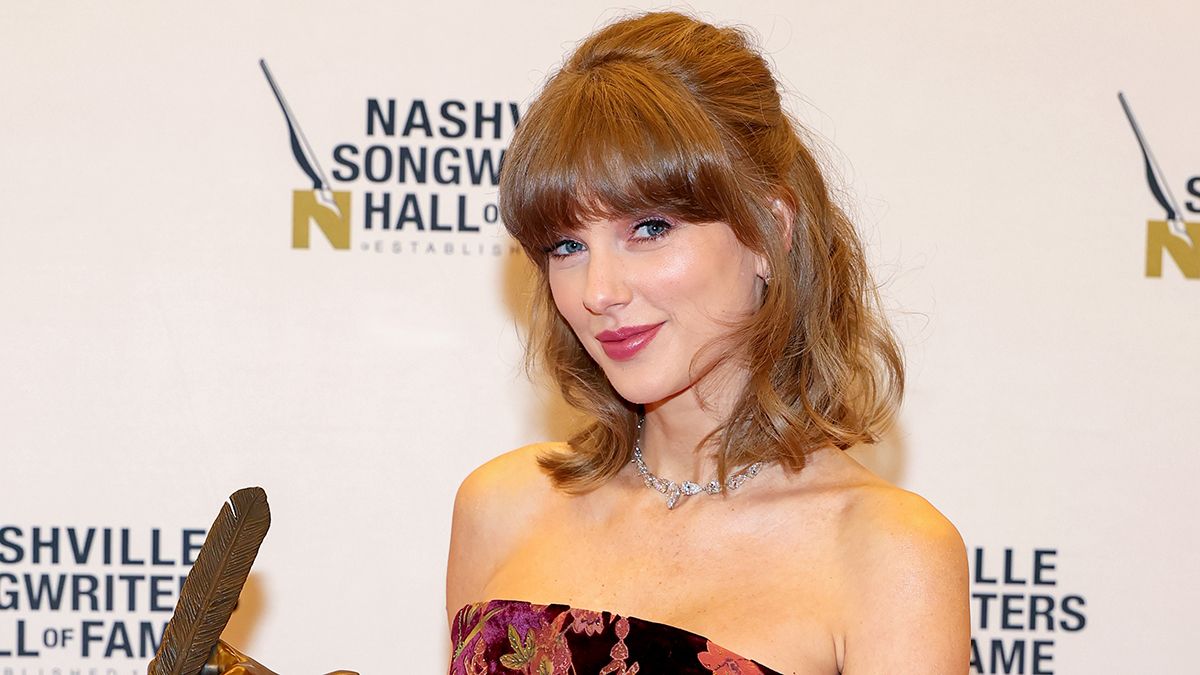
Taylor Swift cemented her legacy in musical history on Monday evening, earning a prestigious induction into the Nashville Songwriters Hall of Fame. At 36 years old, the global superstar and prolific lyricist made history as the youngest artist ever to receive the esteemed honor. The ceremony, held in Tennessee’s capital, brought together icons of the American music industry to celebrate a craft that has underpinned Swift’s record-breaking career from its very inception.
Standing before an audience of peers, industry veterans, and lifelong musical influences, Swift delivered a reflective and heartfelt acceptance speech. Rather than merely recounting her unprecedented commercial achievements—which span multiple Billboard-shattering albums, historic stadium tours, and billions of streams—Swift turned her focus inward, examining the foundational years she spent cutting her teeth in Nashville’s fiercely competitive songwriting community.
The Genesis on Music Row: Early Beginnings and Relentless Repetition
Reflecting on her transatlantic migration to Tennessee as a young teenager, Swift transported the audience back to her earliest days navigating Music Row, the historic epicenter of the country music industry.
"I think back to when I first got to Nashville and I started writing on Music Row," Swift told the audience. "I was lucky enough to get a publishing deal with Sony Publishing when I was 14 and I just hit the ground running."
Securing a professional publishing contract at such a tender age placed Swift in the rarified air of professional writers, many of whom had spent decades perfecting their craft. Rather than relying solely on innate talent, Swift emphasized the grueling, mechanical process of daily writing that ultimately shaped her compositional abilities.
"I started writing every single day. I learned so much. But I learned by repetition. I think you truly learn a craft when you do it over and over and over and that is what the magnificent songwriters that work in this amazing town do," she explained. "There is no music community like this music community. I know. I checked all the communities. There’s no one doing it."
Navigating Creative Blocks and Collaboration in the Writing Room
Beyond the romanticized notion of overnight inspiration, Swift provided a candid look at the unglamorous reality of professional songwriting sessions. She detailed the interpersonal dynamics and problem-solving required when collaborating inside closed rooms on Music Row.
"I learned how to push through a creative block when you’re in the middle of a session," Swift noted. "Are we going to tunnel under this? Are we going to hurdle over it? I learned which ideas are worth fighting for, which ideas are worth letting go of and move on to the next one. I learned how to accommodate when your co-writer has a hangover or when they’re going to need to talk about their divorce for a really long time before we write anything."
These formative interactions, she noted, demystified the process of creation while deepening her appreciation for the human element behind iconic music.
"Because one thing that I did learn is that songwriters, although they possess the superhuman ability to understand and interpret the human condition and insane levels of empathy, they are just people too," Swift observed. "And they are people who in a lot of ways raised me and guided me through my formative years."
A Star-Studded Class of Inductees
Swift was far from the only luminary honored during Monday night’s gala. The 2024 class represented a diverse cross-section of musical heritage, bridging generations of American songwriting greatness.
Among the living inductees honored alongside Swift were Shawn Camp, Lyle Lovett, Lee Thomas Miller, and Bruce Channel. Channel, best remembered for his enduring 1962 global smash hit "Hey! Baby," attended the ceremony at age 85, drawing warm applause from the contemporary room of musicians.
The institution also recognized posthumous contributions through its Legacy Category. The late J.I. Allison, legendary drummer and co-writer for Buddy Holly’s backing band The Crickets, was enshrined for his monumental contributions to rock and roll history. Allison’s co-writing and performance credits include mid-century masterpieces such as "That’ll Be the Day," "Peggy Sue," and "More Than I Can Say," tracks that fundamentally shaped the architecture of modern popular music.
Nashville’s Enduring Cultural and Economic Impact
The Nashville Songwriters Hall of Fame, established in 1970, seeks to honor those who have contributed elite works to the American songbook while solidifying Nashville’s reputation as "Music City, U.S.A." The addition of Swift—an artist who successfully bridged the vast chasm between traditional country music and global pop dominance—highlights the evolving definition of what constitutes a master songwriter in the 21st century.
Economic data underscores the significance of Nashville’s creative infrastructure. According to studies conducted by the Nashville Area Chamber of Commerce and Music City Music Council, the local music industry generates billions of dollars annually for the regional economy, supporting tens of thousands of jobs across publishing, live performance, audio engineering, and tourism. By honoring artists who begin their careers in the city’s publishing houses, the Hall of Fame reinforces the pipeline that feeds the global entertainment ecosystem.
Broader Implications of Swift’s Historic Recognition
Swift’s induction at age 36 carries significant symbolic weight for the modern music industry. In an era where pop stardom is frequently quantified by algorithmic metrics, viral video views, and social media engagement, the Hall of Fame’s decision to enshrine Swift serves as an institutional validation of her foundational musicianship.
Throughout her career, critics have often overlooked Swift’s solo writing credits—a narrative she aggressively dismantled with the release of her entirely self-written 2010 album Speak Now, followed by subsequent critically acclaimed works like Folklore and Evermore. By cementing her status among classic songsmiths like Lovett and the architects of 1950s rock and roll, the Nashville Songwriters Hall of Fame acknowledges her permanent place in the upper echelon of American literary and musical history.
Conclusion: A Moment for a Rainy Day
Swift concluded her historic address by reflecting on the profound emotional tie she maintains with the Tennessee city that first recognized her potential as a teenager with a guitar and a notebook.
"Nashville is the place that honed and polished the thing about myself and the thing about my life that I am the most proud of and the most passionate about," Swift said. "So to be here with you and to be getting to have this moment, I am truly grateful and it just feels like one of those amazing Nashville moments I’m going to revisit on a rainy day."
As the evening drew to a close, the assembled icons of the songwriting community stood to applaud an artist who has carried their tradition onto the largest stages the world has ever seen, proving that behind the stadium-sized spectacle, the core of her art remains rooted in the quiet discipline of a room, a notepad, and a melody.
Related posts: