How to determine if your YouTube niche is saturated using data-driven analysis

The common apprehension among aspiring content creators—the fear that their chosen YouTube niche is already saturated—often serves as a barrier to entry. Many creators abandon their projects after observing a high volume of established, high-view-count videos, assuming the market is closed to new participants. However, industry analysis suggests that the distinction between a "crowded" niche and a "saturated" one is significant. While a crowded niche features many active creators, a saturated niche is defined by an imbalance where the supply of content consistently exceeds viewer demand, leaving little room for new videos to gain traction.

To move beyond anecdotal observation and gut feelings, creators can employ a systematic, seven-step diagnostic process. This analytical framework, often facilitated by tools such as TubeBuddy and the built-in YouTube Studio Trends tab, allows potential creators to evaluate market viability with empirical data. By shifting from subjective scrolling to objective metrics, creators can determine whether a specific topic remains a fertile ground for growth or if it has reached a state of market stagnation.
The Dynamics of Market Saturation on YouTube
At its core, YouTube operates on a supply-and-demand model. Saturation occurs when the volume of content in a specific niche has reached a point of equilibrium or surplus, where the algorithm no longer finds it necessary to promote new videos because viewer demand is already being met by a catalog of high-performing, established assets.

A critical error many creators make is using the number of existing channels as a primary indicator of saturation. Historical data indicates that a niche with thousands of channels can still be wide open if there is growing viewer interest. Conversely, a niche with a relatively small number of channels can be entirely closed if those few creators have monopolized the topic with repetitive, high-quality content that satisfies all search intent. The key differentiator is the performance of recent uploads. If new content, regardless of the channel size, continues to find audiences, the niche is not yet saturated.
A Comparative Analysis: Minecraft vs. Sourdough
To illustrate the difference, industry analysts conducted a comparative study of two distinct niches: "Minecraft survival tips" and "sourdough for beginners." Both topics appear crowded upon a casual search, but their underlying performance data reveals vastly different realities.

In the Minecraft category, an examination of the most recent month of uploads showed that 40% of videos—eight out of 20—surpassed 100,000 views. This indicates that the algorithm is actively pushing new content and that viewer interest is high, likely driven by recurring game updates and community engagement.
Conversely, the "sourdough for beginners" niche yielded zero videos in the same period that reached the 100,000-view threshold. Furthermore, nearly half of the recent uploads in this category failed to break 1,000 views. This suggests that for sourdough tutorials, the market is currently dominated by older, legacy videos from established, high-authority food channels. Viewers have already identified their preferred sources for this information, and the "shelf life" of this content has effectively locked out new competitors.

Seven Diagnostic Checks for Niche Viability
For creators looking to conduct their own assessment, the following seven-step protocol serves as an industry-standard guide for determining market entry:
- Top-Result Authority Audit: Conduct an incognito search for the primary niche keyword. Analyze the age and authority of the top-ranking videos. If the top results are dominated by large, multi-million subscriber channels with videos that are several years old, the niche is likely settled. If the results include recent videos from mid-sized or emerging channels, the niche is still in a state of healthy "churn," providing an opening for new entrants.
- Identifying Content Outliers: Use analytics to find "outlier" videos—content that significantly outperforms a channel’s historical baseline. If these breakouts are coming from diverse, established channels, it is a sign that the audience is receptive to new, high-quality content.
- Distribution of Wins: Evaluate whether viewership is concentrated within one or two dominant channels or if it is spread across a wider landscape of creators. A diverse distribution of successful creators suggests a healthier, more accessible ecosystem.
- Recent Performance Filtering: As demonstrated in the Minecraft versus sourdough comparison, filtering search results by "This Month" is the most direct way to measure current viability. High view counts on recent uploads are the strongest indicator of a gap in the market.
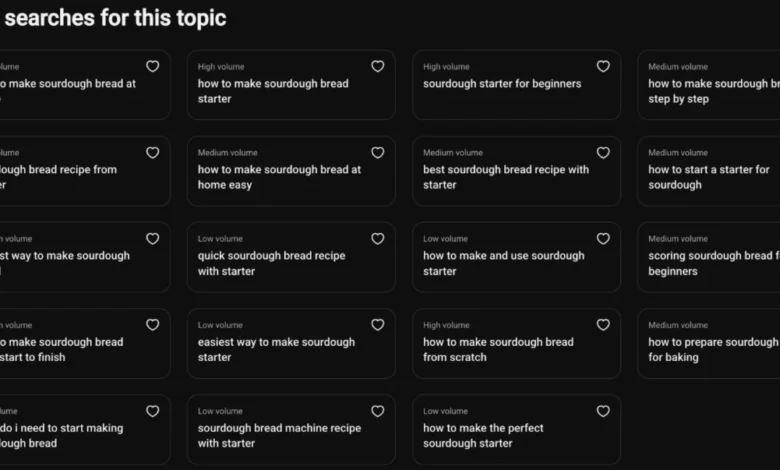
- Demand Quantification: Utilize keyword research tools and the YouTube Studio Trends tab to measure search volume. High-volume, related searches indicate that while the core niche might be difficult to penetrate, there is significant interest in specific sub-topics that may be underserved.
- Targeting the Keyword Gap: Analyze how many of the top-performing videos actually utilize the specific search phrase in their metadata (titles, descriptions, and tags). If the top results lack exact keyword optimization, a well-optimized, high-value video can effectively compete for that traffic.
- The "Sameness" Test: This subjective but necessary test involves evaluating your planned content against existing offerings. If a viewer could watch your video and find no new value, unique perspective, or superior production quality compared to the top 50 existing videos, the niche is functionally saturated for that specific content format.
The Role of Data in Strategic Growth
The integration of data-driven tools is increasingly linked to faster channel growth. Research within the creator economy has shown that channels utilizing performance-tracking tools often experience significant growth compared to those that rely solely on intuition. By using tools to calculate the "Keyword Score"—a combination of search volume and competition levels—creators can identify "sweet spots" where demand is high but the competition is not yet insurmountable.

For example, while "sourdough for beginners" may appear saturated, related searches like "sourdough without a dutch oven" or "step-by-step scoring techniques" might reveal lower competition and higher intent. This process of "niching down" is the primary strategy for creators who find their initial target area is already locked. By narrowing the scope to a specific viewer problem or a unique format, creators can bypass the dominance of legacy content and build a foothold.
Implications for Future Content Strategy
The shift toward data-informed content creation marks a departure from the "lottery" mindset that characterized the early days of YouTube. Today, successful creators treat their channel as a strategic business asset. This involves not only analyzing the niche before committing to it but also performing regular audits. Market conditions change—a new game update, a shift in cultural interest, or the departure of a major creator can open a previously saturated niche overnight.

Industry experts emphasize that "crowded" does not mean "closed." The saturation of a broad topic like gaming or cooking is a myth; it is the specific, generalized search terms that suffer from saturation. The challenge for the modern creator is to avoid the high-competition, low-reward head terms and instead pivot toward the specific, actionable questions that the current market leaders are failing to answer.
Final Considerations for New Entrants
For those planning to launch a channel, the advice is consistent: do not let the fear of saturation prevent a launch. Instead, invest 20 minutes in a systematic check of the proposed niche. If the data shows that recent, non-famous creators are achieving significant views, the niche is viable. If the data shows a stagnant, top-heavy environment, use the search insights to pivot into a more specific, underserved sub-segment.

Ultimately, the most successful channels are those that provide distinct value, whether through superior instruction, unique entertainment, or a fresh perspective. By aligning this value with clear, data-backed demand, creators can navigate even the most competitive environments on the platform. The tools are available, the metrics are transparent, and the barrier to entry is no longer based on luck, but on the ability to interpret the digital landscape effectively.