Fender Unveils the Revolutionary Silent System in Limited Edition American Professional Classic Series to Eradicate Single-Coil Hum


For decades, the unmistakable chime and crystalline articulation of Fender’s single-coil pickups have formed the sonic backbone of modern popular music. From the bright, cutting attack of a Telecaster to the glassy, bell-like quack of a Stratocaster, these instruments defined genres ranging from country and blues to funk, rock, and indie. Yet, this iconic tonal palette has always arrived with an unwanted acoustic companion: the pervasive 60-cycle single-coil hum.
Electromagnetic interference, originating from stage lighting, power transformers, computer monitors, and household wiring, has plagued guitarists since the advent of amplified electric instruments. While hum-canceling solutions such as humbuckers—invented in the mid-1950s by Seth Lover at Gibson—successfully addressed the issue by combining two coils wired out of phase, they fundamentally altered the resonant frequency and dynamic response of the instrument, sacrificing the pristine clarity that single-coil purists demanded.
Over the years, Fender Musical Instruments Corporation has poured significant resources into research and development to conquer this engineering challenge. Early iterations relied on stacked coils or dummy coils, which mitigated noise but frequently compromised the organic harmonic overtone structure of the guitar. Later innovations, including various generations of Noiseless pickups and active circuit designs championed by legendary players like Eric Clapton, offered marked improvements. However, a compromise almost always remained: either players accepted a slight tonal deviation from vintage specifications, or they were forced to power active onboard preamplifiers with external batteries.

Now, Fender aims to permanently close this chapter in guitar engineering with the introduction of the patent-pending Fender Silent System. Debuting on a specialized, limited-edition run of American Professional Classic Stratocasters and Telecasters, this proprietary technology promises to eliminate 60-cycle hum entirely while preserving every nuance of authentic single-coil tone, operating entirely passively without the need for onboard batteries.
The Mechanics Behind the Silence: Inside Fender’s Silent System
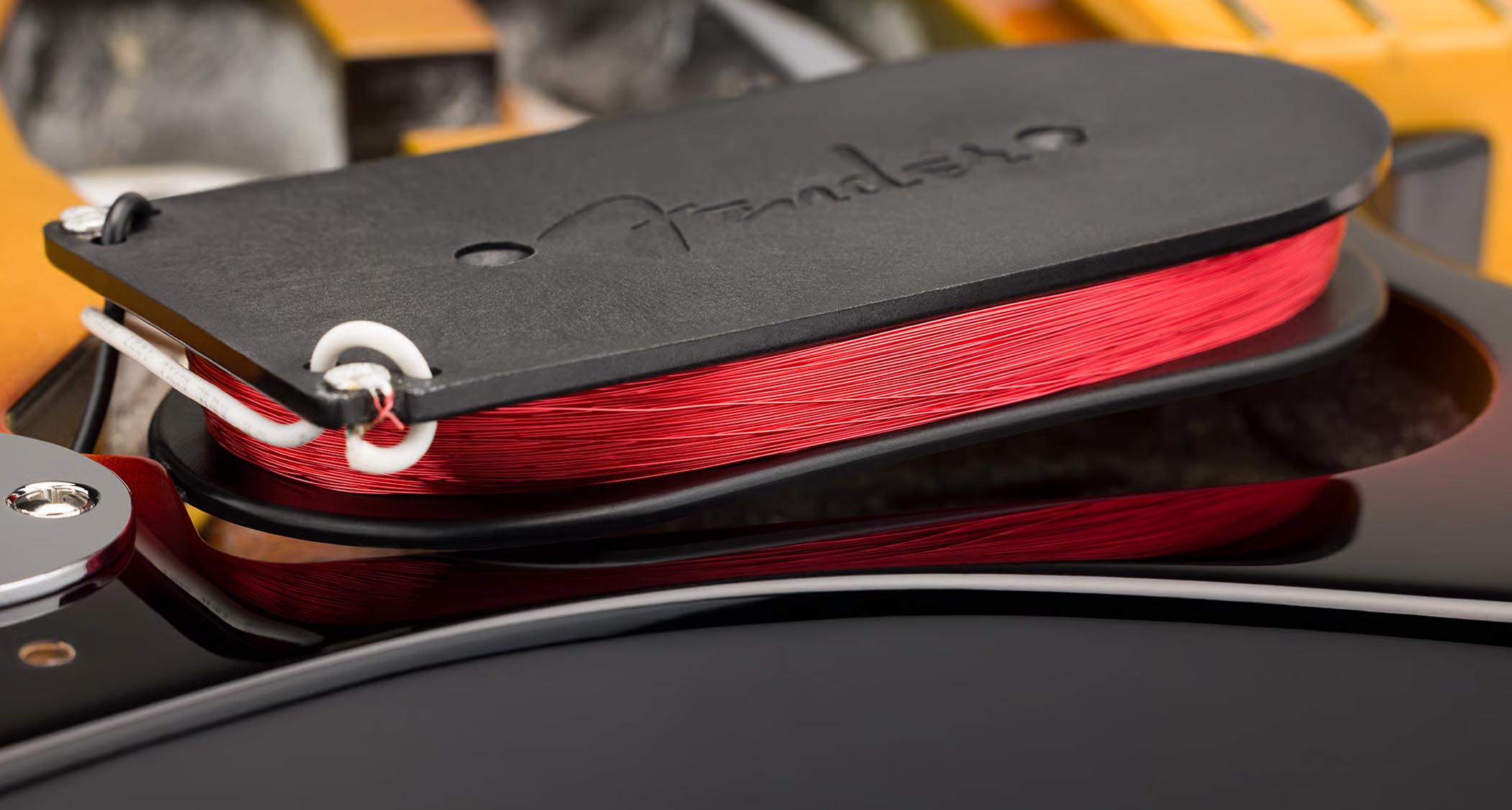
Unlike traditional noiseless pickup designs that alter the internal winding geometry or magnet structure of the pickup itself, the Fender Silent System approaches noise cancellation from a systemic perspective. The apparatus is discreetly mounted directly underneath the instrument’s pickguard, remaining virtually invisible to the casual observer.
Engineered to pair seamlessly with Fender’s newly developed Coastline pickups, the Silent System operates independently of the pickup coils. According to official documentation and technical briefings from the manufacturer, the patent-pending architecture intercepts and neutralizes environmental electromagnetic interference before it reaches the audio signal path.
Crucially, the system requires no external power source. Battery-free operation remains a major selling point for traditionalists who fear the inconvenience of sudden power loss during a live performance or the added weight of an onboard preamp compartment. Furthermore, Fender emphasizes that the system does not compress the dynamic range, alter the output impedance, or color the high-frequency response that players associate with vintage single-coil instruments.

“Designed to eliminate single-coil hum from almost any pickup installed, it hands players even more creative control and flexibility over their guitar, sound, and signal,” Fender stated in its official product release. “It effectively eliminates single-coil hum without sacrificing a single trace of that pure, authentic single-coil tone you know and love.”
Historical Context: A Chronology of Hum Reduction at Fender
To understand the magnitude of the Silent System rollout, one must examine the decades-long evolution of hum-reduction technology within the guitar manufacturing industry.
The quest to silence single-coils dates back to the late 1970s and 1980s, when high-gain amplification became commonplace in rock and heavy metal music. Increased gain structures exacerbated 60-cycle hum, rendering traditional Stratocasters and Telecasters difficult to record or perform with in electrically noisy environments.
- 1980s–1990s: Fender experimented with various stacked-coil designs, placing a secondary dummy coil beneath the primary pickup to cancel hum. While effective at noise reduction, these pickups often exhibited a compressed midrange and diminished high-end sparkle.
- 1990s–2000s: The introduction of the Vintage Noiseless and Hot Noiseless series—popularized by artists like Eric Clapton, Jeff Beck, and Buddy Guy—brought quieter operation to flagship artist models. These designs utilized dual-coil inline construction to mimic single-coil aesthetics while maintaining noise rejection.
- 2010s: Fender launched successive iterations, including the Gen 4 Noiseless pickups, which incorporated ultra-low-noise electronics and redesigned vintage-spec magnet wire to bridge the gap between traditional tone and modern silence.
- Current Era: The debut of the Silent System shifts the paradigm. Rather than redesigning the pickup to be inherently hum-canceling, Fender has isolated the noise-cancellation mechanism into a separate, under-guard chassis. This allows the primary pickups—such as the new Coastline series—to be optimized purely for tone, unencumbered by the mechanical constraints of dual-coil designs.
Specifications, Pricing, and Market Availability
The Fender Silent System is currently rolling out exclusively via a limited-edition run of American Professional Classic instruments. This specialized tier bridges the gap between Fender’s standard production catalog and high-end Custom Shop offerings, appealing directly to working professionals, recording artists, and discerning collectors.
In terms of market positioning, these instruments carry a modest premium over their standard American Professional counterparts. The limited-edition American Professional Classic models equipped with the onboard Silent System retail at approximately £1,649 / $1,599, compared to street prices of roughly £1,439 / $1,499 for conventional configurations. Given the technological integration and the elimination of aftermarket noise gates or hum-bucking modifications, industry analysts view the pricing structure as competitive.
Stratocaster Lineup and Finish Options:
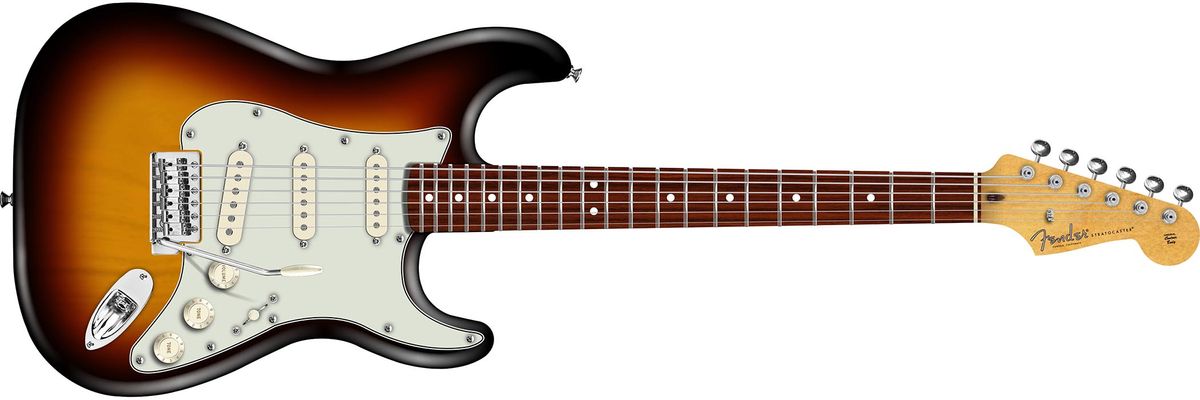
The American Professional Classic Stratocaster featuring the Silent System is available in four distinct aesthetic configurations:
- 3-Color Sunburst with a rosewood fingerboard
- Daphne Blue with a rosewood fingerboard
- Olympic White with a maple fingerboard
- Candy Apple Red with a maple fingerboard
Telecaster Lineup and Finish Options:
The corresponding Telecaster models are offered in four complementary finishes:
- Candy Apple Red with a rosewood fingerboard
- Sonic Blue with a rosewood fingerboard
- Vintage Blonde with a maple fingerboard
- 3-Color Sunburst with a maple fingerboard
Each instrument features premium-grade tonewoods, comfortable neck profiles tailored for modern playability, and hardware appointments consistent with Fender’s professional-grade American manufacturing standards.
Industry Implications and Future Outlook
The introduction of the Silent System raises several compelling questions regarding the future of Fender’s broader product ecosystem. While the technology currently debuts on a limited-edition run, the guitar community is already speculating about broader commercial applications.
If the Silent System proves reliable and well-received by consumers, market observers anticipate that Fender may eventually expand the technology into core production lines, such as the American Professional II or American Ultra series. Furthermore, the prospect of an aftermarket kit—allowing owners of vintage or standard Stratocasters and Telecasters to retrofit the under-guard system—represents a significant commercial opportunity, provided the physical dimensions and routing requirements are compatible with standard instrument cavities.
Competitors in the guitar pickup and electronics sector will also monitor the reception closely. Passive noise-cancellation systems that operate independently of pickup construction could inspire a wave of third-party innovations, shifting consumer preferences away from specialized noiseless pickups and toward modular shielding technologies.
For high-gain players, studio engineers, and live performers who have long wrestled with the sonic compromise between authentic single-coil articulation and background noise, Fender’s latest engineering endeavor offers a compelling proposition. By decoupling noise cancellation from pickup design, the company may have finally resolved an industry-wide engineering dilemma without altering the sonic identity that built its legacy.
Related posts: