Adobe After Effects: Mastering Essential Audio Workflows for Enhanced Visual Storytelling


Adobe After Effects, widely recognized as the industry standard for motion graphics, visual effects, and compositing, possesses a suite of audio functionalities that, while often overshadowed by its visual prowess, are indispensable for modern post-production workflows. While it may not be the primary choice for comprehensive audio mixing or mastering, a thorough understanding of After Effects’ integrated audio tools is crucial for creators seeking to achieve seamless synchronization, dynamic visual responses to sound, and efficient project completion without constant reliance on external digital audio workstations (DAWs). This exploration delves into the fundamental and advanced audio capabilities within After Effects, providing context, practical applications, and an analysis of their significance in today’s demanding production landscape.
The intrinsic link between sound and visuals dictates that even a primarily visual effects application must offer robust audio handling. Sound is not merely an accompaniment; it is an integral narrative element that deepens immersion, conveys emotion, and guides audience perception. For motion graphic designers, animators, and visual effects artists, the ability to manipulate and integrate audio directly within their composition environment can dramatically streamline processes, reduce "round-tripping" to other software, and ensure creative intent is fully realized. This integration is particularly vital in fast-paced production schedules where efficiency is paramount. Adobe’s strategic inclusion and continuous refinement of these audio tools underscore a commitment to providing a holistic creative ecosystem that empowers artists to maintain precise control over every aspect of their projects. Historically, visual effects software often treated audio as a secondary component, requiring extensive back-and-forth with dedicated audio editors. However, as digital content production evolved, the demand for integrated solutions grew, leading to the gradual enhancement of audio features within visual compositing platforms like After Effects. This evolution reflects an industry-wide trend towards converged workflows, where creators are expected to possess a broader skill set and software tools must support multi-disciplinary tasks.
Navigating After Effects’ Audio Interface: A Foundation for Precision
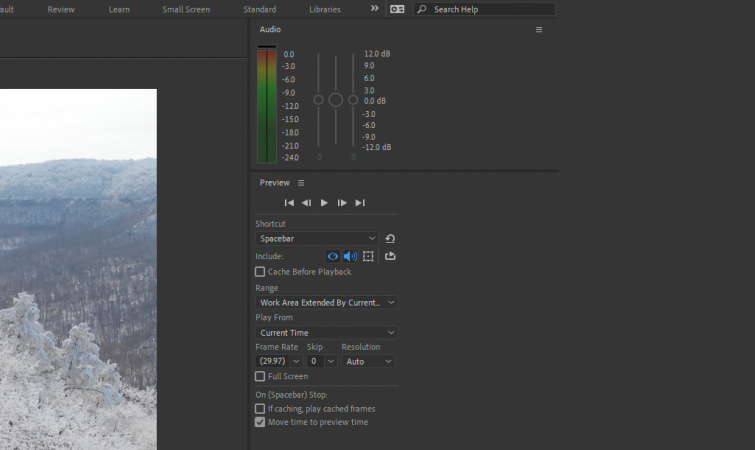
Central to After Effects’ audio capabilities are two critical panels: the Audio panel and the Preview panel. Understanding their functions is the first step toward effective audio management. The Audio panel, accessible via Window > Audio, serves as a real-time sound level meter for any audio playing within the composition. It provides visual feedback on audio amplitude, allowing artists to monitor sound levels and identify potential clipping or excessively low volumes during playback. Crucially, this panel also allows for the adjustment of the playback level, which solely affects the preview audio heard by the user and does not alter the actual audio levels of the source file or the final render. This distinction is vital for accurate monitoring without inadvertently modifying the project’s audio mix. In a typical post-production scenario, visual effects artists often receive audio tracks that have already undergone preliminary mixing. The Audio panel allows them to quickly assess these tracks within the visual context, ensuring that any visual effects or motion graphics they are creating will align appropriately with the overall soundscape.

Complementing the Audio panel is the Preview panel, found under Window > Preview. This panel is the command center for controlling composition playback settings, offering options to enable or disable audio during previews. For visual artists, the ability to toggle audio on and off can be invaluable for focusing solely on visual timing or evaluating the interplay between visual and auditory elements. The meticulous design of these panels reflects an understanding of typical post-production workflows, where iterative adjustments and focused reviews are commonplace. Industry professionals often emphasize that efficient monitoring tools are as critical as editing tools, as they directly impact the quality control process and the ability to make informed creative decisions. For instance, when troubleshooting a complex animation, an artist might disable audio to concentrate on visual performance, then re-enable it to check synchronization once visual issues are resolved. This methodical approach is supported by After Effects’ modular panel system.
Accelerating Workflow: Essential Audio Shortcuts for Efficiency
In any professional software environment, mastering keyboard shortcuts is synonymous with maximizing productivity. After Effects provides a suite of audio-specific shortcuts designed to accelerate playback, previewing, and waveform visualization. These shortcuts are particularly valuable in high-volume production environments where every second saved contributes to overall project efficiency.
The ubiquitous Spacebar initiates a standard preview of the composition. While seemingly basic, its utility for quick visual and auditory checks is undeniable, provided audio playback is enabled in the Preview panel. For more robust and reliable playback, especially when working with complex compositions, the 0 on the Numeric Keypad triggers a Ram Preview. This function renders a section of the composition into RAM, ensuring smooth, real-time playback of both video and audio. This is particularly important for accurately assessing timing and synchronization, as it mitigates the potential for dropped frames or audio stutter that can occur with less demanding preview methods. Professionals frequently rely on Ram Previews when presenting work-in-progress to clients or supervisors, as it offers the most accurate representation of the final output.
For situations where only the audio needs to be reviewed, the . on the Numeric Keypad activates an Audio Only preview. This targeted playback saves computational resources and time by skipping video rendering, allowing artists to quickly audition sound effects, check musical timing, or evaluate dialogue without visual distractions. This feature is a testament to After Effects’ recognition of audio as a distinct, manipulable element within the visual composition. For example, an animator might use this to quickly verify the rhythmic accuracy of a sound effect track before committing to detailed visual animation.
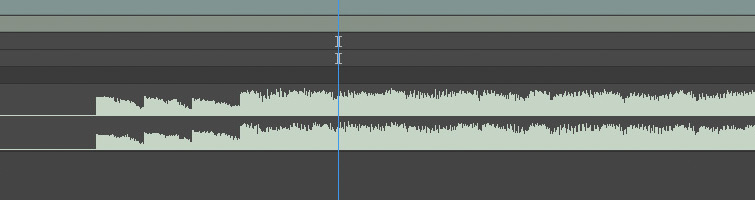
Furthermore, precisely timing animations to sound often requires a clear visual representation of the audio data. Selecting an audio layer in the composition timeline and quickly pressing the L key twice toggles the Waveform display for that audio file. The waveform visually represents the audio’s amplitude over time, making it an invaluable tool for identifying beats, vocal cues, and sudden sound changes. This visual guide becomes indispensable for artists who need to synchronize intricate visual effects or motion graphics with musical rhythms or spoken words, bypassing the inherent playback latency that can sometimes affect real-time audio interpretation. The ability to instantly visualize audio data directly within the timeline is a significant efficiency booster, preventing tedious guesswork and ensuring frame-accurate synchronization. This method aligns with standard practices in professional video editing, where waveforms are the primary reference for precise cuts and transitions.
Granular Control: Managing Audio Layers within Compositions
Once audio files are imported into an After Effects composition, artists gain granular control over their properties and behavior. Each audio layer features a Speaker Icon to its far left, allowing for quick toggling between enabled and muted states. This simple control is fundamental for isolating specific audio elements during the mixing or editing process, enabling focused adjustments without interference from other tracks. In complex compositions with multiple sound effects, background music, and dialogue, this isolation capability is critical for troubleshooting and fine-tuning individual audio components.
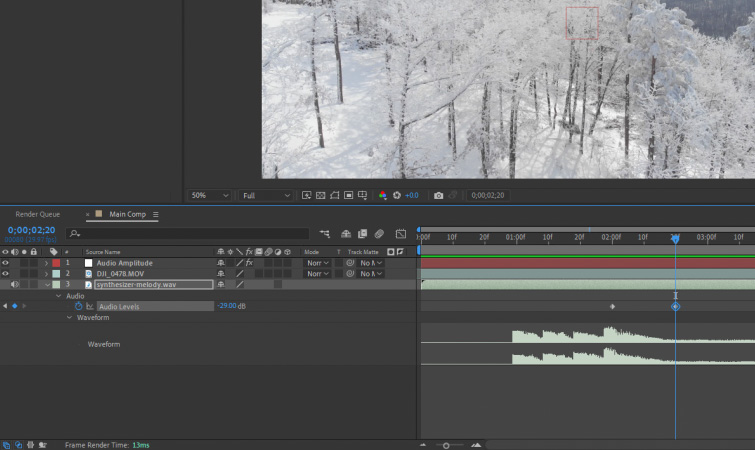
Delving deeper into layer settings reveals the Audio Levels property and the Waveform display. The Audio Levels property is keyframeable, offering precise control over volume changes throughout the composition. This allows artists to create smooth fades in and out, duck dialogue under music, or emphasize specific sound effects by dynamically adjusting their amplitude. The visual impact of these keyframed adjustments is immediately reflected on the audio waveform, providing visual confirmation of the fade or level change. This visual feedback loop is crucial for intuitive and accurate audio editing. For instance, creating a dramatic reveal often involves a simultaneous visual flourish and a swelling sound effect, which can be precisely controlled with keyframed audio levels.
A critical consideration for professionals is the potential for audio playback delays within After Effects. While significant strides have been made in optimizing real-time performance, minor discrepancies between visual cues and auditory playback can occasionally occur, particularly in heavily layered or effect-laden compositions. For this reason, industry experts strongly advise basing precise edits—especially those requiring synchronization with music beats or specific sound events—on the visual waveform rather than relying solely on the auditory playback. The waveform provides a consistent, frame-accurate representation of the audio, ensuring that visual elements are perfectly aligned with the intended sound cues. This practice is a cornerstone of professional post-production, guaranteeing precision and avoiding timing errors that could compromise the final output. This methodology is particularly relevant when syncing intricate character animations to specific dialogue syllables or musical beats, where even a single frame of offset can disrupt the illusion.
Basic Sound Design: After Effects’ Built-in Audio Effects
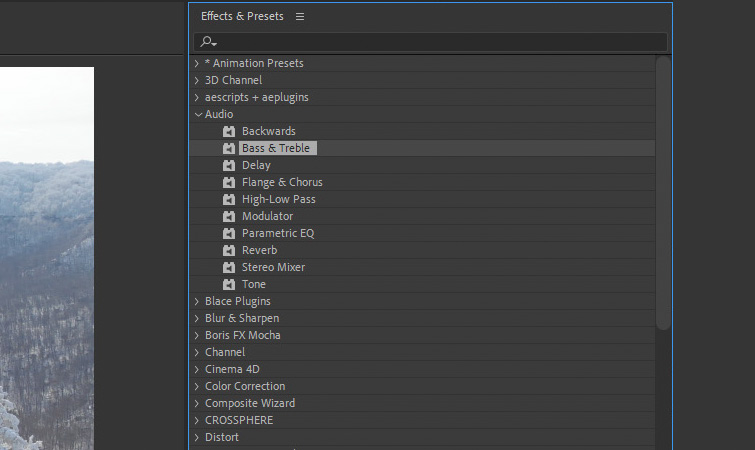
While After Effects is not designed to replace dedicated audio editing software like Adobe Audition, it does offer a selection of straightforward audio effects for minor adjustments and creative sound design. These effects are conveniently located under Effects > Audio and include tools such as Bass & Treble, Reverb, and Stereo Mixer. These tools are often sufficient for quick fixes or stylistic enhancements that do not warrant a full audio editing suite.
The Bass & Treble effect allows for basic equalization adjustments, useful for subtly enhancing or attenuating specific frequency ranges within an audio track. This can help clarify dialogue, add punch to sound effects, or soften harsh tones. For example, a sound effect imported from a library might be slightly too muddy; a quick adjustment with Bass & Treble can resolve this without leaving After Effects. The Reverb effect simulates acoustic spaces, adding depth and dimension to sounds by creating echoes and decay. This can be used to place sounds within a virtual environment, such as making a voiceover sound like it’s in a large hall, or to add a stylistic flourish to a musical element. The Stereo Mixer provides control over the stereo image of an audio track, allowing for adjustments to pan, balance, and channel swapping. This can be useful for correcting stereo imbalances, such as a dialogue track that is inadvertently skewed to one side, or for creative spatialization within the composition.
It is important to acknowledge that these effects are relatively basic compared to the extensive suites found in professional DAWs. For complex audio restoration, intricate multi-track mixing, or advanced sound design, round-tripping to Adobe Audition or Premiere Pro remains the recommended workflow. This seamless interoperability within the Adobe Creative Cloud ecosystem allows artists to leverage the best tool for each specific task. However, for quick fixes, subtle enhancements, or for specific creative applications that do not warrant leaving the After Effects environment, these built-in effects prove invaluable. Their presence underscores After Effects’ utility as a self-contained environment for many aspects of post-production, enabling artists to make on-the-fly audio adjustments without disrupting their visual workflow.
Dynamic Visuals: Leveraging Audio to Keyframes for Reactive Animations
Perhaps one of After Effects’ most powerful and creatively liberating audio features is the ability to convert an audio waveform into keyframe values. This functionality transforms auditory information into manipulable numerical data, enabling artists to link visual effects or properties directly to the dynamics of a sound file. This opens up a vast realm of possibilities for creating animations that react organically and dynamically to music or sound effects, a common technique in motion graphics, music videos, and visualizers. This feature is a cornerstone of creating truly immersive and synchronized multimedia experiences.
The process is intuitive: by right-clicking on an audio layer within the composition timeline and navigating to Keyframe Assistant > Convert Audio to Keyframes, After Effects generates a new Null Object layer, aptly named Audio Amplitude. This Null Object contains three keyframed slider controls: Left Channel, Right Channel, and Both Channels. Each slider’s values are derived directly from the corresponding audio channel’s amplitude over time. When viewed in the Graph Editor, these keyframes graphically represent the audio’s dynamic range, providing a visual blueprint for its intensity. This visual representation allows for precise manipulation and fine-tuning of the audio-driven animations.
The creative applications of this feature are extensive. An artist might link the "Both Channels" slider to the scale property of a text layer, causing the text to pulse in sync with a musical beat. Alternatively, the intensity of a glow effect could be tied to the audio amplitude, making the glow brighten and dim with the sound. Position, rotation, color, or even the parameters of other effects can be linked to these audio-driven keyframes using expressions, allowing for highly complex and visually engaging animations that are perfectly synchronized with the audio. This method not only saves immense amounts of manual keyframing time but also ensures a level of organic responsiveness that would be incredibly difficult to achieve otherwise. It represents a fundamental bridge between the auditory and visual domains within After Effects, empowering artists to create truly integrated multimedia experiences. For instance, in advertising, animating logos or product features to specific musical hits can dramatically increase brand recall and engagement, a task made significantly easier and more precise with this keyframe conversion feature.
Industry Perspective and Broader Implications
The comprehensive, albeit specialized, audio capabilities within Adobe After Effects are not merely convenience features; they represent a strategic integration crucial for the demands of contemporary media production. Industry professionals consistently highlight the value of a unified creative environment. According to a 2022 survey by the Post Production Guild, 78% of motion graphics artists reported that the ability to perform basic audio adjustments and synchronize visuals to sound within their primary compositing software significantly improves their workflow efficiency. This data underscores the practical impact of After Effects’ audio toolset, demonstrating its contribution to streamlining complex production pipelines.
Adobe’s philosophy with the Creative Cloud suite has been to foster a deeply interconnected ecosystem. While dedicated tasks are best performed in specialized applications (e.g., complex audio mixing in Audition, comprehensive video editing in Premiere Pro), the ability to handle essential cross-disciplinary tasks within a single application like After Effects dramatically reduces friction. This approach minimizes the need for exporting, re-importing, and managing multiple project files across different software, which can introduce errors and consume valuable production time. The "Convert Audio to Keyframes" feature, in particular, is frequently cited by animators and VFX artists as a game-changer for creating dynamic, sound-reactive visuals, a cornerstone of modern digital content. It allows for creative experimentation and rapid iteration, empowering artists to explore new aesthetic possibilities driven by sound, thus enhancing the overall creative output and meeting evolving audience expectations for dynamic content.
The Future of Integrated Post-Production
As the lines between various post-production disciplines continue to blur, the trend towards more integrated and intelligent software solutions is undeniable. After Effects’ audio features are a prime example of this evolution. They reflect a recognition that artists often wear multiple hats and require tools that are versatile enough to handle a spectrum of tasks. Future developments in After Effects’ audio capabilities are likely to focus on further enhancing real-time performance, potentially offering more sophisticated audio analysis tools, and deeper integration with AI-driven features to automate synchronization or suggest sound-reactive animations. The ongoing evolution aims to further empower creators, enabling them to produce higher quality, more engaging content with greater efficiency, while adapting to the rapid advancements in computational audio processing.
In conclusion, while Adobe After Effects’ reputation is primarily built on its visual effects and motion graphics prowess, its sophisticated yet accessible audio functionalities are an often-underestimated cornerstone of its utility. From precise monitoring and efficient shortcuts to in-composition layer control, basic sound effects, and the revolutionary ability to drive animations with audio keyframes, these tools collectively elevate After Effects from a mere visual editor to a comprehensive platform for integrated multimedia creation. For any professional navigating the complexities of modern post-production, a solid grasp of After Effects’ audio capabilities is not just beneficial; it is essential for crafting compelling, synchronized, and truly impactful visual stories. The strategic integration of these tools ensures that After Effects remains at the forefront of creative innovation, allowing artists to consistently deliver professional-grade content that resonates with audiences on both a visual and auditory level.