Ocean Photographer of the Year 2026 Winners Revealed: Celebrating Marine Biodiversity and Conservation Through the Lens


The global photography community has turned its gaze toward the mesmerizing depths of the world’s oceans following the official announcement of the Ocean Photographer of the Year 2026 winners. Presented collaboratively by Oceanographic magazine and luxury watchmaker Blancpain, this year’s competition drew more than 15,000 entries from shutterbugs across the globe. Ranging from remote deep-sea trenches to fragile coastal ecosystems, the winning images underscore both the breathtaking beauty of marine life and the urgent, escalating need for aquatic conservation.
This prestigious competition has evolved significantly since its inception, establishing itself as a premier global platform for underwater photography. By combining artistic vision with scientific documentation, the competition bridges the gap between casual observers and marine advocates. The full slate of winners, unveiled following a rigorous judging process that showcased shortlisted finalists last month, demonstrates how advanced imaging technologies and daring field expeditions continue to push the boundaries of what can be captured beneath the waves.
Julien Anton Claims Top Honors with Intimate Seahorse Portrait
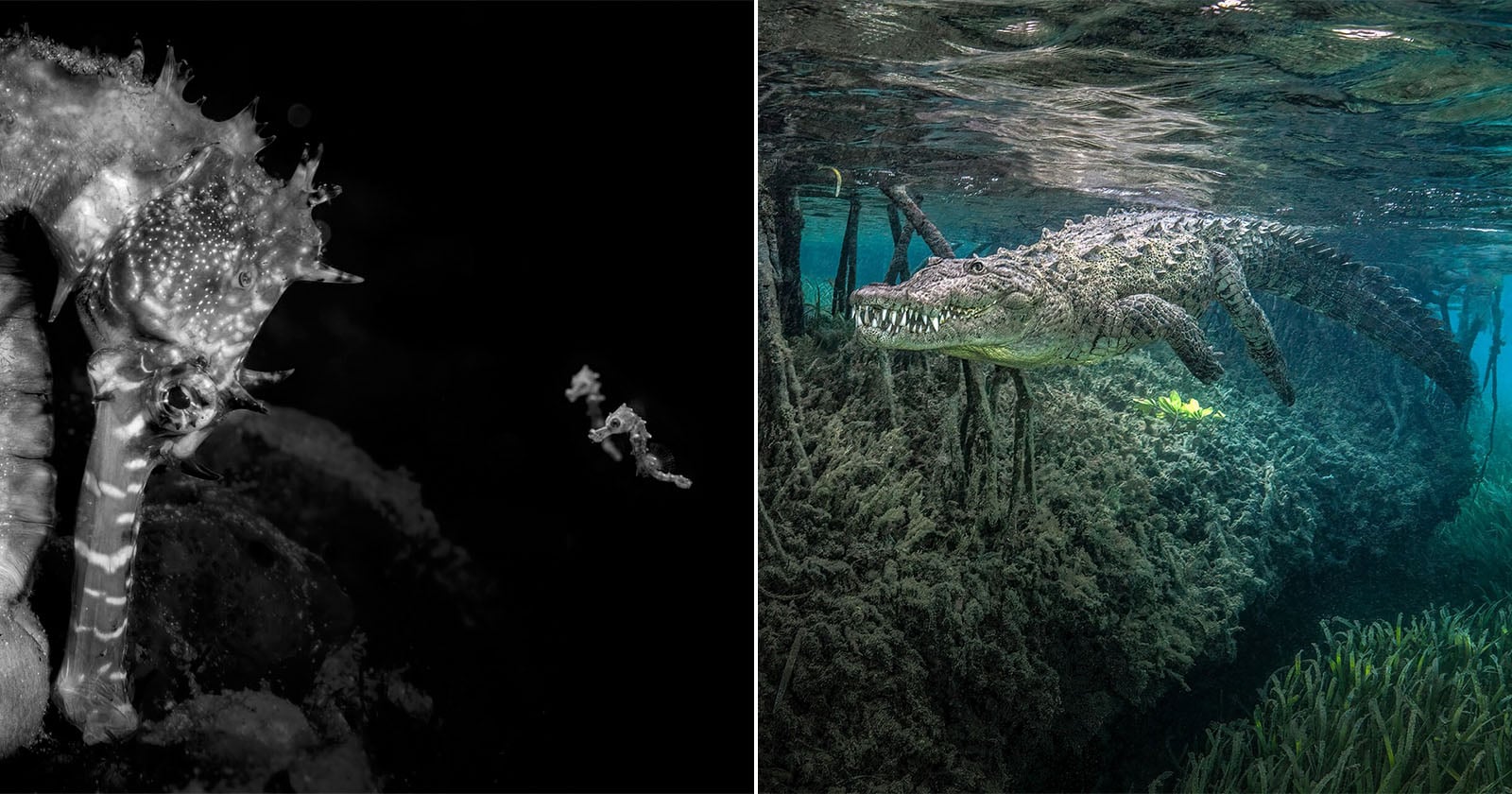
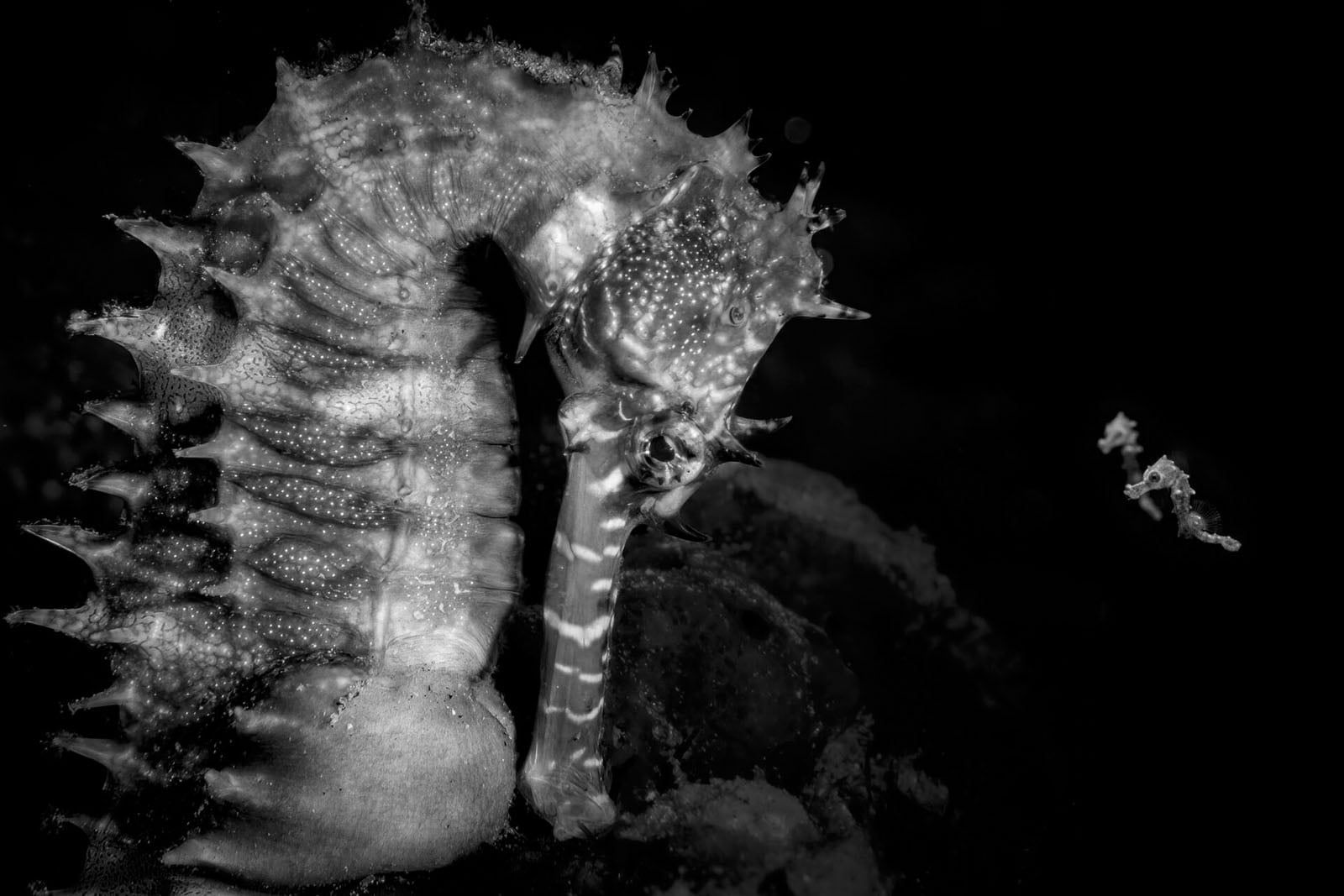
French photographer Julien Anton captured the overall title of Ocean Photographer of the Year 2026, alongside first place in the Ocean Wildlife category, with a striking black-and-white portrait. The image features a textured adult male seahorse flanked by two nearly imperceptible juvenile offspring against a pitch-black oceanic void. The stark contrast and minimalist composition not only provide an immediate sense of scale but also introduce a powerful narrative element regarding lineage and survival in marine environments.
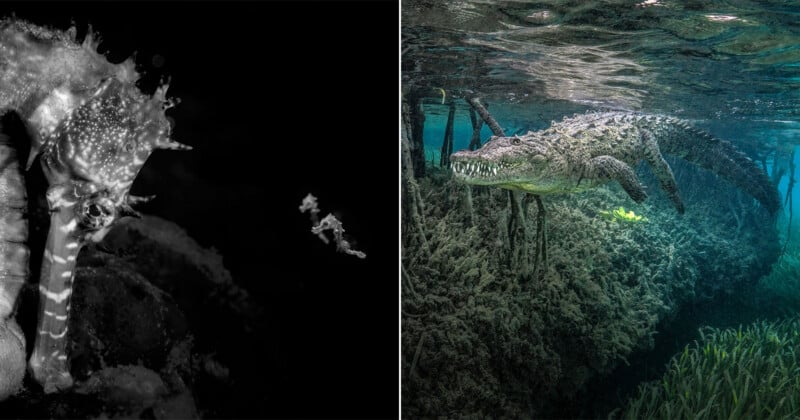
Reflecting on the grueling effort required to secure the shot, Anton noted that the victory was the result of endless hours spent navigating challenging underwater conditions with no guarantee of success. "We spent countless hours searching in difficult conditions, with no guarantee of finding a single seahorse. That is what made the moment so extraordinary—when the juveniles turned back towards the adult, it felt like something far beyond what I had dared to hope for," Anton stated.
Despite operating as an amateur rather than a commercial professional, Anton views his craft strictly as a medium for translation and advocacy. He expressed his fundamental aspiration that the award-winning image acts as a sturdy bridge connecting rigorous marine science, active environmental conservation, and a global public that desperately needs to understand what is currently at stake for ocean ecosystems.
Jenny Stock Honored with the Female Fifty Fathoms Award
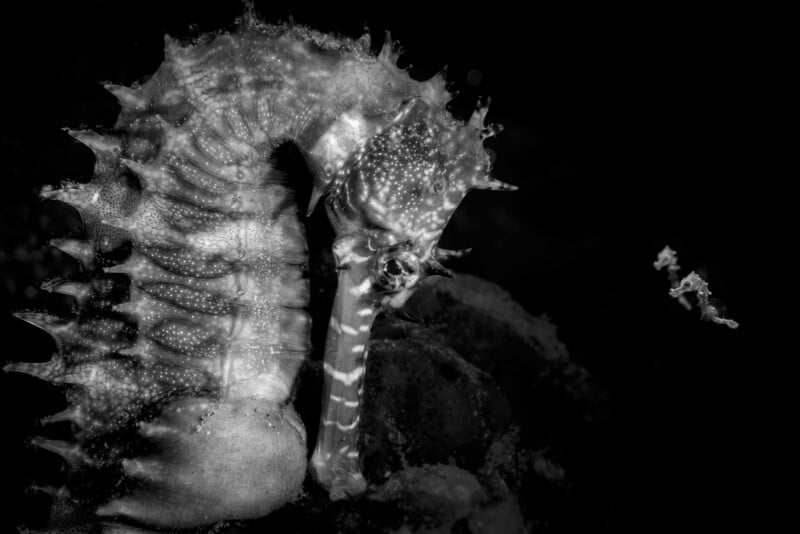
In the special recognition category, British photographer Jenny Stock was awarded the Female Fifty Fathoms Award for 2026. Established in 2021 as a collaborative effort between the competition organizers and Blancpain—whose historic Fifty Fathoms dive watch remains an icon in underwater exploration—this accolade specifically highlights the pioneering contributions of women in marine photography. Unlike standard competition tiers where creators submit portfolios voluntarily, nominees for this distinction are put forward by their industry peers before undergoing rigorous evaluation by the principal judging panel.
Stock, whose portfolio frequently features masterclasses in environmental storytelling such as a striking image of a crocodile swimming near delicate mangrove roots and seagrass, voiced profound gratitude upon receiving the honor. "To be nominated by fellow photographers means more to me than I can easily put into words—this community is everything," she remarked.
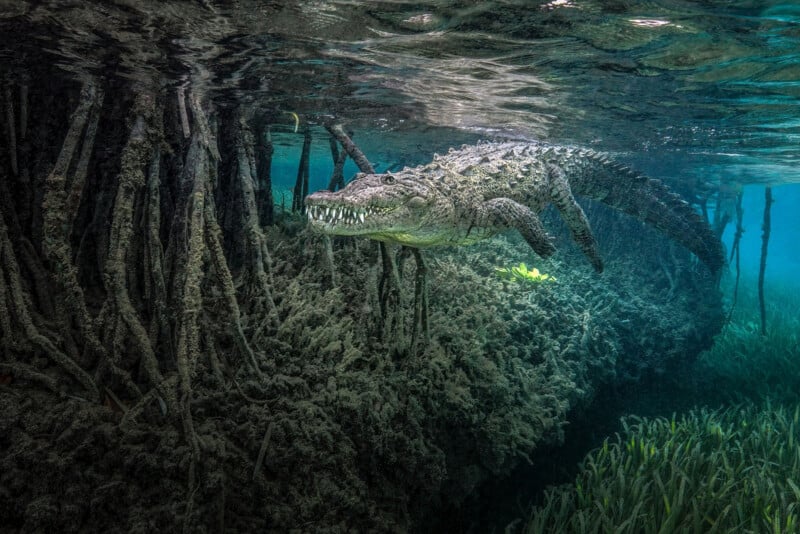
Discussing the broader legacy of the distinction, Stock emphasized the caliber of past recipients and the cultural importance of inspiring future generations. "The Female Fifty Fathoms Award is particularly special because it celebrates the achievements and passion of women in ocean photography, and the women who have previously won it are exceptionally talented, so it’s a privilege to join their ranks. The connection to the Blancpain Fifty Fathoms watch—one of diving’s most iconic timepieces—makes it even more extraordinary. I’m honored beyond measure, and I hope this recognition inspires more women to pick up a camera and discover the magic that’s beneath the surface."
Category Breakdown: Excellence Across Diverse Marine Disciplines
The 2026 competition spanned seven primary categories, alongside the coveted Ocean Portfolio Award, allowing entrants to showcase varied facets of aquatic environments, human interaction, and ecological challenges.
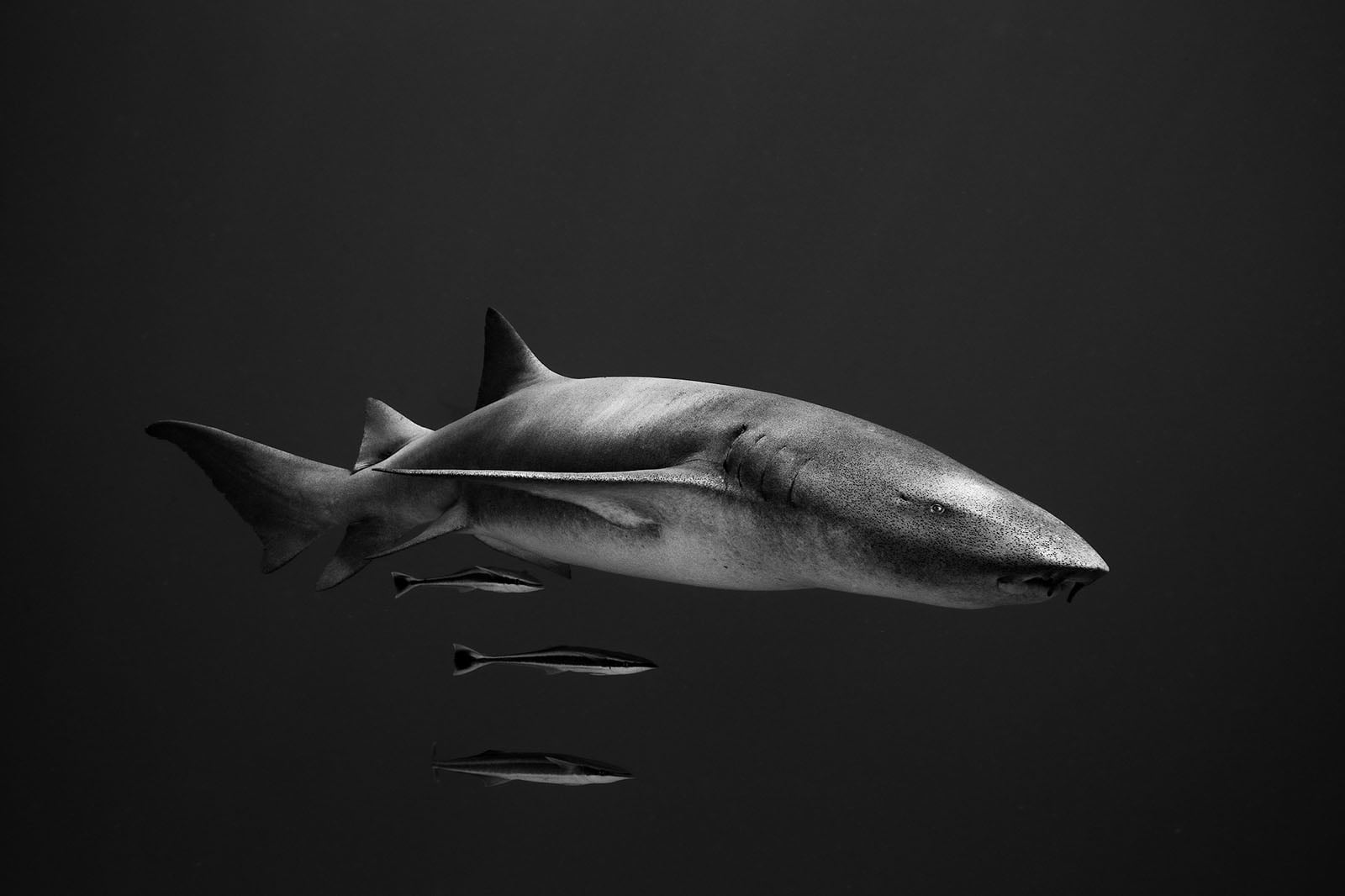
In the Fine Art category, the top prize was awarded to a hypnotic composition featuring a nurse shark navigating dim, murky water accompanied by three small remoras trailing precisely beneath its torso. The minimalist framing transforms an everyday marine encounter into a gallery-worthy study of motion and shadow.
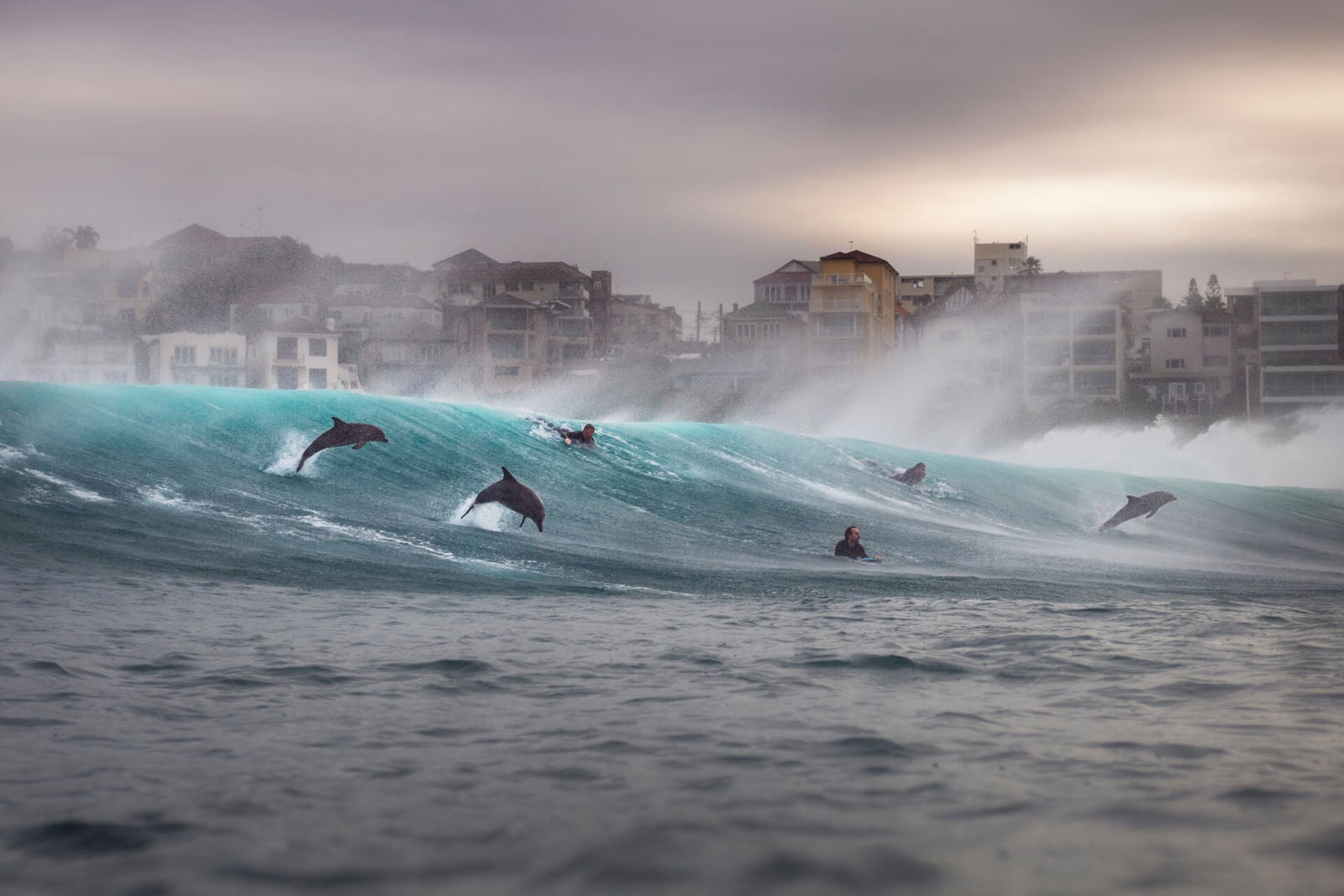
The Adventure category brought dynamic energy to the competition, with a first-place image capturing three dolphins launching themselves through a turquoise, breaking wave in close proximity to human surfers against a coastal backdrop. This image highlights the overlapping spaces where human recreation intersects directly with marine mammal habitats.
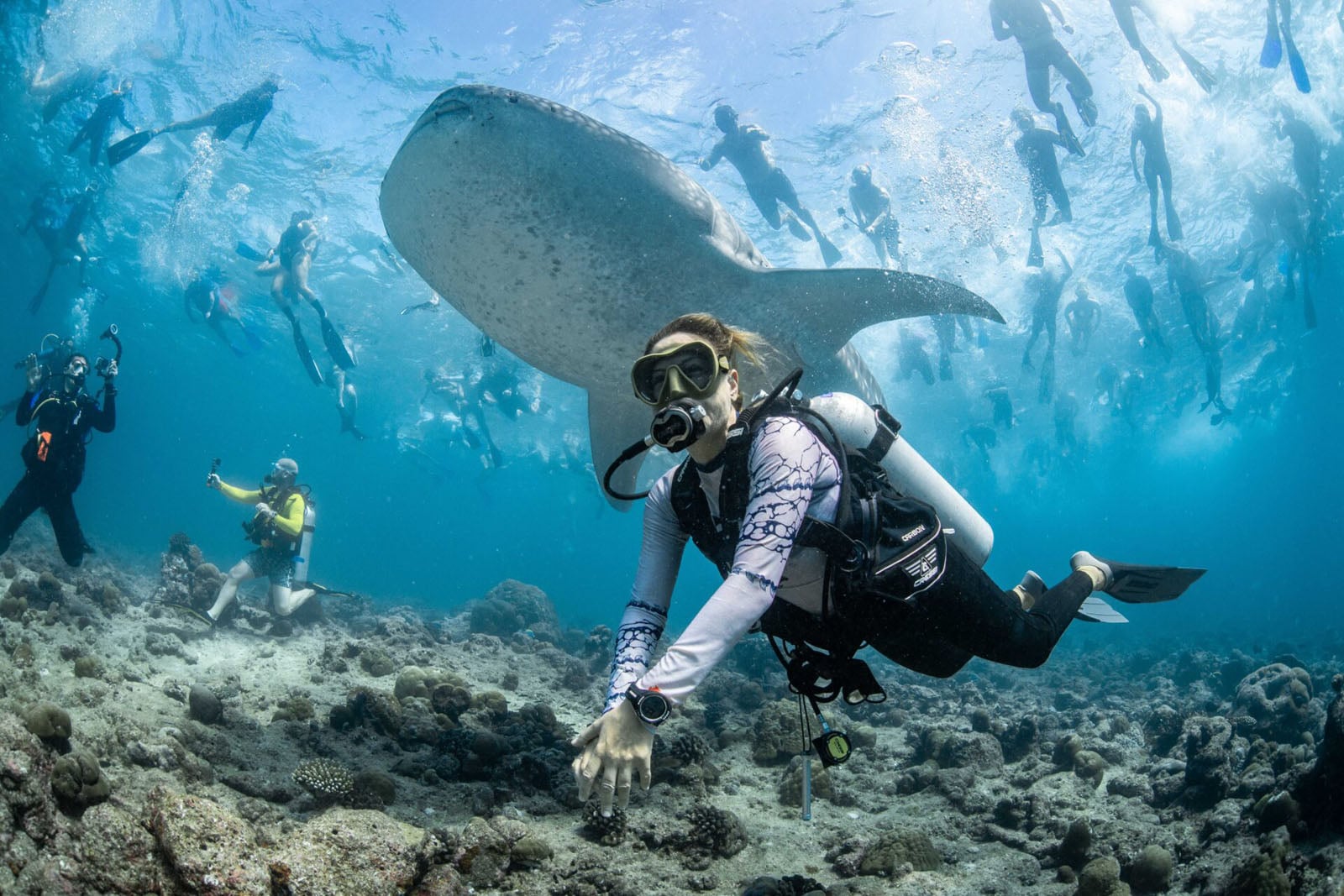
Conservation themes were divided into two crucial sub-categories: Impact and Hope. The Conservation (Impact) award went to a sobering composition depicting a massive whale shark gliding overhead amidst a crowded group of snorkelers and a solitary scuba diver near a stressed coral reef. This visual narrative confronts the complexities of wildlife tourism and the intense pressures placed on charismatic megafauna. Conversely, the Conservation (Hope) category winner highlighted proactive scientific intervention, showcasing a hammerhead shark swimming over a rocky seafloor while marine researchers utilized green laser pointers to accurately measure its length—a non-invasive technique critical for tracking population health.
The Human Connection Award documented a profoundly moving rescue effort, capturing a team of compassionate individuals working collectively on a sandy beach to support a beached whale using a specialized tarp system. This snapshot of interspecies empathy stands as a testament to grassroots conservationism.
Meanwhile, The Ocean Unseen: Hidden Worlds category brought microscopic and elusive phenomena into sharp focus, rewarding an image of a slender, translucent ribbonfish with flowing fins navigating dark waters populated by numerous clear salps. Finally, the Ocean Portfolio Award celebrated cohesive, multi-image storytelling, emphasizing comprehensive field documentation such as night-time monitoring of sea turtles on dark nesting beaches.
Broader Implications and Conservation Impact
The release of the Ocean Photographer of the Year 2026 winners arrives at a critical juncture for global marine policy. With oceans absorbing more than ninety percent of excess heat generated by anthropogenic climate change and facing compounding threats from overfishing, plastic pollution, and ocean acidification, visual documentation plays an indispensable role in shaping public policy and environmental awareness.
Industry analysts and environmental scientists alike note that high-profile photography competitions serve functions far beyond mere aesthetic appreciation. By translating complex ecological data and hidden aquatic realities into compelling, visceral imagery, these photographs bypass intellectual fatigue and foster immediate emotional connections with viewers worldwide. Conservation organizations frequently leverage these assets in educational campaigns, policy lobbying, and fundraising initiatives to secure marine protected areas (MPAs) and enforce sustainable fishing quotas.
The partnership between media outlets like Oceanographic and corporate patrons such as Blancpain ensures that financial resources continue to flow directly into supporting the field-work of independent creators who often risk life and limb in remote maritime regions. As these winning images circulate globally through exhibitions, digital galleries, and print publications, they carry an undeniable mandate: to document a fragile biosphere before it is fundamentally altered, inspiring humanity to actively participate in its preservation.