Navigating the AI Era: How Publishers are Overhauling Subscription, Engagement, and Revenue Strategies Amid Evolving Search Behavior


The media industry stands at a profound structural crossroads as artificial intelligence fundamentally transforms how modern audiences discover, process, and consume digital information. As search engines increasingly rely on automated answer engines and conversational summaries, traditional referral traffic patterns have experienced steep declines. For digital publishers whose business models have historically depended on open-web discovery and programmatic ad impressions, these rapid technological shifts demand an immediate and comprehensive overhaul of their foundational digital strategies.
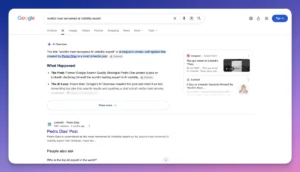
Recent industry data underscores the velocity of this transformation. According to metrics from Chartbeat and the Reuters Institute for the Study of Journalism, organic search traffic from Google to more than 2,500 global publishing sites declined by a third over the course of the previous year. This erosion is largely accelerated by the proliferation of conversational AI features within search engines. Comscore data indicates that by March 2026, roughly 36.1% of all Google searches incorporated an AI Overview feature, a dramatic jump from 30.2% in October 2025 and just 23.4% in May of that same year.
Because generative search engines frequently supply users with direct answers on the search results page itself, fewer readers find reasons to click through to original publisher websites. Consequently, the traditional top-of-funnel discovery channel is contracting, forcing executive teams to shift their strategic focus toward cultivating direct relationships, capturing first-party user data, and building resilient recurring revenue streams centered around subscriptions and personalized engagement.
The Strategic Imperative: Prioritizing Acquisition and Retention
To understand how global media organizations are responding to these market pressures, a comprehensive industry report released in August 2026 by Digiday and customer engagement platform Braze surveyed 90 international publishers. The findings reveal a landscape fiercely focused on transforming anonymous casual browsers into loyal, registered, and paying subscribers before search behaviors permanently sever the connection.

When surveyed on their primary subscription objectives, 60% of publishing executives indicated that acquiring new subscribers remains their central focus, while 40% prioritize the ongoing retention of their existing customer base. This heavy emphasis on acquisition stems from the acute pressure to offset unpredictable organic referral traffic with dependable, recurring subscription revenue.
However, this aggressive pursuit of growth exists alongside a complex economic paradox. Industry benchmarks compiled by Mather Economics and the International News Media Association note that virtually all major digital news brands regularly rely on deep introductory discounts—often slashing subscription prices by 90% or more—to entice hesitant readers. While these promotional campaigns effectively drive initial volume, they also defer immediate, full-price revenue, making long-term subscriber retention an existential survival metric rather than a secondary growth KPI.
"Paywall conversion, post-trial retention, and re-engagement are no longer just growth metrics," explains Andrew Quicho, industry marketing lead at Braze. "They’ve evolved into survival metrics. A publisher that improves retention makes every acquisition dollar compound."
Diversifying Formats and Capturing First-Party Data
To combat the decline of organic search referrals, publishers are increasingly pulling their most valuable, high-intent content back behind proprietary gates. Rather than relying exclusively on third-party platforms like YouTube and social media to capture younger audiences, major outlets including Bloomberg, The Wall Street Journal, and Fortune have deployed paywalled video series, specialized live streams, and interactive multimedia elements directly onto their owned apps and websites.
Similarly, organizations like The Economist have diversified their product offerings through standalone, multi-format tiers—such as audio and video bundles featuring daily briefings, games, and subscriber-only podcasts—catering to consumers who prefer listening and watching over traditional reading.

Concurrently, the data strategies deployed by publishers reveal a fascinating operational dichotomy. According to the Digiday and Braze research, 84% of surveyed publishers prioritize referral traffic metrics when shaping their subscription strategies, closely followed by subscription turnover data at 83%. Surprisingly, only a small fraction of respondents initially categorized anonymous or logged-in user behavioral data as their primary strategic focus, even though 90% of those same publishers actively utilize audience data to tailor conversion messaging.
Experts emphasize that bridging this gap between raw traffic measurement and deep audience identification is critical for future viability. When a reader arrives via an AI-driven search engine, receives an answer, and departs without registering, that interaction holds zero compounding value. By contrast, prompting users to register or log in during their very first session transforms a fleeting visit into a persistent, actionable first-party asset.
Innovative Publishing Case Studies and Cross-Departmental Collaboration
Several media pioneers have already demonstrated the power of proactive audience identification and behavioral data activation. Canadian French-language publication La Presse successfully implemented custom in-browser messaging via Braze to deploy non-paywalled reader walls. These interactive pages granted full content access while featuring countdown-driven prompts encouraging readers to voluntarily create an account. Without charging subscription fees or locking content behind hard paywalls, La Presse leveraged this strategy to achieve an impressive 43% conversion rate and acquire 139,000 new registered users.
On the international front, major European publishers are scaling their operations through strategic consolidation and knowledge sharing. Axel Springer’s acquisition of the U.K.-based Telegraph Media Group—which boasted 1.16 million subscriptions at the close of 2025—highlights a growing corporate appetite for established subscriber ecosystems.
Alexander Thrum, head of customer retention at Bild, Germany’s largest daily newspaper, stresses the importance of unifying internal business units to maximize these assets. "When teams work in silos, valuable customer insights can be lost," Thrum notes. "In my view, the biggest opportunity lies in creating a continuous feedback loop between audience data, customer insights, business decisions, and editorial development to improve the overall subscriber experience."

Despite this recognition, industry data indicates that internal departmental collaboration still lags: 66% of surveyed publishers review audience and traffic data in isolated silos before collaborating later, while only 28% practice open, cross-functional integration from the outset. Industry analysts warn that siloed data inevitably leads to fragmented consumer experiences, duplicate marketing touchpoints, and missed opportunities for lifetime value optimization.
The Evolving AI Landscape: Licensing Deals and Answer Engine Optimization
While AI search initially triggered widespread anxiety across newsrooms, contemporary sentiment among publishers reflects a pragmatic mix of caution and opportunistic adaptation. The Digiday and Braze survey revealed that 96% of publishing executives expect artificial intelligence to eventually create entirely new revenue streams, and 64% anticipate collaborative licensing agreements with major tech companies. Furthermore, 87% of respondents stated they plan to introduce new member-exclusive benefits explicitly designed in response to the rise of AI.
This optimism is mirrored in a rapidly expanding corporate licensing market. Throughout 2025 and 2026, major media enterprises—including The Washington Post, the Associated Press, and the USA Today Network—secured multi-figure licensing pacts with technology platforms and data providers like Snowflake. These agreements permit enterprise environments to query paywalled or proprietary publisher content securely within controlled AI frameworks, bypassing open-web scraping while protecting original intellectual property.
Concurrently, mainstream publishers are reformatting their digital infrastructure to ensure optimal visibility. Outlets like USA Today Co. are actively experimenting with "markdown" pages and agent-readable web formats designed specifically for AI indexing systems. This dual-track approach ensures that content remains accessible and citable for automated search agents while preserving rich, engaging human-centric experiences on owned digital properties.
Looking Ahead: The Roadmap for Sustainable Publishing

As the digital publishing ecosystem prepares for the remainder of the decade, the overarching consensus among industry leaders is clear: long-term survival will not belong to the organizations that cling to predictable, open-web organic traffic, but to those that cultivate deep brand loyalty, trust, and direct audience ownership.
"The publishers that succeed will be those that create trust, habit, and ongoing engagement," concludes Bild’s Alexander Thrum. "Strong brands with highly engaged audiences will be best positioned to adapt to the changes brought by AI search."
Ultimately, as data activation speeds increase and publishers close the operational gap between collecting behavioral signals and deploying personalized interventions, the media industry is redefining its value proposition. By treating every digital touchpoint as an opportunity to build a lasting human connection, publishers are successfully transforming the disruptive challenge of artificial intelligence into a catalyst for sustainable, long-term industry evolution.
Related posts: