Beyond the Open-Plan Cubicle: ROOM Rebrands as a Flexible Architecture Provider for the Modern Workplace

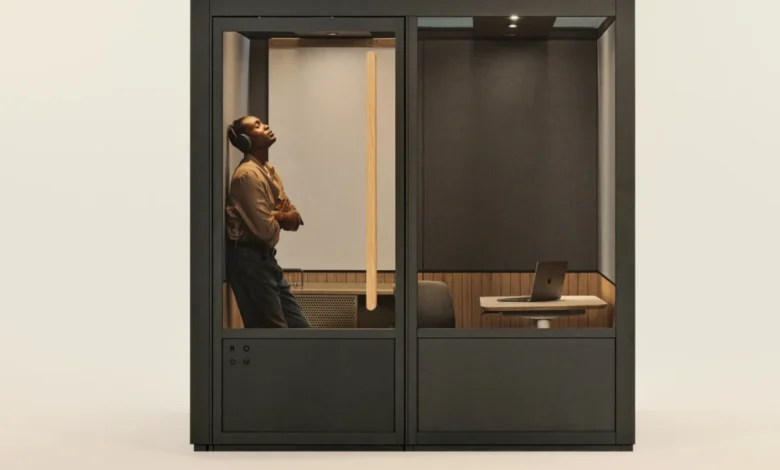
Eight years after disrupting the corporate real estate market with its signature modular phone booth, workplace furniture brand ROOM has unveiled a comprehensive global rebrand. The strategic overhaul reflects the company’s evolution from a single-product startup into a holistic provider of flexible architectural systems. Developed in partnership with creative agency Blonde Inc. and fashion-industry image consultancy ©Public Image, the refreshed identity shifts the corporate focus away from physical products and toward human interaction, redefining how physical environments support the modern workday.
The Modern Evolution of Office Design
The contemporary workplace has undergone a radical transformation over the past decade. The once-ubiquitous open-plan office—long criticized for noise pollution, lack of privacy, and plummeting productivity—paved the way for decentralized workspace solutions. When ROOM launched its flagship acoustic Phone Booth in 2018, it offered a streamlined, movable alternative to permanent drywall construction, satisfying the market’s demand for private, sound-damped focus areas.
Over the subsequent eight years, however, corporate expectations shifted dramatically. Driven by hybrid work models, fluctuating headcounts, and the need for dynamic, multi-use environments, the rigid boundaries separating traditional desks, private offices, and conference rooms began to dissolve. In response, ROOM expanded its portfolio far beyond individual telephone booths, scaling up into architectural pods, modular meeting rooms, and flexible acoustic lounges designed to adapt to fluid corporate needs.

This maturation created a distinct communication challenge for the brand: how to market an expansive ecosystem of architectural hardware without falling back on traditional, catalog-driven product marketing.
Bridging Fashion and Furniture: The Creative Strategy
To solve this branding dilemma, ROOM enlisted global creative agency Blonde Inc. to spearhead its visual and strategic repositioning. Eschewing standard B2B office furniture marketing tropes, Blonde Inc. drew unexpected inspiration from the high-fashion sector, bringing in ©Public Image—a consultancy renowned for crafting visual identities for world-leading fashion houses—to inject a fresh narrative perspective.
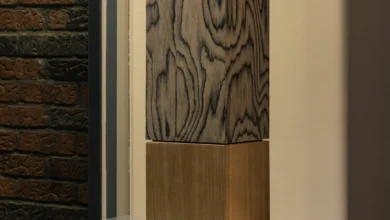
Alfred Lauritzen, executive producer and partner at Blonde Inc., explained that the core strategy relied on completely removing ROOM’s products from their standard corporate habitats. By placing the architectural elements in unexpected, highly stylized settings, the campaign directs the observer’s attention toward the human activity, spontaneous conversations, and quiet moments unfolding inside and around the modules.
"The product’s design became the visual frame for the campaign," Lauritzen noted, emphasizing how the minimalist lines of the architecture serve as a compositional border for human interaction rather than acting as the sole hero of the frame.

The resulting campaign materials span a newly curated photography suite, a refined color palette, an optimized digital footprint across the company’s website and social media channels, and a 30-second, ASMR-inspired short film directed by Corey Hess. Central to this visual overhaul is a new brand promise: "Room for What Matters." This tagline explicitly pivots the company’s messaging from the delivery of physical square footage to the cognitive focus, collaboration, and human connection that those spaces enable.
Human-Centric Architecture: Perspectives from Leadership
As companies grapple with return-to-office mandates and changing employee expectations, workplace designers face mounting pressure to prove that physical offices offer value that remote setups cannot replicate. ROOM’s leadership views their architectural refresh as a direct answer to this structural dilemma.
"The product has never been the entire story with ROOM," said Elyse Heckman, ROOM’s Senior Vice President of Brand and Communications. "Workplaces are full of products, but we know the most meaningful asset within workplaces is the people inside of them."
Heckman underscored that the true value of modern office architecture lies in facilitating micro-interactions—ranging from spontaneous hallway brainstorms to secluded moments of deep concentration between high-stakes meetings. "Those are the moments that make work, work," she stated. "And ROOM creates space for every one of them."

By downplaying the physical mechanics of the furniture, the rebrand allows the architecture to function in alignment with foundational design principles: creating the optimal background conditions for productivity, collaboration, and wellness to occur naturally.
Broader Market Implications and Industry Outlook
ROOM’s brand repositioning arrives at a critical juncture for the commercial real estate and corporate interior sectors. As enterprises continue to optimize their physical footprints to accommodate hybrid schedules, demand has surged for agile, movable infrastructure that can be reconfigured without costly and disruptive capital expenditures.
Traditional construction timelines and permanent interior walls no longer offer the flexibility modern organizations require. Consequently, modular architecture and acoustic furniture systems have transitioned from niche amenities into essential components of enterprise real estate strategy.
By framing its modular systems not merely as objects to be placed inside a room, but as foundational infrastructure for human experience, ROOM is positioning itself at the intersection of architecture, interior design, and organizational culture. As the definition of the workplace continues to evolve, the brand’s pivot suggests that the future of office design belongs less to static square footage and more to adaptable spaces engineered around human behavior.