Freefly Ember S5K Embraces Leica L-Mount, Bolstering High-Speed Cinematography Capabilities with Enhanced Firmware


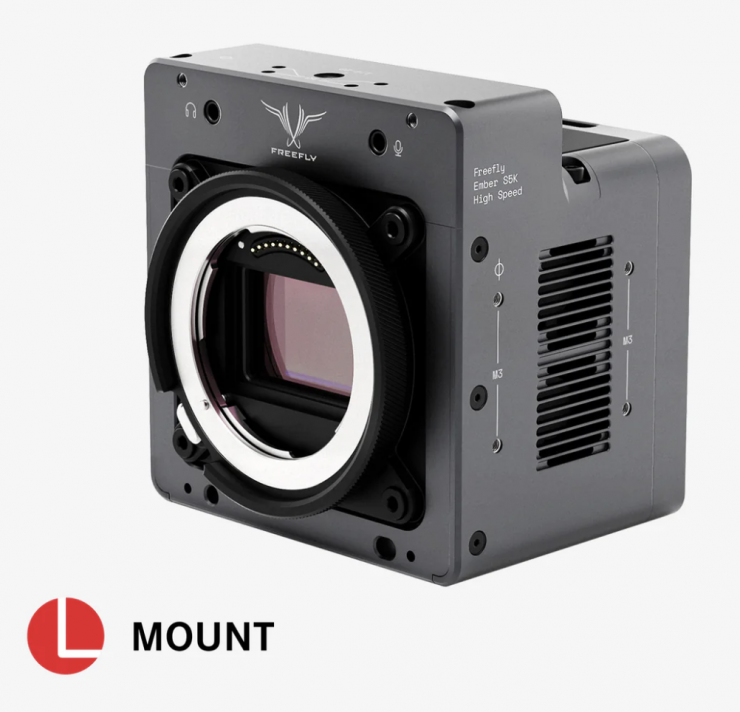
In a significant development for the professional cinematography landscape, Freefly Systems, renowned for its innovative camera stabilization and drone technology, has officially announced the integration of Leica L-Mount support for its Ember S5K high-speed camera. This strategic move, which sees Freefly joining the prestigious L-Mount Alliance, is poised to unlock an expansive library of high-quality lenses for filmmakers and content creators specializing in ultra-slow-motion capture. The Ember S5K with pre-installed L-Mount is now available for pre-order at a price of $19,995 USD for the 4TB version, with shipping anticipated to commence in mid-to-late June 2026. This announcement also coincides with the release of firmware version 3.0, introducing critical performance enhancements including a 10 percent boost in 4K frame rates, swappable media functionality via a new Media Expander, and the highly anticipated pre-record capability.
A Strategic Alliance: Freefly Joins the L-Mount Ecosystem
Freefly Systems’ entry into the L-Mount Alliance marks a pivotal moment, not only for the company but also for the broader professional imaging industry. The L-Mount Alliance, initially formed by Leica Camera AG, Panasonic Corporation, and Sigma Corporation, has grown to include other notable players such as Ernst Leitz Wetzlar and DJI. Its core philosophy revolves around a universal lens mount standard that promises interoperability, optical excellence, and future-proof design across diverse camera systems. The L-Mount, characterized by its large diameter (51.6mm) and short flange distance (20mm), offers significant advantages for lens designers, enabling the creation of fast, compact, and high-performance optics. For camera manufacturers, it simplifies the integration of a robust and versatile lens interface, reducing development costs and accelerating market entry for new camera bodies.
Freefly’s decision to adopt the L-Mount for its Ember S5K is a testament to the mount’s growing prominence and its technical merits. By embracing this open standard, Freefly is providing its users with immediate access to a vast and continuously expanding ecosystem of lenses from Leica, Panasonic, and Sigma, including high-end cine primes, versatile zooms, and specialized optics. This move alleviates the limitations often associated with proprietary mounts or the complexities of adapting various lens systems, streamlining workflows and offering unparalleled creative flexibility for high-speed cinematography.
Unlocking a Vast and Prestigious Lens Library

The addition of L-Mount support fundamentally transforms the lens options available to Ember S5K users. Previously, high-speed cameras, particularly those designed for specialized applications, often required specific lens mounts or relied heavily on adapters, which could sometimes introduce optical compromises or mechanical instabilities. With native L-Mount support, Ember S5K operators can directly attach a wide array of lenses engineered to the highest optical standards.
Leica Camera, the progenitor of the L-Mount, contributes a range of legendary M-mount and SL-mount lenses, known for their exceptional optical quality, robust build, and distinct aesthetic rendering. These include ultra-sharp primes and zooms that deliver stunning resolution and beautiful bokeh, ideal for capturing intricate details in slow motion. Panasonic’s Lumix S series lenses offer a comprehensive selection of professional-grade primes and zooms, featuring advanced autofocus capabilities (though less critical for high-speed manual focus applications) and excellent optical performance suitable for demanding cinematic productions. Sigma’s contribution to the L-Mount ecosystem is particularly significant, with its acclaimed Art, Contemporary, and Sports lines providing a diverse range of high-performance and often more accessible options. This includes incredibly fast prime lenses with wide apertures, essential for maintaining adequate light levels when shooting at thousands of frames per second, and versatile zoom lenses that offer flexibility on set. The ability to use these lenses natively means optimal communication between lens and camera, maximum optical integrity, and a secure, reliable physical connection crucial for precise high-speed work.
The Freefly Ember S5K: A High-Speed Cinematography Powerhouse
The Freefly Ember S5K has carved out a niche for itself in the highly specialized world of high-speed cinematography. Unlike traditional cinema cameras that prioritize resolution and dynamic range at standard frame rates, the Ember S5K is engineered from the ground up to excel at capturing motion at incredibly high speeds, revealing details imperceptible to the human eye. Its compact form factor, robust build, and integrated recording capabilities make it a compelling choice for a variety of demanding applications.
Historically, high-speed cameras were often bulky, complex, and required extensive external infrastructure. Freefly, building on its legacy of miniaturization and integration from its drone and gimbal systems, aimed to democratize high-speed capture with the Ember. The S5K model is particularly noted for its ability to record raw footage directly to internal storage, bypassing the need for external recorders and simplifying the production workflow. This internal raw recording capability is crucial for preserving maximum image quality and providing extensive latitude for color grading and post-production manipulation, which is especially important when stretching a few seconds of action into minutes of slow-motion footage. Its design ethos prioritizes speed, reliability, and ease of use in challenging production environments, from scientific research to high-octane commercial shoots and intricate visual effects sequences. The camera’s ability to maintain high resolution even at extreme frame rates positions it as a versatile tool for both technical analysis and artistic expression.
Firmware 3.0: Enhancing Performance and Workflow Efficiency
Alongside the L-Mount announcement, Freefly has unveiled its latest firmware update, version 3.0, for the Ember S5K, bringing a suite of significant enhancements that directly address user feedback and expand the camera’s operational capabilities. These updates are not merely incremental but represent substantial improvements to both performance and workflow.
The most notable performance upgrade is a 10 percent increase in frame rates when shooting in 4K. While specific baseline frame rates are not detailed in the announcement, a 10% boost can translate into significantly smoother and more detailed slow-motion playback. For example, if the camera previously captured 500 frames per second (fps) at 4K, it could now achieve 550 fps. This extra margin provides filmmakers with greater flexibility in dictating the degree of slow motion, allowing for even more dramatic and nuanced portrayal of rapid events. In fields like sports broadcasting, wildlife documentary, or scientific research, where every millisecond counts, this additional speed can be critical for capturing decisive moments with unprecedented clarity.
Furthermore, firmware 3.0 introduces swappable media functionality via a new Media Expander. This is a game-changer for on-set efficiency. Previously, the Ember S5K relied primarily on its internal fixed storage. While robust, this meant that once the internal storage was full, the camera would be out of commission until data could be offloaded – a process that can be time-consuming with the massive file sizes generated by high-speed raw footage. The Media Expander, by enabling swappable media, drastically reduces downtime. Operators can now quickly exchange full storage modules for empty ones, allowing continuous shooting and significantly accelerating data management workflows on location. This feature is invaluable for productions with tight schedules or those operating in remote areas where immediate data transfer to external systems might not be feasible.
Perhaps one of the most anticipated features in firmware 3.0 is the implementation of pre-record functionality. High-speed cinematography often involves capturing unpredictable events – a shattering object, a sudden movement, an animal’s fleeting action. Without pre-record, operators must constantly roll the camera, generating immense amounts of irrelevant footage and rapidly filling storage. Pre-record solves this by continuously buffering video data for a specified duration (e.g., a few seconds or minutes). When the critical event occurs, the operator triggers the recording, and the camera saves not only the subsequent footage but also the buffered frames before the trigger. This ensures that the decisive moment is never missed, even if the operator’s reaction time isn’t instantaneous. It significantly reduces wasted storage space and improves the hit rate for capturing elusive high-speed phenomena, making the Ember S5K even more practical and efficient for demanding productions.
Pricing, Availability, and the Unconventional 2026 Shipping Timeline
The Leica L-Mount version of the Ember S5K, complete with 4TB of internal storage, is priced at $19,995 USD. This positions it firmly within the professional segment of the market, reflecting its specialized capabilities and premium build quality. While a significant investment, it remains competitive within the high-speed camera category, often offering a more compact and integrated solution compared to some of its larger, more complex rivals.

A notable aspect of the announcement is the shipping timeline: orders placed today are not expected to begin shipping until mid-to-late June 2026. This extended lead time is somewhat unusual for product announcements, suggesting either a meticulous finalization process, significant manufacturing scale-up, or a strategic release schedule aligning with broader market dynamics. For potential buyers, this means a considerable waiting period, requiring careful planning for productions that intend to utilize the L-Mount Ember S5K. However, it also provides ample time for filmmakers to integrate the camera into their future production pipelines, evaluate the growing L-Mount lens ecosystem, and prepare for the unique capabilities this combination will offer. It also gives Freefly time to ensure the product is fully mature and robust upon release, minimizing potential post-launch issues.
Competitive Landscape and Market Implications
Freefly’s move to integrate L-Mount and enhance the Ember S5K with firmware 3.0 has significant implications for the competitive landscape of professional high-speed cinematography. The market is dominated by established players like Vision Research (Phantom cameras) and emerging contenders. Phantom cameras, while offering unparalleled frame rates, often come with a higher price tag and a more industrial workflow. Newer, more compact high-speed cameras like the Chronos series also compete, but the Ember S5K distinguishes itself with its raw internal recording and Freefly’s reputation for user-friendly, integrated systems.
By adopting the L-Mount, Freefly broadens its appeal to a segment of filmmakers who may already own L-Mount lenses through other systems (like Panasonic Lumix S or Leica SL cameras) or who value the optical quality and brand prestige associated with the L-Mount Alliance. This could attract new users to the Ember platform, especially those looking for a versatile camera that integrates seamlessly into an existing L-Mount workflow.
Furthermore, this development solidifies the L-Mount Alliance’s position as a serious contender in the professional cinema space. While it has already gained traction in still photography and hybrid video, Freefly’s endorsement for a dedicated high-speed cinema camera lends considerable weight to the mount’s capabilities and future potential for high-end production. It suggests that the L-Mount is not just for mirrorless cameras but is robust enough for the rigorous demands of professional cinema, including extremely high data rates and precise optical requirements. This could encourage other cinema camera manufacturers to consider L-Mount integration, fostering further growth and innovation within the alliance. The target audience for the Ember S5K with L-Mount is likely to include independent filmmakers specializing in commercials and music videos requiring sophisticated slow-motion effects, documentary crews capturing intricate natural phenomena, and VFX artists needing pristine high-speed plates for compositing. Its relatively compact size compared to some competitors also makes it attractive for specialized applications like drone-based high-speed shots (a natural fit for Freefly’s heritage) or car-mount rigging.
Industry Reactions and Future Outlook

While specific official statements from Freefly Systems’ leadership or representatives from the L-Mount Alliance were not part of the initial brief, one can infer enthusiastic reactions. Freefly’s CEO or product manager would likely highlight the strategic importance of the L-Mount partnership, emphasizing the expanded creative possibilities for their users and the company’s commitment to innovation and workflow efficiency. They might underscore how the Ember S5K, with its new lens capabilities and firmware enhancements, continues to push the boundaries of accessible high-speed cinematography. Similarly, spokespersons from Leica, Panasonic, or Sigma would likely express their pleasure in welcoming Freefly to the L-Mount Alliance, recognizing the Ember S5K as a valuable addition that expands the mount’s presence into a critical segment of the professional imaging market.
The broader filmmaking community, particularly those engaged in high-speed and specialized production, is likely to react positively. Cinematographers and camera operators often prioritize lens choice as a primary factor in their creative process. The L-Mount’s reputation for quality and the growing diversity of its lens offerings will be seen as a significant advantage. The combination of high-end glass with the Ember S5K’s raw high-speed capabilities and improved workflow features (swappable media, pre-record) positions it as a highly desirable tool for demanding productions. The extended shipping timeline, while requiring patience, also builds anticipation and allows for careful financial and production planning.
Looking ahead, Freefly’s integration into the L-Mount Alliance could pave the way for further collaborative efforts. This might include optimized lens-to-camera communication features, enhanced metadata capture, or even joint development of specialized L-Mount lenses tailored for high-speed applications. The move reinforces Freefly’s commitment to providing cutting-edge tools that empower filmmakers to capture the world in extraordinary ways, and it solidifies the L-Mount’s position as a versatile and future-proof standard across an expanding spectrum of professional imaging devices.
The initial report on this significant development was provided by Matthew Allard ACS, a multi-award-winning, ACS accredited freelance Director of Photography with over 35 years of global experience. As the Editor of Newsshooter.com since 2010, Allard’s consistent coverage of professional cinematography news lends considerable credibility and industry insight to this announcement. His background as an acclaimed DP, with 51 ACS Awards including six prestigious Golden Tripods, ensures that news from Newsshooter.com is reported with an informed perspective on the practicalities and implications for working professionals in the field.