Charles & Julia: A Masterclass in Restrained Elegance and Residential Hospitality within New Orleans’ Historic Stutz Building

The opening of Charles & Julia at Hotel Perle marks a significant departure from the traditional aesthetic paradigms that have long dominated the New Orleans hospitality landscape. While many establishments in the Crescent City rely on the saturated colors of Mardi Gras, ornate ironwork, and overt cultural iconography to signal their identity, Anna Nicole Interiors has introduced a sophisticated counter-narrative. Located within the historic 1916 Stutz motorcar dealership at 757 St. Charles Avenue, Charles & Julia functions as both a ground-floor cocktail lounge and a Mediterranean-inspired rooftop bar, prioritizing a "lived-in" European residential feel over the high-gloss artifice of conventional hotel design. By eschewing clichés in favor of layered textures, historical depth, and local craftsmanship, the project offers a nuanced interpretation of Southern luxury that feels both timeless and deeply rooted in its specific urban context.
Historical Context and Architectural Evolution
The site of Charles & Julia is as significant as the design itself. The building originally served as a showroom and service center for the Stutz Motor Company, an American producer of high-end luxury cars known for the iconic "Bearcat" model. Constructed in 1916, the structure is a prime example of early 20th-century industrial architecture, characterized by its robust "fireproof" construction, soaring ceilings, and expansive floor plates designed to accommodate heavy machinery.
In the century following its construction, the building underwent various iterations before its recent transformation into Hotel Perle. The challenge for Anna Nicole Interiors was to reconcile the industrial "bones" of the dealership—specifically the exposed brick and cavernous 3,000-square-foot ground floor—with the intimacy required for a world-class cocktail lounge. Rather than employing structural subdivisions that might obscure the building’s heritage, the design team utilized "residential strategies" to humanize the scale. This involved the strategic placement of vintage rugs, heavy drapery, and custom millwork to create a sequence of "micro-environments" or "moments" within the larger open plan. This approach allows guests to feel a sense of privacy and enclosure without losing the sense of grandeur provided by the original architectural volume.
Materiality and the "Collected" Aesthetic
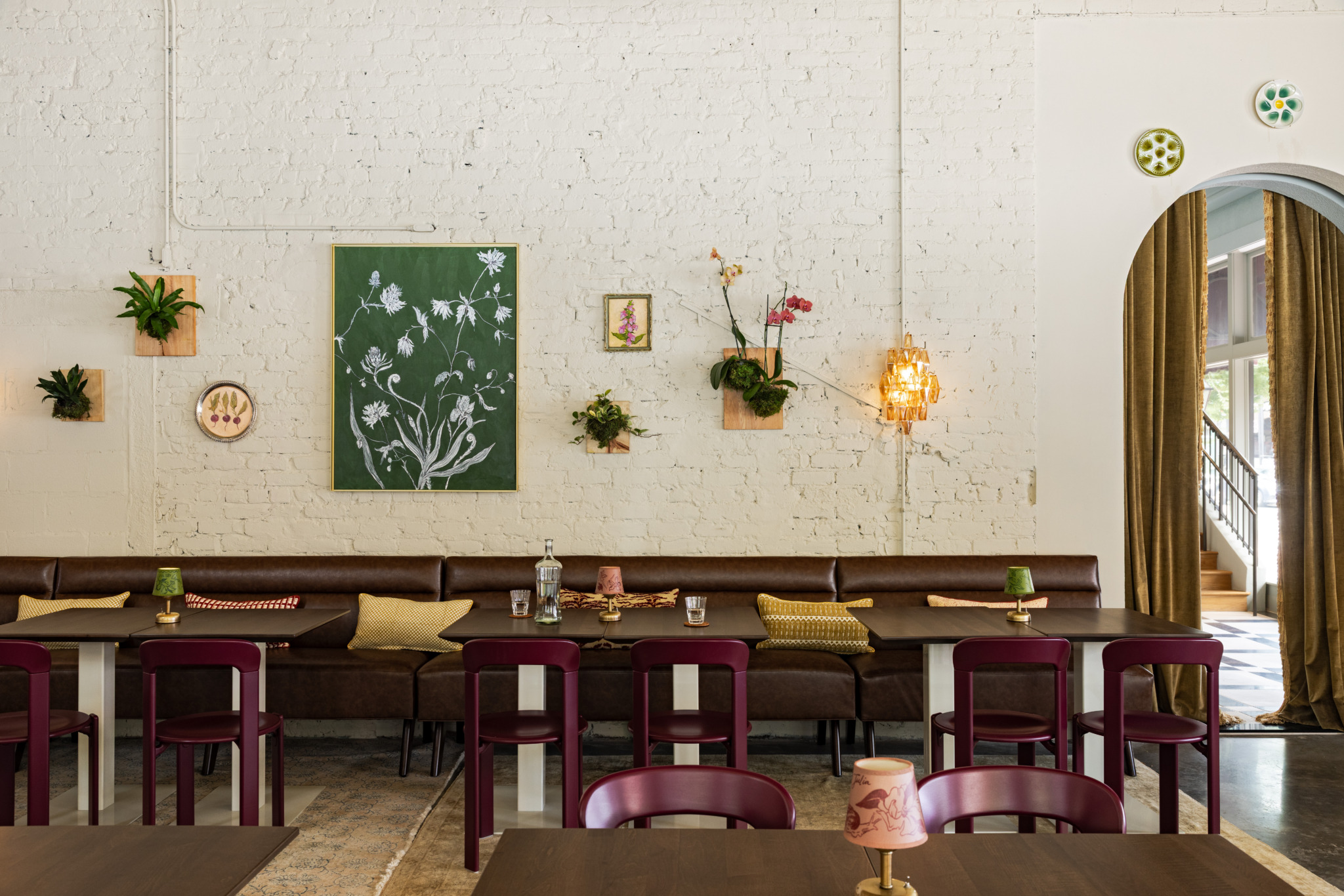
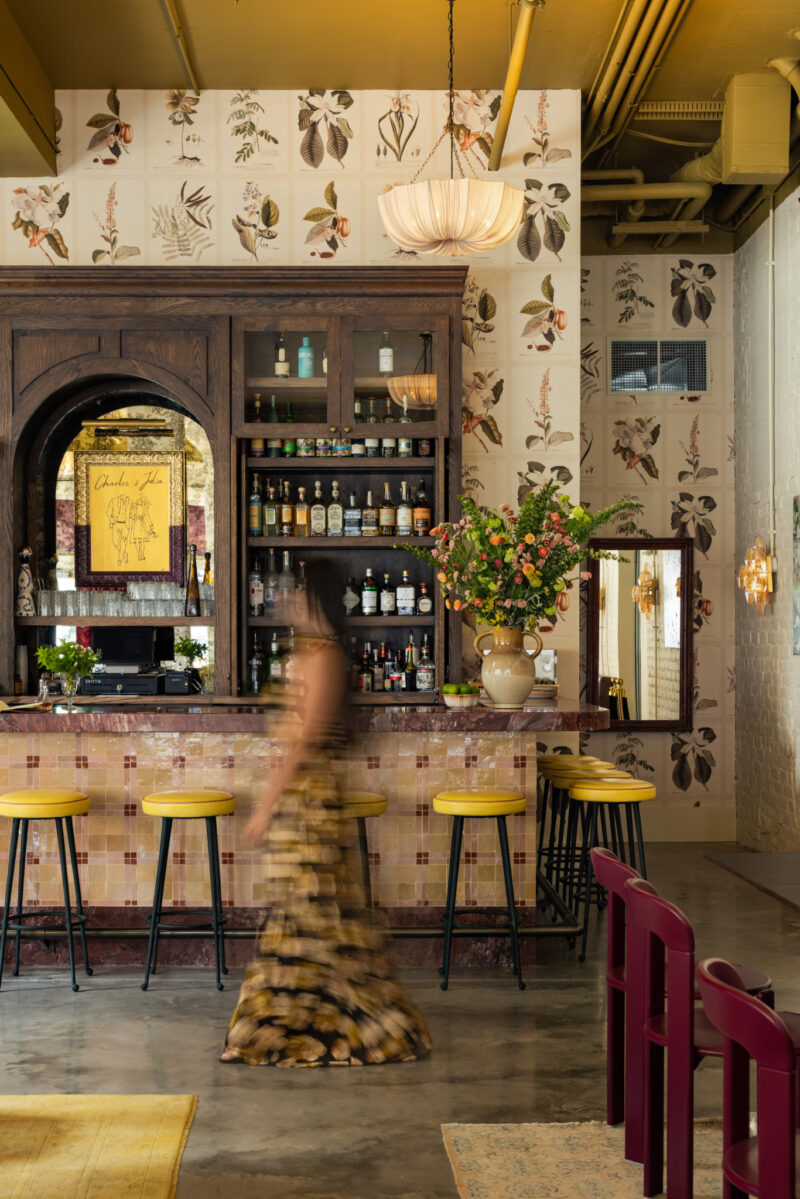
The interior of the ground-floor lounge is defined by a "collected" rather than "decorated" philosophy. This distinction is central to the project’s success; the space feels as though it has evolved over decades rather than being installed over weeks. The material palette is heavy and tactile, designed to absorb sound and create an enveloping atmosphere.
Key design elements include:
- Textiles: Oxblood velvet drapery frames the street-facing windows, providing a dramatic visual weight that contrasts with the natural light of St. Charles Avenue. Layered kilim rugs soften the original flooring, providing both acoustic dampening and a sense of domestic warmth.
- Furniture: The seating is a curated mix of the old and the new. Grape-toned Bruno Rey chairs—a 1971 design known for its screwless wood-to-metal connection—are paired with vintage European furnishings sourced from various periods. This juxtaposition of mid-century modernism with traditional European silhouettes reinforces the "residential" narrative.
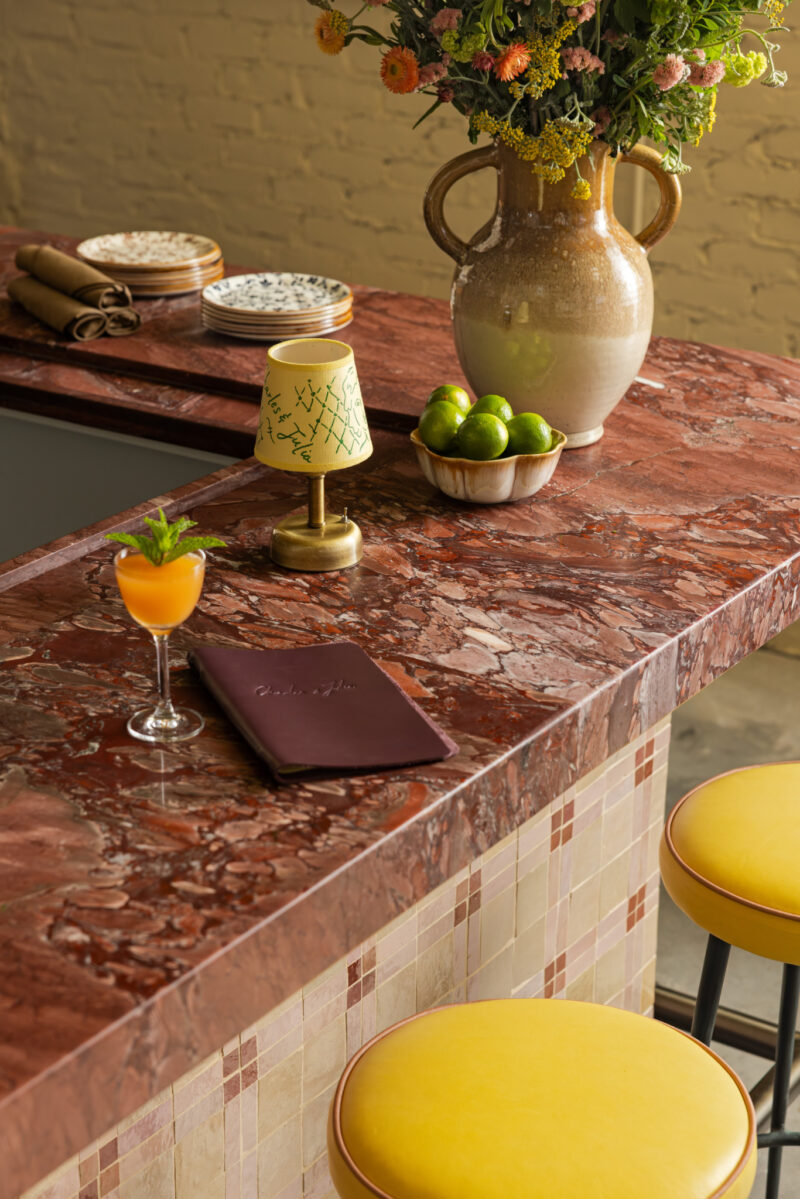
- The Bar: A custom-stained oak back bar serves as the room’s anchor. It is complemented by a front bar fabricated from Calacatta Viola marble. This specific marble, characterized by its deep purple veining and creamy white ground, was fabricated locally, ensuring that even the most "European" materials were handled by New Orleans craftsmen.
- Wall Coverings: Introducing a softer visual texture is a botanical wallpaper inspired by George Ehret’s 1773 Plantae Selectae. Ehret, one of the most influential botanical artists of the 18th century, was known for his scientific accuracy and aesthetic elegance. The use of his work adds a layer of intellectual and historical depth to the space, referencing the long-standing connection between New Orleans and the natural sciences.
The Narrative of Charles and Julia
The design is loosely underpinned by a fictional romance between the eponymous characters, Charles and Julia. According to the design brief, the aesthetic reflects their imagined travels through Europe, with the interiors serving as a repository of their shared history.
This narrative is never presented literally; there are no framed photographs of the couple or written excerpts of their story on the menus. Instead, the story unfolds through "materiality and mood." The ground floor represents the more formal, intimate, and perhaps "northern" part of their journey—heavy velvets, dark woods, and candlelight. This storytelling through design allows for a cohesive aesthetic without the constraints of a rigid theme, providing a sense of mystery that encourages repeat visits.
The Rooftop: A Sicilian Counterpoint
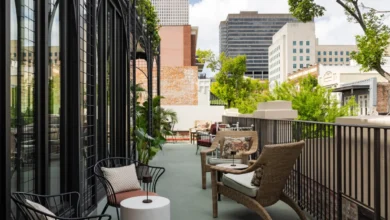
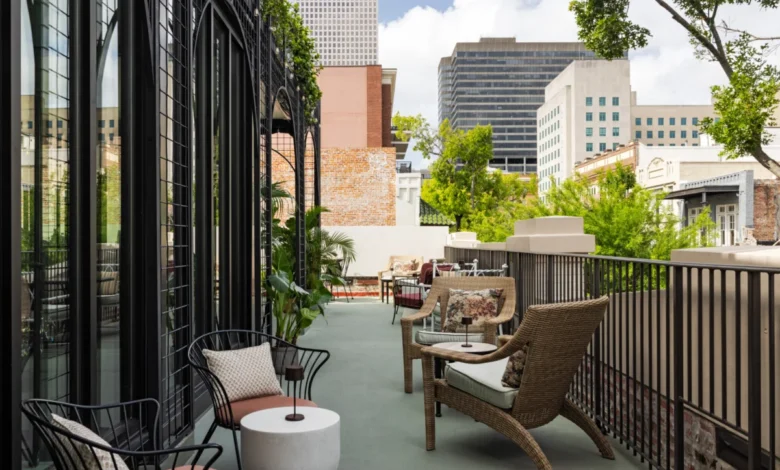
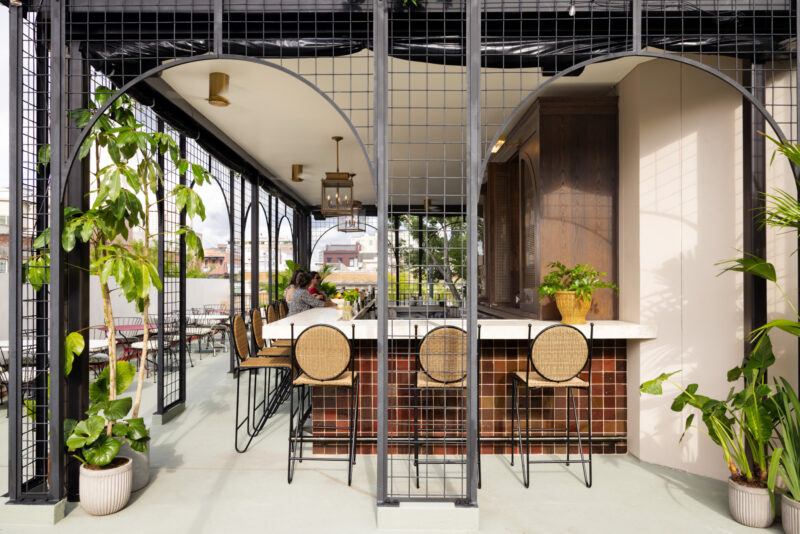
If the ground floor is an intimate European study, the rooftop terrace is its sun-drenched Mediterranean counterpart. Upstairs, the mood shifts from the enveloping and dark to the open and airy. Inspired by the landscapes of Sicily and Southern Europe, the rooftop offers a lighter aesthetic designed to thrive in the humid New Orleans climate.
The rooftop features:
- Sculptural Ironwork: Custom iron furnishings provide a structural elegance that mirrors the city’s historic balconies while maintaining a contemporary edge.
- Natural Textures: Woven materials and lush greenery are used to evoke an elevated garden. The plant selection, curated by Luna Botanicals, focuses on species that can withstand the exposure of a rooftop while providing the "overgrown" charm typical of Southern European courtyards.
- Skyline Integration: The design purposefully directs the eye outward toward the downtown New Orleans skyline, positioning the bar as a premier destination for sunset viewing.
Together, the two levels of Charles & Julia function as a "diptych"—two complementary experiences that allow Hotel Perle to cater to different times of day and varying guest moods.
Local Collaboration and Economic Impact
A critical component of the project is its reliance on the New Orleans creative economy. At a time when many hotel groups utilize centralized procurement and mass-produced décor, Charles & Julia stands out for its commitment to local artisans.
The project features contributions from several notable New Orleans-based creators:
- Rachel Loyacono: Provided hand-painted lampshades that add a bespoke, artisanal touch to the lighting scheme.
- Tracy Mose, Jenn Leverett, and Casey Langteau: Contributed original artworks that populate the walls, ensuring that the "residential" feel is supported by authentic local expression.
- Luna Botanicals: Managed the botanical installations, which are integral to the rooftop’s garden-like atmosphere.
- Local Fabricators: The complex marble work and custom upholstery were executed by local workshops, keeping the project’s capital investment within the city’s economy.
This collaborative approach not only enriches the design but also reinforces the hotel’s status as a "good neighbor" within the local arts community. By providing a platform for local talent, Charles & Julia integrates itself into the cultural fabric of the city more effectively than a purely imported design concept could.
Broader Implications for Hospitality Trends
The design of Charles & Julia reflects a broader shift in the global hospitality industry often referred to as "the residentialization of hotels." Modern travelers, particularly those in the luxury and boutique segments, are increasingly seeking "anti-hotel" experiences. They desire spaces that feel private, curated, and authentic rather than standardized and corporate.
Data from the American Hotel & Lodging Association (AHLA) and various design journals indicate that "sense of place" and "authentic local integration" are now top priorities for high-spending travelers. By moving away from the "Mardi Gras theme" and toward a "European residential" aesthetic that still incorporates local materials and art, Charles & Julia is positioning itself at the forefront of this trend. It acknowledges that New Orleans is a cosmopolitan city with a complex history that extends beyond its most famous festival.
Chronology of Development
The development of Charles & Julia followed a multi-year timeline:
- 2021-2022: Acquisition and initial planning for the conversion of the Stutz building into Hotel Perle.
- Late 2022: Anna Nicole Interiors commissioned to design the food and beverage spaces, with a mandate to create a unique identity distinct from the hotel’s guest rooms.
- 2023: Intensive period of sourcing vintage furnishings from Europe and commissioning local artists.
- Early 2024: Construction and installation phases, including the complex fabrication of the Calacatta Viola marble bar.
- July 2024: Official opening of Charles & Julia to the public.
Conclusion
Charles & Julia represents a sophisticated evolution in New Orleans design. It proves that a space can be deeply "of the city" without being a caricature of it. Through the careful preservation of the 1916 Stutz building’s industrial character and the infusion of a "collected" residential aesthetic, Anna Nicole Interiors has created a venue that feels both world-class and intimately local.
As New Orleans continues to diversify its tourism offerings and attract a global audience, establishments like Charles & Julia will be essential in defining the city’s modern identity—one characterized by restraint, craftsmanship, and a profound respect for history. The project stands as a testament to the power of subtle storytelling and the enduring appeal of a well-designed home, even when that home happens to be a hotel bar.
Charles & Julia is located at Hotel Perle, 757 St. Charles Ave., New Orleans, Louisiana, and is open daily to both hotel guests and the general public.