
Law And Order Svu Actor Talks Duartes Attraction To Benson Following Attack And Working With Mariska Hargitay
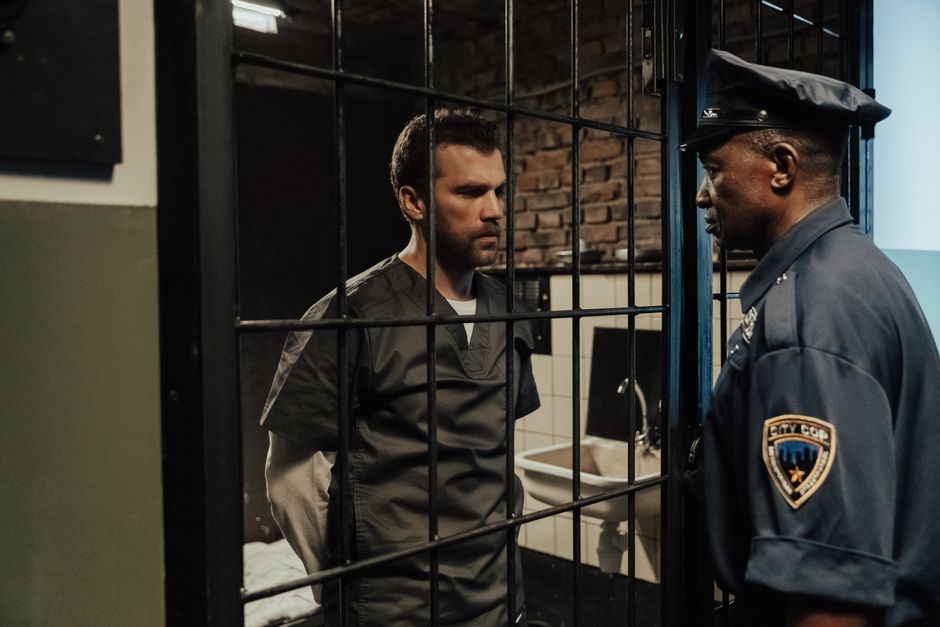
The Siren’s Song: Exploring Elias Koteas’s Portrayal of Ed Tucker’s Complex Attraction to Olivia Benson in Law & Order: SVU
Elias Koteas’s tenure as Captain Ed Tucker on Law & Order: Special Victims Unit provided a fascinating exploration of a seasoned prosecutor wrestling with deeply personal emotions, particularly his undeniable and often turbulent attraction to Detective Olivia Benson. This attraction, simmering beneath the surface of professional decorum and amplified by shared trauma and intense casework, became a compelling subplot that resonated with viewers and added layers of complexity to both characters. Koteas, known for his intense and often brooding performances, brought a nuanced portrayal to Tucker, allowing the audience to witness the internal struggle of a man who, despite his professional standing and personal history, found himself increasingly drawn to Benson’s unwavering moral compass, her resilience, and the inherent danger that often surrounded their shared profession. His interviews and insights into this dynamic, particularly his reflections on working with Mariska Hargitay, further illuminate the power of their on-screen chemistry and the character’s evolving motivations.
The genesis of Tucker’s attraction to Benson is deeply rooted in their shared experiences within the high-stakes environment of SVU. The violent and often horrific nature of the cases they tackled together inevitably forged a unique bond, one built on mutual respect and a shared understanding of the emotional toll their work exacted. Koteas himself has spoken about how the intensity of the SVU world naturally lends itself to complex relationships, and Tucker’s situation is a prime example of this. His initial interactions with Benson were purely professional, marked by a gruff but ultimately supportive demeanor. However, as they navigated particularly harrowing investigations, particularly those that put Benson in direct peril, the professional lines began to blur. The vulnerability that Benson sometimes displayed, coupled with her unwavering dedication, chipped away at Tucker’s professional defenses. This wasn’t a simple infatuation; it was an attraction born from witnessing her strength in the face of unimaginable darkness. The attacks Benson endured, both physical and emotional, served as pivotal moments. During these crises, Tucker’s protective instincts were undeniably activated, revealing a depth of concern that transcended professional obligation. His presence, his unwavering support, and his fierce protectiveness during these vulnerable periods likely solidified his own burgeoning feelings, and perhaps, planted seeds of acknowledgment in Benson’s mind as well.
Elias Koteas’s interviews offer a crucial lens through which to understand Tucker’s internal landscape. He has often alluded to the fact that Tucker, despite his outward stoicism, was a man deeply affected by the cases he prosecuted and the people he worked with. His attraction to Benson, therefore, can be seen not just as a romantic interest, but as a profound recognition of a kindred spirit, someone who mirrored his own commitment to justice and possessed an empathy that he himself struggled to articulate. Koteas emphasized that Tucker was drawn to Benson’s "fierce dedication" and her ability to "remain human in the face of inhumanity." This admiration, when intertwined with the inherent danger and emotional intensity of their work, naturally fostered a sense of closeness and, for Tucker, an undeniable attraction. He recognized in Benson a partner, both professionally and, in a way, emotionally, who understood the weight of their shared burden. This understanding, forged in the crucible of SVU, was a powerful magnet. The "attack" aspect, referring to any instance where Benson was physically or psychologically threatened, acted as a catalyst. These moments of extreme vulnerability and the subsequent need for protection and support would have undoubtedly amplified Tucker’s feelings, forcing him to confront the depth of his concern and, by extension, his attraction. It wasn’t just about solving a case; it became about ensuring her safety, her well-being.
Working alongside Mariska Hargitay, the actress who embodies Olivia Benson with such fierce authenticity, was instrumental in Koteas’s ability to portray Tucker’s complex emotions. Koteas has consistently praised Hargitay’s professionalism, her depth as an actress, and the palpable chemistry they shared on screen. He described their working relationship as "organic" and "effortless," noting how Hargitay’s nuanced performance allowed him to fully inhabit Tucker’s reactions. The unspoken communication, the shared glances, the subtle shifts in body language – all of these elements contributed to the believable depiction of Tucker’s growing attraction. Hargitay’s portrayal of Benson as a woman of immense strength, compassion, and resilience would naturally draw someone like Tucker, a man who had likely seen the worst of humanity. He saw in her a light in the darkness, a beacon of hope in a world often consumed by despair. Koteas’s ability to convey Tucker’s internal conflict – the struggle between his professional duty and his personal feelings – was greatly facilitated by Hargitay’s own compelling performance. Their interactions were not just about dialogue; they were about the subtext, the unspoken tension, the simmering emotions that Koteas expertly conveyed through Tucker’s often guarded demeanor.
The professional ramifications of Tucker’s attraction also added a layer of dramatic tension. As a prosecutor and later as a Captain, Tucker had a responsibility to maintain objectivity. His attraction to Benson created a conflict of interest, or at least the potential for one, that he had to navigate carefully. This internal struggle, the constant balancing act between his professional ethics and his personal desires, was a significant aspect of his character arc. Koteas’s portrayal highlighted this struggle through subtle cues – a lingering look, a brief hesitation, a tone of voice that betrayed a deeper emotion. The audience could feel the weight of his internal conflict, the awareness that pursuing these feelings could compromise his career and potentially Benson’s as well. This added a layer of realism and dramatic stakes to the relationship, making it more than just a simple romantic subplot. It was a testament to the complexities of human relationships, especially within demanding and high-pressure environments.
Furthermore, the nature of the attacks Benson faced often placed her in a position of extreme vulnerability, which, while professionally inappropriate, undeniably intensified Tucker’s protective instincts and, consequently, his feelings. When Benson was assaulted, captured, or otherwise endangered, Tucker’s reaction was often one of raw, unadulterated concern. This was not the detached concern of a colleague; it was the visceral worry of someone who cared deeply. Koteas’s performance conveyed this depth of emotion through his intense gaze, his clipped but urgent dialogue, and his unwavering presence by Benson’s side during these critical moments. The aftermath of such attacks often involved intense debriefings, investigations, and the emotional processing of trauma. During these periods, Tucker and Benson were forced into close proximity, their shared experience of the near-tragedy creating an even stronger bond. Tucker, witnessing Benson’s resilience and her determination to continue her work despite the trauma, would have found his admiration and attraction only deepening. He saw her not just as a victim, but as a survivor, a fighter, and that strength, juxtaposed with the vulnerability she had experienced, was a potent combination.
The narrative arc of Tucker’s attraction to Benson, as portrayed by Koteas, allowed for significant exploration of the complexities of desire and professional boundaries. While the on-screen romance never fully materialized into a stable, committed relationship, the lingering tension and unspoken feelings remained a significant part of their dynamic. Koteas’s interviews often touched upon the ambiguity of their relationship, suggesting that Tucker’s attraction was a constant, underlying current rather than a singular, definitive event. He spoke of Tucker’s quiet admiration for Benson’s "unflappable spirit" and her "moral clarity." This admiration, honed over years of shared harrowing experiences, naturally evolved into something more profound. The "attacks" on Benson served as crucial plot points that amplified this attraction, forcing Tucker to confront the depth of his feelings in the face of her extreme vulnerability and subsequent resilience. The process of working with Mariska Hargitay, Koteas has stated, was key to making this dynamic believable. He recognized Hargitay’s innate ability to convey a wide range of emotions, from fierce determination to profound vulnerability, which allowed him to ground Tucker’s internal struggle in tangible on-screen reactions. Their chemistry, built on years of shared fictional history and mutual respect as actors, provided the fertile ground for this complex attraction to blossom and remain a compelling element of the SVU narrative, contributing significantly to the enduring appeal of both characters and the show itself. The nuanced portrayal of Tucker’s conflicted emotions, the careful navigation of professional ethics, and the undeniable chemistry with his co-star all coalesced to create a memorable and impactful character arc within the Law & Order: SVU universe.
