One Piece: Into the Grand Line Sets Sail for Grand Visual Effects Odyssey in Season 2

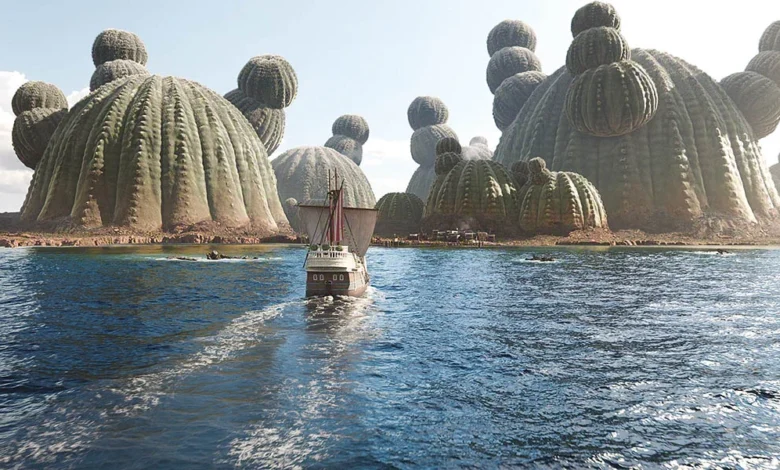
The highly anticipated second season of Netflix’s live-action phenomenon, One Piece: Into the Grand Line, is poised to captivate global audiences starting April 14, 2026. This eight-episode continuation sees Monkey D. Luffy and his Straw Hat Pirates embark on an even grander adventure, navigating the treacherous currents of the Grand Line in pursuit of legendary treasure and the coveted title of Pirate King. The journey will take them through iconic locations such as Loguetown, Reverse Mountain, Whisky Peak, Little Garden, and Drum Island, introducing a host of new characters, including an entirely computer-generated (CG) crew member, colossal creatures, and formidable antagonists wielding fantastical powers. The sheer scale and complexity of this new voyage underscore an unprecedented reliance on visual effects, marking a significant leap from its already VFX-heavy predecessor.
The Uncharted Waters of Adaptation: Fan Expectations and Production Scale
The initial season of One Piece shattered expectations, demonstrating that Eiichiro Oda’s beloved manga, with its whimsical yet epic narrative and distinctive character designs, could be successfully translated into live-action. Its critical and commercial success paved the way for a rapid renewal, signaling Netflix’s confidence in its strategy of adapting globally recognized intellectual property. However, Season 2 presented an even more daunting challenge: translating the increasingly bizarre and fantastical elements of the source material into a believable, immersive live-action experience without alienating its dedicated fanbase.
Co-Showrunner Joe Tracz articulates this core philosophy, stating, "This show wouldn’t be possible without visual effects, and we have an incredible visual effects team. There were definitely superpowers to figure out for the first season. Luffy is made of rubber, so him stretching was the big challenge. But each season gets bigger and bigger." This exponential increase in scope is evident in the staggering rise of visual effects shots: Season 1 featured 2,300 VFX shots, a number that has swelled to an astounding 3,800 for Season 2. This massive undertaking highlights Netflix’s significant investment in the series and its commitment to delivering an authentic yet visually spectacular adaptation.
The narrative arc of Into the Grand Line demands the introduction of characters and environments that push the boundaries of live-action filmmaking. From the gravity-defying Reverse Mountain to islands teeming with prehistoric creatures and gargantuan beings, the production team faced the delicate balance of faithfulness to the source material and practical execution. Tracz openly acknowledges the internal debates: "In the writers’ room, we constantly have questions of, ‘Can we do dinosaurs and giants?’ The answer was, ‘It’s One Piece. You have to do dinosaurs and giants. If you don’t do dinosaurs and giants, Little Garden, the island where they discover those things, just isn’t the same Little Garden.’" This unwavering commitment to the inherent "insanity" of One Piece guided every creative and technical decision, ensuring that realism did not compromise the spirit of Oda’s world.
Bringing the Impossible to Life: Character-Driven Visual Effects
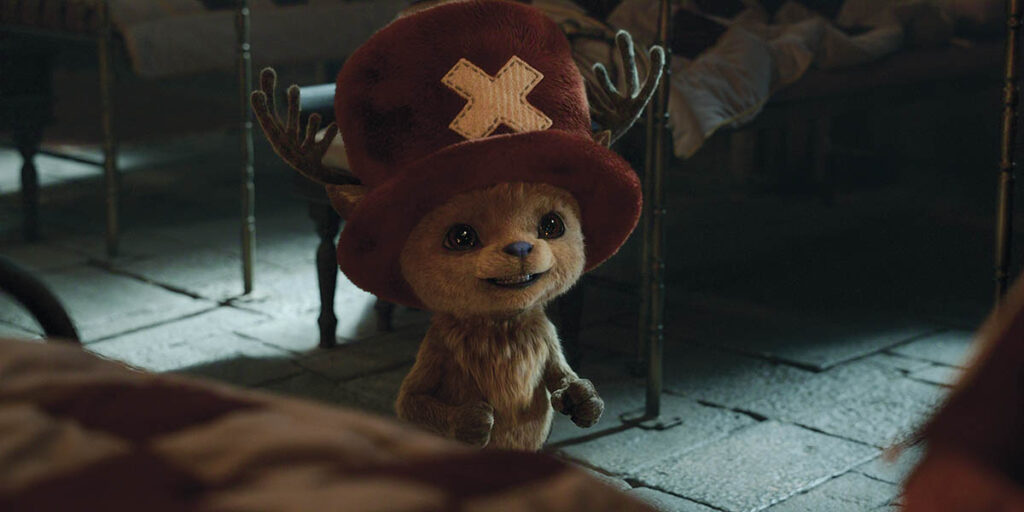
One of the most significant visual effects challenges for Season 2 was the introduction of Tony Tony Chopper, the adorable reindeer-human doctor who joins the Straw Hat crew. Chopper is an entirely CG character, a first for a principal cast member in the series. The production team ingeniously drew inspiration from successful precedents in Hollywood, particularly the methodology employed for characters like Rocket Raccoon and Groot in Marvel’s Guardians of the Galaxy.
"We knew that one of our big challenges was we were introducing a new crew member to the Straw Hats, and he is a little reindeer boy known as Tony Tony Chopper, who is an entirely visual effects character," Tracz explains. The process involved a multi-faceted approach to performance capture and voice acting. On set, a local actress, N’kone Mametja, donned a body suit, providing a physical reference point for the live-action actors to interact with. This ensured authentic eye lines, spatial awareness, and emotional cues, allowing for a more natural performance from the human cast. In post-production, Mikaela Hoover, who also lent her talents to the Guardians movies, provided Chopper’s distinct voice and facial expressions, breathing life into the digital character. This meticulous attention to detail underscores the commitment to making Chopper feel like a fully integrated and emotionally resonant member of the crew, rather than a mere digital insert.
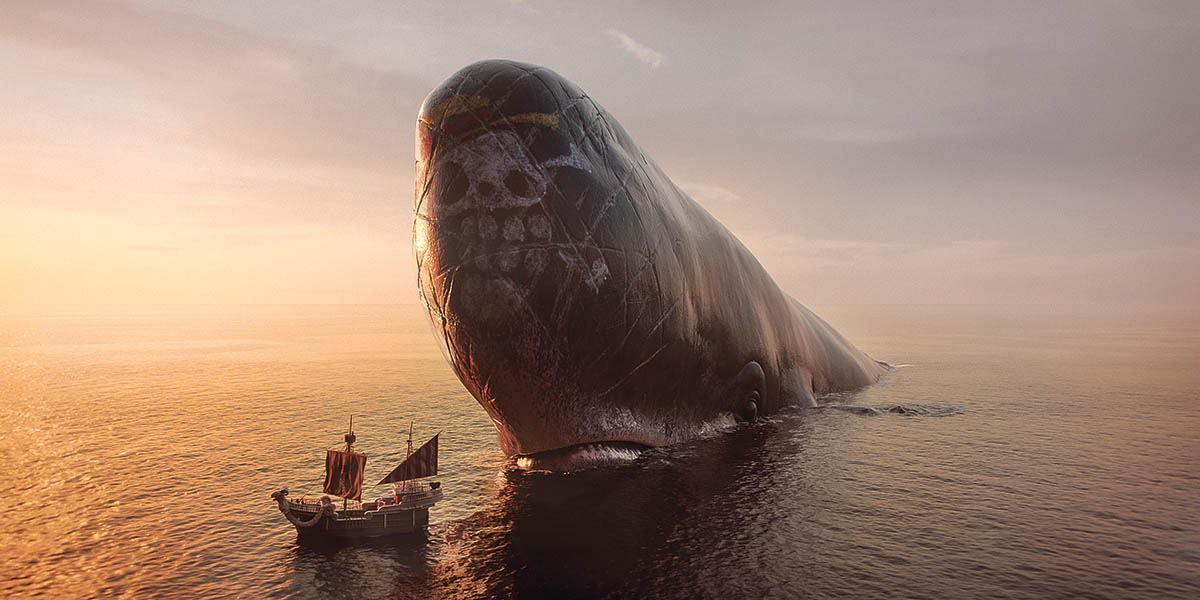
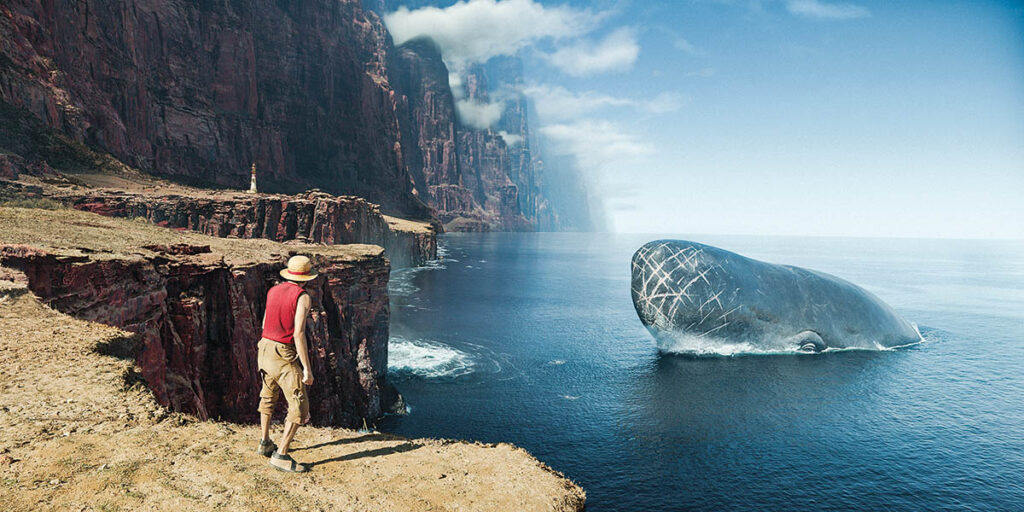
The journey into the Grand Line also introduces other monumental CG creations, most notably Laboon, the colossal sperm whale. Framing an entirely CG creature of such immense scale, especially in dynamic interaction with human-sized characters, presented a unique set of difficulties. Production Designer Max Gottlieb elaborates on the intricate planning required: "For instance, with Laboon we built the lighthouse up to the edge, and we had to make a mark where there was this huge drop and cliff, and then there was the sea and Laboon. Beforehand, we have to proportion the whole thing into a series of drawings that are exactly to scale and then design where the eye of Laboon would be. Luffy is standing on what would be the clifftop, and we have to pinpoint where his eye would be and where he’s looking at different parts of the action." This precise pre-visualization and mathematical planning were essential to seamlessly integrate the digital leviathan into the live-action footage, ensuring convincing interaction and emotional impact despite the vast scale difference.
The Blend of Practical and Digital: Giants, Landscapes, and Devil Fruit Powers
While the series heavily leans on visual effects, the production team demonstrated a pragmatic approach, opting for practical solutions where they could enhance believability or manage costs effectively. A prime example is the portrayal of the giants Dory and Brogy on Little Garden. Initial considerations for fully CG giants were weighed against the sheer volume of shots required.
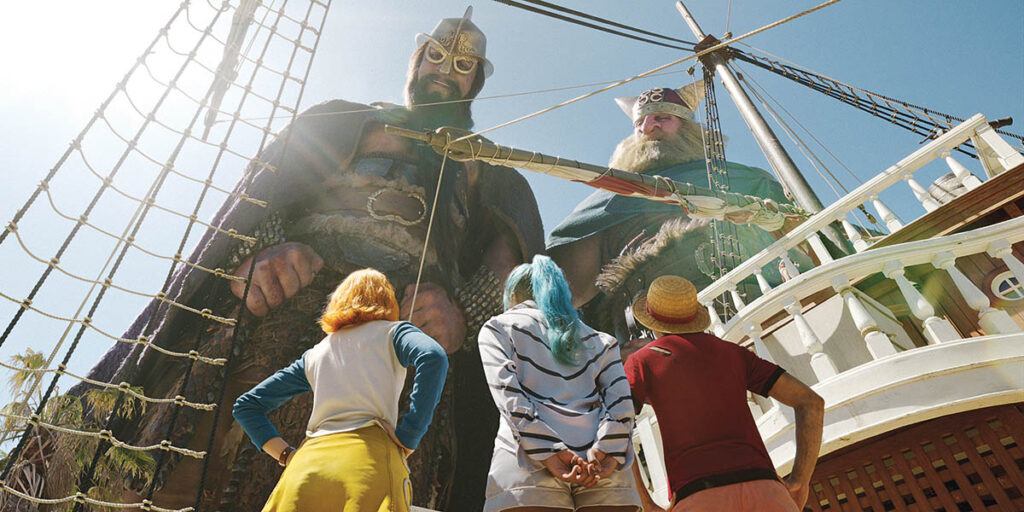
Production Designer Tom Hannam recounts the decision-making process: "Little Garden is an island populated by two giants that were 60-to-70-feet tall… That had a lot of Straw Hats, human-sized crew, dealing with these two enormous giants. It took a lot of collaboration with visual effects right from the beginning." Ultimately, the team opted for a hybrid approach. Visual Effects Supervisor Victor Scalise explains, "We ended up getting two actors, and we worked with Tom Hannam to build big and small sets. Christoph Schrewe [director] came in, and we blocked everything out. We had little characters that were the size they were, so on the giant-size set, we could have Straw Hats, stand-ins that were the real size. We did a lot of math and planning to where it all snapped together beautifully in post." This ingenious blend of scaled practical sets and live actors, with digital enhancements, allowed for more organic interaction and a greater sense of presence for the colossal characters, while optimizing the VFX budget.
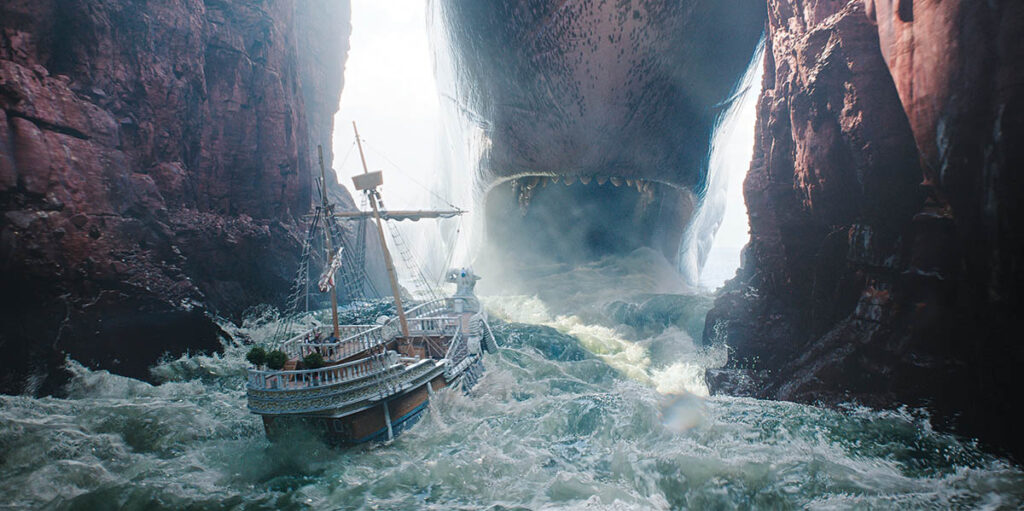
Beyond creatures and characters, the environments themselves demanded extraordinary technical prowess. Reverse Mountain, where a river defies gravity by flowing upwards, was a monumental challenge for fluid simulations. Scalise notes, "The biggest problem we had was fighting the scale of the water [for Reverse Mountain] because a lot of the fluid simulators are meant to build oceans. You’re using water simulations that are defying physics and also need to be moving upward, colliding with the landscape, as well as being like white water rafting." To tackle this, the sequence was strategically divided among specialized VFX vendors, with Rising Sun Pictures handling the initial approach and ILP taking over as the Going Merry ascended the peak, leveraging each studio’s unique strengths in water dynamics.
The fantastical powers derived from Devil Fruits also received a significant visual upgrade. Luffy’s rubber abilities, a foundational element of his character, are further refined. The antagonists of Season 2 also bring unique visual challenges. Mr. 3, with his ability to manipulate wax, required extensive practical effects development. Special Effects Supervisor Mickey Kirsten reveals the unexpected journey: "The wax was insane. It was such a journey trying to find a product that we could have on the artist, and get it to do what we wanted it to do. We literally went from food stuffs like marzipan to baking products. We finally settled on a medical plastic that you can mold and it breaks really cool and nicely." Meanwhile, the logia-type powers of Captain Smoker, who can transform into smoke, necessitated complex digital effects. Scalise details the enhancements: "The punches are true to the manga, and with the tendrils, we wanted to give them more shape, so a tornadoish swirling was added. We also had a lot of fun developing the Gum Gum Gatling effects as Luffy is punching Smoker. We went through a lot of cool simulations to answer the questions: How do things go through Smoker? How does it react? How does it interact?" These elaborate effects sequences promise intense and visually dynamic battles true to the spirit of the manga.
Behind the Scenes: A Symphony of Collaboration
The creation of One Piece: Into the Grand Line Season 2 was a testament to meticulous planning and seamless collaboration across multiple departments and continents. The production, primarily based in Cape Town, South Africa, required an intricate dance between practical set builds, special effects, and a global network of visual effects studios.
The "jigsaw puzzle" analogy resonated throughout the production design process. Max Gottlieb emphasizes the constant communication: "For each setup we would have continuous meetings… we have to proportion the whole thing into a series of drawings that are exactly to scale." This early and continuous collaboration with Visual Effects Supervisor Victor Scalise and Visual Effects Producer Scott Ramsey was crucial, ensuring that practical sets were designed with digital extensions in mind.
Cinematographer Michael Swan, responsible for the final three episodes, underscored his role in facilitating the VFX team. "One of the most important parts of a cinematographer’s job is to try and facilitate the best outcome for all the imagery, whether live-action or visual effects," he states. Pre-visualization (previs) and storyboarding were indispensable tools, mapping out complex sequences long before cameras rolled. Fight scenes were rigorously rehearsed and choreographed, ensuring that the live-action elements would integrate flawlessly with the digital enhancements. While practical locations were minimal, elaborate sets and extensive use of bluescreen/greenscreen were the norm, maintaining the established visual aesthetic from Season 1.
The editing team played a pivotal role in shaping the narrative amidst a sea of greenscreen footage and placeholders for CG characters. Editors Tessa Verfuss, Eric Litman, and Tim Kinzy faced unique challenges. Verfuss highlights the proactive approach to VFX integration: "While we are still offline, we have this absolutely fantastic team of visual effects editors and also our own previs artists so we can do internal turnovers constantly and get temp visual effects moving." This allowed for iterative feedback and ensured that even early cuts presented to Netflix had a strong visual foundation.
Litman describes the immense "imagination" required: "So much is on bluescreen or greenscreen. You have a character that is not present because it’s CGI. And from an editor’s perspective, it requires, at least from me, so much imagination. As an editor you are imagining the timing and pacing." The need to constantly infer cause and effect, especially when a character like Chopper is not physically present, demanded deep understanding of storyboards and even reference to the original manga. Kinzy further elaborated on the pacing complexities introduced by expensive CG shots, particularly for Chopper’s flashback scenes. "You can’t just cut away to Chopper whenever you’re stuck on an editor because it’s going to cost a lot of money, so sometimes the pacing had to play out," he noted, highlighting the strategic choices made in storytelling economy.
The Special Effects team, led by Mickey Kirsten, tackled extraordinary practical challenges. The gimbal rig for the Going Merry, simulating its ascent up Reverse Mountain, pushed engineering limits. "We had the Going Merry at 20-odd degrees going up Reverse Mountain," Kirsten recalls. "Everything needed to be elevated… People literally had to use ropes to pull themselves up and reset everything that was falling down during the take." The interior of Laboon, the whale, was another colossal practical build, requiring months of preparation to simulate stomach acid, bubbling pools, smoke, and constant moisture across a massive 40×25 meter set. "We had kilometers of plumbed air underneath Laboon for the bubbles, steam and smoke, and also plumbed water underneath it, causing little eruptions," Kirsten describes, painting a vivid picture of the intricate physical environment.
A Global Network of Visual Effects Expertise
The sheer volume and complexity of the 3,800 visual effects shots for Season 2 necessitated a collaborative effort from a consortium of leading VFX studios worldwide. Framestore, Rising Sun Pictures, ILP, Folks VFX, Barnstorm VFX, Ingenuity VFX, Mr. Wolf, and Refuge VFX all contributed their specialized expertise. This global distribution of work, orchestrated by Victor Scalise and Scott Ramsey, allowed the production to leverage the unique strengths of each vendor. For instance, the Reverse Mountain sequence was deliberately broken down, assigning the water dynamics to studios known for their excellence in such simulations. This strategic allocation ensured that each challenging sequence received the highest level of technical and artistic execution.
Broader Implications and the Future of Live-Action Anime
One Piece: Into the Grand Line Season 2 stands as a testament to the evolving capabilities of live-action adaptations of beloved anime and manga. Its ambitious scale, coupled with a deep respect for the source material’s unique blend of fantasy and eccentricity, sets a new benchmark for the genre. The success of such a complex production reinforces Netflix’s commitment to high-budget, genre-bending content and its strategy of leveraging globally popular intellectual properties.
The significant increase in VFX shots and the intricate methodologies employed for characters like Chopper demonstrate the growing demand for sophisticated digital artistry in television production. This trend not only provides immense opportunities for the global visual effects industry but also pushes the boundaries of what is technically achievable in episodic storytelling. The meticulous blend of practical and digital effects showcases a mature approach to filmmaking, prioritizing creative solutions that best serve the narrative and honor fan expectations.
As the Straw Hat Pirates continue their journey "into the Grand Line," the series promises not only an exhilarating adventure but also a masterclass in modern visual storytelling. The collective effort of showrunners, designers, cinematographers, editors, and a vast network of VFX and special effects artists has culminated in a season that is bigger, bolder, and more visually audacious than ever before. With Joe Tracz’s observation that "Everything gets bigger, and I’m sure Season 3 will be no different," fans can eagerly anticipate that the visual spectacle of One Piece will only continue to accelerate its "insanity" on screen.