Can Meta Truly Dominate the AI Landscape, or is Mark Zuckerberg’s Vision Another Costly Gamble?

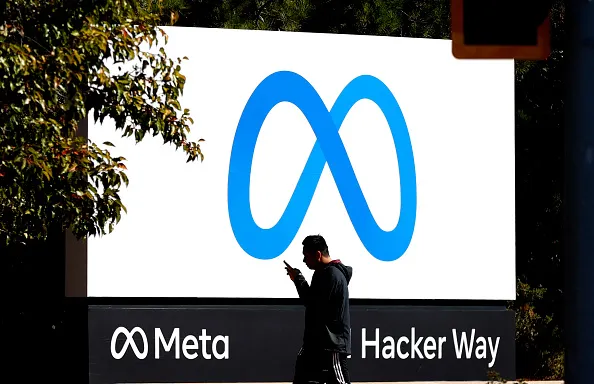
Meta Platforms, Inc., under the leadership of CEO Mark Zuckerberg, has embarked on an ambitious and costly endeavor to establish itself as a leader in the burgeoning field of artificial intelligence. This aggressive pivot, marked by substantial investments in infrastructure, talent, and research, comes on the heels of the company’s multi-billion-dollar bet on the metaverse, which saw a significant scaling back of enthusiasm and expenditure as AI captured the global spotlight. The central question remains: can Meta, with its mixed track record of innovation and reliance on strategic acquisitions, genuinely win the AI race, or is this latest pursuit another high-stakes "pipe dream" fueled by Zuckerberg’s perceived genius and a desire to dominate evolving markets?
The Shifting Sands of Meta’s Strategic Vision
Meta’s corporate history is a testament to its ability to adapt, acquire, and, at times, replicate to maintain market dominance. The journey from Facebook’s inception to its current AI-centric focus reveals a pattern of both shrewd business acumen and expensive missteps.
Early Triumphs and Strategic Acquisitions (2004-2012):
Facebook’s initial rise was undeniably meteoric, transforming from a university social network into a global phenomenon. While the original idea for Facebook itself has been a subject of historical debate, Zuckerberg’s leadership undeniably parlayed the platform into a multi-trillion-dollar business. A crucial element of this success lay in Meta’s (then Facebook’s) willingness to make bold, strategic acquisitions that solidified its market position. The most notable examples include:
- Instagram (2012): Acquired for approximately $1 billion, Instagram was a rapidly growing photo-sharing app. This acquisition eliminated a burgeoning competitor and integrated a popular visual platform into the Facebook ecosystem, proving immensely profitable.
- WhatsApp (2014): Purchased for a staggering $19 billion, WhatsApp was a leading mobile messaging service. This move secured Facebook’s dominance in the messaging space, granting it access to billions of users globally and insulating it from potential disruption.
These acquisitions were instrumental in Facebook’s expansion, demonstrating a powerful strategy of growth through external integration rather than purely internal invention.
The Era of Replication and Competitive Responses (2013-2020):
Not all competitive threats could be acquired, leading Meta to adopt a strategy of replication. This period is marked by attempts to clone successful features or entire applications from rivals, often with mixed results:
- Snapchat (2013-present): In 2013, Facebook reportedly offered $3 billion to acquire Snapchat, an offer rejected by its CEO, Evan Spiegel. This rebuff prompted Zuckerberg to invest heavily in developing Snapchat-like features and standalone apps.
- Slingshot (2014): Meta launched a direct competitor to Snapchat, allowing users to send ephemeral photos and videos. It ultimately failed to gain significant traction and was shut down.
- Stories (2016): While Slingshot failed, Meta successfully integrated the "Stories" format, pioneered by Snapchat, across Instagram, Facebook, and WhatsApp. This move significantly blunted Snapchat’s growth, though it required substantial investment in development and promotion. Despite its widespread adoption, it didn’t "overpower" Snapchat as a competitor in its niche.
- Houseparty and Clubhouse Clones (Late 2010s – Early 2020s): Meta also attempted to replicate other trending social apps. "Bonfire" was its answer to the group live-streaming app Houseparty, and "Hotline" was designed to compete with the audio-chat phenomenon Clubhouse. Both projects failed to capture a significant audience and were eventually shuttered.
- TikTok and Reels (2020): Recognizing the explosive growth of short-form video platform TikTok, Meta launched "Reels" across Instagram and Facebook. Reels has since become a primary driver of engagement growth on Meta’s core platforms, but it is a clear example of successful replication rather than groundbreaking internal innovation.
Original Innovations and Costly Failures (2017-2022):
Alongside its acquisition and replication strategies, Meta has also invested significantly in internal "moonshot" projects. However, many of these ambitious ventures, intended to define the next generation of technology, have ended in costly failures:
- Portal (2018): A video connection device designed for smart homes, Portal aimed to capitalize on the growing smart device market. Despite initial marketing pushes, it struggled to find a significant audience and was eventually discontinued in 2022.
- Connectivity Drones (2014-2018): Meta pursued a project to connect remote regions to the internet using solar-powered drones (Project Aquila). This highly ambitious and expensive initiative was abandoned in 2018 due to technical challenges and the realization that other approaches, like satellites, were more viable.
- Diem (formerly Libra) Cryptocurrency (2019-2022): Meta’s ambitious cryptocurrency project aimed to create a stablecoin that could facilitate global payments. Facing intense regulatory scrutiny and political opposition worldwide, the project continually scaled back its ambitions and was ultimately sold off in 2022.
- Instant Articles (2015-2023): Designed to provide publishers with a faster, mobile-optimized format for their content directly within Facebook, Instant Articles promised a better user experience and monetization opportunities. However, many publishers grew disillusioned with the revenue split and control Facebook exerted, leading to its eventual deprecation in 2023.
These failures, though expensive, were largely absorbed by Meta’s incredibly robust and profitable core advertising business, which consistently generated massive revenues, allowing the company to experiment on a grand scale.
The Metaverse Pivot and Subsequent AI Shift (2021-Present):
In 2021, Mark Zuckerberg famously rebranded Facebook to Meta, signaling an "all-in" commitment to building the metaverse – a persistent, interconnected virtual world. This vision involved massive investments in Reality Labs, Meta’s VR/AR division, costing tens of billions of dollars annually. Zuckerberg positioned this as the next generation of digital connectivity, investing heavily in VR headsets (Oculus, later Meta Quest) and virtual social platforms like Horizon Worlds.
However, the enthusiasm for the metaverse proved to be relatively short-lived among the broader public, and the financial returns were slow. Then, in late 2022, OpenAI released ChatGPT, electrifying the tech world and demonstrating the transformative potential of generative AI. The sudden surge in AI’s prominence led to an abrupt and dramatic shift in Meta’s strategic focus. Zuckerberg quickly recalibrated, declaring AI the "actual tech development of a generation," effectively relegating the metaverse to a longer-term, more niche pursuit within the broader AI-powered future. Investments in the metaverse were curtailed, and resources were rapidly reallocated towards AI.
Meta’s Ambitious AI Playbook
Following this strategic pivot, Meta has embarked on an aggressive campaign to position itself at the forefront of AI development. This playbook involves immense capital outlay, a focus on foundational models, and integration across its vast user base.
Investment Scale and Infrastructure:
Meta has committed substantial resources to building the necessary infrastructure for its AI ambitions. This includes:
- Data Centers and GPUs: The company is investing tens of billions of dollars annually into data center projects and the acquisition of high-end GPUs, particularly Nvidia’s H100s, which are critical for training large language models. Zuckerberg has stated Meta’s goal to acquire 350,000 H100 GPUs by the end of 2024 and approximately 600,000 by the end of 2025. This represents a projected investment of hundreds of billions of dollars over the coming years for AI infrastructure.
- Talent Acquisition: Meta has aggressively hired top AI researchers and engineers, attracting talent with competitive compensation packages and the promise of working on cutting-edge projects at an unparalleled scale.
- Systematic Updates: Significant resources are being poured into updating existing systems and developing new ones to support AI capabilities across all Meta products.
Key AI Initiatives:
Meta’s AI strategy is multifaceted, aiming to leverage its scale and open-source philosophy:
- Llama Models: Unlike some competitors who keep their foundational models proprietary, Meta has adopted an open-source approach with its Llama series of large language models (LLMs). This strategy aims to foster a broad developer ecosystem, accelerate innovation, and establish Llama as a de facto industry standard, potentially giving Meta a strategic advantage through widespread adoption.
- Meta AI Assistant: Integrated across WhatsApp, Instagram, Messenger, and Facebook, Meta AI is a personal assistant designed to answer questions, generate images, and assist with various tasks directly within Meta’s platforms.
- AI-Powered Ray-Ban Meta Smart Glasses: Developed in collaboration with EssilorLuxottica, these smart glasses incorporate advanced AI capabilities, including multimodal AI that allows users to ask questions about what they are seeing and hear responses. This project represents a tangible step towards Meta’s vision of ambient computing and a more seamless human-AI interaction. While the eyewear company plays a key role in design, the AI functionality is Meta’s core contribution.
- AI for Content Moderation and Advertising: Beyond generative AI, Meta continues to invest heavily in AI for improving its core business, including enhanced content moderation, more sophisticated advertising targeting, and personalized user experiences.
Zuckerberg’s Vision for AI:
Zuckerberg’s narrative for Meta’s AI push emphasizes a democratic and integrated future. He envisions AI not just as a tool but as an omnipresent layer across all digital interactions, making Meta’s platforms more intelligent, personalized, and engaging. His focus is on building "general intelligence" that can power a wide range of applications, from creative tools to conversational agents, ultimately enhancing user experience and, implicitly, Meta’s dominant position in the digital sphere.
The Profitability Paradox and Market Realities
Despite the immense investment and ambitious vision, the path to profitability for Meta’s AI endeavors remains fraught with challenges, raising questions about whether this bet will yield the expected returns.
High Costs, Unclear Returns:
The sheer scale of Meta’s AI investment is unprecedented for the company in such a short timeframe. While Meta’s core ad business is incredibly strong, generating hundreds of billions in revenue, AI projects are notoriously expensive to develop and run, particularly at the foundational model level. Training and maintaining LLMs require massive computational power, which translates to enormous energy consumption and hardware costs.
The original article posits that based on current outlay, Meta would need to generate more than $100 billion per year from AI subscriptions alone for over a decade just to break even on the expenditure. To put this in perspective, Meta’s total revenue for 2023 was $134.9 billion (not $200.97 billion for 2025 as the original article incorrectly cited, referring to analyst estimates not actual results). Of this, only a tiny fraction ($4.8 billion in the original article’s context, likely from Reality Labs and other non-ad sources) comes from non-advertising intake. This means Meta would need to build an entirely new business, at least half as profitable as its highly optimized advertising engine, purely from AI services – a monumental task.
The "AI Hype Cycle" vs. Practical Impact:
The tech industry is currently in the throes of an "AI hype cycle," where the potential of AI is widely touted. However, practical implementation data does not always match this fervor. A study published earlier this year by the National Bureau of Economic Research (NBER) found that among nearly 6,000 CEOs, CFOs, and other executives, the vast majority reported seeing little operations-level impact from AI. Many businesses adopting AI tools have not yet realized the promised productivity gains, nor have they been able to significantly reduce staff costs by outsourcing work to AI agents.
If the predicted efficiency and productivity gains cannot be universally realized, Meta risks burning massive amounts of capital on a technology that, while revolutionary in theory, struggles to deliver tangible, monetizable value in the short to medium term.
The Metaverse Precedent:
The ghost of the metaverse looms large over Meta’s AI pivot. Meta reportedly sunk over $80 billion into its metaverse vision, primarily through its Reality Labs division, between 2021 and 2023. While some of that development, particularly in VR/AR hardware, has transferable aspects to AI (e.g., smart glasses), the core metaverse concept as initially envisioned by Zuckerberg has not yielded the expected user adoption or financial returns. This history underscores Zuckerberg’s willingness to make incredibly expensive bets on future technologies, often with limited immediate success. The AI bet is arguably even riskier due to the intense competition and the ambiguous path to widespread, profitable monetization.
Competitive Landscape:
Meta is not alone in the AI race. It faces formidable competition from established tech giants and well-funded startups:
- Google: With decades of AI research and deep integration across its search, cloud, and Android ecosystems, Google is a natural leader.
- Microsoft: Through its strategic partnership and investment in OpenAI, Microsoft has gained a significant head start in generative AI, integrating it across its Azure cloud services and productivity suite.
- Amazon: Leveraging its AWS cloud platform and extensive e-commerce data, Amazon is also a major player in AI development and deployment.
- OpenAI: As the pioneer of ChatGPT, OpenAI remains a key innovator, albeit with its own monetization challenges.
Meta’s open-source strategy for Llama is a differentiator, aiming to build a developer community around its models. However, this also means foregoing direct licensing fees in favor of broader ecosystem influence, a long-term play with uncertain immediate financial returns.
Meta’s Innovation Track Record: Acquisition vs. Invention
A recurring theme throughout Meta’s history is its tendency to achieve success through strategic acquisitions or by effectively replicating features from other successful platforms, rather than consistently delivering groundbreaking, self-developed innovations. Instagram, WhatsApp, and Oculus (which led to the VR push) were all acquired. Reels was a response to TikTok. While Meta has invested heavily in R&D, many of its entirely self-conceived projects—from Portal to Diem to internet drones—have ultimately failed to gain significant traction or were outright abandoned.
This pattern raises a critical question: can Meta break this mold with AI? Building foundational AI models and integrating them seamlessly and profitably across its ecosystem requires deep, sustained, and truly original technological innovation. While Meta has world-class AI researchers, its corporate culture has often prioritized rapid deployment and market capture over painstaking, long-term, purely internal R&D for entirely new product categories. The AI race demands both.
Broader Implications for Meta’s Future
The implications of Meta’s AI bet are profound, not just for the company’s financial health but for its strategic direction and impact on the global tech landscape.
- Strategic Risk: The scale of investment means that failure to achieve significant monetization from AI could have a material impact on Meta’s profitability and shareholder confidence, even with its strong core business. It represents a significant strategic risk.
- Talent and Resources: Successfully competing in AI requires attracting and retaining the world’s best AI talent. Meta’s ability to maintain its leading position in this competitive talent market will be crucial.
- Societal Impact: Given Meta’s vast user base (over 3 billion people across its family of apps), its AI developments will inevitably have broad societal implications, impacting everything from information dissemination to human interaction and digital commerce. The ethical deployment and governance of Meta’s AI will be paramount.
- Reliance on Advertising Anchor: For now, Meta’s core advertising business continues to be the financial engine funding these massive R&D costs. The question is how long this can sustainably support such extensive and potentially unprofitable experimental ventures. If AI doesn’t yield significant new revenue streams, Meta will remain heavily dependent on an advertising market that is increasingly subject to regulatory scrutiny and privacy changes.
In conclusion, Mark Zuckerberg’s aggressive pivot to AI positions Meta at a critical juncture. The company possesses immense resources, a vast user base, and a clear strategic intent. However, its historical reliance on acquisitions and replication, coupled with a track record of expensive internal failures and the lingering financial shadow of the metaverse, casts a skeptical light on its capacity for truly winning the AI race through groundbreaking, self-developed innovation. The path to profitable AI is long, costly, and intensely competitive. While Meta’s current financial strength allows for such gambles, the AI endeavor will be the ultimate test of Zuckerberg’s visionary leadership and Meta’s ability to evolve beyond its established patterns of growth into a genuine pioneer of the next technological frontier.