Advanced Visual Effects Drive Seth MacFarlane’s Ted Season 2, Blending Cutting-Edge AI with Immersive Storytelling

Seth MacFarlane, a filmmaker renowned for his distinctive blend of raunchy, boundary-pushing comedy and sophisticated technological ambition, has once again leveraged state-of-the-art visual effects to bring his creative vision to life in the second season of Ted on Peacock. The series, which follows the adventures of a foul-mouthed, fully computer-generated teddy bear, presented its visual effects team with an array of complex challenges, from crafting fantastical Dungeons & Dragons realms to digitally recreating a period-appropriate Bill Clinton and meticulously enhancing the titular character’s fur.
The eight-episode sophomore season saw Co-Visual Effects Supervisors Blair Clark, known for his work on films like Hellboy, and Hoyt Yeatman, whose credits include The Fly, navigate an eclectic mix of technical hurdles. Their task was not merely to animate Ted, but to integrate him seamlessly into diverse environments and scenarios, pushing the boundaries of what is achievable in episodic television VFX. This commitment to technical excellence underscores MacFarlane’s consistent approach across the Ted franchise, which has now spanned two feature films and two seasons of television, all centered around a wholly digital protagonist.
The Unprecedented Challenge of Recreating a 1990s Bill Clinton
One of the season’s most ambitious and technically intricate undertakings involved creating a digital facsimile of former U.S. President Bill Clinton from the mid-1990s. Seth MacFarlane himself intended to portray the former president, but the visual effects team faced significant constraints, notably a studio directive prohibiting the use of generative AI in a broad sense. This necessitated a highly controlled and targeted application of advanced techniques to achieve a believable result without falling into the dreaded "uncanny valley."
Yeatman elaborated on the unique nature of this task: "This season we went in a bunch of different directions. There were a lot of effects that went outside of the realm of doing a Ted. Seth MacFarlane wanted to play mid-1990s Bill Clinton, and the studio had forbidden us from using any AI." The initial approach involved acquiring rights to news footage and presidential portrait photographs from the William J. Clinton Presidential Library. These assets were used to create a highly accurate ZBrush sculpt of Clinton’s head. However, a crucial early discovery was the fundamental difference in head shapes between MacFarlane and the former president, making a simple face-swap unfeasible.
A full CG head replacement became necessary. Gradient Effects was brought in to utilize their proprietary Shapeshifter software. This tool generated a 3D mesh of MacFarlane’s head, which was then meticulously applied to the Clinton rig derived from the ZBrush sculpt. While an improvement, the challenge of avoiding the uncanny valley persisted. The uncanny valley refers to the phenomenon where highly realistic but imperfect humanoid robots or computer-generated characters elicit feelings of revulsion or unease in observers. Achieving perfect realism, especially with a recognizable public figure, is notoriously difficult.
Deep Voodoo and the Surgical Application of AI
The solution emerged from an unexpected quarter: Deep Voodoo, a visual effects house in Venice, California, founded by South Park creators Trey Parker and Matt Stone, known for their innovative use of technology. Deep Voodoo was developing an application that aligned perfectly with the Ted team’s specific needs. "We found Deep Voodoo in Venice, California, which is a visual effects house that does visual effects with an eye toward AI," Yeatman stated.
Deep Voodoo’s technology allowed for a highly precise, localized application of AI, effectively "lopping the head off somewhere through the neck and replacing the whole head with CG, including the hair, ears and the back of the head." This differed significantly from broader generative AI applications that might create images or text from prompts. Instead, it was a sophisticated performance transfer system. The model was trained on Bill Clinton’s facial characteristics and then tasked with studying the plate photography of Seth MacFarlane’s performance, accounting for existing lighting, camera lensing, and tracking data.
Yeatman highlighted the critical advantage of this AI-driven approach over traditional CG: "The advantage of using AI over CG is that it understands human speech well. This means you can look into the mouth and see the tongue moving. In animation, you can’t capture that, or the little nuances around the eyes and squints; AI does that perfectly. AI does all the heavy lifting that is not seen by the viewer but is felt by them. That’s the last 5% or 10% that you struggle with in traditional CG. AI was another tool in the visual effects arsenal."
The process involved rendering a 1024 x 1024 pixel window that precisely overlaid MacFarlane’s head. This generated element then entered a standard visual effects pipeline, undergoing compositing, multiple approval stages, and color correction, much like any other VFX shot. This meticulous, hybrid approach showcased how AI, when used as a specialized tool within a conventional VFX workflow, can overcome challenges that push the limits of traditional CG, particularly in capturing the subtle, organic nuances of human facial performance and speech. The implication for the VFX industry is significant: AI is not necessarily a replacement for artists but an increasingly sophisticated tool that can enhance realism and efficiency for specific tasks.
Crafting a Fantastical Dungeons & Dragons Realm
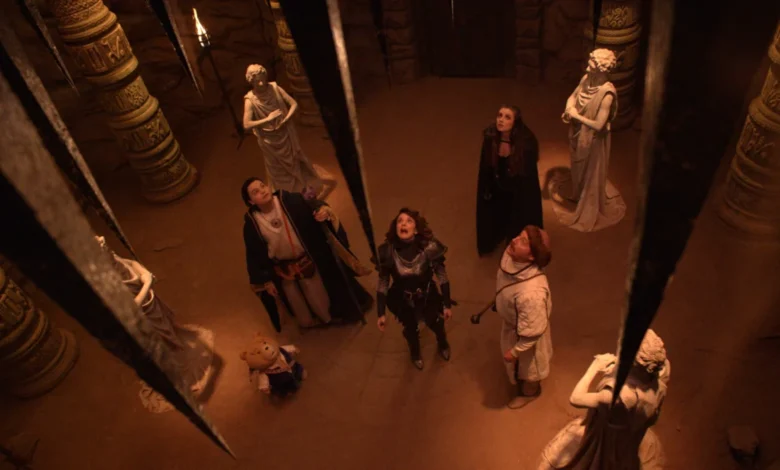
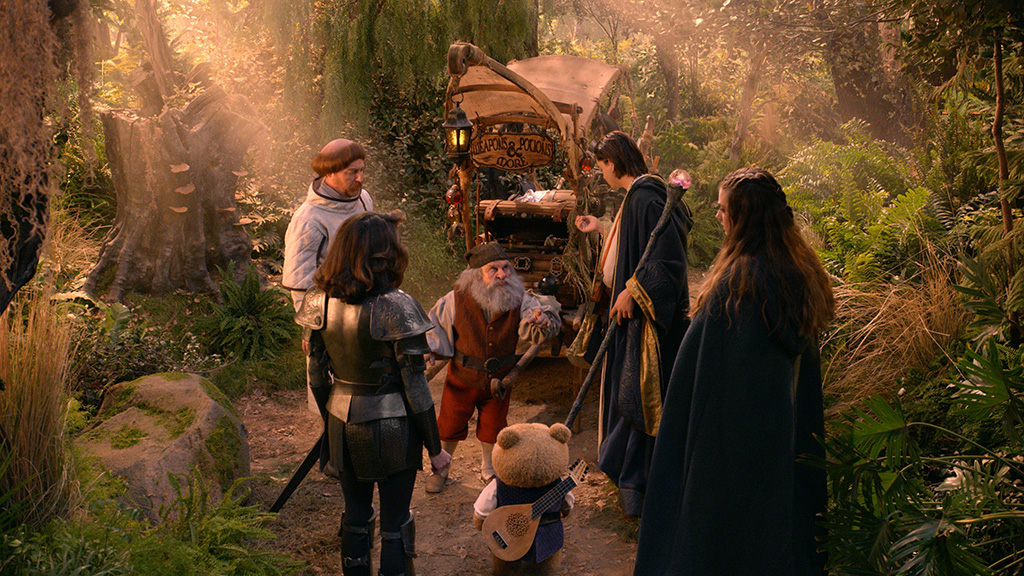
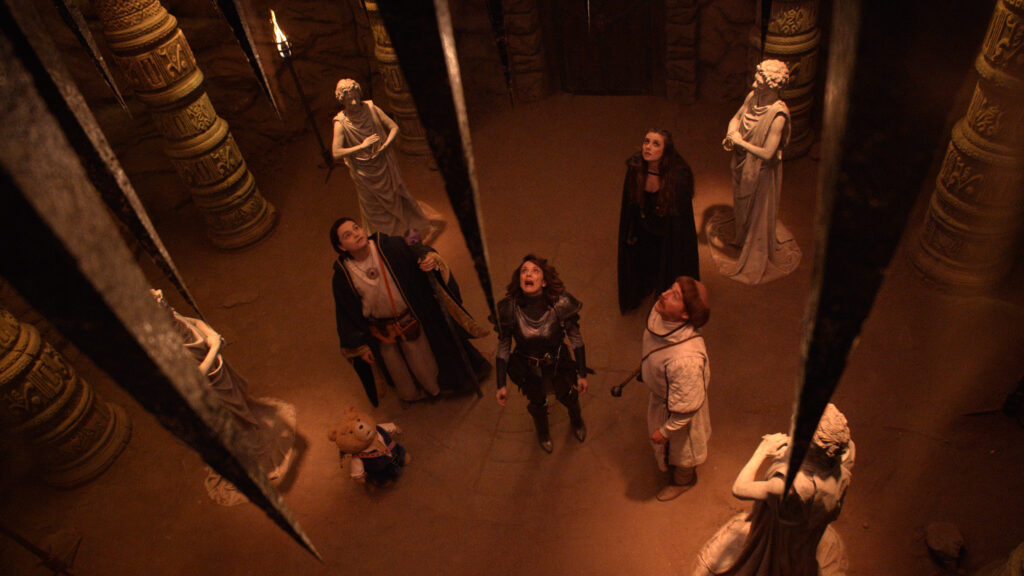
Beyond the intricacies of digital human recreation, Ted Season 2 also plunged into the realm of high fantasy with a Dungeons & Dragons-themed episode (Episode 203). This sequence demanded extensive environmental world-building, a collaborative effort between the visual effects, art, and costume departments.
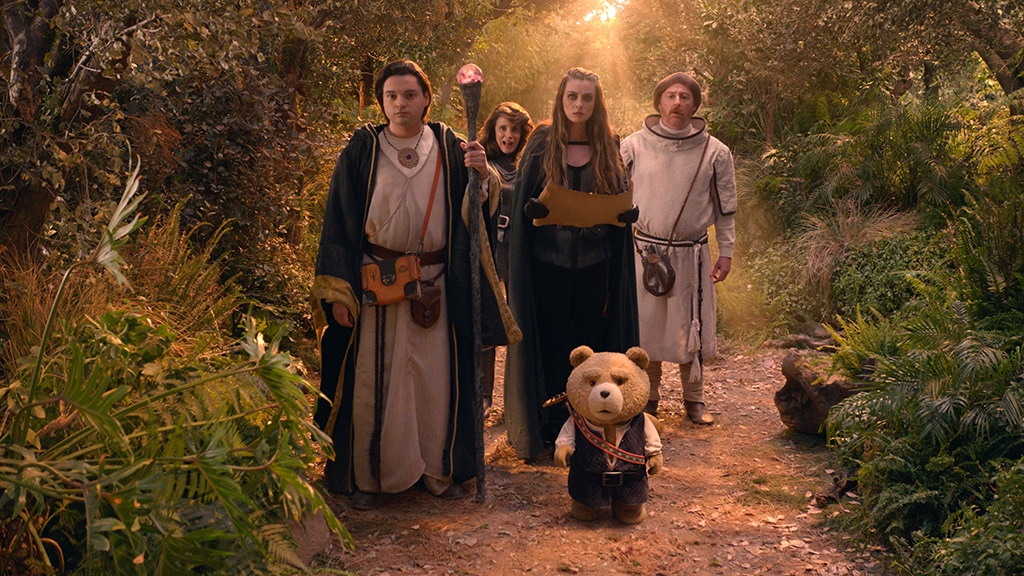
Co-Visual Effects Supervisor Blair Clark shared insights into the character-specific rules that guided their design: "There were certain rules we had to follow with Ted. We never put shoes on him because they look like an orthopedic contrivance that’s ridiculous." The art department initiated the process with an elaborate Unreal Engine previs (pre-visualization) of the scene, charting the camera’s journey from a sweeping vista through a dense forest to the actors on a path.
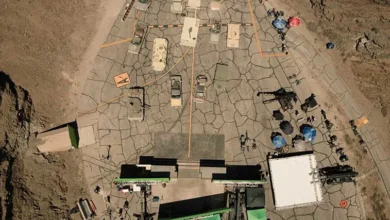
The production constructed an enormous practical forest set on a Universal Studios soundstage. "The tree branches were less than eight or nine inches away from the bluescreen, which is typically a big no-no," Yeatman recounted with a laugh. "You need at least 36 to 40 inches away so you can have a chance of lighting it. There were over 3,000 linear feet of bluescreen that went 40 feet into the air." This tight proximity to the bluescreen presented significant challenges for separation and keying, demanding precise lighting and compositing techniques.
To achieve the desired magical atmosphere, complete with "God rays" filtering through branches and subtle particulates floating in the air, the team employed advanced digital techniques. A LiDAR scan of the practical set provided a volumetric representation of all physical elements – plants, trunks, rocks. This data was crucial for the digital arena, allowing for accurate camera tracking in 3D space. "We can fill that CG area with atmosphere and artificially put the key light in and light that to get the God rays," Yeatman explained. "Those rays were done in layers, and we can sandwich them like a clamshell between the foreground, the actors, the midground and the background." Digital set extensions seamlessly expanded the practical forest, creating an illusion of boundless wilderness beyond the confines of the stage.
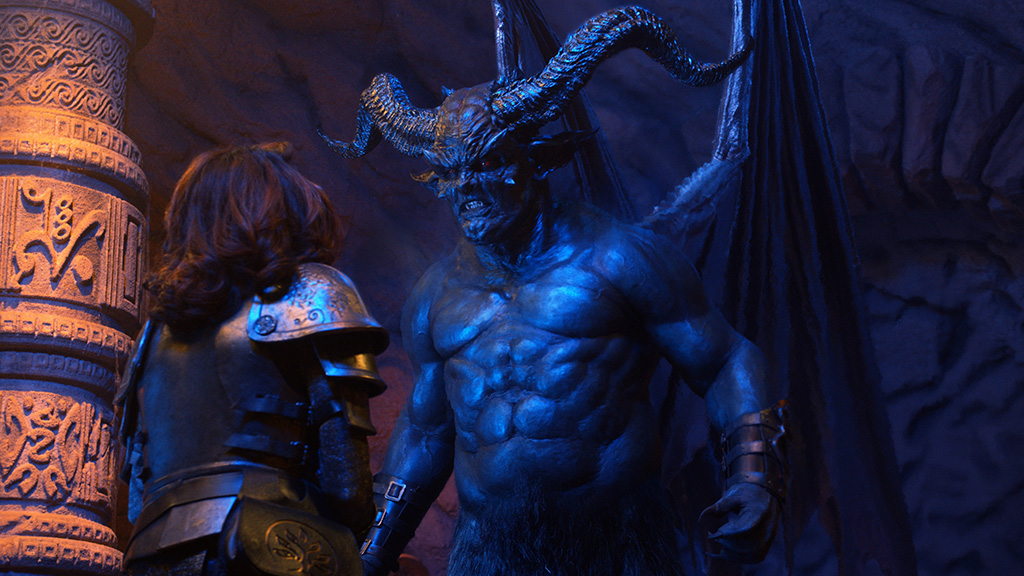
The episode also featured the demon Dra’hul, brought to life through a combination of practical prosthetics and digital enhancements. Clark detailed the hybrid approach: "We added wings, slimmed down the waist and did a treatment on the skin that was otherworldly or ethereal. Other than that, it was straight makeup. It looked great." This blend of tangible on-set effects with digital augmentation allowed for maximum realism and creative freedom, demonstrating the enduring value of practical effects as a foundation for digital artistry.
The Evolution of Ted: Fluffier Fur, Dynamic Performance
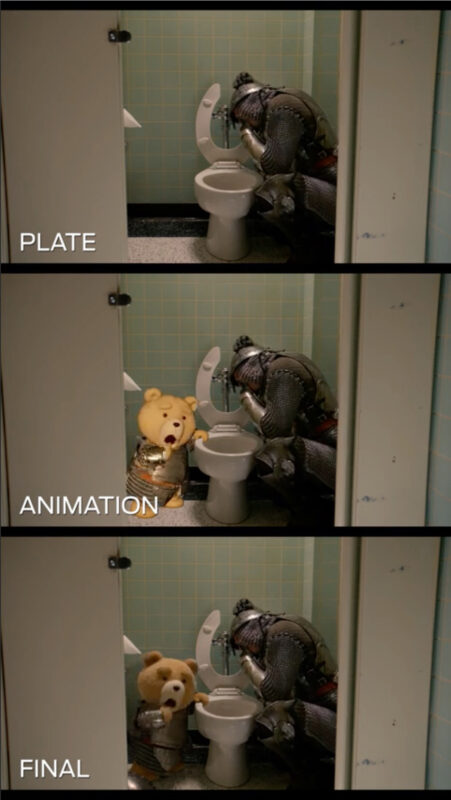
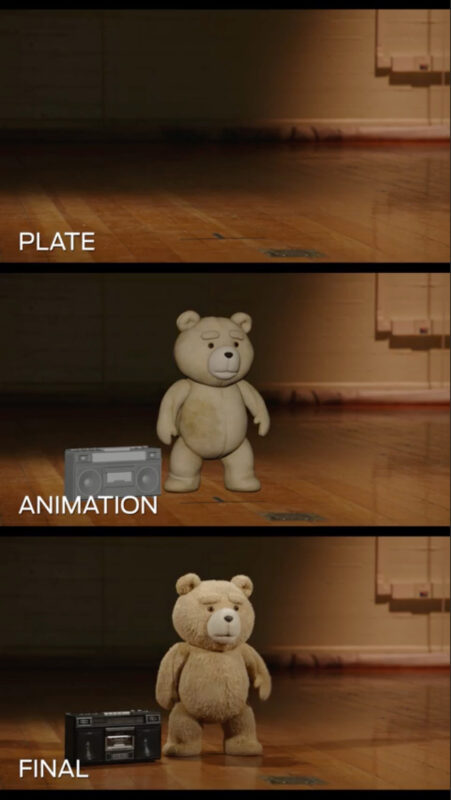
The eponymous character, Ted, remains the heart of the franchise’s visual effects efforts. Framestore, a visual effects powerhouse, has been the consistent creative force behind Ted’s animation since the first feature film, ensuring continuity in his movements, mannerisms, and overall look.
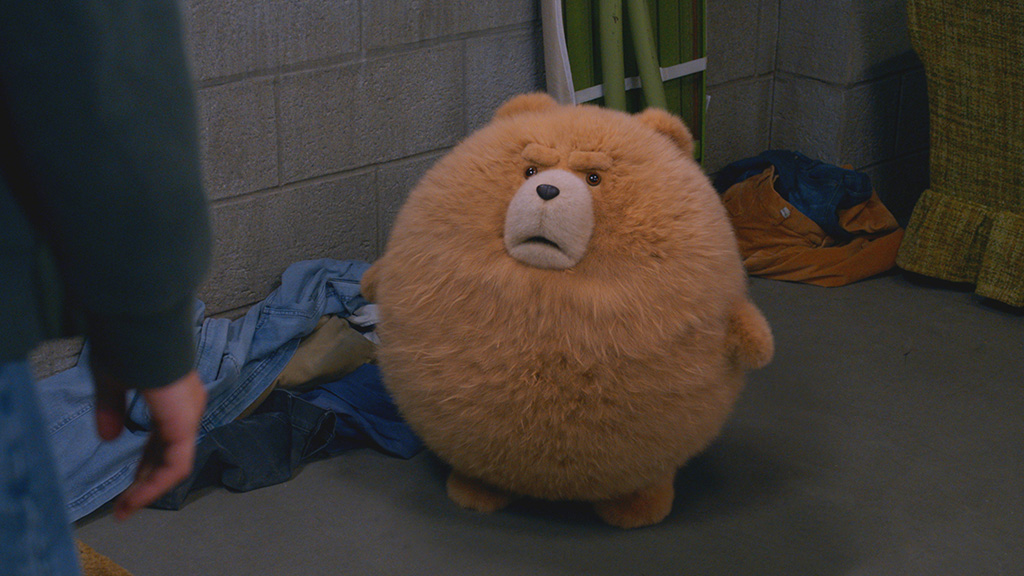
One particularly memorable visual gag in the new season involved Ted emerging from a clothes dryer, unusually fluffy. "Coming out of the dryer was the fluffiest he had ever been! That was artistic license. We had some where he was puffed up, but Seth wanted a full sphere of fur," Clark noted. This seemingly simple gag required intricate fur simulation and rendering to achieve MacFarlane’s specific vision, pushing the character’s appearance to a comically exaggerated yet believable extreme.
Another recurring element was Ted coughing up furballs. Clark emphasized the importance of subtlety in these animations: "The success in that was mainly the pantomime. It wasn’t a struggle, but part of the trick was to keep Ted grounded in subtlety with his mannerisms and not going cartoony. Just go in enough so that people forget he is a CG character and buy him as another member of the cast." This philosophy underscores the challenge of animating a fully CG character: achieving realism not just in texture and movement, but in performance, allowing the audience to suspend disbelief and connect with him as a character, not just a digital construct.
Ted’s physical interactions with other characters also required careful planning. When Ted is thrown around, the team utilized a "stunt stuffie" – a physical teddy bear prop with detachable limbs – to aid actors like Scott Grimes in pantomiming the action. "Scott practiced with the torso [nicknamed ‘the egg’] to get a sense of the volume and mass. Then for the plate where Scott scoops Ted up and throws him, it’s all Scott pantomiming; he nailed it," Clark explained. This combination of physical reference and precise actor performance is critical for grounding the CG character in the live-action environment.
The Role of On-Set Pre-visualization and Workflow
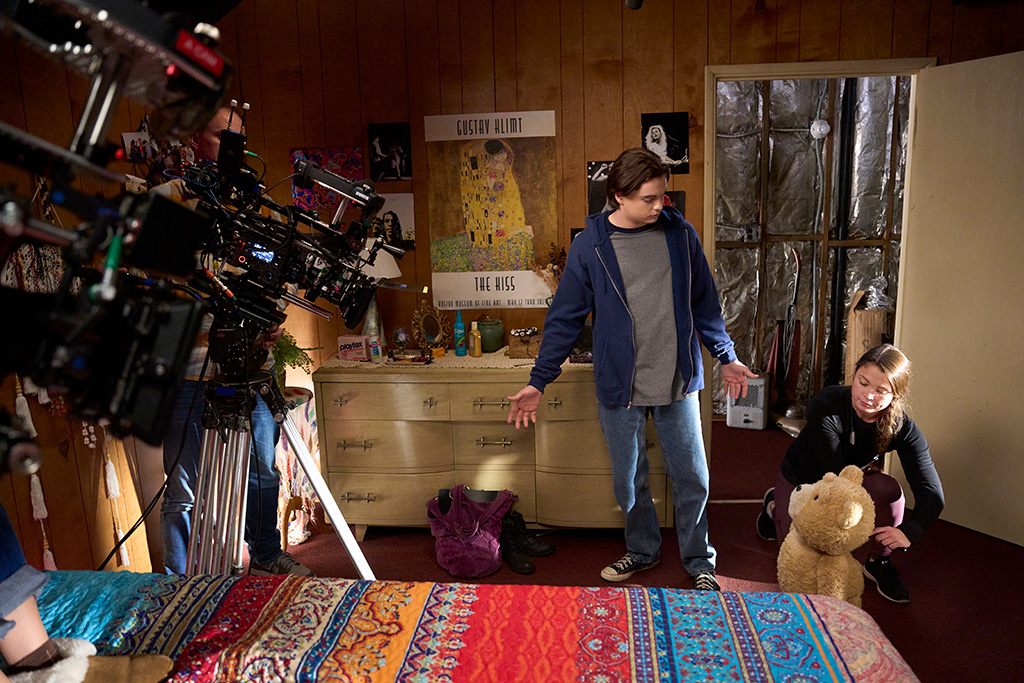
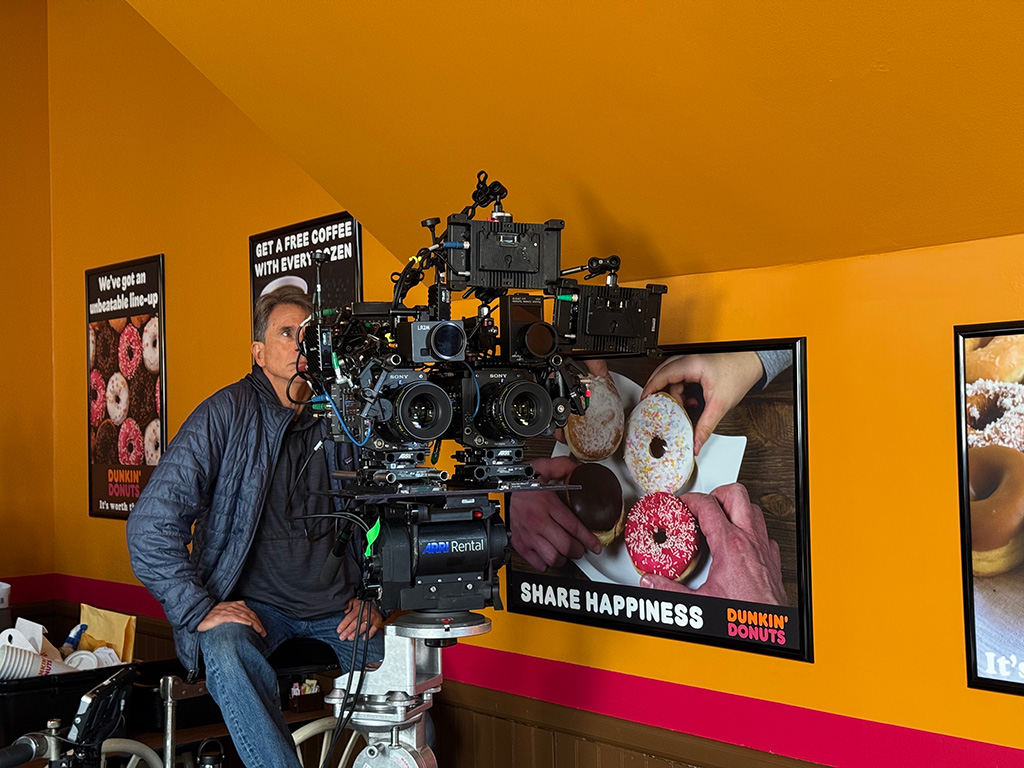
Throughout the production, tools like ViewScreen Studio and Unreal Engine animatics played a crucial role in visualizing and coordinating the complex visual effects. ViewScreen allows for a rough, real-time composite of Ted to be seen in the camera viewfinder on set, providing immediate feedback for cinematographers and directors.
While ViewScreen is a valuable reference, its dynamic nature makes it less suitable for precise character performance. Yeatman likened the process to jazz improvisation: "It’s like the difference between jazz and classical music. In classical music, every single note is written down, but here you know the tune and melody and just get in there, and it organically happens. That’s what’s nice about Ted. These guys have been working [together for] so long on the features and episodes that they have it drilled down. That’s why it goes as smoothly as it does because everyone knows how it goes."
For environmental work, however, ViewScreen and Unreal Engine were indispensable. In the D&D forest sequence, ViewScreen allowed the team to "see beyond what we had physically on set." For a complex opening shot involving a 64-foot crane move (as per the Unreal Engine animatic) over a 24-foot practical crane move, these tools provided a clear understanding of framing, set extensions, and camera positioning. Similarly, for a scene featuring spikes descending from a temple ceiling, Unreal Engine animatics helped determine the speed and framing, ensuring seamless integration of practical and digital elements. The meticulous planning extended to elements like the stone sculptures in the temple, which were achieved by digitally altering human actors to appear as if carved from stone, adding another layer of visual complexity.
Recreating 1990s Boston: Environmental VFX and Period Accuracy
Beyond fantasy worlds, the visual effects team was tasked with the equally challenging job of transforming the backlots of Universal Studios Hollywood into a convincing depiction of 1990s Boston. This extensive environmental work, involving contributions from Studio Blackbird, Rising Sun Pictures, Deep Voodoo, and Pitch Black, accounted for nearly 3,000 visual effects shots across the season.
Maintaining period accuracy was paramount, and Seth MacFarlane, known for his keen eye for detail, was highly specific. "Seth was keen on the trees," Clark revealed. "He would be like, ‘Those look like West Coast trees.’ Seth was very specific." This attention to subtle regional differences highlights the immense effort required to create believable environments.
Driving sequences, a staple of television, presented their own challenges. "Big chunks are driving in a car, which is more of a traditional greenscreen," Yeatman explained. The production used a multi-camera setup, often with three cameras running simultaneously, adding complexity to the visual effects pipeline. To achieve authentic 1990s Boston streetscapes, the team utilized plates from the previous season, which were shot on location. However, even these required extensive cleanup. "As we drove by, there would be a car from the wrong era that needed to be changed out," Yeatman said, illustrating the painstaking work involved in period reconstruction.
For scenes set at a mansion, an elaborate eight-camera array provided complete freedom on stage, allowing for dynamic camera movements and angles while ensuring the digital environment could be seamlessly integrated. Even subtle details like snow on the ground required VFX intervention. While powder paper was used on parts of the Universal backlot for close-ups, digital extensions were needed to ensure the entire neighborhood appeared consistent, particularly for wider shots looking down the road.
The Future of Visual Effects: Adaptability and Innovation
The work on Ted Season 2 exemplifies the rapid evolution of digital technology in the entertainment industry. Both Yeatman and Clark underscored the importance of staying abreast of these advancements. "Blair and I stay up on the latest greatest [tech] and make sure it works before we put it into practice," Yeatman stated. This proactive approach ensures that new tools and techniques are rigorously tested and integrated effectively, rather than being adopted merely for novelty.
Their ultimate goal is to empower filmmakers like Seth MacFarlane with maximum creative freedom while maintaining the highest visual fidelity. "We want to give Seth the greatest amount of freedom that he can have and still achieve a good look," Yeatman affirmed. This philosophy allows for audacious creative choices, confident in the knowledge that the visual effects team has the technical prowess to realize them.
The successful integration of AI for facial recreation, the intricate blend of practical and digital environments for fantasy sequences, and the meticulous attention to character animation and period accuracy in Ted Season 2 highlight a critical juncture in visual effects. It demonstrates that innovation often lies not in wholesale technological replacement, but in the intelligent and targeted application of new tools within an established, collaborative pipeline. The season stands as a testament to the enduring craft of visual effects artists, who, armed with an ever-expanding arsenal of technologies, continue to push the boundaries of storytelling and immersion in television production.