Blender 5.3 brings native Gaussian splatting to the forefront of open-source 3D production

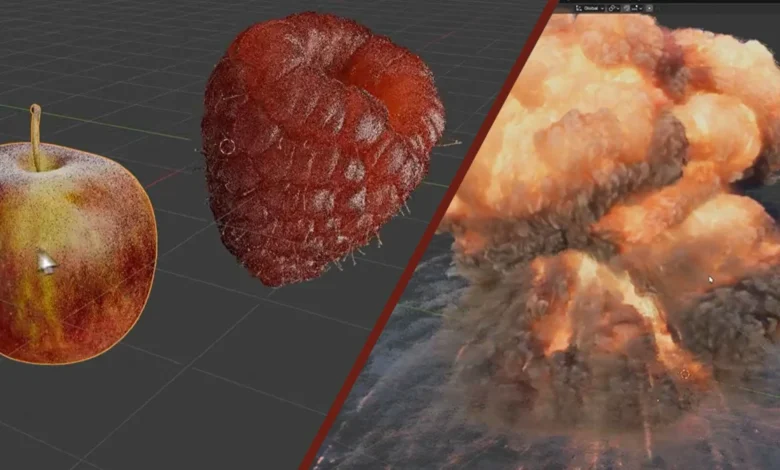
Blender 5.3 is poised to redefine the standards of free, open-source 3D software with the introduction of native Gaussian splat support, a feature set that significantly bridges the gap between traditional polygon-based modeling and photorealistic, image-based reconstruction. Currently in its alpha development phase, the full release of version 5.3 is slated for November. This update marks a major shift in how 3D artists interact with captured real-world data, moving away from complex, third-party add-ons and toward a streamlined, integrated workflow within the Blender ecosystem.
The Evolution of 3D Reconstruction
Gaussian splatting represents a paradigm shift in computer graphics. Unlike conventional 3D modeling—which relies on rigid geometric meshes, vertices, and UV-mapped textures—Gaussian splatting utilizes a point-cloud-based approach. Each "splat" is a semi-transparent, colored 3D ellipsoid. When millions of these blobs are positioned and scaled correctly, they form a volumetric, photorealistic representation of an environment or object derived directly from high-resolution photographs or video footage.
The technology gained mainstream attention due to its ability to capture complex lighting, reflections, and high-frequency details that are traditionally labor-intensive to replicate manually. By integrating this natively, Blender is positioning itself as a primary hub for researchers and VFX artists who require high-fidelity assets without the overhead of manual polygon modeling.
Chronology of the Integration
The path to native Gaussian splatting in Blender has been accelerated by the rapid maturation of the technology in the research community. Historically, the pipeline for a Blender user involved a multi-stage process:
- Capture: Using devices like standard smartphones or high-end cameras to record video or capture image sequences.
- Processing: Running this raw data through specialized external software suites such as COLMAP or Luma AI to generate a .ply (Polygon File Format) file containing the Gaussian data.
- Importing: Using community-developed add-ons, such as the popular Brush tool or other third-party bridges, to bring these files into Blender.
- Rendering: Manually configuring lighting and materials to attempt to make the splats play nicely with the rest of the scene.
With the advent of Blender 5.3, the final two steps are drastically simplified. Users can now natively import .ply and .spz files directly into the software. While the initial release focuses on importing rather than native creation or export, the ability to view and render these assets directly within the viewport—and subsequently through the EEVEE and Cycles engines—represents a significant efficiency gain for the creative industry.
Technical Specifications and Current Limitations
While the integration is a milestone, the development team has been transparent about the current limitations of the implementation. According to official release documentation, the native support for Gaussian splats in version 5.3 is still undergoing optimization.
Current performance benchmarks indicate that rendering high-density splat clouds can be computationally demanding, often exceeding the real-time capabilities of standard hardware. Furthermore, there are specific color-space challenges: the current pipeline assumes an sRGB color space, which can lead to visual discrepancies when rendering in scenes configured for linear space, a standard practice in professional cinematography and high-end game development.
Additionally, the "Apply Transform" function—a standard operation for scaling, rotating, or moving objects in 3D space—does not yet fully support the underlying data structure of Gaussian splats. Specifically, the system struggles to correctly update the rotation and spherical harmonics attributes, which dictate how the splats react to light and viewing angles. These issues are currently tracked by the Blender development team as priority items for post-launch stability updates.
Industry Implications and Broader Impact
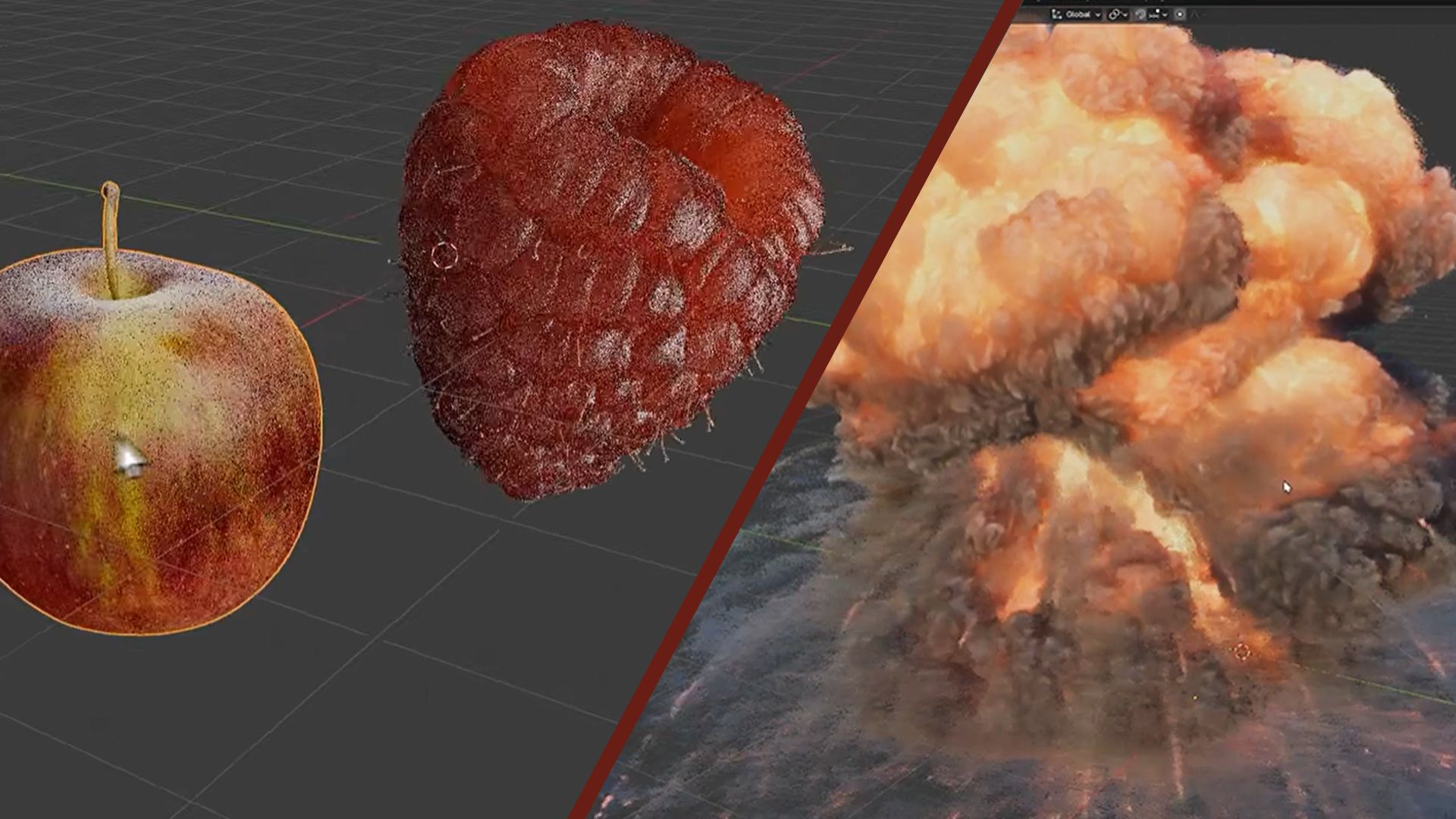
The adoption of Gaussian splatting by Blender, a cornerstone of the creative software market, signals a broader industry trend. Major players like Chaos, the creators of V-Ray, have recently focused on solving the "relighting" problem—the inability to change the lighting conditions of a splat after it has been captured. By bringing this technology into the mainstream, Blender is facilitating a move toward "Hybrid Workflows."
In a hybrid workflow, a VFX studio might capture an actor’s performance or a complex physical set using Gaussian splats, integrate them into a 3D environment, and then overlay traditional geometric models for interaction. This allows for a level of realism that was previously the exclusive domain of high-budget production houses with proprietary scanning equipment.
For the freelance market and independent creators, this democratization is profound. The barrier to entry for producing high-fidelity 3D assets has been effectively lowered to the cost of a camera and the time required to process a data set. As the community continues to refine the import process, we can expect an influx of high-quality, photorealistic assets in independent short films, game prototypes, and architectural visualizations.
Data and Hardware Requirements
The inclusion of native splatting also highlights the growing demand for hardware performance in the creative sector. Because splats are fundamentally millions of individual data points, they are memory-intensive. For users looking to leverage this feature in Blender 5.3, the recommended hardware specifications have shifted slightly. While a standard GPU is sufficient for traditional modeling, efficient Gaussian splat rendering benefits significantly from high VRAM capacity and robust multi-core processing, as the software must handle the parallel computation required to render millions of individual points per frame.
Future Outlook
Looking ahead, the community and core developers are already looking toward the next stages of development. The primary focus after the November release will be the improvement of the render pipeline to resolve the linear/sRGB color space issues and the implementation of a native export tool. If the development team can achieve native creation (the ability to generate splats from images directly inside Blender), it would effectively eliminate the need for external software suites entirely.
While Blender 5.3 is currently in the alpha stage, the feedback from early testers on platforms like X (formerly Twitter) and YouTube has been largely positive. VFX artists have demonstrated that even with current limitations, the ability to manipulate these assets in a native environment—using the viewport to preview, adjust, and composite—is a massive upgrade over existing workarounds.
As Blender continues to evolve, the integration of Gaussian splats serves as a clear indication of the software’s direction: moving toward a unified, all-encompassing suite that embraces the latest in computer vision and photogrammetry. For the professional 3D artist, the November release of version 5.3 is not merely an incremental update, but a necessary adaptation to the changing landscape of digital content creation.
The integration of such cutting-edge technology into a free, open-source tool remains a testament to the power of the global developer community. By providing the tools for high-end rendering and complex data manipulation to every user, regardless of budget, Blender 5.3 ensures that the next generation of creative work will be built on the foundation of the most advanced technical standards available. As the software moves toward its stable release, the creative community remains expectant, waiting to see how these splats will be integrated into the next wave of digital art, film, and interactive media.
Related posts: