The Business Case for 2026: Why C-Suites Are Replacing Traditional Ad Spends with Employee Advocacy Programs

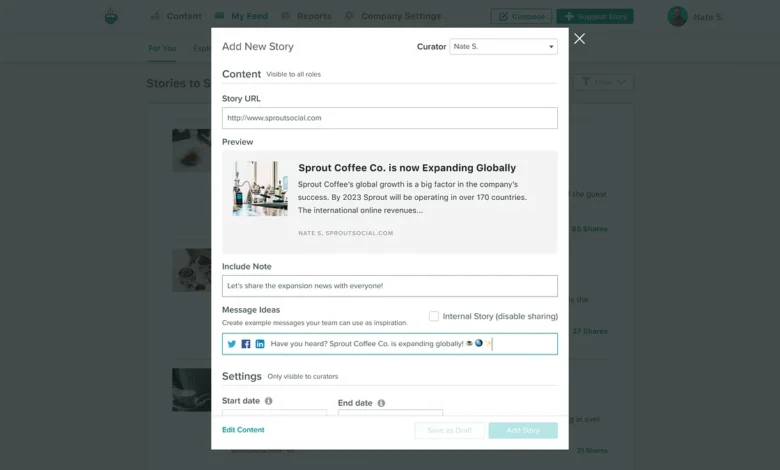
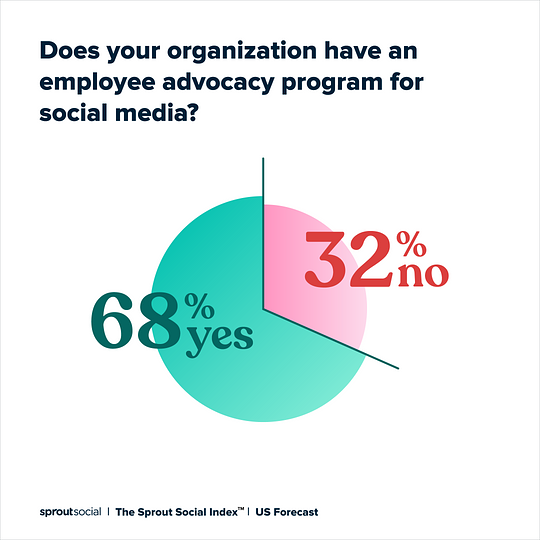
Securing executive buy-in for modern marketing initiatives has long required more than passion or creative vision; it demands empirical proof and a direct line to the bottom line. As corporate budgets face heightened scrutiny and traditional social media algorithms continue to favor paid amplification over organic brand visibility, organizational leaders are increasingly looking toward a decentralized yet highly effective resource: their own workforce. According to recent industry data compiled by enterprise social media management leader Sprout Social, 68% of marketing organizations already operate a formalized employee advocacy program, cementing the strategy as a standard corporate operational practice rather than an experimental marketing tactic.

The evolution of employee advocacy from an informal, grassroots communications effort into a sophisticated enterprise growth strategy marks a significant shift in corporate communications. Historically relegated to ad-hoc social sharing by enthusiastic executives or public relations teams, modern advocacy programs are now supported by dedicated internal resources, advanced software tools, structured compliance processes, and comprehensive employee training regimens. As businesses navigate an increasingly crowded digital landscape where traditional paid advertisements suffer from consumer fatigue, organizations are realizing that internal networks represent an underutilized goldmine for amplification, talent acquisition, and revenue generation.
The Quantitative Foundations: Data-Driven Insights for Executive Decision-Makers
When corporate strategists approach the C-suite to request funding and resources for employee advocacy software and management, intuition must take a backseat to hard metrics. Decision-makers across industries want to understand the exact mechanics of employee advocacy and the precise, measurable benefits their respective enterprises stand to gain.
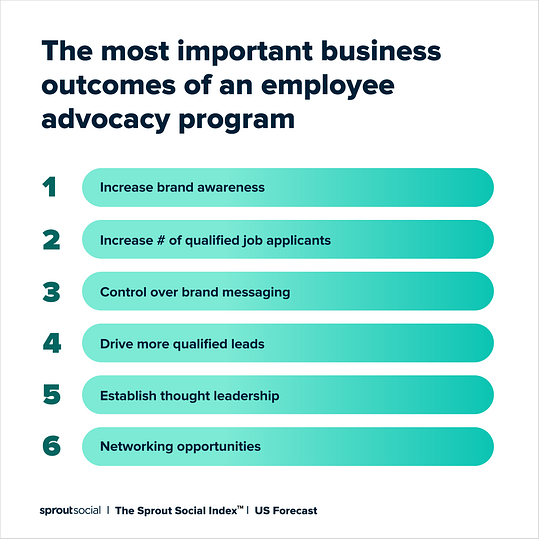
Market research indicates that employee advocacy serves multiple core objectives within a modern enterprise. Among the more than 1,000 marketing leaders surveyed in recent benchmark reports, the primary drivers for launching structured advocacy initiatives include increasing brand awareness, attracting a higher volume of qualified job applicants, and maintaining rigorous control over brand messaging in the public sphere. Secondary objectives frequently cited by enterprise leaders include driving qualified sales leads, establishing corporate thought leadership within niche industries, and expanding professional networking opportunities for staff members at all organizational levels.
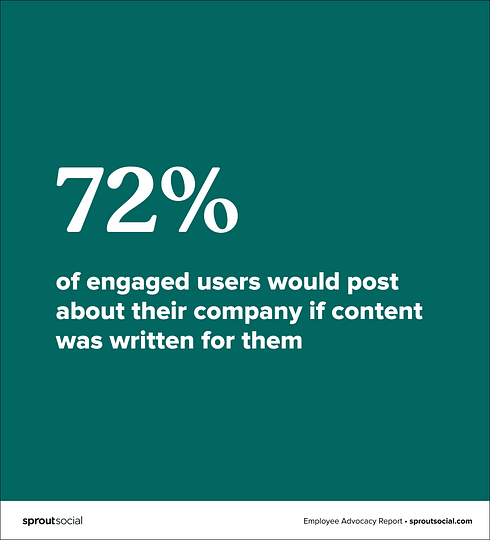
Furthermore, the data suggests that employees are inherently willing to participate in these initiatives, provided the administrative barrier to entry is kept low. Sprout Social’s research highlights that an overwhelming 72% of engaged enterprise social media users would readily post about their company on their personal channels if the communications or marketing teams wrote the content for them. When organizations implement structured programs featuring centralized, curated content hubs, participation rates soar; up to 85% of onboarded employees actively share company-approved material on their personal channels when given the right digital tools.
Humanizing the Enterprise: Trust, Authenticity, and the Frontline Advantage
The modern consumer has grown adept at filtering out polished, highly corporate messaging originating from branded social media accounts. In response, corporate communicators are shifting their focus toward peer-to-peer authenticity. Data from the 2026 Influencer Marketing Report reveals that 40% of consumers discover new products and services through employee-generated content on a monthly basis.
Crucially, the hierarchy of trust has inverted. The data indicates that 46% of consumers prefer to hear from frontline staff and everyday employees when learning about a brand, compared to a mere 10% who express a desire to hear directly from C-suite executives. While executive thought leadership remains a valuable tool for high-level corporate positioning, the authentic, ground-level perspective carried by software engineers, customer success representatives, sales associates, and regional managers resonates far more deeply with prospective buyers.
This dynamic addresses a fundamental operational challenge: ad fatigue. Paid digital reach has become progressively more expensive while yielding diminishing returns due to consumer skepticism. By activating employees, brands can scale the single asset that contemporary audiences continue to reward—genuine human credibility—without incurring additional media placement costs.
Amplifying Global Reach: Case Studies in Enterprise Scale
The sheer scale of reach achievable through employee advocacy networks far surpasses the organic limits of corporate brand channels. Enterprise organizations across diverse sectors have begun measuring these impacts in tens of millions of impressions, redefining how corporate communications teams calculate return on investment.
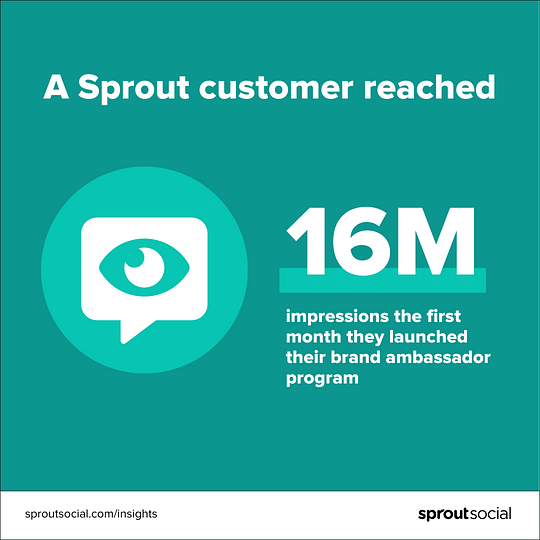
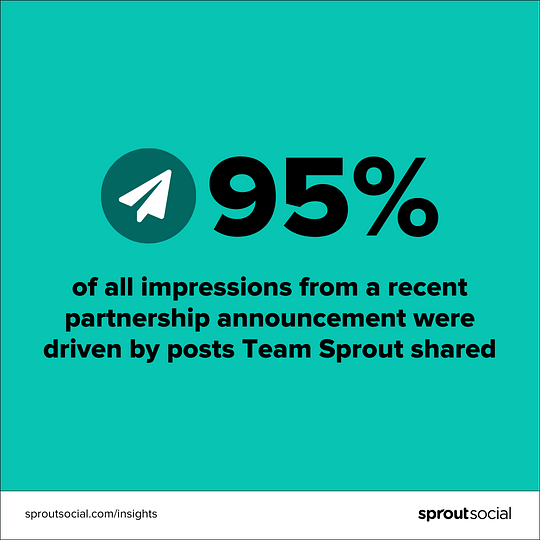
For instance, global IT software provider Ivanti deployed a brand ambassador program utilizing Sprout Social’s advocacy platform. Within the first month of the program’s rollout, Ivanti expanded its total reach by an impressive 16 million impressions. Similarly, Sprout Social experienced massive amplification during major corporate announcements, generating more than 28 million impressions through its internal advocacy platform within a single operational year. In one notable instance, a staggering 95% of the 740,000 total impressions generated by an announcement regarding a global partnership with Salesforce were driven directly by posts shared by individual employees.
Healthcare organizations have reported equally dramatic outcomes. One healthcare sector customer utilizing Sprout’s advocacy architecture documented a 200% increase in total social media engagements within six months of launching their structured program, alongside a 98% internal employee satisfaction rate regarding the platform’s ease of use. These figures illustrate that when employees are equipped with intuitive, streamlined tools to share news, they not only amplify the brand’s voice but do so willingly and enthusiastically.
Accelerating the Bottom Line: From Earned Media Value to Quota Attainment
While brand awareness and impression volume are critical metrics for marketing departments, executive leadership ultimately evaluates initiatives through the lens of revenue generation and financial impact. Employee advocacy directly influences the bottom line by acting as a powerful engine for demand generation and social selling.
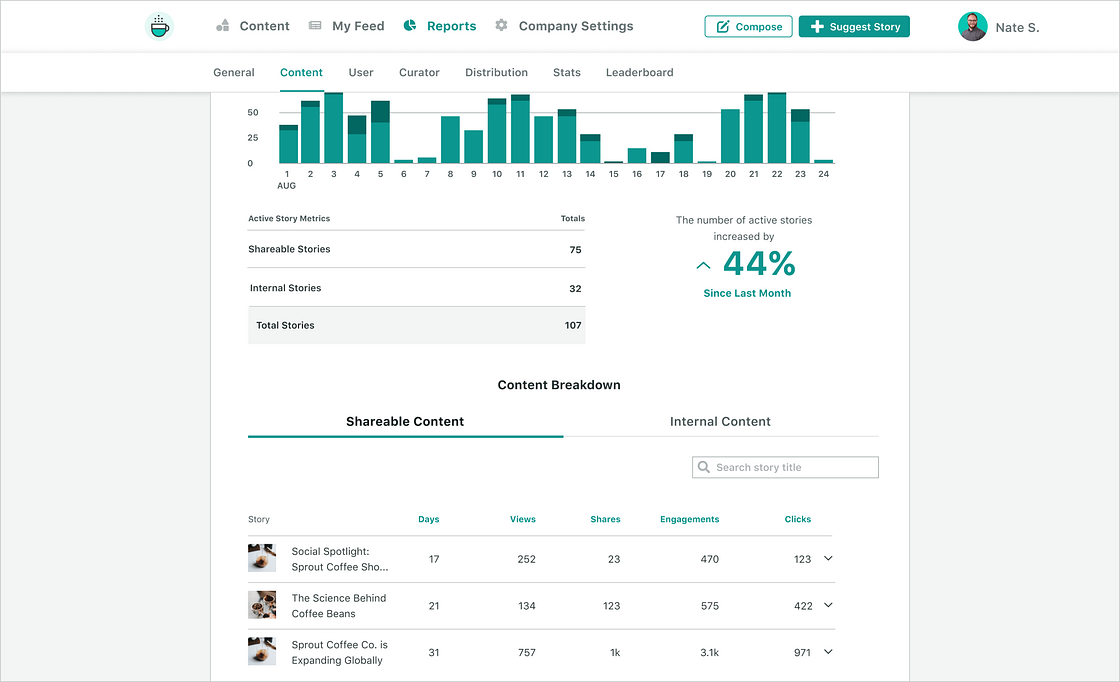
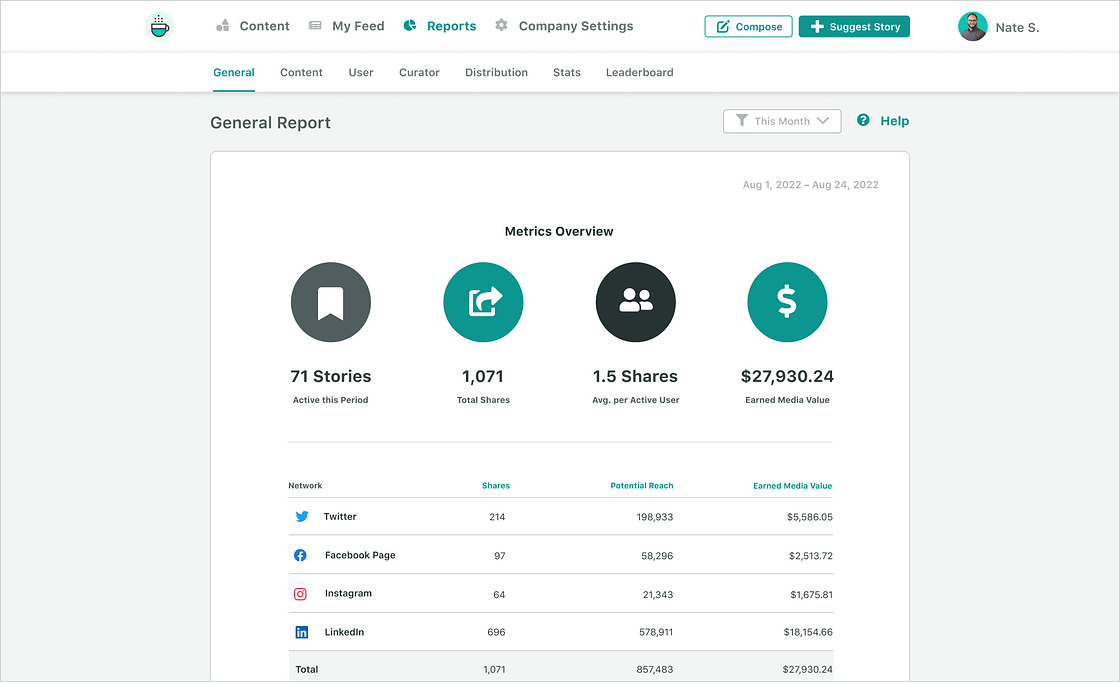
By scaling top-performing content through employee networks, organizations generate qualified leads without expanding their paid advertising budgets. For example, enterprise software provider Infor successfully generated $100,000 in earned media value within a single month by leveraging employee advocacy channels.
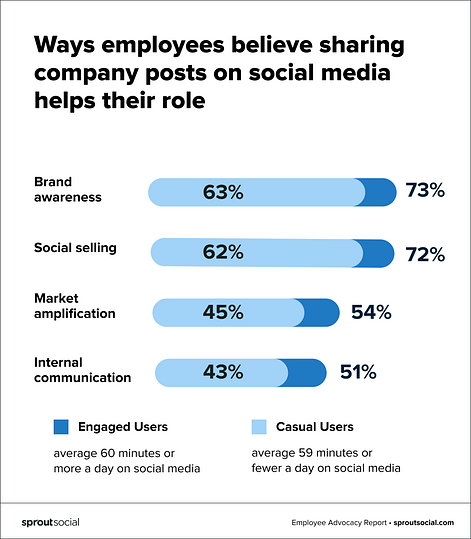
Beyond top-of-funnel brand awareness, advocacy directly empowers customer-facing personnel. Sprout Social’s research indicates that 72% of engaged users—and 62% of casual users—agree that sharing company content on social media directly supports their day-to-day professional responsibilities, including social selling and client relationship management. This aligns with broader industry data from LinkedIn’s Social Selling Index, which demonstrates that sales professionals who actively share company and industry content on their personal profiles are 51% more likely to reach or exceed their sales quotas.
When sales and revenue teams integrate advocacy shares directly into Customer Relationship Management (CRM) workflows, organizations can accurately attribute pipeline growth, event registrations, and closed-won deals back to specific employee-driven campaigns. This ability to quantify earned media value bridges the historical gap between marketing activity and measurable sales outcomes.
Employer Branding, Talent Acquisition, and Retention Dynamics
Beyond external marketing and sales, employee advocacy plays an equally vital role in internal human resources strategy, specifically in talent acquisition and employee retention. Modern job seekers rarely rely solely on corporate career pages; instead, they conduct rigorous due diligence on social media platforms, examining what current and former employees say about the organizational culture, management practices, and daily work environment.
When employees organically celebrate their workplace culture, share company milestones, and discuss internal achievements, they project an authentic employer brand that traditional corporate accounts simply cannot replicate. This organic advocacy widens the candidate pool, attracts passive job seekers, and increases application volumes with higher-quality talent.
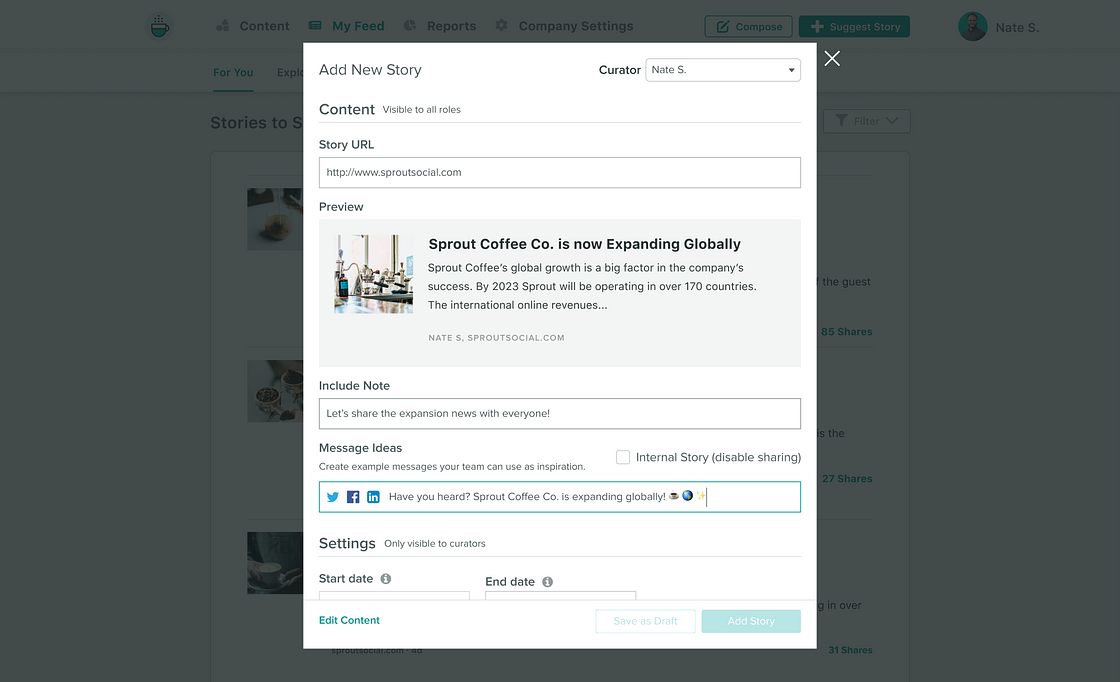
Furthermore, participation in advocacy programs transforms ordinary workers into active stewards of the corporate brand. This sense of ownership fosters deeper professional loyalty, enhances workplace morale, and strengthens long-term retention. To streamline this process, enterprise platforms now feature integrated internal newsletter distribution tools. These solutions allow human resources and communications teams to broadcast curated updates regarding open job roles, internal promotions, and company milestones directly to employee inboxes, enabling staff to share recruitment messaging with their professional networks via a single click.
Strategic Implications and the Path Forward
The empirical data gathered across multiple industries points to a singular, overarching conclusion: employee advocacy is no longer an optional peripheral marketing tactic. It has matured into an essential enterprise growth strategy that optimizes digital reach, enhances corporate credibility, accelerates sales pipelines, and fortifies employer branding.
As corporate budgets face rigorous optimization in 2026, organizations that fail to activate their internal networks risk ceding competitive advantage to peers who have successfully transformed their workforce into a high-performing digital marketing channel. For executive leadership teams, the decision is no longer whether to establish an advocacy program, but how rapidly and systematically to formalize, resource, and scale it across the enterprise.