Apple Unveils the iPhone Duo: A Landmark Entry into the Foldable Smartphone Market

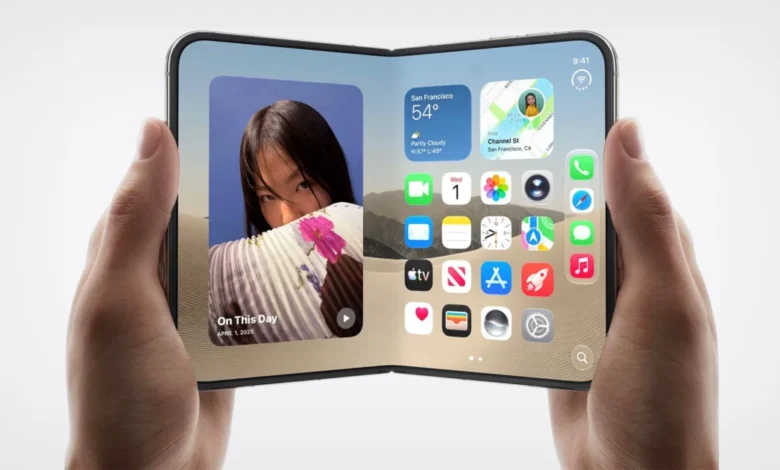
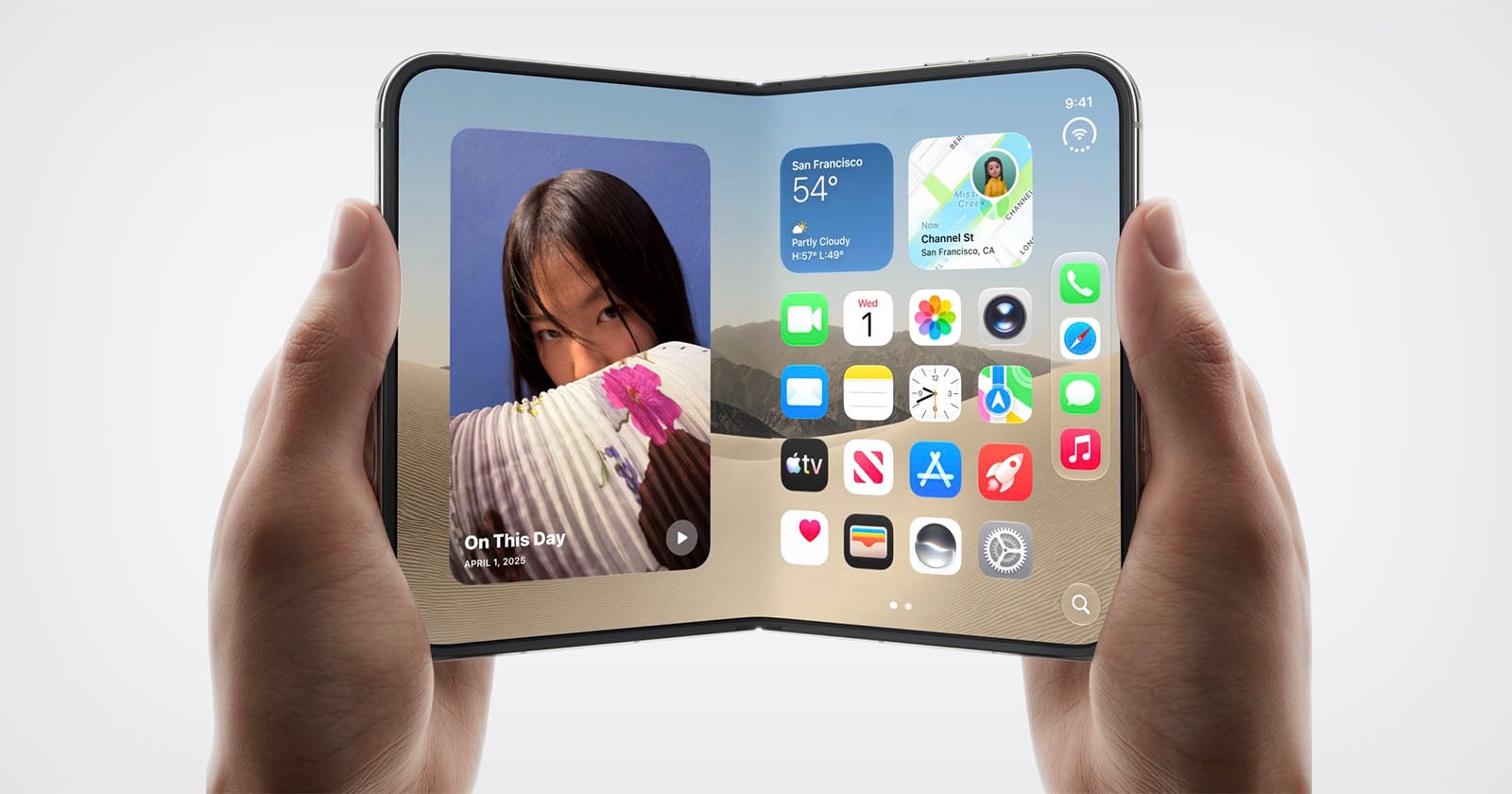
Apple has officially entered the foldable smartphone arena with the introduction of the iPhone Duo, marking what company leadership is calling the most significant shift in iPhone design since the device’s debut nearly two decades ago. Priced at a premium starting point of $1,999, the book-style foldable device features an expansive 7.6-inch inner display paired with a compact 5.4-inch outer screen. Designed to merge the portability of a traditional smartphone with the versatile screen real estate of a small tablet, the iPhone Duo arrives after years of intense industry speculation and technological development.
The launch represents a calculated move by Apple to capture a lucrative segment of the mobile market currently dominated by rivals like Samsung, Google, and OnePlus. While foldable devices have evolved from experimental novelties into viable luxury flagships, Apple’s entry brings the weight of its ecosystem and design philosophy to a form factor that has struggled with consumer complaints regarding hardware durability, software fragmentation, and noticeable screen creases.
The Evolution of Apple’s Foldable Ambitions
Rumors surrounding an Apple foldable device have circulated within the tech industry for the better part of a decade. Patents filed by Cupertino as early as 2016 outlined various hinge mechanisms, flexible glass integration, and dual-screen configurations. However, Apple famously adhered to a strategy of market patience, allowing competitors to test the waters, identify consumer pain points, and refine manufacturing processes before committing to a commercial product.
During this waiting period, the foldable market matured significantly. Competitors released multiple iterations of book-style and clamshell foldables, gradually improving hinge longevity and software optimization. Despite these advancements, foldable phones remained a niche category for early adopters and tech enthusiasts, largely restricted by high price points and compromises in battery life, camera performance, and structural thickness.
By entering the market in late 2026, Apple aims to bypass the growing pains that plagued early foldable generation devices. According to industry analysts, the timing aligns with maturity in ultra-thin battery technology, durable hinge engineering, and advanced display coatings capable of virtually eliminating the central crease—a primary aesthetic and tactile drawback of competing hardware.
Design and Hardware Engineering: Refining the Foldable Form Factor
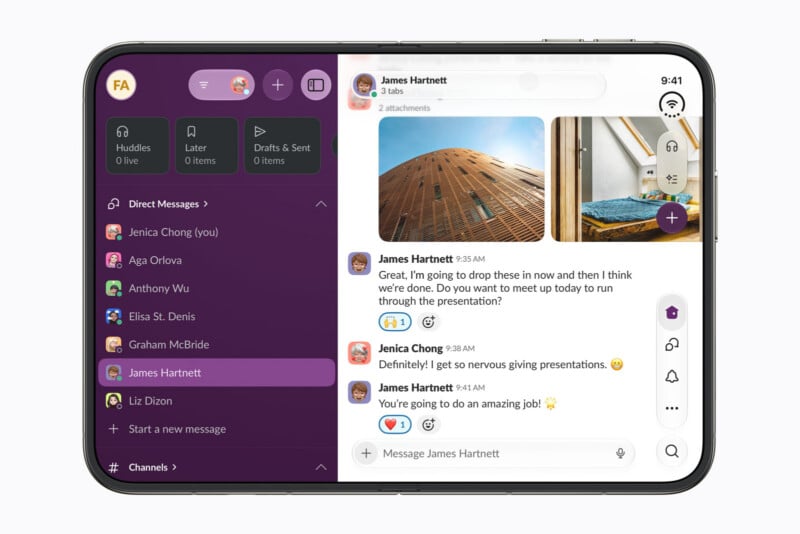
The iPhone Duo adopts a book-style configuration roughly equivalent in closed dimensions to a standard passport, engineered to fit comfortably within a single hand. When unfolded, it reveals a continuous 7.6-inch inner display that is roughly 80 percent larger than the screen area found on the iPhone 18 Pro. The 5.4-inch outer display retains 90 percent of the screen area of a standard Pro model, maintaining a consistent aspect ratio across both panels to ensure seamless app transitions. Both displays achieve an impressive peak outdoor brightness of up to 3,000 nits.
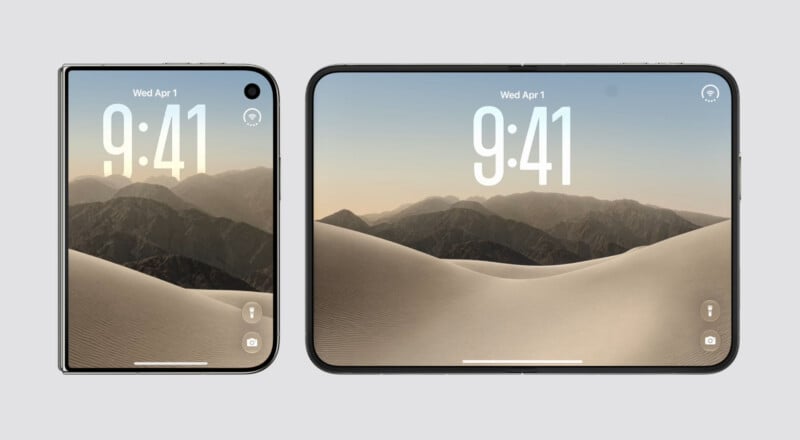
Addressing the structural flaws of previous foldables was a top priority for Apple’s engineering teams. During the unveiling, Apple’s newly appointed CEO, John Ternus, offered a subtle critique of existing market alternatives.
"Others have created foldables that feel like two phones awkwardly stuck together," Ternus stated, emphasizing Apple’s holistic approach to hardware and software integration.
To combat the notorious central crease, Apple incorporated its proprietary Nano Texture display technology, previously utilized in high-end Mac and iPad displays, making the fold virtually imperceptible to both sight and touch. The underlying hinge mechanism relies on more than 100 precision-engineered micro-components designed to withstand heavy daily use and countless folding cycles.
The exterior frame is forged from grade-five titanium, providing a rigid yet lightweight structure. Protection is further enhanced via a Ceramic Shield back panel and a next-generation Ceramic Shield 2 on the front display, complemented by industry-standard IP68 dust and water resistance. Available in two distinct colorways—Sky White and Night Sky, a deep dark blue—the device also features Touch ID integrated seamlessly into the side button, with support for multiple fingerprint enrollments to accommodate various grip orientations.
Software Reinvention: iOS 27 and Ecosystem Integration
Hardware innovations alone do not define a successful foldable device; software optimization remains paramount. To maximize the utility of the iPhone Duo’s expansive canvas, Apple developed iOS 27, a platform redesigned from the ground up for dual-screen and folding architectures.
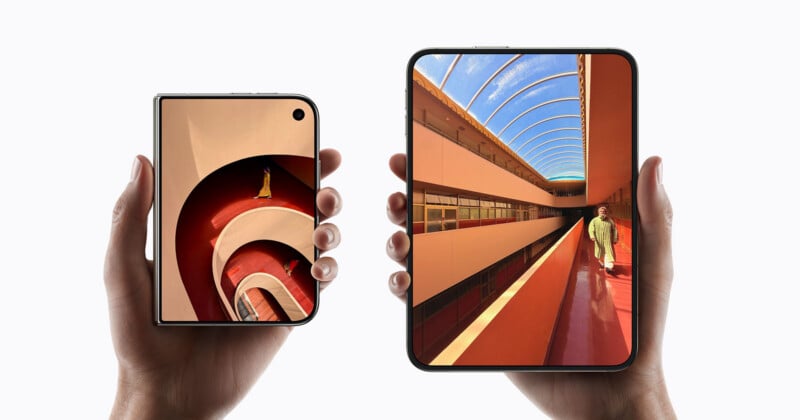
The operating system bridges the gap between smartphone ergonomics and tablet-level productivity. Multitasking features allow users to run side-by-side applications, such as managing a Slack communication thread while simultaneously reviewing documents or browsing the web. Later in the year, Apple will expand functionality further by introducing cross-display Apple Pencil support for both the inner and outer screens, targeting creative professionals and note-taking enthusiasts.
Under the hood, the iPhone Duo is powered by the advanced A20 Pro chip, matching the processing engine found in the mainline iPhone 18 Pro and Pro Max. Because internal space is at a premium in such a slim profile, the iPhone Duo is configured as an eSIM-only device, allowing engineers to maximize battery capacity. Power management metrics promise up to 44 hours of video playback when utilizing solely the outer display, and up to 24 hours under a balanced workload split between both screens. Fast charging capabilities enable the device to reach a 50 percent charge in approximately 20 minutes via cable, or 30 minutes wirelessly.
Camera Capabilities and Creative Flexibility
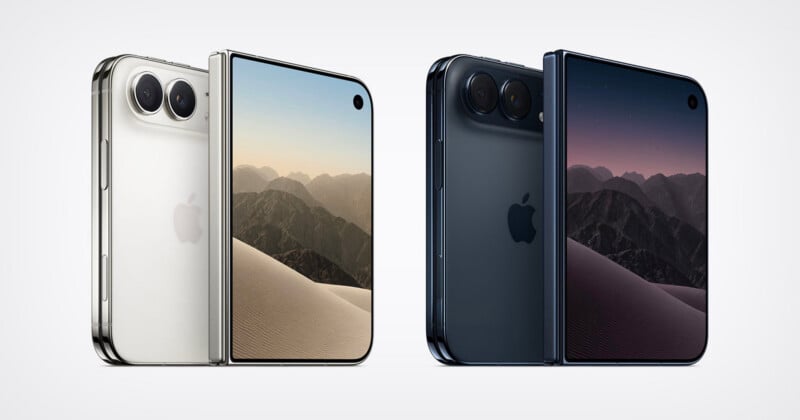
The camera system on the iPhone Duo diverges slightly from the absolute apex of Apple’s traditional Pro lineup, omitting a dedicated telephoto lens in favor of maximizing internal space. However, it incorporates a robust dual-camera array featuring a 48-megapixel Fusion Main camera and a 48-megapixel Fusion Ultra Wide camera.
While lacking the physical variable aperture lens found on the top-tier iPhone 18 Pro models, the Duo utilizes sensor-crop technology to deliver 2-megapixel "optical quality" zoom shots at a 2x focal length. For selfies and video calls, a sub-display front-facing camera is hidden beneath the inner screen, remaining nearly invisible during standard media consumption.
The foldable form factor introduces unique photographic workflows. When partially folded, the device functions as a native smart tripod, allowing users to stabilize the camera on flat surfaces and set automated timers for group photos or content creation. Furthermore, unfolding the device enables simultaneous recording from both front and rear cameras, with a real-time framing preview displayed on the outer screen. For videographers, the system supports 4Kp120 video recording in Dolby Vision, complete with post-capture Cinematic effects adjustable at up to 60 frames per second.

Pricing, Availability, and Market Implications
The iPhone Duo carries a base manufacturer’s suggested retail price of $1,999 for the 256GB storage configuration, squarely targeting the ultra-premium luxury segment. Preorders are scheduled to commence on October 16, with official retail availability and in-store shipping beginning on October 23.
Market analysts suggest that Apple’s entry into the foldable sector will serve as a powerful validation of the form factor, likely accelerating consumer adoption globally. While Android manufacturers have spent years pioneering and refining foldable hardware, Apple’s historically powerful brand ecosystem, combined with its rigorous hardware-software synergy, often shifts mainstream consumer perception overnight.

Whether the high price point will limit the iPhone Duo to early adopters and enterprise power users remains to be seen. However, by solving long-standing hardware hurdles such as screen creases and clunky software scaling, Apple has established a new design baseline for the future of mobile computing.