Maxon Unveils Redshift 2026.8 Introducing Procedural Scratches Shader and Enhanced Atmospheric Controls for Professional Rendering Workflows

Maxon, a leading developer of professional software solutions for editors, filmmakers, motion designers, and visual effects artists, has officially announced the release of Redshift 2026.8. This latest iteration of the industry-standard GPU-accelerated renderer introduces a suite of features designed to enhance surface realism and atmospheric depth while streamlining workflows for architectural visualization specialists. As the rendering landscape continues to shift toward a balance of speed and photorealistic precision, Redshift 2026.8 positions itself as a pivotal update for artists working across Cinema 4D, Houdini, Maya, and specialized architectural platforms like Revit and Vectorworks.
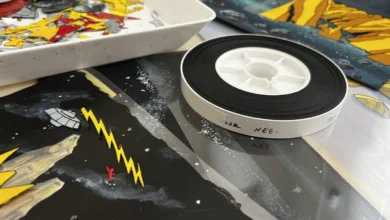
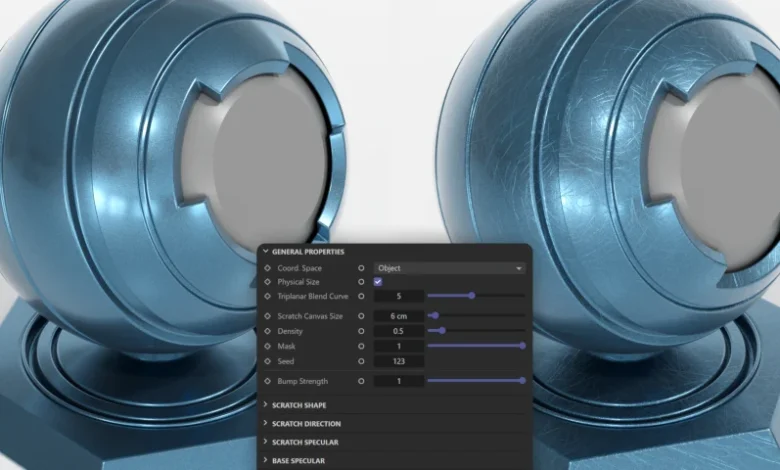
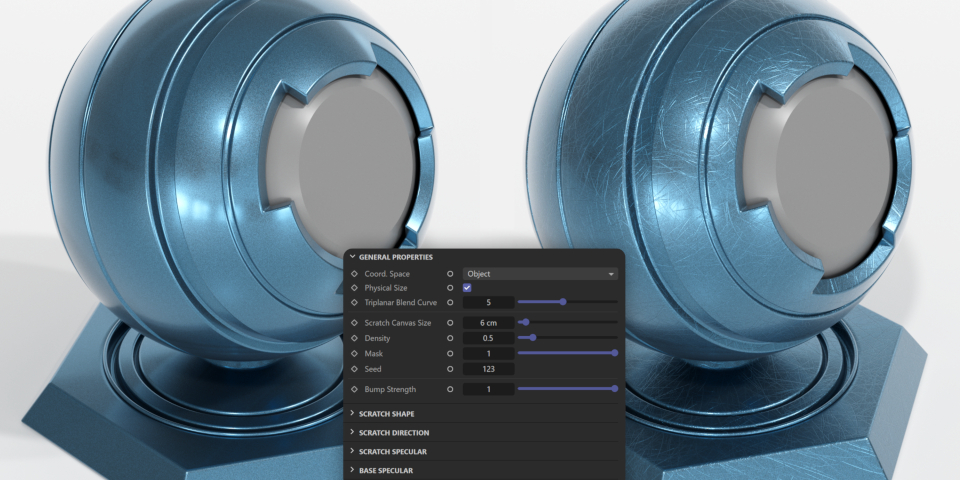
The headline feature of this mid-year update is the introduction of a dedicated procedural Scratches shader. This tool allows artists to simulate complex surface imperfections—such as fine abrasions, industrial wear, and micro-scratches—without the need for high-resolution image textures or external painting software. By utilizing a procedural approach, the shader ensures that surface details remain crisp at any distance, eliminating the "pixelation" issues often associated with traditional bitmap-based displacement or bump maps.
Technical specifications for the Scratches shader reveal a high degree of granularity. Users can manipulate parameters including scratch density, length, curvature, and orientation. This level of control is particularly significant for creating anisotropic materials, such as brushed aluminum or stainless steel, where the direction of microscopic scratches dictates how light reflects off the surface. Furthermore, the distribution of these scratches can be masked or influenced by additional texture maps or vertex attributes, allowing for "smart" wear patterns that accumulate naturally on the edges of 3D objects or in high-traffic areas of a digital model.
Advancements in Volumetric Environments and Atmospheric Realism
Beyond surface-level detailing, Redshift 2026.8 significantly upgrades its "Clouds" object, a tool that has become essential for environment artists and architectural illustrators. The update introduces a dual-layer system that separates low-altitude and high-altitude cloud formations. Previously, artists often struggled to create complex skies within a single procedural volume without encountering artifacts or excessive render times.
The new High Altitude layer is specifically optimized for cirrus-style formations. These thin, wispy clouds exist at the upper reaches of the troposphere and interact with sunlight differently than the dense, billowy cumulus clouds found in the lower atmosphere. By providing independent control over the scale, density, and animation of these layers, Redshift allows for more convincing time-lapse sequences and static renders. The high-altitude layer can be animated independently, simulating the real-world phenomenon where wind speeds and directions differ at various atmospheric levels, thereby adding a subtle but crucial layer of parallax and realism to outdoor scenes.
Industry analysts suggest that these atmospheric improvements are a direct response to the growing demand for "out-of-the-box" environmental tools that reduce the reliance on third-party VDB (OpenVDB) caches. By generating these volumes procedurally within the renderer, studios can significantly reduce file sizes and network overhead during the rendering process.
Specialized Enhancements for the Architecture and Construction Sector
The 2026.8 update also places a heavy emphasis on "Redshift for Archviz," a specialized branch of the renderer tailored for the Architecture, Engineering, and Construction (AEC) industries. Following the recent integration of Redshift into Vectorworks and Revit, Maxon has focused on "frictionless" workflows that allow architects to produce high-end renders without deep technical knowledge of 3D shading.
Key improvements in the Archviz editions include the ability to save and recall post-effects presets. This allows firms to maintain a consistent "visual brand" across different projects by standardizing color grading, bloom, and photographic exposure settings. Additionally, a new storyboard menu context has been implemented, enabling users to save specific scene states, camera views, and animation paths into a unified organizational structure. This is particularly useful for client presentations, where an architect may need to jump between different lighting scenarios or design iterations instantaneously.
Perhaps the most forward-looking addition to the Archviz toolkit is the introduction of an offline, AI-powered asset search. As digital asset libraries grow into the tens of thousands of models and materials, finding the specific "modern oak chair" or "brushed brass faucet" can become a bottleneck. The new AI search utilizes local machine learning models to index and categorize assets based on visual and metadata characteristics, allowing for rapid retrieval even when a workstation is not connected to the internet—a critical requirement for many high-security architectural firms.
Chronology of Redshift Development and Market Context
The release of version 2026.8 follows a rapid development cycle that has defined Maxon’s strategy since its acquisition of Redshift Rendering Technologies in 2019. Over the past several years, the software has transitioned from a niche GPU renderer favored by boutique motion graphics houses to a cornerstone of the global VFX pipeline.
- 2021-2022: Maxon focused on "Redshift Everywhere," expanding CPU support to allow users without high-end NVIDIA GPUs to utilize the renderer, and launching the initial versions for macOS using Apple’s Metal API.
- 2023-2024: The focus shifted to "Standard Surface" parity, ensuring Redshift materials behaved predictably when moved between different DCC (Digital Content Creation) tools like Houdini and Katana.
- 2025-Early 2026: Recent updates, including 2026.4 and 2026.7, introduced "Redshift Live," a real-time previewing engine designed to compete with technologies like Unreal Engine and NVIDIA Omniverse.
The 2026.8 update represents a "polishing" phase, where the raw power of the GPU engine is augmented with sophisticated procedural tools and workflow optimizations that cater to both high-end film production and the fast-paced world of architectural design.
Technical Specifications and Ecosystem Compatibility
Redshift 2026.8 maintains broad compatibility across various operating systems and hardware configurations. On Windows, the software requires Windows 10 or later, while Linux users need a distribution with glibc 2.28 or higher. For the Apple ecosystem, Redshift remains a flagship for "Pro" hardware, requiring macOS 14.0 (Sonoma) or later to take full advantage of the latest Metal performance optimizations.
The plugin ecosystem for Redshift is one of the most extensive in the industry. The 2026.8 update is compatible with:
- Autodesk 3ds Max: 2018 and newer
- Maxon Cinema 4D: 2023 and newer
- SideFX Houdini: 19.0 and newer
- Foundry Katana: 5.0 and newer
- Autodesk Maya: 2018+ (Windows/macOS), 2022+ (Linux)
- Autodesk Revit: 2024 and newer
- Vectorworks: 2026.4 and newer
- Maxon ZBrush: 2023 and newer
This cross-platform compatibility is a major selling point for large-scale studios that utilize "mixed-DCC" pipelines, where a character might be modeled in ZBrush, animated in Maya, and rendered in a Houdini-based environment.
Market Analysis and Industry Implications
The introduction of procedural shaders like the Scratches tool reflects a broader industry trend toward "intelligent" rendering. As production schedules tighten, the time required for manual UV unwrapping and texture painting is becoming a luxury many artists cannot afford. By moving these details into the shader level, Maxon is effectively "democratizing" high-end look development.
Furthermore, the expansion of the Archviz features suggests that Maxon is looking to capture a larger share of the visualization market currently dominated by V-Ray and Chaos Corona. By integrating Redshift directly into Revit and Vectorworks, Maxon is bypassing the need for architects to export their models to intermediate software like Cinema 4D, thereby reducing the "barrier to entry" for photorealistic rendering.
While some users have expressed concerns over the rental-only subscription model—currently priced at $49 per month or $289 annually—Maxon argues that this model allows for the continuous delivery of updates like 2026.8. Instead of waiting for a single "major" annual release, subscribers receive incremental features as soon as they pass beta testing.
Official Responses and Looking Ahead
In statements surrounding the release, Maxon representatives emphasized the software’s commitment to performance. "Redshift 2026.8 is about giving artists the tools to add that final 10% of realism that makes a render truly indistinguishable from a photograph," noted a member of the development team on the official Maxon forum. "Whether it’s the way light catches a scratch on a metal surface or the subtle layering of clouds in a sunset sky, these details matter."
User feedback from the initial rollout has been largely positive, particularly regarding the Scratches shader’s ability to handle complex anisotropic reflections without significant render time hits. As GPU hardware continues to evolve with more VRAM and faster ray-tracing cores, Redshift is well-positioned to remain a leader in the field.
Looking forward, the industry expects Maxon to continue integrating AI-driven features into the rendering core. With the 2026.8 update’s AI asset search acting as a precursor, future versions may see AI-assisted denoising, automated light placement, or even generative texture synthesis, further blurring the line between traditional 3D rendering and artificial intelligence. For now, Redshift 2026.8 stands as a robust, feature-rich update that reinforces the renderer’s reputation for speed, versatility, and uncompromising visual quality.