The AI Filmmaker’s Odyssey: Challenging the Boundaries of Cinema in the Age of Artificial Intelligence

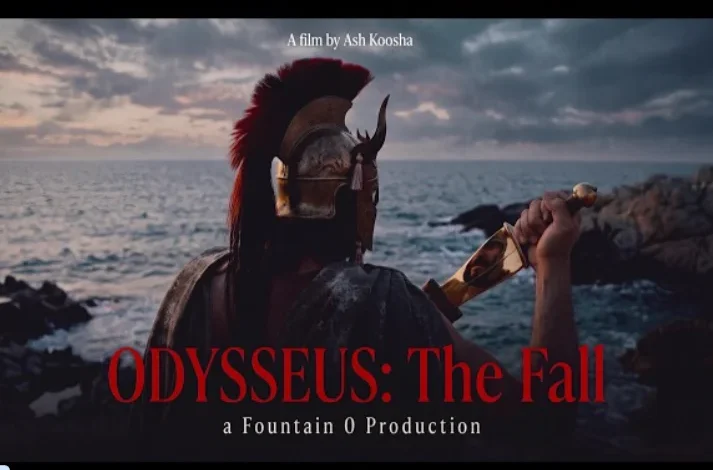
The announcement that an artificial intelligence filmmaker was creating a 135-minute cinematic adaptation of Homer’s The Odyssey sent ripples of surprise and skepticism through the film industry and beyond. The project, titled Odysseus: The Fall, was conceived by Iran-born, England-raised engineer Ash Koosha, a figure already known for his AI-driven work, including the Tribeca-debuting Dreams of Violet, a film that addressed the recent Iranian democracy protests. The timing of Koosha’s announcement, coinciding with a public debate between acclaimed director Christopher Nolan and actor Matt Damon about the future of large-scale analogue filmmaking, only amplified the discourse and controversy.
Koosha’s intention to release Odysseus: The Fall as a public domain work, albeit inspired by a classic narrative, immediately sparked questions about its purpose and potential impact. The significant cost disparity between Koosha’s production – reportedly a few thousand dollars with no human actors – and Nolan’s upcoming $250 million epic, also rumored to be inspired by The Odyssey, highlighted a stark contrast in filmmaking methodologies. This juxtaposition led many to perceive Koosha’s endeavor as a provocative challenge to established cinematic traditions, potentially heralding the very "end-of-cinema" moment that figures like Matt Damon had expressed concerns about.
To address the burgeoning questions and nascent backlash, The Hollywood Reporter engaged in a comprehensive discussion with Ash Koosha, his brother and collaborator Pooya Koosha, and their producer Tom Rogers, founder of CNBC and co-founder of the AI-centric film production banner Fountain 0. Their collective vision, they explained, is not to directly compete with or devalue traditional filmmaking, but rather to explore and expand the possibilities of AI as a creative tool, thereby democratizing cinematic storytelling.
A New Dawn for Storytelling: Koosha’s Vision
Ash Koosha articulated his perspective on the perceived conflict with Christopher Nolan’s work, emphasizing that their aim is not to pit themselves against the established giants of cinema but to carve out a new space within the evolving landscape. "There’s been a lot of excitement, and a lot of questions, and a lot of confusion," Koosha stated. "One thing we want to clear up is that we’re not going against Christopher Nolan. He’s doing what he’s doing in the old world of cinema. And he does it brilliantly. But there’s room for something in the new world."
Koosha revealed his long-standing fascination with The Odyssey, a passion ignited in his childhood and further fueled by online communities dedicated to Homer’s epic. "I’m an Odyssey fan since I was a little kid," he shared. "I learned about Nolan’s movie from a Homer-focused Reddit. I’ve been immersed in all the questions about all the details, like Agamemnon’s outfits and everything else. My goal is not to make a movie that is the same as his. It’s to use the tools to make my own version of the story."
Connecting the Threads: From Protest to Epic
The comparison between Dreams of Violet and Odysseus: The Fall was a recurring theme. While Dreams of Violet was seen by many as a sympathetic and necessary project, born out of the inability to film safely in Iran and addressing a humanitarian crisis, Odysseus: The Fall was perceived by some as a more abstract, potentially exploitative endeavor. Ash Koosha, however, views the two projects as intrinsically linked. "I see them as related," he explained. "Dreams of Violet raised questions and this raises deeper questions – questions that are important for the industry. ‘Can we have stories at the speed of news?’ ‘Can other people paint with tools besides people like Christopher Nolan?’ ‘What can be created if they can?’"
He further clarified that his intention is not to create mere "knockoff" productions that trade on existing hits. Instead, he positions Odysseus: The Fall as part of a broader cultural conversation. "Before these AI tools if I had a theory about Odysseus I could write a Substack about him. And some people would read it but how many? Now I can put my take into a film. I can paint my opinion with images and sound and light. And a lot more people can see it." This perspective reframes the project not as a derivative genre piece but as a "discourse vehicle."
Tangential Filmmaking: A New Paradigm
Koosha introduced the concept of "tangential filmmaking," a term he uses to describe the creation of "other stories that can exist with the main one in cinemas." This suggests a model where AI-generated content can coexist alongside traditional blockbusters, offering alternative interpretations and perspectives.
Tom Rogers elaborated on this vision, acknowledging the inherent challenge of operating in the same space as a filmmaker of Christopher Nolan’s caliber. "Obviously, it’s hard to be in the same arena as Christopher Nolan; everyone agrees his Odyssey is the superior film. And we want people to see that film. But hopefully, they see ours too," Rogers stated. He drew a clear distinction between Nolan’s mastery of "physical filmmaking" and their pursuit of excellence in "AI filmmaking."
Ash Koosha echoed this sentiment, emphasizing the nascent stage of AI in filmmaking. "You can’t judge them on the same terms," he argued. "They’re at 125 years and we’re in our infancy. So of course, there are going to be bumps in the road. But it’s what you can achieve by trying. To me, the risk is low and the reward is high: a whole new kind of cinema."
Rogers added that the absence of traditional budgetary constraints in AI filmmaking allows for unprecedented creative exploration. "We’re just trying to show what’s possible when you don’t have to worry about budgets. We want people to see it’s not all slop."
A Deeper Understanding of Odysseus
Koosha also shed light on his specific interpretation of the character of Odysseus. He believes the epic hero is often misunderstood, and his personal journey from Iran to the West has informed his perspective. "I don’t think he’s well-understood," Koosha remarked. "I don’t want to say too much but I think as someone who came from Iran and moved to the West as a child, I can understand something about his story, about what it means to be far from home. How it wasn’t just about ego motivating him." This personal connection suggests a more nuanced and emotionally resonant portrayal of Odysseus, moving beyond traditional interpretations.
The Chronology of Release and the Future of Cinema
Regarding the release of Odysseus: The Fall, the team indicated a strategic delay. Pooya Koosha explained, "We want to wait a while, at least until late summer. We don’t want people to feel overloaded and confused. That’s important to us." Rogers concurred, adding, "We could have released it now but we’re not trying to trick people. We want them to be able to clearly compare." This deliberate approach underscores their commitment to fostering a clear dialogue and allowing for considered comparison between traditional and AI-generated cinematic experiences.
The Analogy of the Early Web and Democratization
The concept of "tangential filmmaking" was further explored through an analogy to the early days of the internet and blogging. Just as the web democratized media creation and consumption, Koosha believes AI will do the same for cinema. "There is room for all kinds of cinema and AI finally makes that possible," he stated. "We’ve had so many years when making cinema was dependent on having enough money, and unless you’re Christopher Nolan, you couldn’t make a movie of a certain scale, and even he couldn’t sometimes. The concentration of revenue became a barrier to entry. All of that is going to go away. That’s what we’re trying to bring about."
Pooya Koosha expressed hope that this would inspire a wave of new creators. "We hope a lot of other people come in and do this. This is about something very broad and democratic." Tom Rogers affirmed this mission, stating, "That’s the whole goal of Fountain 0 – to look for the best use of the tools."
The Role of Actors in an AI-Dominated Landscape
The discussion inevitably turned to the role of human actors in a future where AI filmmaking becomes more prevalent. Rogers offered a perspective that suggested an elevated value for actors. "I think this will make actors more valuable, whether it’s in an old-world movie or live theater," he posited. "People will want to see them too, maybe even more than they do now."
This vision presents a fascinating dichotomy: a world where traditional, actor-centric cinema continues to thrive, while a parallel universe of AI-generated content flourishes alongside it, offering diverse forms of storytelling. Ash Koosha concluded, "That’s all we’re trying to do. To show you can make great films in the manner that Christopher Nolan does. But you can make gorgeous films using AI models too."
The implications of this development are far-reaching. The potential for AI to lower the barrier to entry for filmmakers could lead to an unprecedented explosion of creative content, much like the early internet did for written and visual media. This democratization could empower diverse voices and perspectives that have historically been excluded from mainstream cinema due to financial or logistical constraints. However, it also raises profound questions about the definition of authorship, the future of creative industries, and the enduring appeal of human performance. As Odysseus: The Fall prepares for its release, it serves as a significant marker in the ongoing evolution of filmmaking, challenging our assumptions and inviting us to consider a future where the lines between human and artificial creativity blur.