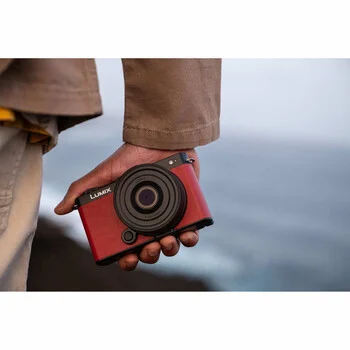
The camera industry, facing an existential crisis in 2026, is confronting an uncomfortable truth: for the vast majority of consumers, a dedicated camera is no longer a necessity. The ubiquitous smartphone, with its ever-advancing computational photography capabilities, has rendered standalone cameras largely redundant for casual shooting. This reality necessitates a fundamental strategic shift, moving away from the long-held focus on technical specifications and towards cultivating a sense of desire and emotional connection with consumers. The industry’s recent successes, particularly with aesthetically pleasing and experience-driven cameras, suggest that survival hinges on tapping into what people want, not just what they need.
The Folly of the Spec Race
For decades, the camera industry operated under a well-established paradigm: continuous improvement of technical specifications. Megapixel counts steadily increased, frame rates climbed, and ISO ranges expanded, each new model promising incremental leaps in performance. This relentless pursuit of numbers, while generating impressive marketing copy and fueling internal competition, ultimately proved to be a dead end in the face of smartphone dominance. The result was a generation of technically superlative, yet emotionally inert, devices. These "capable black boxes" performed exceptionally well on paper but failed to inspire a deep connection with users.
This competitive strategy was fundamentally flawed because it was a direct race against the smartphone, a device that already held an insurmountable advantage in the key areas for casual photography: convenience, connectivity, computational power, and constant availability. While dedicated cameras retain significant strengths in optical quality, sensor size, lens versatility, ergonomic design, telephoto reach, and professional video capabilities, these advantages are increasingly niche. For the everyday snapshot, a task most people undertake daily, competing with a smartphone on convenience and processing power is akin to a pocket calculator attempting to out-perform a supercomputer in arithmetic. The camera industry spent years chasing the casual shooter, a demographic that had compelling reasons to migrate to their phones and little incentive to return to a dedicated device that offered little more than marginal improvements in areas they didn’t prioritize.
The Pivot to Desire: A New Paradigm Emerges
A discernible shift began to occur within the industry, with a select few camera models demonstrating an alternative path to market success. Cameras like the Fujifilm X100VI, the Nikon Zf, and the Panasonic Lumix S9, among a growing cohort, embraced a seemingly radical concept: a camera should be a beautiful object that users want to hold and interact with. For models such as the Fujifilm X100VI and the Nikon Zf, this translated into tactile, physical dials that eschew complex menu systems, evoking a nostalgic connection to the golden age of photography through their vintage-inspired designs. In the realm of style-conscious compacts, exemplified by the Panasonic Lumix S9, the focus shifted to compact, characterful bodies designed around the sheer pleasure of shooting and sharing, rather than an exhaustive spec sheet.
This approach fundamentally changes the competitive landscape. These cameras compete on the very essence of the shooting experience itself, an aspect that smartphones, by their very nature, cannot fully replicate. The market’s enthusiastic response to these aesthetically driven, experience-focused cameras has provided a powerful refutation of the spec-race argument.
The quantitative evidence supporting this pivot is compelling. The Fujifilm X100VI, launched in early 2024, experienced immediate and sustained demand, leading to six-month waiting lists and significant premiums on the secondary market, a situation that persisted for approximately two years. It achieved the remarkable feat of becoming the best-selling camera at Japan’s Map Camera in 2024, outperforming all other compacts, interchangeable-lens bodies, and full-frame cameras, despite chronic backorders. Similarly, the Nikon Zf, a full-frame retro-styled camera priced around $2,000, secured the fourth position overall at the same retailer. This indicates that a camera designed around its tactile feel and aesthetic appeal could outsell more conventional offerings. While Map Camera is a significant specialty retailer in Shinjuku, the broader market trends align. Japanese domestic camera sales experienced growth in 2023 for the first time in over a decade, a trend that has continued. While post-pandemic travel and leisure spending certainly contributed to this rebound, the robust sales of cameras like the X100VI and Zf suggest that a renewed sense of desire was a critical factor. Retail tracking data indicates that Japanese compact camera sales more than doubled year-over-year in 2025.
Sony arguably initiated this trend, perhaps partly driven by self-interest, by introducing smaller, more characterful camera bodies that reminded consumers that cameras could be desirable objects. However, it was Fujifilm and Nikon who most fully embraced this new philosophy. Fujifilm’s film simulations and intuitive dial controls transform the act of shooting into a tactile ritual, while Nikon demonstrated that a retro-styled full-frame camera could command a premium price and still achieve significant market penetration. These manufacturers shifted their focus from asking "What does a camera need to do?" to "What should a camera make you feel?"
The Undeniable Power of "Cheap" Cameras
The assertion that desire is the driving force behind camera purchases is further solidified by the explosion of inexpensive, low-fidelity cameras. These devices, which would be considered technically inferior by any objective measure, have achieved remarkable commercial success, demonstrating that desirability has little to do with image quality.
Consider the Kodak Charmera, a miniature keychain camera retailing for approximately $35. It captures 1.6-megapixel images, producing output roughly equivalent to an early camera phone in resolution. By all technical standards, it is a poor performer. Reviewers have widely criticized its image quality, and any modern smartphone would effortlessly surpass it in every quantifiable metric. Yet, the Charmera went viral, sold out upon launch, attracted scalpers, and, most significantly, garnered prestigious design accolades such as the iF Design Award and the Red Dot Design Award. A 1.6-megapixel toy camera producing soft, noisy images is being celebrated by the same industry that meticulously obsesses over corner sharpness and dynamic range.
The explanation for this phenomenon is central to the article’s thesis: the "bad" photos are not a flaw to be overcome, but rather the very essence of the product. The Charmera’s lo-fi images possess an imperfect, nostalgic, "of-the-moment" aesthetic that resonates with a generation raised on flawless smartphone output. This appeals to a desire for images that feel more authentic, a reaction against the often overly processed and clinically perfect visuals produced by modern mobile devices. The camera’s distribution through blind boxes adds a collectible, game-like element to the purchase, and its design allows it to function as a fashion accessory, clipped to a bag as much as a tool. Consumers are not purchasing the Charmera to produce high-quality photographs; they are buying it because it is fun, distinctive, and personal – a pure manifestation of want over need.
This underlying logic fuels a broader category of cameras, extending beyond mere retro styling. This includes Fujifilm’s dial-driven models, pocketable Ricoh GR IV compacts, creator-focused compacts, budget point-and-shoots, and even screenless, distraction-free options like the Camp Snap, the Paper Shoot camera made of sustainable stone paper, and various toy and keychain cameras. Their common thread is not necessarily a vintage aesthetic, but rather their compact size, low-friction operation, and personality-forward design. These are cameras users want to carry because using them is an enjoyable experience rather than a chore. The fact that a $35 toy camera and a $4,000 Leica are both succeeding by tapping into the same underlying consumer desire underscores where the industry’s true value now resides: in the act of wanting, not in the sensor.
Navigating the Honest Tensions
This strategic pivot towards desire is not without its inherent risks and complexities. Building a product strategy on desire, a far more ephemeral quality than measurable capability, presents significant challenges. A technical advantage is quantifiable and enduring, whereas a particular "vibe" can dissipate rapidly as cultural trends evolve. The recent surge in cheap, low-fidelity cameras, for instance, carries the distinct characteristics of a fad, and manufacturers must exercise caution to avoid over-investing in novelty items.
Furthermore, the substance behind the styling is crucial. A retro-styled camera with genuine engineering innovation, such as the Fujifilm X100VI or Nikon Zf, represents a legitimate product. However, this trend also invites cynicism, and the industry has, at times, earned it. Canon’s 2025 reissue of the PowerShot Elph 360 HS, a 2016 point-and-shoot model with largely unchanged specifications, fewer wireless features, and an increased price, exemplifies this potential for superficiality. While capitalizing on the compact camera resurgence, it offered little genuine innovation. Retro styling can easily become a thin veneer over indifference, and consumers will eventually discern the difference. Even in genuine efforts, imperfections can emerge. The Nikon Zf, while aesthetically pleasing, can lose some of its vintage charm when paired with a modern Z lens adorned with numerous buttons and lacking an aperture ring, highlighting the potential disconnect between design philosophy and functional integration.
The issue of product scarcity also warrants careful consideration. Fujifilm’s CEO has publicly stated that overproduction and price reductions would be detrimental to maintaining premium value, citing Leica as a model for premium positioning. While Fujifilm has denied deliberate scarcity strategies, asserting that they are producing and shipping the X100VI as rapidly as possible, a degree of ambiguity persists. It is plausible that the company is experiencing genuine supply chain constraints while simultaneously recognizing the prestige and market demand that sustained waitlists can confer. The risk lies in how this situation is perceived by consumers. Buyers who simply wish to purchase a camera at its advertised price, without engaging in a lottery or enduring extended waiting periods, may reasonably conclude that scarcity is being tolerated rather than actively addressed, regardless of the company’s intent. While desire is a potent motivator, an industry that relies on frustrated demand to cultivate mystique risks alienating its customer base and fostering resentment.
The Correct Path Forward
Despite these challenges, the strategic pivot towards desire is unequivocally the correct course of action. The alternative – continuing to compete with smartphones on technical capability – is a trajectory that leads towards obsolescence. By rediscovering the camera as an object of desire, a tactile and characterful item worth wanting for its own sake, the industry has identified a unique market position that smartphones cannot penetrate.
The smartphone will always maintain its advantages in convenience, connectivity, and computational power for casual photography. However, it will never be the device that users instinctively reach for because the act of using it brings inherent pleasure. This distinction, the intrinsic joy derived from the object itself and the deliberate process of creating an image with it, is not merely a marketing tactic. It represents the entire future of the dedicated camera industry. The companies that truly grasp this paradigm are the ones that will remain relevant and thriving in the coming decade.
In essence, the most intelligent strategic decision the camera industry has made in years is to cease striving to be essential and instead focus on being desirable. It has finally recognized that this is the winnable fight.
For individuals seeking to deepen their understanding of deliberate, hands-on photographic craft, foundational resources like "Photography 101" offer essential guidance on utilizing manual controls with intention. Complementary educational materials, such as "The Well-Rounded Photographer: 8 Instructors Teach 8 Genres of Photography," provide valuable insights into how professional photographers leverage simple, characterful tools across diverse photographic disciplines.