Unlocking Peak Productivity: How Long-Running AI Coding Agents Are Redefining Software Development Workflows

The landscape of software development is undergoing a profound transformation, driven by the rapid advancements in artificial intelligence, particularly the emergence of highly capable coding agents. These sophisticated AI entities are increasingly demonstrating an ability to undertake complex programming tasks with minimal human intervention, fundamentally shifting the traditional development paradigm. The critical next frontier in harnessing their full potential lies in enabling these agents to operate autonomously for extended periods, ideally through long-running, uninterrupted sessions. This capability is proving to be a cornerstone for maximizing efficiency, accelerating development cycles, and addressing the new bottlenecks that have emerged in the AI-augmented software engineering workflow.
The Evolution of AI in Software Development: From Tools to Autonomous Agents
The integration of AI into software development has progressed dramatically over the past decade. Initially, AI tools offered assistance through features like intelligent code completion, syntax highlighting, and basic debugging suggestions within Integrated Development Environments (IDEs). Tools such as GitHub Copilot marked a significant leap, providing context-aware code generation that drastically sped up routine coding tasks. However, the current wave of "coding agents" represents a qualitative jump, moving beyond mere assistance to autonomous task execution.
These advanced agents, exemplified by models like Claude Opus (and its subsequent iterations such as Claude Fable mentioned in emerging contexts) and leading-edge models like the hypothetical GPT-5.6 (or advanced versions of GPT-4 and beyond), are designed not just to generate code but to understand higher-level goals, break them down into sub-tasks, execute those tasks, and even self-correct. Their prowess in sustained reasoning and problem-solving has reached a point where they can tackle multi-stage development projects, from initial concept to deployment, with remarkable independence. This evolution has redefined the very nature of developer interaction, moving from direct instruction to more supervisory roles. The ability of these agents to "run for longer periods of time, being more eager to complete the goals" signifies a maturation in their design, pushing the boundaries of what autonomous systems can achieve in a professional coding environment.
The Bottleneck Shift: From Code Generation to Human Oversight
Paradoxically, as AI coding agents have become more powerful and efficient at generating and implementing code, a new bottleneck has emerged: human review time. Prior to the widespread adoption of highly autonomous agents, the primary constraint in software development was often the sheer volume of coding required, limited by human typing speed, knowledge recall, and problem-solving capacity. With agents now capable of producing vast amounts of functional code swiftly, the constraint has shifted.
Post-milestones like the release of Claude Opus 4.5, which significantly enhanced agent capabilities, the bottleneck within coding has transitioned from code implementation to the meticulous process of human verification and review. Engineers now spend less time writing code and more time scrutinizing the AI-generated output, ensuring its correctness, adherence to specifications, security, and integration within existing systems. This review process, while crucial for quality and safety, can be time-consuming and labor-intensive. Studies by industry analysts suggest that for complex projects, human review can account for 30-50% of the total development cycle when AI agents are heavily utilized. Minimizing this human review overhead becomes paramount for unlocking the full productivity gains offered by AI agents. The objective, therefore, is to empower agents to perform more comprehensive self-assessment and rectification before presenting their work for human approval, thereby reducing the frequency and intensity of human interaction.
Architecting for Autonomy: Key Strategies for Persistent Agent Operation
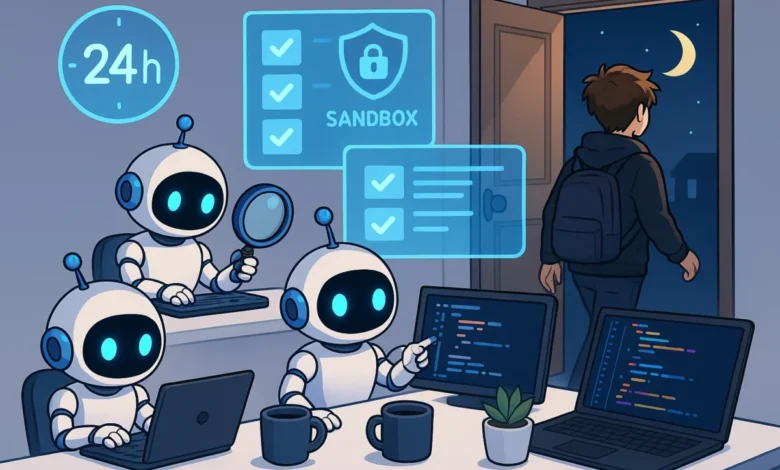
To effectively transition to a workflow where coding agents can run for extended durations—potentially for over 24 hours or even longer—specific architectural and operational strategies must be implemented. These strategies aim to minimize interruptions, enhance agent self-sufficiency, and ensure a secure and efficient environment.
Streamlining Permissions and Sandboxing for Security
One of the most immediate and impactful steps to enable long-running agents is to pre-configure all necessary permissions. Frequent interruptions to request human input for file access, network connections, or system modifications are a significant impediment to autonomous operation. In most development scenarios, these permissions are routinely granted, making automated approval a logical step. Tools like Codex and Claude Code often provide settings for "auto-mode" or "skip all permissions," which can be activated.
However, granting broad permissions necessitates robust security measures. Running agents in a sandbox environment is not merely a recommendation but a critical safeguard. A sandbox isolates the agent’s execution environment from the host system, preventing unintended access or modification of critical files and data outside its designated workspace. This isolation is crucial, especially in light of past incidents. For instance, OpenAI publicly acknowledged a rare but significant issue where a GPT model, under specific circumstances, could inadvertently delete user files. While such occurrences are exceedingly rare, the potential consequences underscore the importance of preventative measures.
Beyond sandboxing, comprehensive data backup strategies are indispensable. Storing all code and project assets in version control systems like GitHub ensures secure storage, change tracking, and easy restoration. Additionally, regular system-wide backups, such as using Apple’s Time Machine or similar solutions on other operating systems, provide an extra layer of protection against data loss, whether due to agent error or other unforeseen events. These combined approaches create a secure operational framework that allows agents to function autonomously without posing undue risk to the development environment or data integrity.
Enabling Self-Verification: Agents as Autonomous Testers
A cornerstone of extended autonomous operation is the agent’s ability to verify its own work. This capability significantly reduces the need for human intervention to check for correctness and completeness. The effectiveness of self-verification hinges on how tasks are described to the agent and the tools provided for its assessment.
Detailed, explicit instructions are paramount. Beyond merely outlining the desired outcome, developers must define the criteria for success and, crucially, how the agent should test and know when its work is complete. This includes specifying test cases, expected outputs, and verification methodologies. For example, when tasked with implementing a specific UI design, the agent should be instructed to:
- Implement the design precisely.
- Capture screenshots of the reference design and its own implementation.
- Compare these screenshots programmatically to identify discrepancies.
- Report any significant deviations for human review, especially if they stem from technical infeasibility within the existing codebase (as designers may not always account for all architectural constraints).
To facilitate this, agents can be granted browser access (e.g., to Chrome) to render designs and implementations, take screenshots, and perform visual comparisons.
This philosophy extends to all programming tasks. For backend development, agents should be instructed to run comprehensive unit tests, integration tests, and potentially end-to-end tests to validate their code against defined requirements. By embedding verification steps directly into the agent’s workflow, human oversight can transition from granular code review to higher-level architectural validation and decision-making on reported discrepancies. This not only extends agent runtime but also improves the quality and reliability of the output, as agents can iterate on fixes based on their own test failures.

Automated Code Review: The Role of Agentic Oversight
While enabling agents to verify their own work within a specific task is powerful, extending this capability to a broader, agentic code review process provides an even greater leap in autonomy and efficiency. This strategy minimizes the need for human code reviewers, freeing up valuable engineering time. Many experts believe that properly configured AI review agents can virtually eliminate many common bugs introduced by new code, especially for non-critical application components.
One leading tool in this domain is Codex, which offers robust code review capabilities. Developers can integrate Codex directly into their GitHub workflows, allowing it to automatically review pull requests (PRs) when tagged. Alternatively, Codex can be triggered via a Command Line Interface (CLI) to compare two branches and generate a comprehensive review. The CLI method often offers faster feedback cycles, avoiding potential delays associated with GitHub’s webhook processing.
By leveraging agentic code review, teams can significantly accelerate their continuous integration/continuous deployment (CI/CD) pipelines. Agents can identify potential bugs, suggest optimizations, and ensure coding standards are met, allowing human engineers to focus on more complex architectural decisions, system design, and critical security audits. This automated layer of review ensures consistent code quality and reduces the cognitive load on human developers, enabling them to push more code to production with higher confidence.
The Imperative of Remote Execution for Uninterrupted Workflows
For agents to truly run for extended periods, uninterrupted by the vagaries of human schedules or hardware limitations, remote execution is essential. Running agents locally on a developer’s machine offers immediate access and ease of setup, allowing for real-time observation of browser interactions or code execution. However, this convenience comes at the cost of vulnerability to interruptions. Closing a laptop, system updates, or even simply moving to a different location can terminate an ongoing agent session. While workarounds like disabling sleep mode exist (e.g., on macOS), they often lead to overheating and are generally impractical for prolonged, unattended operation.
Remote execution, by contrast, involves running agents on a dedicated server, a secondary always-on computer, or within a cloud environment. This ensures that agent sessions persist irrespective of the developer’s local machine status.
- Dedicated Local Server/Secondary Machine: Many developers adopt a hybrid approach, using their primary powerful machine for interactive development while dedicating a secondary, always-on computer (often a less powerful but reliable machine) for long-running agent tasks. This setup provides a balance of control and persistence, allowing continuous operation without tying up the main workstation.
- Cloud Environments: Running agents in the cloud (e.g., AWS, Google Cloud, Azure) offers scalability, robustness, and true "always-on" capability. Cloud instances can be configured with ample computational resources and are inherently designed for continuous operation. However, this approach introduces additional considerations, such as managing sensitive data and secrets in the cloud, which requires stringent security protocols and compliance. Setting up cloud environments can also be more complex initially compared to local or secondary machine setups.
While remote execution might initially require a more complex setup and offers less immediate visual feedback on agent activities, the benefits of uninterrupted, persistent operation for critical, long-duration tasks far outweigh these challenges. As agent workflows become more central to software development, remote execution is poised to become the standard, enabling developers to initiate complex projects and trust that agents will diligently work towards completion without human oversight for days on end.
Broader Implications and the Future Landscape
The rise of long-running, autonomous coding agents carries profound implications across the software development lifecycle, extending to economic, ethical, and professional dimensions.
Transforming Developer Roles
The shift enabled by highly autonomous agents will fundamentally alter the role of human developers. Rather than spending a majority of their time on coding, engineers will increasingly pivot towards higher-level functions:
- Architectural Design: Focusing on system design, scalability, and robust architecture.
- Strategic Oversight: Managing and orchestrating multiple agents, defining high-level objectives, and ensuring alignment with business goals.
- Complex Problem Solving: Tackling novel challenges that still require human creativity, intuition, and ethical reasoning, which AI agents are not yet equipped to handle.
- Agent Training and Refinement: Developing and fine-tuning agents, creating custom tools, and improving their ability to understand and execute tasks.
- Verification and Validation: While agents will self-verify, human engineers will perform critical final checks, especially for security, compliance, and user experience.
This evolution signifies a move towards "AI-assisted architecture" and "agent orchestration," elevating the developer’s role to a more strategic and intellectually stimulating plane.
Economic Impact and Competitive Advantage
For businesses, the effective deployment of long-running AI coding agents translates directly into significant economic advantages:
- Accelerated Time-to-Market: Faster development cycles mean products and features can be delivered to market more quickly, gaining a competitive edge.
- Cost Efficiency: While initial investment in AI tools and infrastructure is required, the long-term reduction in human hours spent on routine coding and review tasks can lead to substantial cost savings.
- Increased Output: A single human engineer, augmented by autonomous agents, can potentially oversee and manage the output of multiple "virtual engineers," dramatically increasing team productivity.
- Innovation: Freeing human developers from mundane tasks allows them to dedicate more time to innovation, research, and developing groundbreaking solutions.
Companies that master the art of deploying and managing long-running agents will likely outpace competitors who rely solely on traditional, human-centric development models.
Ethical and Security Considerations
As AI agents gain more autonomy, ethical and security considerations become paramount. Ensuring that agents operate within defined ethical boundaries, do not introduce biases, and handle sensitive data responsibly is critical. The "OpenAI file deletion" incident, though rare, serves as a stark reminder of the potential for unintended consequences.
- Data Privacy: When agents process code or access databases, strict adherence to data privacy regulations (e.g., GDPR, CCPA) must be maintained.
- Bias in Code: AI models can inadvertently perpetuate biases present in their training data. Developers must actively monitor and mitigate such biases in agent-generated code.
- Security Vulnerabilities: Agents might generate code with subtle security flaws. Continuous vigilance, secure coding practices, and advanced static/dynamic analysis tools remain essential.
- Accountability: Establishing clear lines of accountability for agent-generated errors or security breaches is crucial in a legal and operational context.
These considerations necessitate robust governance frameworks, continuous monitoring, and ongoing research into secure and ethical AI development.
Conclusion
The era of long-running, autonomous AI coding agents is not merely an incremental improvement; it represents a fundamental paradigm shift in how software is conceived, developed, and maintained. By addressing the critical challenge of uninterrupted operation, developers can unlock unprecedented levels of productivity, allowing AI to handle the bulk of iterative coding and testing while human engineers focus on innovation, architecture, and strategic oversight. The strategies outlined—from proactive permission management and secure sandboxing to enabling comprehensive self-verification and implementing agentic code review, all underpinned by robust remote execution environments—are not just best practices; they are essential prerequisites for thriving in this new development landscape. As AI capabilities continue to evolve, the ability to deploy and manage agents that can operate autonomously for extended periods will increasingly define the efficiency and competitive edge of software development organizations worldwide. The future of programming is undoubtedly moving towards more intelligent, persistent, and self-sufficient AI collaborators.
Related posts: