The Star-Spangled Banner Takes Center Stage at World Cup Final, Sparking Debate Over Americanization of Global Football

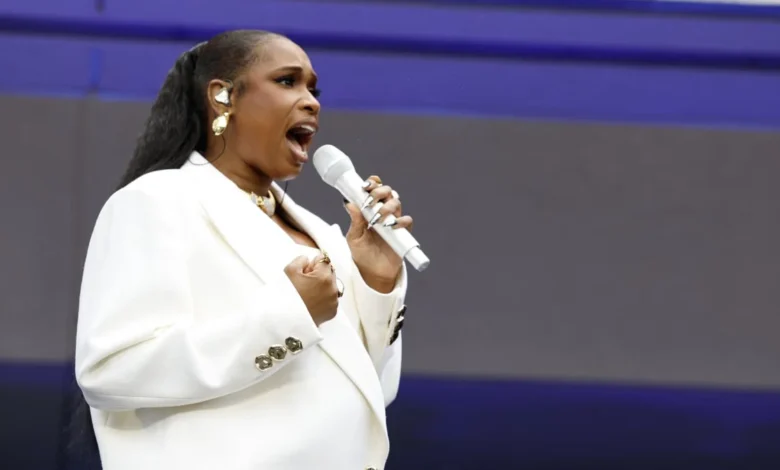
The U.S. national anthem, "The Star-Spangled Banner," is set to resonate through the New York New Jersey Stadium ahead of the FIFA World Cup final on Sunday, July 19, despite the absence of the American team from the culminating match. This decision, announced by FIFA on July 14, has ignited a considerable debate among football fans globally, questioning the rationale behind featuring a host nation’s anthem in a ceremonial capacity rather than as a direct representation of a competing team. Grammy Award-winning singer and talk show host Jennifer Hudson is slated to perform a "special rendition" of the anthem, a move FIFA justifies as part of a pre-game celebration acknowledging the tournament’s journey across its three host countries: Canada, Mexico, and the United States.
The Announcement and Immediate Repercussions
FIFA’s official statement confirmed Hudson’s participation, specifying that her performance would precede the highly anticipated final between Spain and Argentina at MetLife Stadium, known officially for the tournament as New York New Jersey Stadium. The news quickly spread across social media platforms and football forums, prompting an immediate surge of queries and criticisms. Many fans expressed confusion and even dismay, asking why the American anthem would be performed when neither the U.S. Men’s National Team nor the U.S. Women’s National Team (who did not participate in this men’s tournament) qualified for the final. The sentiment largely revolved around a perceived departure from traditional World Cup protocol, where only the anthems of the two competing nations are typically played immediately before kickoff.
The pre-game ceremony, scheduled to commence at 1:30 p.m. ET, 90 minutes before the 3 p.m. ET kickoff, is described by FIFA as a broader event designed to celebrate the entire tournament’s footprint. This includes highlighting the shared hosting duties of Canada, Mexico, and the United States. Since the grand finale is being held on American soil, FIFA’s explanation suggests Hudson’s performance is intended to symbolically represent the host nation’s contribution to the global spectacle. However, this explanation has not fully quelled the online discussion, with many fans pointing out the multi-national hosting arrangement and questioning why the national anthems of Canada and Mexico are not also being featured if the intent is to celebrate all host countries. The prevailing sentiment among critics is that this decision reflects an "Americanization" of the World Cup, prioritizing entertainment value and market appeal over the sport’s established traditions.
Historical Context: A Precedent from 1994
While the current situation has generated significant controversy, the concept of a host nation’s anthem being played at a World Cup final on American soil is not entirely unprecedented. When the United States last hosted the men’s World Cup in 1994, saxophonist Kenny G performed "The Star-Spangled Banner" during the closing ceremony. That event also took place before the final match, which saw Brazil triumph over Italy in a penalty shootout.
The 1994 instance, however, occurred in a vastly different media landscape. The prevalence of social media was non-existent, and immediate global reactions were far less amplified. While some purists might have raised eyebrows, the event did not trigger the widespread, instantaneous online debate witnessed today. This historical context underscores how FIFA’s current strategy is being scrutinized through a contemporary lens, where global connectivity allows for immediate and collective expressions of opinion, shaping the narrative around major sporting events. The comparison highlights a shift in audience expectations and the heightened sensitivity surrounding attempts to modify long-standing football traditions.
An Unprecedented Entertainment Extravaganza
Hudson’s performance of the national anthem is merely one component of an elaborate and unprecedented entertainment lineup planned for the World Cup final. FIFA has significantly expanded the pre-game and halftime festivities, signaling a clear intent to elevate the event beyond a traditional football match into a global entertainment spectacle, drawing parallels to American Super Bowl culture.
The pre-game ceremony, besides Hudson, will feature a constellation of international stars. Post Malone is set to headline the event, joined by acclaimed artists such as Robbie Williams, Nicole Scherzinger, and Laura Pausini. Additionally, popular streamer IShowSpeed is scheduled to perform, indicating FIFA’s strategic outreach to younger, digitally native audiences. Adding to the star power, Hollywood icon Tom Cruise is slated to make a still-unspecified special appearance, further cementing the event’s status as a cross-cultural entertainment magnet.
Perhaps the most significant departure from World Cup tradition is the introduction of a full-fledged halftime show. Historically, the halftime interval in football matches is reserved for team preparations and a brief interlude for fans. For this final, FIFA has unveiled an ambitious 11-minute performance curated by Coldplay frontman Chris Martin. The lineup is staggering, featuring music legends Madonna and Shakira, global K-Pop phenomenon BTS, and pop superstar Justin Bieber. Further diversifying the entertainment, Nigerian sensation Burna Boy, renowned Venezuelan conductor Gustavo Dudamel, the PS22 Chorus (featuring Coldplay), and beloved characters from Sesame Street and The Muppets are also scheduled to participate. This expansive halftime show is not merely for entertainment; it also supports the FIFA Global Citizen Education Fund, an initiative dedicated to expanding access to education and soccer programs for children worldwide, adding a philanthropic dimension to the spectacle.
Fan Backlash and the "Americanization" Debate
The extensive entertainment program, particularly the inclusion of the U.S. national anthem and the unprecedented halftime show, has fueled a robust debate among football fans and traditionalists. Online platforms are replete with comments expressing concern that FIFA is "Americanizing" the World Cup, sacrificing the sport’s unique cultural identity for broader commercial appeal. Critics argue that these additions dilute the purity of the sporting event, transforming it into a made-for-television spectacle reminiscent of American sports leagues like the NFL or NBA, which are known for their elaborate pre-game and halftime productions.
Many traditional football fans voice apprehension that these changes signal a long-term shift in the World Cup’s format, potentially altering the very essence of the tournament that has captivated billions for decades. The criticism extends to other tournament modifications, such as the previously implemented "hydration breaks," which some viewers perceived as thinly veiled opportunities for additional television advertising. The core of the discontent lies in the belief that the commercial interests are increasingly overshadowing the sporting integrity and cultural traditions that have historically defined the World Cup. Fans from non-American football cultures, in particular, often express a desire for the World Cup to retain its distinct global character, resisting what they perceive as an imposition of American entertainment norms onto a universally beloved sport.
FIFA’s Strategic Imperative: The Lucrative American Market
The driving force behind FIFA’s decision to infuse the World Cup final with such a pronounced entertainment focus, particularly catering to an American sensibility, is undeniably commercial. FIFA has publicly stated its ambition to generate a record $13 billion during the current World Cup cycle. Achieving this ambitious financial target hinges significantly on penetrating and maximizing revenue from the lucrative North American market, especially the United States.
The United States represents a vast and relatively untapped market for professional football (soccer). While football enjoys immense popularity among certain demographics, it traditionally competes with deeply entrenched American sports like American football, basketball, and baseball for mainstream attention and advertising dollars. By staging an entertainment-heavy final on American soil, FIFA aims to attract not only existing soccer fans but also a broader audience of casual viewers and those who typically follow other sports. The strategy is to convert these casual observers into dedicated World Cup viewers, thereby expanding the sport’s footprint and unlocking substantial advertising and sponsorship revenue.
Early indicators suggest this strategy is yielding positive results. Fox’s group-stage broadcasts of the tournament averaged over 5 million viewers in the U.S., nearly doubling the audience for the corresponding stage in the 2022 World Cup. Furthermore, matches involving the U.S. team garnered significantly larger Spanish-language audiences on Telemundo and Peacock compared to the previous tournament, indicating successful engagement with diverse demographic segments. These viewership numbers underscore the immense commercial potential FIFA sees in the American market. In this context, Jennifer Hudson singing "The Star-Spangled Banner" transcends a mere ceremonial act; it becomes a strategic branding exercise, designed to resonate with the host nation’s audience and reinforce the event’s local relevance, thereby strengthening its commercial appeal. The message is clear: even if the American team is out, the American audience, and the considerable financial investment attached to it, remain central to FIFA’s overarching goals.
Implications for Global Football and Future Tournaments
The elaborate production surrounding the 2026 World Cup final, particularly the integration of the U.S. national anthem and an extensive halftime show, holds significant implications for the future direction of global football’s premier tournament. This strategy sets a potential precedent for how FIFA might approach future World Cups, especially those hosted in regions with burgeoning football markets or co-hosted across multiple nations.
One major implication is the ongoing evolution of the World Cup from a pure sporting competition into a hybrid global entertainment spectacle. While the core of the tournament will always be the athletic prowess and competitive spirit of the teams, FIFA’s increasing emphasis on A-list celebrity performances, expansive ceremonies, and enhanced fan engagement initiatives suggests a deliberate move towards a more entertainment-centric model. This shift could attract new demographics to the sport, particularly in markets where football is still growing, but it also risks alienating traditionalists who prioritize the sport’s heritage and authenticity.
The debate also touches upon the delicate balance between respecting the unique cultural identities of host nations and maintaining a universal appeal. While celebrating the host country is a time-honored tradition, the scale and nature of the American elements in this final have led some to question where the line is drawn between tribute and cultural imposition. Future co-hosted tournaments, particularly the 2030 and 2034 editions which are still being decided, will likely face similar scrutiny regarding how they balance regional pride with the global ethos of the World Cup.
Ultimately, FIFA’s current approach is a calculated gamble. By investing heavily in a star-studded, entertainment-focused production for the final in the U.S., the organization aims to solidify its financial future and expand its global reach. The success of this strategy will be measured not only in viewership figures and revenue generated but also in how it impacts the perception of the World Cup among its diverse global fanbase – whether it is embraced as an exciting evolution or criticized as a commercial dilution of a cherished sporting tradition.
How to Watch the World Cup Final and Closing Ceremony
For fans eager to witness both the historic match and the controversial pre-game and halftime spectacles, the World Cup final between Spain and Argentina will take place on Sunday, July 19, at the New York New Jersey Stadium in East Rutherford, New Jersey.
The closing ceremony, including Jennifer Hudson’s performance and the broader pre-game entertainment, is scheduled to begin at 1:30 p.m. ET. Kickoff for the final match is slated for 3 p.m. ET.
English-language coverage of the entire event will be available on Fox, with streaming options through Fox One and the Fox Sports app. For Spanish-language viewers, comprehensive coverage will be provided by Telemundo and Peacock. Peacock has confirmed that all 104 matches of the tournament, including this highly anticipated final, are streaming live in Spanish, ensuring broad accessibility for diverse audiences across the United States.