
Pedro Pascal Gets Asked About What Its Like To Wear The Mandalorian Armor And Gave A Very Honest Response
Pedro Pascal Gets Real About The Mandalorian Armor: It’s Not All Space Cowboy Glamour
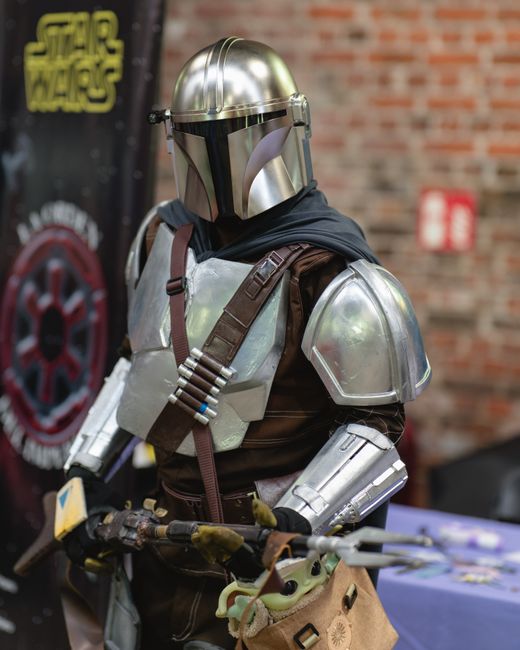
The weight. That’s the first thing that comes to mind, isn’t it? Not just the physical burden of the Beskar, which is considerable, but the metaphorical heft of it all. Pedro Pascal, the man who brought Din Djarin to life, the stoic bounty hunter whose face remained hidden for much of his inaugural season, has been remarkably candid about the realities of inhabiting that iconic suit of armor. It’s a far cry from the effortless cool one might imagine when picturing a lone warrior traversing the galaxy. Instead, Pascal’s accounts paint a picture of grit, discomfort, and a surprising amount of ingenuity required to even function within the confines of that gleaming Mandalorian shell. When asked about the experience, his answers are refreshingly devoid of Hollywood polish, leaning instead into the raw, unvarnished truth of the matter. He doesn’t shy away from detailing the physical toll, the sensory deprivation, and the unique challenges it presented to his performance. This isn’t just about wearing a costume; it’s about embodying a character whose very existence is defined by the very object that encases him, and Pascal’s willingness to share these details offers a profound insight into the process of bringing such a beloved, yet enigmatic, figure to the screen.
The practicalities of the Mandalorian armor are where Pascal’s honesty truly shines. It’s not a lightweight, form-fitting ensemble designed for agile movement. Instead, it’s a rigid, multi-piece construct that, as Pascal has described, significantly impacts one’s mobility. He’s spoken about the difficulty of simple actions, like bending over, sitting down, or even turning his head, becoming exercises in calculated effort. The sheer bulk of the armor restricts peripheral vision and necessitates a more deliberate, almost robotic, style of movement. This wasn’t something that could be easily overcome with a few rehearsals. It required constant adaptation and a deep understanding of the armor’s limitations. Pascal’s descriptions often involve terms like "clunky" and "cumbersome," which are hardly the adjectives one associates with galactic heroism. He’s mentioned the sheer physical exertion involved in simply moving around the set, often feeling like he was performing a strenuous workout just to deliver a few lines. This constant physical demand, far from being a minor inconvenience, undoubtedly influenced his physical performance, forcing him to adopt a more grounded and powerful posture, which in turn, contributed to the character’s imposing presence.
Beyond the restricted movement, the sensory experience within the helmet is another major talking point for Pascal. The helmet, of course, is a crucial element of the Mandalorian’s mystique. It conceals his identity, projecting an aura of mystery and detachment. However, for the actor inside, it’s a more claustrophobic reality. Pascal has described the muffled sound, the limited visibility, and the significant heat buildup as constant challenges. Imagine trying to emote, to convey subtle shifts in emotion, when your hearing is dulled and your vision is akin to looking through a very small, very hot periscope. This is where the actor’s craft truly comes to the fore. Without the ability to rely on facial expressions, Pascal had to channel his performance through his voice, his posture, and the subtle nuances of his body language. The armor, in a way, forced him to develop a deeper, more internal approach to acting. He couldn’t “act with his eyes” in the traditional sense. Instead, he had to rely on an internalized emotional landscape that could then be projected outwards through the limited channels available to him. This often involved vocal delivery, the tilt of his head, or the way he held his arms, all meticulously planned and executed to convey the character’s inner state.
The heat is a recurring theme in Pascal’s discussions about the armor. Beskar, while undoubtedly durable, is also a conductor of heat. In the controlled environments of a film set, this can be managed to some extent with cooling systems and breaks. However, during the filming of "The Mandalorian," particularly in its earlier seasons, the demands were often intense. Pascal has spoken about the sweat, the discomfort, and the sheer endurance required to film for extended periods in the suit. This is not just about feeling a little warm; it’s about working under significant physical duress. This discomfort, he has implied, wasn’t something he could just "act through" in a detached manner. It was a visceral, bodily experience that he had to contend with, and in doing so, it likely informed his performance in a very authentic way. The weariness, the slight adjustments to his stance, the moments where he might subtly shift his weight – these could all be subtly influenced by the physical reality of wearing the armor. It’s a testament to his dedication that he could maintain such a compelling performance under these conditions.
The psychological aspect of wearing the Mandalorian armor is equally fascinating. For Pascal, the helmet served as a sort of second skin, a barrier that separated him from the outside world and, in many ways, from his own persona. This detachment, while challenging, also offered a unique opportunity for character development. He has mentioned how wearing the helmet helped him to shed his own identity and fully inhabit Din Djarin. It allowed him to explore a different kind of presence, one defined by action and quiet resolve rather than outward expression. This is a powerful insight into the acting process. The costume becomes an extension of the character, a tool that facilitates the actor’s immersion. For Pascal, the Mandalorian armor was not just a prop; it was a transformative element that allowed him to discover and embody the stoic, honorable warrior. This psychological shift, the feeling of becoming someone else entirely behind that visor, is a crucial part of his portrayal, and his honest reflections shed light on this profound aspect of his craft.
The collaboration with the stunt team and the prop department is another area where Pascal’s honesty is evident. He’s not pretending to be a one-man show. He readily acknowledges the expertise of those who designed, built, and helped him navigate the complexities of the armor. The process of figuring out how to execute scenes, how to achieve certain movements, and how to manage the practicalities of the suit involved a significant amount of teamwork. This collaborative spirit is essential in large-scale productions like "The Mandalorian," and Pascal’s appreciation for it is a genuine reflection of the filmmaking process. He’s spoken about the solutions they devised, the modifications made to the suit, and the constant adjustments that were necessary to make the vision a reality. This isn’t just about the actor; it’s about the collective effort of many talented individuals working together to create a believable and compelling character.
The evolution of the Mandalorian armor throughout the series also plays a role in Pascal’s experiences. As the character has developed, so too have the practicalities of his attire. While the core elements of the Beskar suit remain, there have been moments where the armor might have been adapted for specific scenes or challenges. Pascal’s willingness to discuss these changes, even the subtle ones, contributes to a more complete understanding of the character’s journey. It’s not a static costume; it’s a functional element that adapts alongside the narrative. This dynamic nature of the armor, and Pascal’s engagement with it, underscores his commitment to portraying Din Djarin as a living, breathing character, rather than a static mannequin. His honest accounts offer a behind-the-scenes glimpse into the constant problem-solving and creative adaptation that defines the creation of a beloved onscreen persona.
Ultimately, Pedro Pascal’s candidness about wearing the Mandalorian armor provides a valuable and insightful look into the realities of acting. It demystifies the glamorous facade of Hollywood and reveals the hard work, discomfort, and ingenuity required to bring a character like Din Djarin to life. His honest responses, devoid of any pretense, offer a profound appreciation for the dedication and craft involved in embodying such an iconic and physically demanding role. The Beskar might look formidable, but the experience of wearing it, as Pascal has so clearly articulated, is a testament to the power of perseverance, collaboration, and the actor’s unwavering commitment to his art. It’s a reminder that behind every legendary figure, there’s a human being navigating challenges, pushing boundaries, and ultimately, delivering a performance that resonates with audiences worldwide, not just because of the armor, but because of the man within it. His journey within that suit is a compelling narrative in itself, one that speaks to the complexities of performance and the enduring allure of a character forged in the fires of both legend and practical, sometimes sweaty, reality.
