CgSide Explores Advanced Procedural Cliff Generation and Texturing in Houdini 20

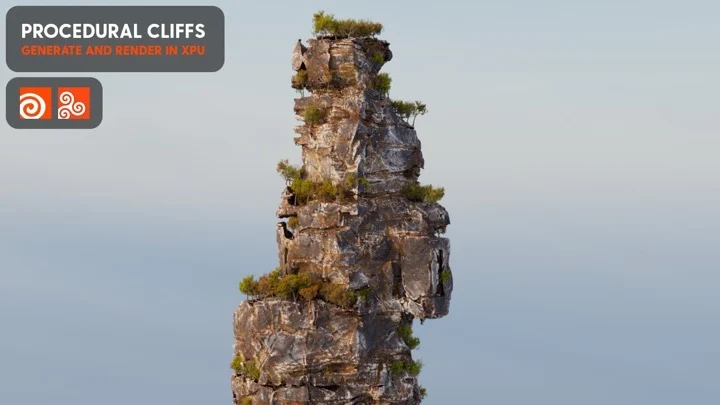
The digital content creation landscape recently saw a significant contribution from cgSide, a recognized authority in SideFX Houdini tutorials, through a new instructional video detailing advanced techniques for procedural cliff generation and subsequent texturing within Houdini 20. This latest offering expands upon cgSide’s extensive library of resources, consistently revisiting and refining methods for creating complex digital environments. The tutorial specifically provides an overview of a robust cliff setup, with more in-depth content accessible through cgSide’s Patreon platform, catering to artists seeking to master the intricacies of naturalistic terrain creation using algorithmic approaches.
The Evolution of Procedural Generation in Digital Artistry
From Manual Craft to Algorithmic Efficiency
The journey of 3D modeling has witnessed a transformative shift from labor-intensive manual sculpting to sophisticated procedural generation. At its core, procedural generation refers to the algorithmic creation of data, encompassing everything from textures and models to entire landscapes and animations. This methodology stands in stark contrast to traditional manual modeling, where artists meticulously craft every vertex and polygon. While manual techniques offer unparalleled artistic control over singular assets, they present significant limitations in terms of scalability, iteration speed, and the efficient generation of unique variations, particularly for large-scale digital environments.
The genesis of procedural techniques can be traced back to the early days of computer graphics, with pioneers exploring mathematical functions to generate patterns and forms. Over decades, driven by the escalating demands for realism and efficiency in film visual effects (VFX) and open-world video games, proceduralism has evolved into a cornerstone of modern digital production. Its ability to create vast, detailed, and non-repeating assets with relative ease makes it indispensable for industries striving to build immersive virtual worlds without incurring prohibitive costs or timelines associated with manual asset creation. This paradigm shift has enabled artists to focus more on high-level design and artistic direction, delegating the repetitive aspects of detail generation to intelligent algorithms.
Houdini’s Dominance in Procedural Workflows
At the forefront of this procedural revolution stands SideFX Houdini, a software renowned for its unique node-based, procedural workflow. Developed by SideFX, a Canadian software company, Houdini has carved out a niche as the industry standard for advanced procedural content creation, simulations, and visual effects. Its architecture is fundamentally different from many other digital content creation (DCC) applications; every action, from modeling a simple cube to simulating a complex fluid dynamic, is recorded as a series of nodes in a network. This non-destructive, history-dependent approach allows artists unparalleled flexibility to modify parameters at any stage of the creation process, instantly propagating changes throughout the entire asset.
This inherent proceduralism makes Houdini exceptionally powerful for tasks such as environment generation, destruction simulations, character rigging, and motion graphics. Major VFX studios like Industrial Light & Magic, Weta Digital, and Double Negative, alongside leading game developers, widely adopt Houdini for its capability to create reusable and scalable digital assets. Its versatility allows artists to build entire systems that can generate endless variations of geometry and effects from a single master setup, drastically reducing production times and fostering creative exploration. The software’s deep integration of scripting languages like Python and VEX (Houdini’s proprietary expression language) further extends its power, enabling artists to write custom tools and behaviors that perfectly align with their specific production needs.
Mastering Digital Terrain: The Art and Science of Procedural Cliffs
The Intricacies of Natural Environments
Replicating the raw, untamed beauty of natural geological formations, such as cliffs, presents a significant challenge in digital art. These formations are the result of millennia of complex interactions between geological forces like tectonic shifts, erosion by wind and water, and sedimentation. Capturing their organic randomness, subtle imperfections, and intricate detail requires more than just geometric accuracy; it demands an understanding of geological processes and an artistic eye to imbue them with believable character. Manual sculpting, while capable of exquisite detail for specific hero assets, often falls short when tasked with generating diverse, non-repeating natural forms efficiently for vast digital landscapes found in open-world games or expansive cinematic vistas. The sheer volume of unique geological features required for such projects often renders purely manual approaches impractical due to time and resource constraints.
The challenge lies not only in creating the primary forms but also in layering secondary and tertiary details—cracks, fissures, rock strata, and subtle erosion patterns—that collectively contribute to a truly authentic appearance. Without these layers of detail, digital cliffs can appear sterile, repetitive, or artificial, breaking the immersion for the audience. This complexity is precisely where procedural methods offer a compelling solution, providing the tools to simulate natural processes and generate a myriad of unique, believable forms from a foundational set of rules.
cgSide’s Methodological Approach
cgSide has established itself as a leading educator within the Houdini community, renowned for its clear, concise, and technically sound tutorials that demystify complex concepts. This specific tutorial on procedural cliff generation is a testament to cgSide’s ongoing commitment to sharing refined techniques, building upon a foundation of previous explorations into similar topics. The recurrence of cliff-related tutorials in their portfolio indicates a continuous effort to evolve and optimize these creation methods, reflecting the iterative nature of procedural development itself.
The "procedural cliff techniques" demonstrated likely encompass a sophisticated blend of Houdini’s native toolset. This would include the strategic use of height fields, a specialized geometry type in Houdini designed for terrain manipulation, allowing artists to sculpt and erode landscapes using volumetric data. Noise functions, such as Perlin noise or Voronoi noise, are instrumental in generating the organic randomness inherent in natural rock formations, providing the initial chaotic patterns that mimic geological forces. Displacement maps further refine these forms by adding high-frequency detail to the base geometry.
Beyond basic form generation, cgSide’s tutorial would delve into simulating geological processes. This might involve applying iterative erosion simulations that mimic the effects of water and wind over time, carving out realistic channels, valleys, and overhangs. Techniques for layering various geological influences, such as fault lines, rock stratification, and sediment buildup, would contribute to the visual complexity and believability of the cliffs. While not explicitly stated, advanced setups in Houdini often leverage VEX or Python scripting to create custom behaviors and parameters, allowing for highly art-directable procedural systems. The overarching goal of these techniques is to empower artists to create varied, realistic, and highly customizable cliff forms that can be easily adapted to different artistic visions and project requirements, without sacrificing the crucial element of naturalism.
The Significance of Houdini 20 in Texturing Workflows
Advancements in Material and Shader Development
Texturing plays an indispensable role in bringing any procedural model to life, transforming raw geometry into visually compelling and believable assets. With the release of Houdini 20, SideFX has continued to refine its capabilities in material authoring and shading, ensuring that artists have access to cutting-edge tools for surface definition. Modern DCC applications, including Houdini 20, place a strong emphasis on physically based rendering (PBR) workflows. PBR materials accurately simulate how light interacts with surfaces in the real world, producing highly realistic results by defining properties such as albedo (base color), roughness, metallicness, and normal maps.
Houdini 20 benefits from advancements in its native Karma renderer, which is designed to handle complex scenes and advanced shading models with efficiency. The software also increasingly supports industry standards like MaterialX, an open-source standard for describing rich material and shader networks, enabling greater interoperability and flexibility in cross-application workflows. These technical improvements mean that artists can craft more sophisticated and nuanced materials directly within Houdini, leveraging its procedural strengths not just for geometry but also for surface attributes. Procedural texturing, in this context, allows for the automatic generation of texture maps and the intelligent application of materials based on geometric attributes. This includes techniques like automatic UV generation, attribute-based material blending (where different materials are applied based on factors like slope, height, or curvature), and the layering of textures driven by procedural masks generated during the modeling phase.
Seamless Integration of Form and Surface
cgSide’s tutorial likely highlights the seamless integration between the procedurally generated geometry and the application of realistic textures, a hallmark of efficient Houdini workflows. One of the most significant advantages of a procedural approach is the ability to automatically transfer attributes generated during the modeling phase to the texturing phase. For instance, an artist might generate attributes indicating the steepness of a rock face, its exposure to environmental elements, or even a simulated "age" based on erosion patterns. These attributes can then be used to drive complex material blending. For example, steeper, more exposed areas might receive a drier, weathered rock texture, while crevices and flatter surfaces could be textured with moss, dirt, or sediment.
This attribute-driven texturing workflow drastically reduces manual labor by automating much of the texture placement and blending process. It ensures a consistent aesthetic across an entire environment, even as the underlying geometry changes. Furthermore, the non-destructive nature of Houdini means that artists can easily iterate on both the form of the cliff and its surface details simultaneously. Adjusting a single parameter in the geometry generation graph can cascade through to the texturing phase, instantly updating the entire asset without requiring laborious manual re-texturing. This synergy between procedural modeling and texturing is crucial for achieving high levels of detail and realism efficiently, enabling artists to explore a wider range of design possibilities and refine their digital environments with unprecedented speed and control.
The Role of Specialized Content Creators and Community Support
cgSide: A Pillar of the Houdini Community
cgSide has firmly established itself as a critical resource and a pillar within the global Houdini artist community. Their reputation as a "trusted source" stems from a consistent output of high-quality, technically accurate, and practical tutorials that address the real-world challenges faced by professionals and aspiring artists alike. In a software ecosystem as complex and powerful as Houdini, experienced artists who can distill advanced concepts into actionable learning modules provide immense value. The demand for such focused, in-depth training is particularly high for specialized software like Houdini, where the learning curve can be steep, but the creative possibilities are vast.
The value cgSide provides extends beyond mere instruction; it contributes to the overall skill development and problem-solving capabilities of the community. By sharing their methodologies for tasks like procedural cliff generation, cgSide helps demystify workflows that might otherwise seem daunting, empowering artists to tackle complex environmental challenges with confidence. This approach underscores cgSide’s commitment to fostering a knowledgeable and proficient user base, ultimately contributing to the broader advancement of digital content creation techniques across the industry. Their consistent output also provides a benchmark for quality and depth in online education for technical art.
The Patreon Model: Sustaining In-Depth Education
The tutorial’s mention of additional, more detailed content being available on cgSide’s Patreon page highlights a prevalent and increasingly vital model for creators of specialized educational content. Patreon, a membership platform, allows creators to receive direct financial support from their audience in exchange for exclusive content, early access, or enhanced learning resources. For creators like cgSide, who invest significant time and expertise in developing and refining advanced techniques, the Patreon model offers a sustainable pathway to continue producing high-value material.
Placing more detailed or advanced content behind a paywall is a logical choice for creators who dedicate substantial effort to developing production-ready knowledge. This allows them to monetize their expertise, cover operational costs, and dedicate more time to content creation, thereby benefiting the most dedicated learners. Subscribers, in turn, gain access to specialized, often proprietary, knowledge that can be directly applied to professional projects, giving them a competitive edge. This symbiotic relationship ensures that creators are fairly compensated for their intellectual property and teaching efforts, while the community gains access to otherwise inaccessible insights. The willingness of artists to support such platforms is a testament to the high demand for focused, expert-level instruction in niche but powerful software applications, reflecting a collective understanding of the investment required to produce such educational resources.
Broader Industry Impact and Future Implications
Enhancing Production Pipelines and Efficiency
The procedural techniques demonstrated by cgSide have far-reaching implications for enhancing production pipelines across various industries, including film, game development, and architectural visualization. The ability to rapidly generate diverse variations of complex assets like cliffs, terrains, and entire environments translates directly into significant efficiency gains. In film production, this means faster iteration on set designs and background elements, allowing directors and art departments to experiment with numerous visual options without incurring substantial time penalties. For game development, it enables the creation of vast, open-world environments teeming with unique geological features, crucial for player immersion, without manually crafting every rock and mountain.
These methods streamline asset creation, reduce manual labor, and significantly accelerate iteration cycles. Artists can quickly prototype different environmental moods, scale landscapes from small props to sprawling vistas, and maintain a consistent aesthetic across an entire project. Furthermore, procedural systems facilitate better team collaboration and asset management, as core systems can be shared and customized by different artists, ensuring consistency and reducing the chances of errors. This efficiency directly impacts project timelines and budgets, allowing resources to be reallocated to other critical areas of production.
Democratizing Advanced Techniques
Tutorials like those provided by cgSide play a pivotal role in democratizing access to sophisticated techniques that were once the exclusive domain of highly specialized artists in large studios. By breaking down complex Houdini workflows into digestible segments, cgSide makes these advanced methodologies accessible to a wider audience, including freelance artists, independent game developers, and students. This accessibility is crucial for skill development within the digital artist community, fostering a new generation of creators equipped with powerful procedural thinking.
The widespread availability of such high-quality educational content contributes significantly to raising the overall technical proficiency of the industry. It empowers individuals to develop complex assets and environments independently, fostering innovation and reducing barriers to entry for those without access to traditional academic or large studio training. This democratization not only broadens the talent pool but also encourages creative experimentation and the development of novel approaches to digital content creation.
The Horizon of Digital Environment Creation
Looking forward, the principles and techniques of procedural generation, particularly within a robust framework like Houdini, are foundational to the future of digital environment creation. The industry is on a trajectory towards increasing automation, potentially integrating artificial intelligence and machine learning to generate even more nuanced and adaptive virtual worlds. Hyper-realistic virtual environments, essential for the burgeoning metaverse, advanced simulations, and next-generation gaming experiences, will heavily rely on these scalable and efficient procedural methods.
As digital content creation continues its rapid evolution, the ability to design and implement procedural systems will become an increasingly indispensable skill for artists and technical directors. The continuous development of software like Houdini, coupled with the invaluable contributions of educators like cgSide, ensures that the industry remains at the cutting edge of technological and artistic innovation. The shared knowledge fosters a dynamic environment where the boundaries of what is possible in digital artistry are constantly being pushed, leading to ever more immersive, detailed, and believable virtual experiences.