London Synth and Pedal Expo 2026 Showcases Innovation and Industry Resilience in Hackney Wick

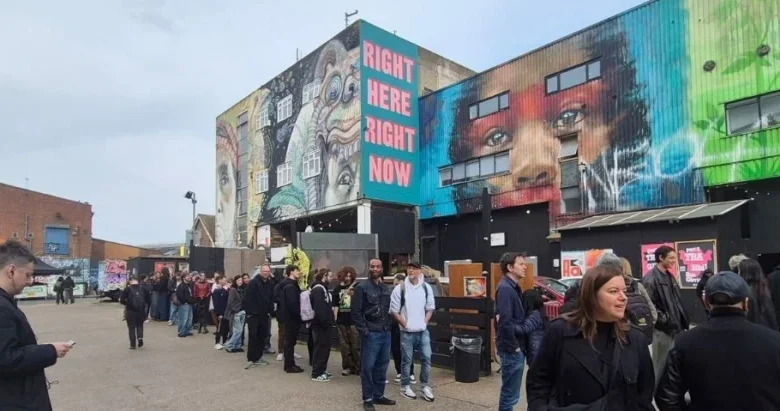
The London Synth and Pedal Expo 2026, held on March 21 and 22, successfully concluded its latest edition in Hackney Wick, marking a significant milestone for the United Kingdom’s electronic music hardware industry. Organised through a strategic partnership between Delicious Audio Events, KMR Audio, and the prominent retailer guitarguitar, the event transformed the No. 90 venue into a concentrated hub of synthesis, sequencing, and signal processing. Despite a shifting global landscape marked by administrative complexities and the rising influence of artificial intelligence in creative fields, the expo demonstrated a robust and growing demand for tactile, hardware-based music production tools.

The 2026 edition was particularly notable for its capacity crowd, with Saturday tickets selling out well in advance. This surge in interest occurred despite the introduction of a formal entrance fee, a move that suggests the event has transitioned from a casual gathering into a premier destination for professionals and enthusiasts alike. The choice of Hackney Wick—a district with a long-standing association with London’s industrial and artistic subcultures—provided a symbolic backdrop for an industry that continues to balance traditional analogue craftsmanship with cutting-edge digital innovation.
Event Structure and Venue Logistics
The expo was strategically divided into two primary zones to accommodate the diverse range of technologies on display. The first room was dedicated exclusively to effects pedals, catering to the guitar community and synthesists who use outboard processing to define their sonic signatures. The second, larger space housed an extensive array of synthesizers, drum machines, modular systems, and MIDI controllers.

By hosting the event at No. 90, a venue known for its intimate and industrial aesthetic, the organisers maintained a high-energy atmosphere often missing from larger, more sterile trade shows. Industry observers noted that the "record fair" vibe of the expo encouraged direct interaction between manufacturers and end-users, a factor that has become increasingly important as the industry moves away from mass-market retail toward boutique, specialized production.
Nearly 50 manufacturers were represented in the synthesizer hall alone. The exhibitor list featured a blend of legacy brands and modern innovators, including Arturia, Moog, and Korg, alongside "synth-show" staples such as Melbourne Instruments, 1010 Music, and Dreadbox. This mix provided a comprehensive overview of the current hardware market, ranging from entry-level portable devices to high-end, professional-grade laboratory instruments.

Technical Highlights: The Monk Project and TMA1
Among the most significant reveals at the expo was the TMA1 from The Monk Project. Positioned as a generative sequencer, the TMA1 represents a shift toward more "intelligent" and performative sequencing environments. The device offers over 20 different sequencer models, allowing users to move beyond standard 16-step loops into more complex, evolving compositions.
When integrated with a MIDI keyboard, the TMA1 can manage 16 channels of expressive, non-repeating live performance data. The internal models cover a vast spectrum of musical styles:

- Percussive Models: "Drummer" and "Amen" cater to rhythm-heavy duties, with the latter likely paying homage to the classic breakbeat culture.
- Melodic and Bass Models: "Bassline," "Acid," and "Fingerpicking" provide specialized algorithms for different instrument emulations.
- Modern Classics: The inclusion of "Euclidean" and "Step" sequencing ensures compatibility with contemporary production trends.
- Experimental Models: "Birds," "TicTacToe," and "Turing" models offer more esoteric approaches to note generation, appealing to the modular and avant-garde communities.
The TMA1’s interface was a point of significant discussion among attendees, praised for its "beautifully bonkers" design that prioritizes tactile exploration over menu-diving.
The Katla: Volcanic Innovation from Genki Instruments
Iceland’s Genki Instruments drew some of the largest crowds of the weekend with the debut of the Katla, a polyphonic rackmount synthesizer. Named after one of Iceland’s most prominent subglacial volcanoes, the instrument aims to bridge the gap between geological permanence and ethereal soundscapes.

The Katla features five voices, each equipped with its own sub-oscillator. Its primary design philosophy focuses on "rotating" voices, where arpeggios or sequences can cycle through different voices for each note, creating a sense of movement and depth. Users can manually punch voices in or out or mute them to create rhythmic "gated" gaps in a sequence.
The most striking aspect of the Katla is its physical construction. In an industry-first move, Genki Instruments utilized actual volcanic lava for the instrument’s knobs and side plates. While the $5,000+ price tag and digital oscillators may invite debate among analogue purists, the instrument was widely regarded as one of the most innovative and organic-sounding offerings at the show. Analysts suggest that the Katla’s high entry price reflects both the artisan manufacturing process and the broader economic realities of high-end boutique hardware in 2026.

Motion Control and Software Integration: Flowfal
The expo also highlighted the evolving relationship between hardware and software through the presentation of Flowfal. This application leverages the gyroscopic and motion-sensing capabilities of modern smartphones and smartwatches to act as 3D motion controllers for Ableton Live.
By translating physical gestures—such as sweeps, shakes, and tilts—into MIDI data, Flowfal allows producers to control filters, LFOs, and trigger clips without touching a traditional fader or knob. This technology points toward a future where "performance" in electronic music becomes increasingly physical, breaking the "laptop performer" stereotype. The developers emphasized a community-driven model, offering the app for free while requesting donations to sustain ongoing updates and compatibility.

Market Trends and Supporting Data
The success of the London Synth & Pedal Expo 2026 comes at a time when the global musical instrument market is navigating significant headwinds. According to recent industry reports, while software sales remain dominant due to accessibility, the "Boutique Hardware" sector has seen a 12% year-on-year growth. Collectors and professionals are increasingly seeking "tactile permanence" in response to the saturation of AI-generated digital content.
However, the industry faces logistical hurdles. The transition of studio equipment and inventory between the UK and the EU remains a costly endeavour due to post-Brexit customs regulations and administrative complexities. These "blunders" in international logistics have led to a more localized event circuit, making regional shows like the London Expo vital for brands that cannot justify the extortionate costs of larger continental shows like Superbooth in Berlin.

Demographic Observations and Industry Responsibility
While the expo was a technical success, it also highlighted a persistent challenge within the music technology community: a lack of demographic diversity. Despite the event being held in Hackney—one of London’s most culturally diverse boroughs—the attendee and exhibitor profiles remained overwhelmingly male-dominated.
Industry observers noted that the male-to-female ratio appeared even more skewed than at similar international events. While the organisers were praised for creating a welcoming and well-managed environment, the disparity underscores a broader need for the industry to engage in more inclusive outreach. Efforts to bridge this gap are expected to be a major talking point for the 2027 planning committee, with potential initiatives including workshops for underrepresented groups and diverse mentorship programmes.

Broader Impact and Future Outlook
The London Synth & Pedal Expo has firmly established itself as a cornerstone of the UK’s electronic music scene. The transition from a free event to a paid, sold-out model indicates that the community views these gatherings as essential professional and social experiences.
As the event continues to grow, questions remain regarding the sustainability of the No. 90 venue. While the intimate, windowless rooms contributed to the "buzz" of the 2026 show, the physical capacity limits may necessitate a move to a larger facility in the near future. However, many attendees expressed a desire to maintain the "underground" feel that has become the expo’s hallmark.

In a world increasingly dominated by virtual interactions and automated content, the London Synth & Pedal Expo 2026 served as a powerful reminder of the value of physical touch, human error, and the "beautifully bonkers" nature of hardware synthesis. The innovations showcased by companies like The Monk Project and Genki Instruments suggest that the future of the industry lies not in competing with AI, but in offering experiences that AI cannot replicate: the tactile, the unpredictable, and the geological.