Mouse: P.I. for Hire Launches with Troy Baker at the Helm of a Noir-Inspired Detective Adventure

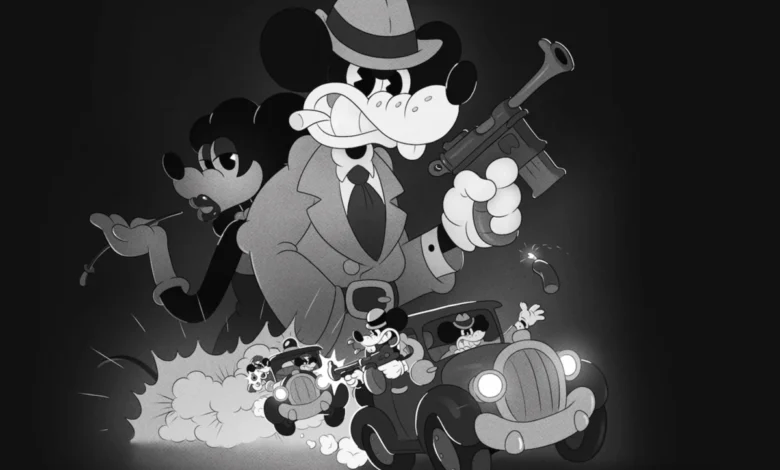
Troy Baker, a titan in the video game voice acting industry, known for his indelible portrayals of iconic characters such as Joel in The Last of Us and Indiana Jones in the upcoming Indiana Jones and the Great Circle, has added another significant role to his extensive resume. On Thursday, Baker lent his distinctive voice to Jack Pepper, the titular protagonist of Mouse: P.I. for Hire, a new first-person shooter developed by PlaySide Studios and published by Fumi Games. This launch marks a notable entry into the gaming landscape, blending the stylistic sensibilities of 1930s classic animation with the hard-boiled atmosphere of noir detective cinema.
The game distinguishes itself with a striking black-and-white aesthetic, a deliberate choice that immerses players in a world that feels both vintage and darkly contemporary. Baker, whose career is studded with critically acclaimed performances across a vast array of franchises including BioShock Infinite (Booker DeWitt), Uncharted 4 (Nathan Drake), and the Lego Batman series (Bruce Wayne), spoke with Variety about his latest venture, shedding light on his decision to take on the role of Jack Pepper and the unique appeal of this particular project.
The Allure of a Distinctive Vision
Baker’s prolific career is a testament to his passion for his craft and his discerning selection process. When asked about what drew him to Mouse: P.I. for Hire amidst a multitude of potential projects, he revealed a consistent drive to collaborate with studios producing compelling games. “My agent is constantly telling me to stop, because I love what I do,” Baker admitted, a sentiment that resonates with many who witness his dedication. “The problem is, there’s a lot of amazing studios out there that are making amazing games that I want to be a part of.”
The initial spark for Mouse: P.I. for Hire ignited approximately eighteen months to two years prior to its release, when early teasers of the game’s distinctive animation style captured Baker’s attention. “And the thing that always draws me to a project is, how many questions does it raise for me?” he explained. This curiosity is a key indicator for Baker, signaling a project with depth and potential. He elaborated, “Do I immediately go, well, hold on a second, what’s the world, or what’s the story? What’s the character? What’s the gameplay? How are they going to pull that off?”
The specific allure of Mouse: P.I. for Hire lay in its tonal ambition. Baker was particularly intrigued by the potential for a precisely defined tone. “And so I immediately had questions, and the number one question was: what’s the tone?” he stated. While acknowledging the appeal of a purely whimsical approach, he found himself drawn to a more focused artistic intent. “Because if there’s a – which is what ended up being the case – laser-focused intent and tone that we are constantly with every line of dialogue, every scene, every mechanic, every piece of art, trying to nail, I’m in.” This commitment to a singular, well-executed vision is a significant factor in Baker’s project selection.
The opportunity to join Mouse: P.I. for Hire materialized through a direct outreach from the developers at Fumi Games. “So very rarely does it happen where there’s a trailer that launches – because typically, I’m a part of the project before that launch trailer happens – and I go, oh, no, I really want to be a part of that! And then they call,” Baker shared. In this instance, the proactive engagement from Fumi Games was met with immediate enthusiasm. “So the wonderful people at Fumi reached out, and they’re like, ‘Hey, got an idea, we want to see if you’d be interested.’ And I can tell them this now, I was like, whatever it takes, make it happen.”
The initial collaboration proved to be as unconventional as the game’s aesthetic. Baker recounted, “Our first session, I was on vacation with my family in London, and I’m like, can we make this happen there? And that’s where we all met. That was our first dance. And we spent a majority of the first session just figuring out who Jack was.” This willingness to adapt and prioritize the project, even during personal time, underscores Baker’s dedication to bringing his characters to life.
Deconstructing Jack Pepper: A Noir Detective with a Comedic Soul
The character of Jack Pepper presented Baker with a fascinating challenge: to embody the archetypal noir detective while infusing him with a unique comedic sensibility. “There’s a lot of adjectives that get used in character descriptions and direction. And the problem with adjectives is they’re descriptive, but they’re not playable,” Baker observed, highlighting the practical difficulties of translating abstract descriptors into tangible performance. Terms like “grizzled” or “tough” require further interpretation to become actionable for an actor.
To bridge this gap, Baker and the development team sought out analogous inspirations. The core concept of Mouse: P.I. for Hire was to filter the classic film noir genre and its distinctive art style through the comedic lens of Police Squad and The Naked Gun ethos. “Knowing what this studio wanted to do – an homage to this film noir genre and this art style – was to put that through the lens of the type of humor and tone of ‘Police Squad’ and ‘The Naked Gun’ ethos. And I was like, ‘Yes, let’s go. How do we do that?’” Baker enthused.
The delicate balance of incorporating humor without undermining the narrative’s gravitas was a central focus. “And so it constantly became ways of going, how can we add humor and levity without making it yuks? Comedy is so hard to do, especially in games, because it’s all dependent upon timing. And when the player has control, it’s really hard to take control of that pace for humor and not make the player feel like they’re being gate kept.” This acknowledgment of the interactive medium’s inherent challenges demonstrates a sophisticated understanding of game design and player experience.
A pivotal moment in defining Jack Pepper’s character and the game’s narrative structure arose from a discussion about the game’s narration. Baker posed a crucial question: “is that diegetic? Are we doing this in flashback?” The developers’ initial uncertainty opened the door for Baker to propose a more dynamic approach. “I was like, what if he’s narrating this live? So when he says, ‘From the second the dame walked in, I knew I was in trouble,’ she can hear that.” This innovative concept, where the narration is perceived by other characters within the game world, fundamentally altered the narrative possibilities and required adjustments to the script. “And they were like, ‘OK, now we have something.’ And we ended up having to go back and kind of tweak the lines for that to be able to fit in.”
Ultimately, Baker summarized Jack Pepper’s essence as that of an reluctant hero. “But to answer your question as succinctly as I can, Jack Pepper is one of those guys that was offered every opportunity to be a hero and rejected it until he no longer had a choice and he found a good reason to finally be a hero.” This character arc, from evasion to reluctant engagement, provides a compelling foundation for the narrative.
Navigating the Landscape of Potential Franchises
Baker’s extensive experience with long-running and critically successful franchises like The Last of Us and the anticipation surrounding Indiana Jones and the Great Circle naturally leads to discussions about the potential for future installments in Mouse: P.I. for Hire. However, Baker approaches such prospects with a grounded perspective, learned through hard-won experience.
“Oh, what a trap, what a trap, what a trap, what a trap,” Baker declared, referencing his early involvement with The Last of Us. He recalled advising Neil Druckmann, co-creator of The Last of Us, about the importance of planning for a sequel even during the development of the first game. Druckmann’s response, focusing on the immediate demands of the current project, served as a valuable lesson. “He’s like, ‘I’m not thinking about anything else but this game and this story right now, because it requires me to do so.’”
Baker emphasizes that while publishers like Fumi Games might envision franchising opportunities, the primary responsibility of the development studio, such as PlaySide, lies in delivering the current game to the highest possible standard. “And Fumi may be thinking about publishing several of these and, hey, how can we franchise this out? But PlaySide’s responsibility is to go, ‘Hey, we’re making this game right now. It requires our full faith and focus. We hope that the game is successful. We hope that people play the hell out of it and have so much fun doing it.’”
The actor’s personal philosophy is rooted in fully inhabiting the present moment and the character within it. “But especially as a character, if I start thinking about, ‘OK, well, hold on a second – what’s Jack Pepper like in Mouse: PI for Hire 2?’ Then, all of a sudden, I’m just doing a character.” This detachment, he believes, can be detrimental to the authenticity of the performance.
Baker drew a parallel to his work on the Lego game franchise, where the sheer volume of characters and projects could have led to a superficial approach. “I learned this doing ‘Lego,’ as oddly as that sounds, that this is a real person having a real experience in a real moment, in a real world, in a real life. And the second that I take my focus off of that and go, ‘Well, it’s just a character.’ It’s gonna come off a little fugazi.” This commitment to embodying the character as a fully realized individual within a believable context is central to Baker’s acclaimed performances and ensures that each role, regardless of its potential for future installments, is given his complete and dedicated attention.
The Stylistic Underpinnings of Mouse: P.I. for Hire
The artistic direction of Mouse: P.I. for Hire is a significant factor in its appeal, drawing inspiration from two distinct but complementary eras of visual storytelling. The animation style harkens back to the exuberance and fluidity of 1930s cartoons, a period known for its innovative character design and dynamic movement. This era saw the rise of iconic animated figures that captivated audiences with their charm and expressiveness, laying the groundwork for much of what would follow in animated media.
Juxtaposed with this animated influence is the gritty, atmospheric aesthetic of classic noir detective films. These movies, predominantly produced in the 1940s and 1950s, are characterized by their chiaroscuro lighting, cynical protagonists, morally ambiguous narratives, and often bleak urban settings. Films like The Maltese Falcon, The Big Sleep, and Double Indemnity established a visual and thematic language that has profoundly influenced storytelling across various media.
The decision to render Mouse: P.I. for Hire in black and white is not merely an aesthetic choice but a deliberate strategy to enhance the noir atmosphere. This monochromatic palette evokes a sense of timelessness and emphasizes the stark contrasts of light and shadow that are integral to the genre. It allows the stylized character designs, reminiscent of vintage animation, to pop against the shadowy backdrops, creating a unique visual signature.
The fusion of these disparate influences—the whimsical spirit of early animation and the somber realism of noir—presents a fertile ground for both narrative and gameplay. The black-and-white presentation, combined with a first-person perspective, aims to fully immerse players in Jack Pepper’s world. The game’s mechanics are expected to complement this immersion, likely involving investigation, puzzle-solving, and action sequences that align with the detective genre, all filtered through the unique tonal approach that Baker described.
Development and Publisher Context
PlaySide Studios, the developer behind Mouse: P.I. for Hire, has a history of working on diverse projects, often with a focus on mobile and VR platforms. Their expansion into the PC and console market with a title of this scope and artistic ambition signifies a notable step for the Australian-based studio. Their collaboration with Fumi Games, a relatively newer publisher in the gaming space, suggests a shared vision for innovative and distinctive gaming experiences.
Fumi Games, established with the aim of publishing unique and engaging titles, has positioned Mouse: P.I. for Hire as a flagship release. Their involvement underscores a commitment to supporting developers who are pushing creative boundaries. The partnership between PlaySide and Fumi Games is indicative of a trend in the industry where smaller, independent studios are collaborating with publishers to bring ambitious and artistically driven games to a wider audience. The success of Mouse: P.I. for Hire could pave the way for further collaborations and a greater visibility for both entities.
Broader Implications and Industry Impact
The launch of Mouse: P.I. for Hire with Troy Baker in the lead role carries significant weight within the gaming industry. Baker’s involvement instantly elevates the game’s profile, drawing attention from his vast fanbase and the wider gaming community. His reputation for delivering nuanced and compelling performances ensures a certain level of quality and depth, setting high expectations for Jack Pepper’s characterization.
Furthermore, the game’s distinctive stylistic approach—the blend of 1930s animation aesthetics with noir sensibilities and a black-and-white palette—could influence future game design. In an industry often characterized by iterative sequels and established trends, Mouse: P.I. for Hire represents a bold move towards originality and artistic experimentation. Its success or failure could serve as a barometer for the market’s receptiveness to unconventional visual styles and thematic fusions.
The decision to embrace a more mature, yet stylized, narrative within a first-person shooter framework also contributes to the ongoing evolution of the genre. By eschewing hyperrealism for a more artistic and narrative-driven experience, the game carves out a unique niche. This could inspire other developers to explore more diverse aesthetic and thematic avenues, broadening the creative horizons of interactive entertainment.
The game’s success hinges on its ability to seamlessly integrate its stylistic elements with engaging gameplay and a compelling narrative. If Mouse: P.I. for Hire can successfully deliver on its ambitious premise, it will not only be a triumph for PlaySide Studios and Fumi Games but also a testament to the enduring appeal of innovative storytelling and the power of a seasoned voice actor like Troy Baker to anchor such a unique vision. The journey of Jack Pepper, the reluctant hero, is poised to be a significant talking point in the gaming world throughout the year.