The Art and Soul of Photography: A Compendium of Iconic Quotes and Their Profound Meanings

Photography, an intricate tapestry woven from threads of technology, science, and art, transcends mere image-making to become a philosophy, a perspective, and for many, a profound form of truth. Each photograph possesses the potential to ignite a unique narrative, breathing life into static moments. Given its expressive and subjective nature, it is unsurprising that photography has inspired a wealth of insightful pronouncements from its practitioners and observers. This compilation delves into some of the most celebrated and thought-provoking photography quotes, offering a lens through which to understand and appreciate this dynamic art form, and serving as a wellspring of inspiration for both aspiring and seasoned photographers.
The Enduring Significance of the Photographic Image
Beyond its artistic merit, photography serves as a powerful conduit for preserving history, articulating ideas, capturing fleeting moments, and conveying emotions. Its purpose and meaning are deeply personal, resonating differently with each individual. The subjective essence of photography transforms the exploration of its quotes into an illuminating exercise, a journey of discovery and inspiration. As this extensive collection, updated annually, demonstrates, every photographer and thought leader brings a distinctive and valuable perspective to the medium.
Timeless Reflections on Photography’s Core Values
The world is in constant flux, with change being the only constant. Photography, in its ability to arrest time, offers a unique gift: the power to preserve moments in a state of blissful eternity. This sentiment is powerfully echoed by Ali Novak, who states, "The world moves fast, changing everything around us with each new day. Photography is a gift that can keep us in a moment forever, blissfully eternal." This ability to freeze time also highlights the inherent permanence of a captured image, even as life continues to evolve. Andy Warhol astutely observed, "The best thing about a picture is that it never changes, even when the people in it do." This inherent stillness allows photographs to serve as enduring testaments to periods and individuals, offering a stable point of reference in an ever-shifting reality.
The profound truth that can be unearthed within the seemingly small moments of life is a recurring theme. An anonymous quote eloquently captures this: "A tear contains an ocean. A photographer is aware of the tiny moments in a person’s life that reveal greater truths." This speaks to the photographer’s role as an observer, one who can distill complex human experiences into resonant visual narratives. Ansel Adams, a titan of landscape photography, articulated the deep connection between the photographer’s inner world and their external work: "A great photograph is a full expression of what one feels about what is being photographed in the deepest sense and is thereby a true expression of what one feels about life in its entirety." Adams’ perspective underscores that a compelling photograph is not merely a technical achievement but an emotional and philosophical statement.
Capturing Emotion and the Human Experience

The ability of photography to evoke feeling is paramount. Renowned photojournalist Don McCullin emphasized this visceral connection: "Photography for me is not looking, it’s feeling. If you can’t feel what you’re looking at, then you’re never going to get others to feel anything when they look at your pictures." This sentiment is echoed by Peter Adams, who wisely stated, "Great photography is about depth of feeling, not depth of field." The true impact of an image lies in its emotional resonance, not necessarily its technical sharpness. Aaron Siskind further elaborated on this, highlighting the enduring power of captured moments: "Photography is a way of feeling, of touching, of loving. What you have caught on film is captured forever… It remembers little things, long after you have forgotten everything." This suggests that photographs act as external memories, preserving details and emotions that might otherwise fade with the passage of time.
The interaction between the photographer and their subject is also a critical element. Alfred Eisenstaedt famously prioritized human connection over technical execution: "It is more important to click with people than to click the shutter." This advice champions empathy and genuine engagement as fundamental to creating impactful portraits. Annie Leibovitz, known for her intimate and revealing portraits, shared her approach: "A thing that you see in my pictures is that I was not afraid to fall in love with these people." This suggests that a photographer’s willingness to connect and form bonds with their subjects is key to capturing their essence.
Vision, Light, and the Photographer’s Eye
The unique perspective of the photographer is central to their craft. Amy Spalding articulated this powerfully: "The thing I love about photography is that for just a moment, you can make everyone else look at the world the way you see it." This highlights the photographer’s ability to guide the viewer’s perception and share their distinct vision. Light, the fundamental element of photography, is acknowledged by Alfred Stieglitz, who simply stated, "Wherever there is light, one can photograph." This seemingly straightforward observation underscores the indispensable role of light in shaping the photographic image.
The role of post-processing in photography is also a subject of debate and commentary. Dean Farrell offered a pragmatic perspective: "If Photoshop is the answer, you’re asking the wrong question." This quote serves as a reminder that while editing tools are valuable, they cannot compensate for a lack of fundamental photographic understanding or a weak concept.
Inspirational Mantras for the Photographic Journey
The journey of a photographer is often characterized by continuous learning and a commitment to the craft. Alfred Eisenstaedt encouraged a spirit of perpetual learning: "Once the amateur’s naive approach and humble willingness to learn fades away, the creative spirit of good photography dies with it. Every professional should remain always in his heart an amateur." This emphasizes the importance of maintaining curiosity and a beginner’s mindset throughout one’s career. Alfred Stieglitz further explored the transformative power of photography, suggesting, "In photography there is a reality so subtle that it becomes more real than reality." This paradox points to photography’s ability to reveal deeper truths by reinterpreting the visible world.
Ambrose Bierce poetically described photography as "Photograph: a picture painted by the sun without instruction in art." This highlights the inherent artistry of light itself, captured and directed by the photographer. Andy Warhol’s famous quip, "In the future everyone will be famous for 15 minutes," while often applied to celebrity culture, also reflects on the fleeting nature of attention, making the enduring power of a well-crafted photograph all the more significant. Anne Geddes noted the lasting impact of impactful imagery: "The best images are the ones that retain their strength and impact over the years, regardless of the number of times they are viewed."

Annie Leibovitz’s extensive body of work demonstrates a deep engagement with her subjects and the world around her. She expressed a desire to capture the intangible: "I wish that all of nature’s magnificence, the emotion of the land, the living energy of place could be photographed." Her dedication to the photographic process is evident in her statement, "One doesn’t stop seeing. One doesn’t stop framing. It doesn’t turn off and turn on. It’s on all the time." This continuous engagement is a hallmark of a dedicated photographer. She further elaborated on the immersive nature of the act: "The camera makes you forget you’re there. It’s not like you are hiding but you forget, you are just looking so much." Leibovitz’s philosophy extends to her relationships with her subjects: "When I say I want to photograph someone, what it really means is that I’d like to know them. Anyone I know I photograph."
Anonymous voices offer relatable metaphors for life and photography. "Life is like a camera. Just focus on what’s important and capture the good times, develop from the negatives and if things don’t work out, just take another shot." This sentiment suggests resilience and a positive outlook. The addictive nature of photography is captured by, "Once photography enters your bloodstream, it is like a disease." The power of observation and memory is also highlighted: "Once you learn to care, you can record images with your mind or on film. There is no difference between the two." And the profound revelation of reality through photography: "Taking an image, freezing a moment, reveals how rich reality truly is." A fundamental truth about photographic skill is offered: "When people ask me what equipment I use I tell them my eyes." The gentle, respectful approach to capturing an image is conveyed by, "You don’t take a photograph. You ask quietly to borrow it."
Ansel Adams’ wisdom is multifaceted, touching upon composition, perspective, and the very essence of photography. "A good photograph is knowing where to stand." He also differentiated between passive viewing and active engagement: "A photograph is usually looked at – seldom looked into." His assessment of landscape photography as a demanding discipline is notable: "Landscape photography is the supreme test of the photographer – and often the supreme disappointment." Adams eloquently defined photography as "Photography is an austere and blazing poetry of the real." He spoke of moments of divine timing: "Sometimes I arrive just when God’s ready to have someone click the shutter." He drew an analogy between the photographic process and music: "The negative is the equivalent of the composer’s score and the print the performance." Adams emphasized the human element above all: "The single most important component of a camera is the twelve inches behind it!" He also recognized the collaborative nature of viewing: "There are always two people in every picture: the photographer and the viewer." His belief in artistic freedom is clear: "There are no rules for good photographs, there are only good photographs." Adams was critical of superficial technicality: "There is nothing worse than a sharp image of a fuzzy concept." He reiterated the dual presence in an image: "To the complaint, ‘There are no people in these photographs,’ I respond, There are always two people: the photographer and the viewer." His preference for visual communication over words is striking: "When words become unclear, I shall focus with photographs. When images become inadequate, I shall be content with silence." Finally, he articulated the rich tapestry of influences that inform a photographer’s work: "You don’t make a photograph just with a camera. You bring to the act of photography all the pictures you have seen, the books you have read, the music you have heard, the people you have loved." He also famously stated, "You don’t take a photograph, you make it."
Ara Güler, the "Eye of Istanbul," infused his work with a romantic sensibility, stating, "Me and my Photographs are a bit romantic. I do not take photographs in a normal light. Either at sunrise, or sundown, or early in the morning. Besides I want to explain something in every frame. Every image has to have a message." Arnold Newman cautioned against over-reliance on gear: "A lot of photographers think that if they buy a better camera they’ll be able to take better photographs. A better camera won’t do a thing for you if you don’t have anything in your head or in your heart." August Sander pointed to the illuminative power of photography: "In photography there are no shadows that cannot be illuminated." Berenice Abbott simply stated, "Photography helps people to see."
Biju Karakkonam offered a more modern perspective, suggesting that to improve, one should internalize inspiration: "If you really want to become a better photographer don’t save other photographers good photographs to your computer. Save it to your heart, then you can take better picture than that picture in similar situations." He also captured the essence of photography’s ability to freeze time: "Only a photographer can stop the time. Just by one click." And the dreamlike quality of the medium: "The beauty of Photography is not in what you see, its art lies in your dreams." Bill Brandt asserted, "Photography has no rules, it is not a sport. It is the result which counts, no matter how it is achieved." Bodhi Smith explored the interplay of light and dark: "In photography and as in life, it is the strong contrasts between dualities that make things interesting and beautiful…particularly speaking, darkness has to exist and be present in order for light to glow, and have meaning and purpose." Brigitte Bardot poetically described a photograph’s enduring presence: "A photograph can be an instant of life captured for eternity that will never cease looking back at you."
Bruce Gilden’s street photography is characterized by a raw, intimate style. He expressed his connection to his subjects: "I love the people I photograph. I mean, they’re my friends. I’ve never met most of them or I don’t know them at all, yet through my images I live with them." He defined his genre: "If you can smell the street by looking at the photo, it’s a street photograph." Carrie Latet offered a culinary metaphor: "A photograph is like a recipe the memory is the finished dish."
Chase Jarvis advocated for embracing imperfection and practicality. "Allow yourself the freedom to step away from perfection because it is only then that you can find success." He also echoed a common refrain: "The best camera is the one you have with you." Collin Pierson identified a significant impediment to creative growth: "Fear is the thing that prohibits a lot of photographers from reaching their full potential." David Alan Harvey urged for emotional depth: "Don’t shoot what it looks like. Shoot what it feels like." David Bailey saw photography as a tool for perception: "Photography is a means by which we learn to see the ordinary." David duChemin emphasized the critical role of vision: "Without vision, the photographer perishes." David Hultgren argued against the primacy of expensive gear: "The best photographers do not need 50000 dollars worth of gear. Look what Ansel Adams did with a Kodak brownie camera. A good photographer has a way of seeing (perspective) that is different from the mundane."
Destin Sparks saw photography as a way to preserve moments and share dreams. "A photograph is an opportunity to keep a moment forever." "I have a dream… photography allows me to share it with you." "Photography is inspired by beauty, captured with passion." And "Photography is the story I fail to put into words." Diane Arbus explored the enigmatic nature of photography: "A photograph is a secret about a secret. The more it tells you the less you know." She also acknowledged the unpredictable nature of her work: "I never have taken a picture I’ve intended. They’re always better or worse." Arbus believed her role was to reveal the unseen: "I really believe there are things nobody would see if I didn’t photograph them." Her approach to photography was adventurous: "I tend to think of the act of photographing, generally speaking, as an adventure. My favorite thing is to go where I’ve never been." She offered a playful description of the act: "Taking pictures is like tiptoeing into the kitchen late at night and stealing Oreo cookies."

Dorothea Lange recognized the power of photography to alter perception and reveal hidden realities. "Photography takes an instant out of time, altering life by holding it still." She saw the camera as a teacher: "The camera is an instrument that teaches people how to see without a camera." And she articulated its capacity to expand our vision: "While there is perhaps a province in which the photograph can tell us nothing more than what we see with our own eyes, there is another in which it proves to us how little our eyes permit us to see." Duane Michals offered a philosophical view: "Photography deals exquisitely with appearances, but nothing is what it appears to be."
Dustin Thibideau highlighted the connective and contemplative power of images: "Photographs allow for connections to be made and for time to pause to appreciate all the world has to offer." Edward Steichen emphasized the human aspect of portraiture: "A portrait is not made in the camera but on either side of it." He also saw photography as a vital tool for understanding: "Photography is a major force in explaining man to man." Edward Weston stressed the importance of dedication and a holistic approach: "If I have any ‘message’ worth giving to a beginner it is that there are no shortcuts in photography." He also acknowledged the camera’s ability to influence the artist’s vision: "My own eyes are no more than scouts on a preliminary search, or the camera’s eye may entirely change my idea." Weston believed in harnessing the camera’s unique capabilities: "The camera sees more than the eye, so why not make use of it?" He also cautioned against rigid adherence to rules: "To consult the rules of composition before making a picture is a little like consulting the law of gravitation before going for a walk."
Ellen von Unwerth expressed a preference for capturing subjects before they become self-conscious: "I like to photograph anyone before they know what their best angles are." Elliott Erwitt believed in the power of images to transcend language: "The whole point of taking pictures is so that you don’t have to explain things with words." He defined photography as an art of observation, emphasizing perspective: "To me, photography is an art of observation. It’s about finding something interesting in an ordinary place…I’ve found it has little to do with the things you see and everything to do with the way you see them." Eudora Welty offered a simple yet profound definition of a good snapshot: "A good snapshot keeps a moment from running away."
Eve Arnold underscored the photographer’s responsibility and empathy: "If the photographer is interested in the people in front of his lens, and if he is compassionate, it’s already a lot. The instrument is not the camera but the photographer." George Bernard Shaw used a humorous analogy to describe the prolific nature of photographers: "A photographer is like a cod, which produces a million eggs in order that one may reach maturity." Giles Duley spoke to the profound responsibility of documentary photography, stating, "For me, documentary photography has always come with great responsibility. Not just to tell the story honestly and with empathy, but also to make sure the right people hear it. When you photograph somebody who is in pain or discomfort, they trust you to make sure the images will act as their
Gregory Crewdson described the artist’s essential drive: "Every artist has a central story to tell, and the difficulty, the impossible task, is trying to present that story in pictures." He also spoke of the allure of transitional light: "I have always been fascinated by the poetic condition of twilight. By its transformative quality. Its power of turning the ordinary into something magical and otherworldly." Gregory Heisler highlighted the comprehensive nature of photographic creation: "All the planning, intuition, technical prowess, and knowledge, as well as the trust and rapport you have (or haven’t) established, will show up in the picture, frozen forever." He also noted the finality of capture: "Whatever happens in front of the lens stays. What’s captured during the encounter is all that exists."
Harry Callahan reflected on the selective nature of success in photography: "I guess I’ve shot about 40,000 negatives and of these I have about 800 pictures I like." Harry Gruyaert viewed photography as a therapeutic practice: "I think of photography like therapy." Henri Cartier-Bresson, a pioneer of street photography, expressed a pragmatic detachment from the subject once the image was captured: "Actually, I’m not all that interested in the subject of photography. Once the picture is in the box, I’m not all that interested in what happens next. Hunters, after all, aren’t cooks." He viewed the camera as a tool for intuition: "For me, the camera is a sketch book, an instrument of intuition and spontaneity." He emphasized the significance of detail: "In photography, the smallest thing can be a great subject. The little, human detail can become a Leitmotiv." His philosophy was deeply rooted in lived experience: "It is through living that we discover ourselves, at the same time as we discover the world around us." He recognized the ephemeral nature of moments: "Photographers deal in things which are continually vanishing and when they have vanished there is no contrivance on earth which can make them come back again." He contrasted photography with drawing: "Photography is an immediate reaction, drawing is a meditation." Cartier-Bresson famously challenged conventional notions of technical perfection: "Sharpness is a bourgeois concept." He defined the decisive moment: "There is a creative fraction of a second when you are taking a picture. Your eye must see a composition or an expression that life itself offers you, and you must know with intuition when to click the camera. That is the moment the photographer is creative. Oop! The Moment! Once you miss it, it is gone forever." He elaborated on this pivotal concept: "To me, a photograph means the simultaneous recognition, in a fraction of a second, of the meaning of an event on the one hand and the exact arrangement of the visually perceived forms expressing that event on the other." He further simplified this: "To me, photography is the simultaneous recognition, in a fraction of a second, of the significance of an event." The intense focus and coordination required for capturing a photograph were described as: "To photograph is to hold one’s breath, when all faculties converge to capture fleeting reality. It’s at that precise moment that mastering an image becomes a great physical and intellectual joy." He envisioned a holistic approach to photography: "To photograph: it is to put on the same line of sight the head, the eye and the heart." And he offered a candid assessment of early work: "Your first 10,000 photographs are your worst."
Imogen Cunningham suggested a poetic approach to photography: "The formula for doing a good job in photography is to think like a poet." She also expressed a forward-looking perspective: "Which of my photographs is my favorite? The one I’m going to take tomorrow." Irving Penn defined a truly effective photograph: "A good photograph is one that communicates a fact, touches the heart and leaves the viewer a changed person for having seen it. It is, in a word, effective." Jack Dykinga described the quick decision-making of photojournalism: "A photojournalist makes snap decisions; based on the ability to quickly assess situations and record one’s perceived truth." He also shared an anecdote illustrating dedication to capturing moments: "John White, another Pulitzer Prize winning photographer at the Sun – Times once told me he photographed every sunrise. In disbelief, I inquired why? He simply said he didn’t want to miss the really great one."
James Lalropui Keivom offered a poignant observation on the accumulation of photographic moments: "It’s weird that photographers spend years or even a whole lifetime, trying to capture moments that added together, don’t even amount to a couple of hours." James Wilson highlighted the communal aspect of photography: "In the world of photography, you get to share a captured moment with other people." Jay Maysel suggested a more passive relationship with the camera: "You don’t take pictures, they take you." Jean-Luc Godard drew a distinction between still and moving images: "Photography is truth. The cinema is truth twenty – four times per second." He also saw the profound depth in portraiture: "When you photograph a face . . .you photograph the soul behind it." Jen Rozenbaum emphasized learning from imperfections: "We don’t learn from our good images; we learn from the ones that can be improved on." Jim Richardson advised on a practical approach to improvement: "If you want to be a better photographer, stand in front of more interesting stuff." Joan Miro spoke of the lasting impact of an image: "You can look at a picture for a week and never think of it again. You can also look at a picture for a second and think of it all your life." He also noted the relationship between reflection and creation: "Yes, it took me just a moment to draw this line with the brush. But it took me months, perhaps even years, of reflection to form the idea." Joe Buissink suggested the personal investment in each photograph: "You cannot possibly hit the shutter without leaving a piece of you in the image." Joe McNally advised on persistence: "Don’t pack up your camera until you’ve left the location." Jon Luvelli poetically defined photography: "Photography is what emotions look like."

Karl Lagerfeld appreciated the irreplaceable nature of captured moments: "What I like about photographs, is that they capture a moment that’s gone forever, impossible to reproduce." Katja Michael saw nature as the ultimate artist: "Actually, it’s nature itself that creates the most beautiful pictures, I’m only choosing the perspective." She also offered a nuanced definition of photography: "No, you don’t shoot things. You capture them. Photography means painting with light. And that’s what you do. You paint a picture only by adding light to the things you see." Kim Edwards viewed photography as an exploration of hidden truths: "Photography is all about secrets. The secrets we all have and will never tell." Lara Jade advocated for experimentation and resilience: "What I have learnt and what I teach now is all about experimentation and learning to pick yourself up and try again when you fall down." Lewis Hine expressed the power of visual storytelling over words: "If I could tell the story in words, I wouldn’t need to lug around a camera." Linda McCartney saw photography as a way to preserve cherished moments: "If you see something that moves you, and then snap it, you keep a moment." Man Ray prioritized inspiration over technical instruction: "Of course, there will always be those who look only at technique, who ask ‘how’, while others of a more curious nature will ask ‘why’. Personally, I have always preferred inspiration to information." Marc Riboud described the intensity of the photographic act: "Taking pictures is savoring life intensely, every hundredth of a second." Martin Parr aimed to elevate the ordinary: "My ultimate goal is to try to make the ordinary look extraordinary." Matt Hardy differentiated between a snapshot and a photograph: "Beauty can be seen in all things, seeing and composing the beauty is what separates the snapshot from the photograph." Michael Kenna advocated for artistic freedom: "The golden rule in the arts, as far as I am concerned, is that all rules are meant to be broken." He also noted the interpretative nature of black and white photography: "We see in colour all the time. Everything around us is in colour. Black and white is therefore immediately an interpretation of the world, rather than a copy." Miguel Syjuco suggested the importance of perspective: "Sometimes one waits too long for the perfect moment before snapping the picture. You never realize that you needed was to change perspective." Nan Goldin reflected on the bittersweet nature of preserving memories: "I used to think that I could never lose anyone if I photographed them enough. In fact, my pictures show me how much I’ve lost." Neeraj Agnihotri emphasized the inseparability of vision and equipment: "A camera is just a medium to capture what you have in your vision, and vision is something that cannot be bought." Orson Welles saw the camera as a portal: "The camera is much more than a recording apparatus, it is a medium via which messages reach us from another world." Paul Caponigro distinguished between capturing likeness and essence: "It’s one thing to make a picture of what a person looks like, it’s another thing to make a portrait of who they are." Paul Strand saw photography as a reflection of life: "Your photography is a record of your living, for anyone who really sees." Peter Lindbergh advised on diverse inspiration: "Your inspiration is better if it comes from many different sources and your sensibilities will transform all those influences and inspiration into your own visual world. It’s like reading the book instead of watching the movie." Ralph Hattersley saw photography as a means of self-discovery: "We are making photographs to understand what our lives mean to us."
Richard Avedon offered a nuanced view on photographic truth: "All photographs are accurate. None of them is the truth." He also suggested a deeply personal connection to his work: "My portraits are more about me than they are about the people I photograph." Robert Capa stressed the importance of proximity and action: "If your pictures aren’t good enough, you’re not close enough." He also had a simple approach to capturing images: "The pictures are there, and you just take them." Robert Frank believed that a photographer must be deeply invested in their subject matter: "Above all, life for a photographer cannot be a matter of indifference." He also advocated for a more intuitive and empathetic way of seeing: "The eye should learn to listen before it looks." Frank identified the core element of powerful photography: "There is one thing the photograph must contain, the humanity of the moment." He desired his images to evoke a deep emotional response: "When people look at my pictures I want them to feel the way they do when they want to read a line of a poem twice." Robert Heinecken distinguished between the act of taking and making a photograph: "There is a vast difference between taking a picture and making a photograph." Roberto Vazquez spoke of the power of dedication: "Work very hard, until you don’t have to introduce yourself anymore." Roger Kingston offered a simple analogy for the camera’s function: "A camera is a SAVE button for the mind’s eye." Roland Barthes explored the paradox of photographic reproduction: "What the Photograph reproduces to infinity has occurred only once: the Photograph mechanically repeats what could never be repeated existentially." Sally Mann saw photographs as portals to different times: "Photographs open doors into the past, but they also allow a look into the future." Sam Abell described photography as illuminated life: "Essentially what photography is is life lit up." Scott Lorenzo viewed photographs as a fusion of imagination and reality: "The picture that you took with your camera is the imagination you want to create with reality." Sebastian Smee described photography as capturing the unique and the beautiful with precision: "Photography is the recording of strangeness and beauty with beguiling precision." Sebastiao Salgado saw photography as a tool for social change: "I try with my pictures to raise a question, to provoke a debate, so that we can discuss problems together and come up with solutions." He also acknowledged the ideological underpinnings of photographic work: "You photograph with all your ideology."
Seth Godin offered a powerful definition of art, emphasizing the artist’s internal struggle and intention: "Art is what we call…the thing an artist does. It’s not the medium or the oil or the price or whether it hangs on a wall or you eat it. What matters, what makes it art, is that the person who made it overcame the resistance, ignored the voice of doubt and made something worth making. Something risky. Something human. Art is not in the …‘eye of the beholder.’ It’s in the soul of the artist." Steve McCurry identified his driving force: "My life is shaped by the urgent need to wander and observe, and my camera is my passport." Steven Pinker saw the art of photography in guiding the viewer’s attention: "The art of photography is all about directing the attention of the viewer." Sukant Ratnakar emphasized the importance of observation over expensive equipment: "For a Photographer – Having an observant mind is more important than having an expensive camera." He also advised on refining one’s work: "Photographs are like diamonds. Polish them well to make them priceless." Susan Meiselas viewed the camera as a tool for access and detachment: "The camera is an excuse to be someplace you otherwise don’t belong. It gives me both a point of connection and a point of separation." Susan Sontag explored the complex relationship between photographs, mortality, and memory: "All photographs are memento mori. To take a photograph is to participate in another person’s (or thing’s) mortality, vulnerability, mutability. Precisely by slicing out this moment and freezing it, all photographs testify to time’s relentless melt." She also noted the power of images to capture and possess: "Photographs are a way of imprisoning reality…One can’t possess reality, one can possess images—one can’t possess the present but one can possess the past." Sontag also drew a distinction between artistic creation: "The painter constructs, the photographer discloses." And she offered a provocative observation on contemporary culture: "Today everything exists to end in a photograph." Ted Grant provided a simple, action-oriented mantra: "If you can see it, you can shoot it." He also highlighted the soul-capturing potential of black and white photography: "When you photograph people in color, you photograph their clothes. But when you photograph people in Black and white, you photograph their souls!" Theodore Levitt astutely observed Kodak’s marketing strategy: "Kodak sells film, but they don’t advertise film; they advertise memories." Tim Walker advocated for personal passion in creation: "Only photograph what you love." Tony Benn offered a humorous perspective on the experience of photography: "Most things in life are moments of pleasure and a lifetime of embarrassment; photography is a moment of embarrassment and a lifetime of pleasure." Trey Ratcliff embraced a process of iterative learning and experimentation: "To me, it is better to ‘guess’ at how something works, experiment, fail, guess again, fail, and keep repeating that process over and over again until you either figure it out or you discover a multiplicity of other cool tricks along the way." Wayne Miller believed in the power of imagination: "I think good dreaming is what leads to good photographs." William Albert Allard stressed the importance of simplicity and clarity in communication: "What’s really important is to simplify. The work of most photographers would be improved immensely if they could do one thing: get rid of the extraneous. If you strive for simplicity, you are more likely to reach the viewer." William Klein encouraged individuality: "Be yourself. I much prefer seeing something, even it is clumsy, that doesn’t look like somebody else’s work." Wynn Bullock saw photography as a quest for understanding: "When I photograph, what I’m really doing is seeking answers to things." Yann Arthus-Bertrand, known for his aerial photography, offered a profound statement on the Earth as art: "The earth is art, the photographer is only a witness." Yousuf Karsh emphasized the importance of thoughtful observation and internal processing: "Look and think before opening the shutter. The heart and mind are the true lens of a camera."
Impactful Quotes Applied to the Photographic Ethos
Beyond these direct pronouncements on the craft, certain broader philosophical statements resonate deeply within the photographic community. Ralph Waldo Emerson’s assertion, "Every artist was first an amateur," serves as a powerful encouragement to those beginning their photographic journey. It reminds us that even the most accomplished photographers started with little to no experience, driven by passion and a willingness to learn. This quote advocates for humility and continuous growth, urging established artists to remember their roots and foster a supportive environment for newcomers.
Confucius’s timeless wisdom, "Everything has its beauty, but not everyone sees it," speaks directly to the photographer’s role as an interpreter of the world. It acknowledges that aesthetic appreciation is subjective and that not all viewers will immediately grasp the beauty inherent in an image. For photographers, this means understanding that criticism is inevitable, and the goal is not universal approval but the authentic expression of their unique vision. It also implies a responsibility to look deeper, to find and reveal the often-overlooked beauty in the mundane.
Kirby Ferguson’s assertion, "Everything is a remix," offers a valuable perspective on creativity in the digital age. While seemingly counterintuitive in a field that values originality, it acknowledges that most creative endeavors are built upon existing ideas and influences. For photographers, this is not an endorsement of plagiarism but an invitation to embrace the interconnectedness of inspiration. It encourages photographers to draw from diverse sources, reinterpreting and infusing them with their own personality and style to create something distinctly their own. This perspective fosters a more collaborative and less territorial approach to artistic development, recognizing that innovation often arises from building upon the work of others.
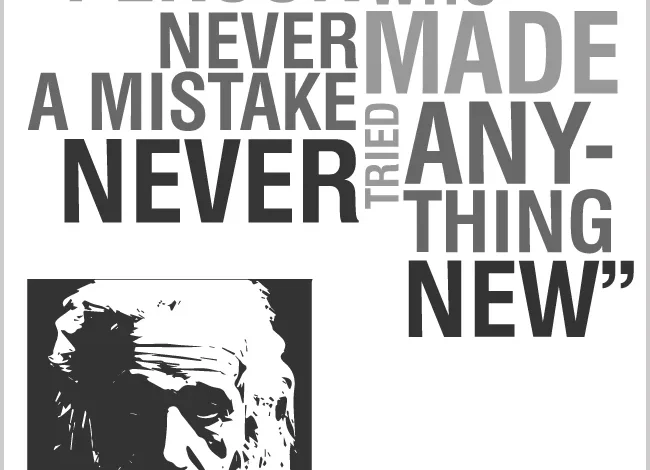
Albert Einstein’s profound statement, "A person who never made a mistake never tried anything new," is a cornerstone for any creative pursuit, especially photography. Mistakes are not failures but invaluable learning opportunities. They are the necessary byproducts of experimentation and the pushing of boundaries. This quote encourages photographers to embrace risk, to venture beyond their comfort zones, and to understand that growth is intrinsically linked to the willingness to err and learn from those experiences.

Pye Jirsa’s lighthearted anecdote about an iPhone and a Coke, "Give me an iPhone and a Coke and I’ll rock your world," underscores a crucial point: creativity often transcends the limitations of equipment. While technology plays a role, the photographer’s vision, resourcefulness, and ability to adapt are far more critical. This sentiment champions the idea that compelling imagery can be created with minimal resources, challenging the notion that expensive gear is a prerequisite for artistic success. It highlights the power of the photographer’s mind and spirit over the tools they wield.
Conclusion: The Enduring Resonance of Photographic Wisdom
In conclusion, the landscape of photography is rich with profound insights, captured not only in images but also in the eloquent words of its pioneers and practitioners. These quotes offer a powerful means of understanding the multifaceted nature of this art form, reminding us that photography is far more than the mere act of capturing light. It is about perceiving, feeling, connecting, and interpreting the world around us. Whether one is an emerging amateur seeking direction or a seasoned professional striving for deeper meaning, these timeless statements serve as guiding lights, inspiring continuous exploration, experimentation, and the pursuit of more compelling visual narratives. From the technical precision championed by some to the emotional depth advocated by others, these diverse perspectives collectively illuminate the enduring power and profound significance of photography in our lives.