The Evolution of Portable Studio Lighting: A Technical Analysis of the NEEWER FS and HB Series

The landscape of professional photography and videography equipment has undergone a significant transformation over the past decade. While high-end camera bodies and precision optics have seen consistent price hikes—often driven by inflation and the integration of advanced computational processing chips—the lighting sector has followed an inverse trajectory. Manufacturers are now prioritizing accessibility, miniaturization, and high-output efficiency, a trend exemplified by the recent release of the NEEWER FS60B, HB60B, and HB80C COB (Chip-on-Board) lighting solutions. These units, which retail between $90 and $170, represent a shift in the democratization of studio-grade illumination.
A Chronology of Lighting Innovation
For decades, studio lighting was defined by bulky, tungsten-based systems that required significant power draws and specialized electrical infrastructure. The transition to LED technology began in earnest around 2010, but the early iterations were often plagued by poor Color Rendering Index (CRI) scores and limited output. By 2018, the industry saw the rise of COB LEDs, which consolidated multiple diode chips into a single module to create a high-intensity point source.
The NEEWER product cycle reflects this accelerated development timeline. Following the release of the Q120 strobe earlier this year, the company shifted focus to compact, mobile-first video lights. The FS60B, HB60B, and HB80C were developed to address the specific needs of content creators who require professional-grade output in portable form factors. This shift highlights a broader industry pivot: moving away from centralized, tethered studio lighting toward modular, battery-integrated ecosystems that function equally well in a controlled studio environment and on location.
Technical Specifications and Performance Metrics
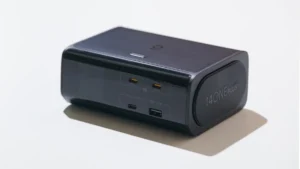
The three units serve distinct functional roles, categorized primarily by power delivery and color capability. The NEEWER FS60B is the most compact entry, weighing in at approximately 298 grams. Despite its minimal footprint, it achieves an output of 60W, capable of producing 34,300 lux at a distance of one meter when paired with the included reflector dish. Its versatility is derived from its power flexibility, accepting DC input, USB-C Power Delivery (PD), or specialized battery grips.
The HB60B introduces an internal 50Wh battery, effectively eliminating the need for external power bricks during field operations. Testing indicates that the unit maintains high performance levels even when disconnected from AC power, with output dropping only marginally from 44,800 lux to 38,400 lux. This efficiency is critical for location shooters who must rely on consistent light quality without the logistical burden of heavy power management systems.
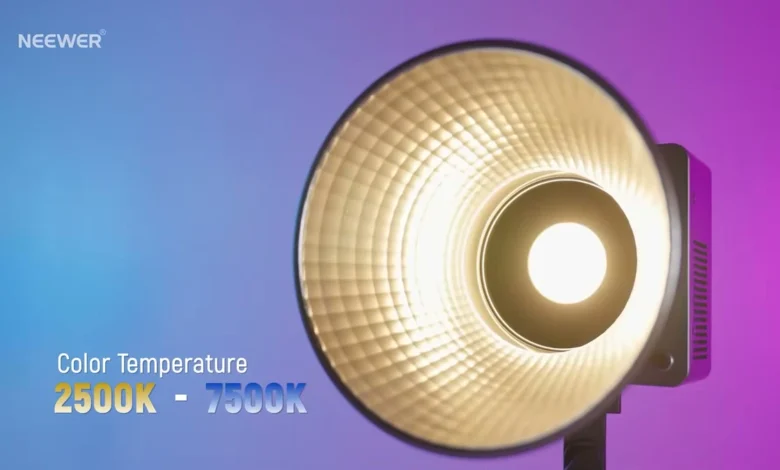
The flagship of this new trio, the HB80C, represents the most significant technological leap. It features an 80W output (when using 100W PD power supplies) and a 72Wh internal battery. Beyond sheer brightness, its defining feature is its Full-Color RGBWW capability. Unlike bi-color lights that are restricted to a kelvin-based warm-to-cool spectrum (2,500K to 7,500K), the HB80C allows for precise manipulation of green and magenta tints. This is a crucial feature for professional color science, as it allows the light to be calibrated to match ambient light sources, such as the greenish cast common in foliage-heavy outdoor environments or the varying color temperatures of fluorescent office lighting.
The Role of Software in Hardware Integration
A recurring theme in modern lighting design is the integration of wireless control ecosystems. All three NEEWER units utilize the proprietary NEEWER app, which standardizes the user interface across devices. This allows for the simultaneous control of multiple lights, the implementation of 12 pre-programmed lighting effects (such as simulated lightning or emergency vehicle strobes), and the management of color presets.
The HB80C’s "Source Match" function is perhaps the most notable innovation in this software suite. By utilizing the smartphone’s camera as a color sensor, the app can calculate the chromaticity of ambient light and adjust the HB80C to match it in real-time. This capability, which was formerly restricted to high-end, multi-thousand-dollar cinema lights, signifies a major advancement in the affordability of color-accurate production tools.
Industrial Design and Modularity
A significant pain point for many photographers is the lack of standardized mounting systems in entry-level lighting. The HB80C addresses this by incorporating a native Bowens mount, the industry standard for light modifiers. This allows users to attach softboxes, snoots, and grids without the need for cumbersome adapters.
Conversely, the FS60B and HB60B utilize a proprietary, miniaturized mount. While this allows for a more compact design, it necessitates the use of a Bowens mount adapter for those who rely on existing lighting modifiers. NEEWER has also updated its softbox ecosystem, introducing a quick-release mechanism that eliminates the need for manual rod insertion. This redesign reduces setup time and mitigates the risk of losing individual components during transit, reflecting a focus on the practical, time-sensitive nature of professional production workflows.
Broader Economic and Professional Implications
The market impact of these lights cannot be overstated. By lowering the entry price for professional-grade, high-CRI lighting, companies like NEEWER are fundamentally changing the requirements for entry into the industry. Previously, the high cost of entry for reliable, color-accurate lighting served as a barrier that favored established production houses. Today, independent creators can access equivalent output and color control for a fraction of the cost.
However, industry analysts note that this shift also places a higher burden on the user to understand color science and light modifiers. The hardware is no longer the primary differentiator; rather, it is the operator’s ability to manipulate the light to suit the specific requirements of a scene. The integration of RGBWW capabilities into sub-$200 lights suggests that future iterations will likely focus on even greater levels of automation and AI-driven light balancing.
Comparative Analysis: Choosing the Right Tool
For professionals looking to integrate these tools into their kits, the selection criteria should be based on the intended use case:
- Studio-Centric Workflows: The FS60B is optimal for users who predominantly work in controlled environments near consistent power outlets. Its lightweight design makes it ideal for mounting on overhead booms or delicate desk-mount stands.
- Location-Based Production: The HB60B offers the best balance of portability and power. Its internal battery removes the need for external power management, making it the preferred choice for run-and-gun documentary or portrait work.
- Creative and Precision Lighting: The HB80C is the clear winner for professionals requiring color accuracy and creative flexibility. Its RGBWW capabilities, native Bowens mount, and advanced software features make it a versatile workhorse suitable for both video production and high-end still photography.
Conclusion
The release of these three COB lights highlights a period of intense innovation in the photography and videography sector. By emphasizing power efficiency, standardized wireless control, and professional-grade color science, manufacturers are effectively closing the gap between consumer-grade equipment and high-end cinema tools. As NEEWER and its competitors continue to refine these technologies, the focus will likely shift further toward advanced connectivity and the seamless integration of AI-assisted lighting adjustments, further simplifying the complex task of professional lighting for creators across all skill levels.