How Blind Beagle VFX and Russell FX Brought Director Dylan Meyer’s Trippy Vision to Life in NEON’s The Wrong Girls

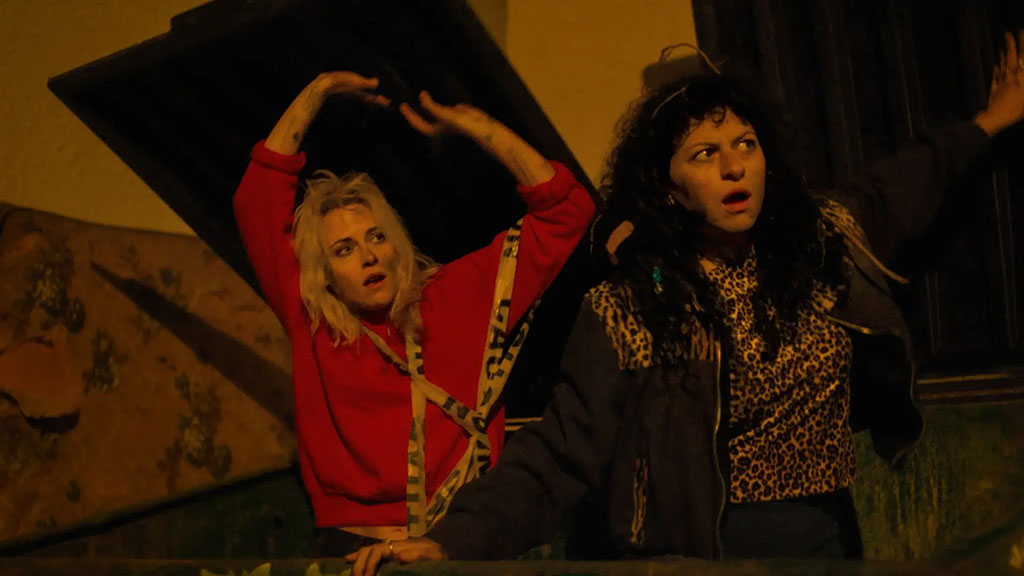
NEON’s upcoming stoner comedy The Wrong Girls blends high-stakes psychedelic chaos with practical filmmaking wizardry, anchored by a surprising cinematic motif: giant, bioluminescent squids. Written and directed by Dylan Meyer, the film follows down-on-their-luck best friends Frankie, played by Kristen Stewart, and Molly, played by Alia Shawkat. Struggling to make rent and desperately searching for financial relief, the duo inadvertently comes into possession of a briefcase containing a powerful experimental hallucinogen following a case of mistaken identity.
Opting to test the substance themselves, Frankie and soon Molly develop profound telepathic abilities. Their newfound consciousness expansion instantly draws the attention—and wrath—of a syndicate of impeccably dressed enforcers tasked with recovering the missing drugs at all costs. What follows is a high-octane cross-country flight for survival. Yet, amidst the terrestrial car chases and psychedelic mind-melding, Meyer utilizes cephalopods as a thematic anchor. To pull off the film’s visually arresting sequences, the production enlisted Christopher Warren, Special Effects Director of Photography, and his veteran team at Blind Beagle VFX, alongside practical creature creators Russell FX, to craft tangible, handcrafted wonder for the big screen.
Crafting the Psychedelic Aesthetic: Practical Magic Meets Modern Indie Cinema
The collaboration between Dylan Meyer and Blind Beagle VFX follows the studio’s celebrated work on Boots Riley’s genre-bending feature I Love Boosters. According to Warren, working with Meyer mirrored the liberating creative ethos he experienced on Riley’s sets. In an era where visual effects budgets are frequently dominated by all-digital pipelines and computer-generated imagery (CGI), both directors prioritized tangible, camera-captured illusions that favored style, tactile texture, and emotional resonance over clinical photorealism.
"With this movie, we did not need it to be grounded in reality," Warren notes, reflecting on Meyer’s directorial philosophy. "I think she was in that same mode of, ‘It doesn’t have to look real, it has to look cool.’"
This commitment to practical artistry is most evident in the film’s mind-bending title sequence. Rather than relying on digital compositing suites to generate an introductory oceanic expanse, the sequence was built using a meticulous three-tiered photographic approach.
The opening phase utilizes genuine underwater footage shot by Warren off the coast of Southern California’s Catalina Island. Initially captured simply to serve as a visual reference for lighting and texture, the footage was so striking that it was incorporated directly into the finished film. This authentic marine environment—brimming with organic kelp forests and native fish—establishes a baseline of naturalism before seamlessly plunging the audience into darkness.
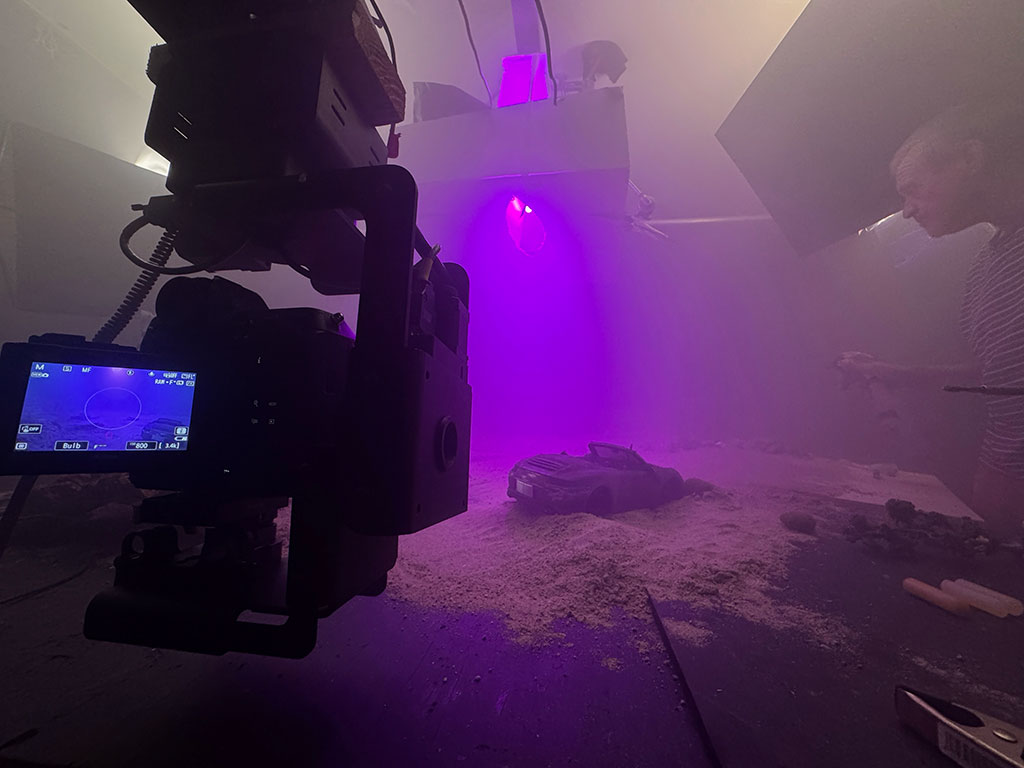
As the underwater imagery fades to black, the transition shifts to a miniature ocean floor engineered by the Blind Beagle team. "When you watch it, you’ll see the kelp edge, and a fish going by, and it’ll kind of go to black," Warren explains. "Then the black turns into the ground on the floor. You’ll see the little Porsche on the right and then the little squid come over the top, and then it kicks back Wrong Girls in your face."
The Art of Dry-for-Wet and Miniature Engineering
Simulating deep-ocean environments on a controlled stage requires specialized cinematic trickery. To achieve the murky, light-diffusing properties of deep-water cinematography without the logistical nightmare of shooting entirely underwater, Blind Beagle utilized a classic practical technique known as "dry-for-wet."
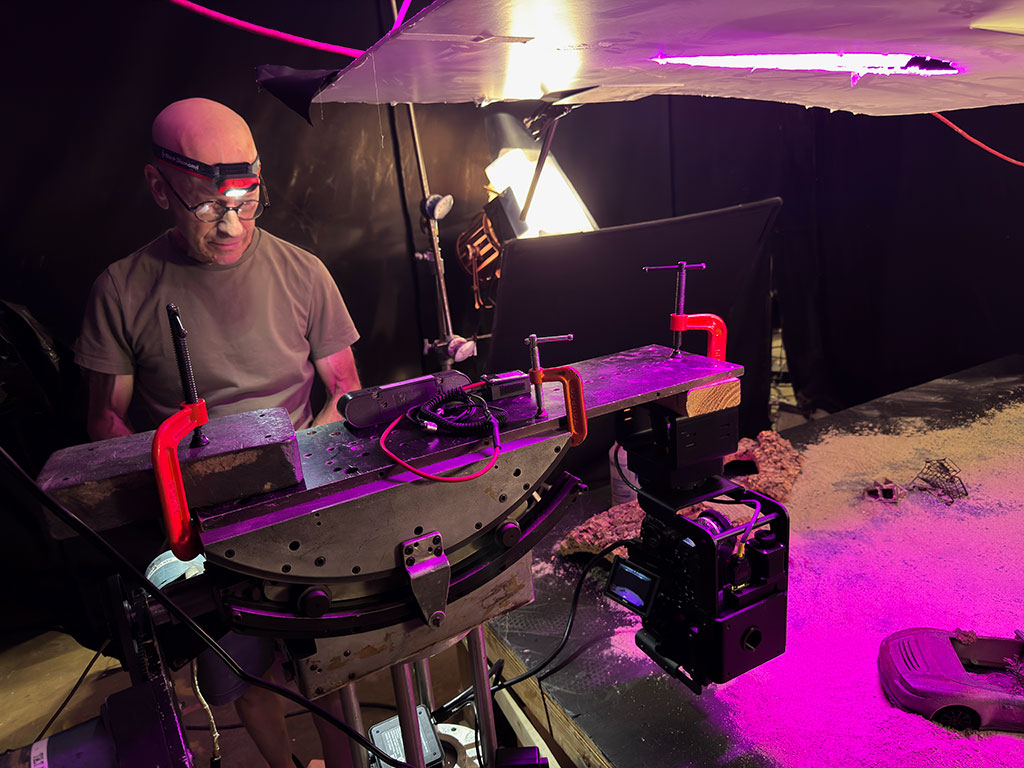
By flooding a controlled soundstage with carefully managed theatrical smoke, the crew altered the density of the air to mimic the turbidity of the ocean. However, achieving consistency across multi-day shoots required exact precision. "Dry-for-wet is when you smoke up the room," Warren details. "You put a bunch of smoke in the room, and it makes it appear like murky water. Depending on what exposures you’re shooting at, you have to be careful that the smoke doesn’t move around too much."
Camera movement through this miniature landscape was executed by veteran motion control operator Les Bernstien, whose extensive industry background includes high-profile science fiction projects such as Foundation. Bernstien’s precise motion control rigs allowed the camera to glide effortlessly over the detailed terrain—which featured a miniature Porsche resting on simulated seabed sand—before the puppet squid made its dramatic entrance.
The production timeline for these sequences required patience and rigorous testing. While the miniature photography itself spanned two to three dedicated shoot days, the preliminary development phase for the dry-for-wet environment took roughly a full week. This window was dedicated to constructing the set, executing exposure tests, and securing final visual approval from director Dylan Meyer.
Russell FX and the Engineering of the Bioluminescent Cephalopod
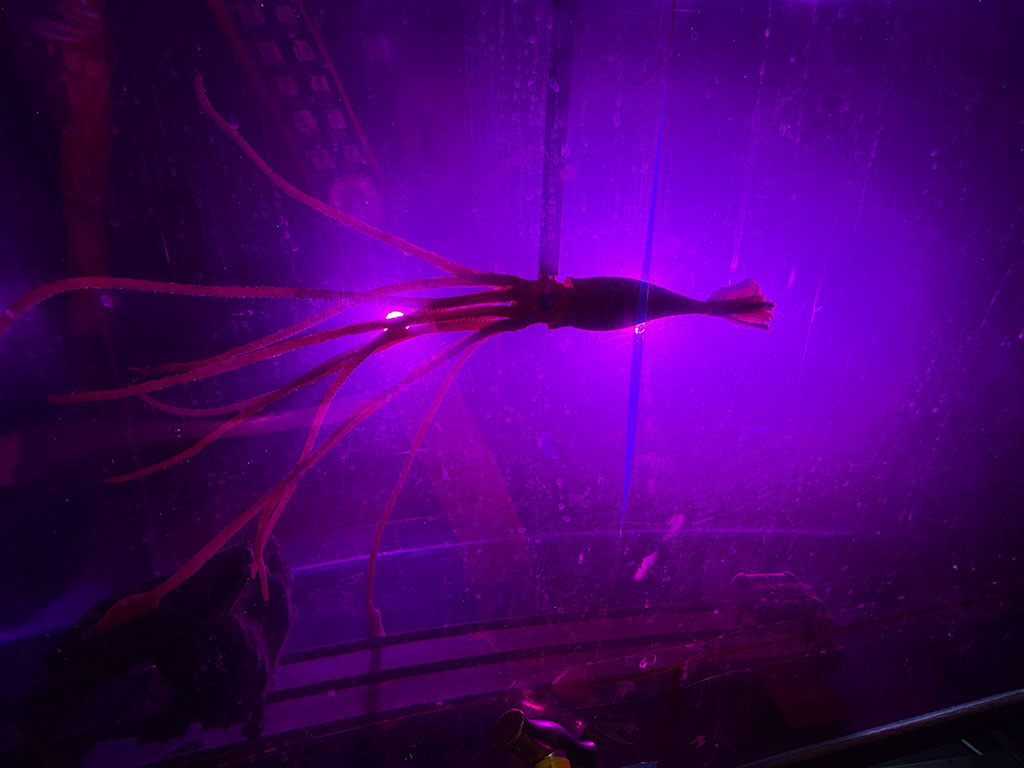
The centerpiece of these sequences—a remarkably detailed miniature squid puppet—was designed and fabricated by Russell FX, led by creature effects artists Josh Russell and Sierra Spence. Known for their ability to blend traditional sculpting with advanced animatronic capabilities, the Russell FX team constructed both the miniature puppet utilized by Blind Beagle and oversized, menacing tentacles engineered for the film’s high-stakes climax.
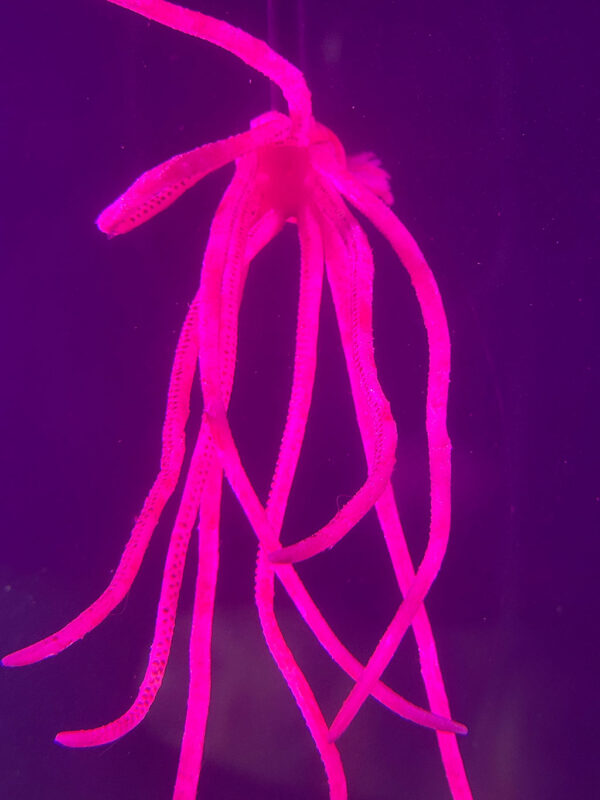
The miniature puppet measured approximately two and a half feet in total length, featuring a mantle body roughly nine inches to a foot long. To capture the signature eerie glow of deep-sea marine life, the creators embedded extensive fiber-optic cabling throughout the creature’s anatomy.
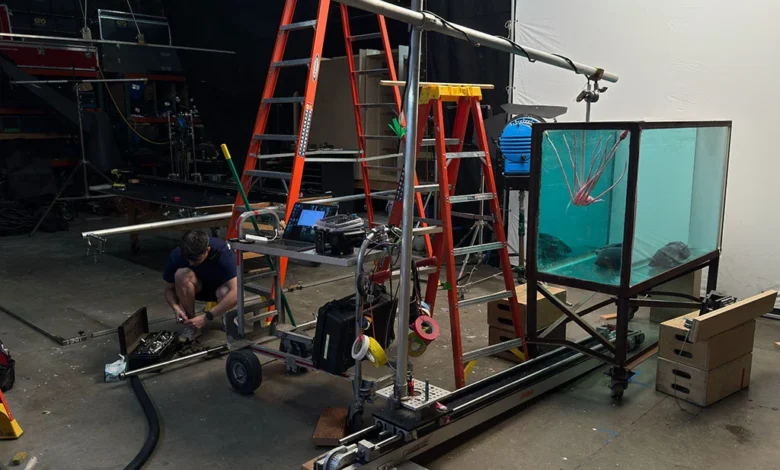
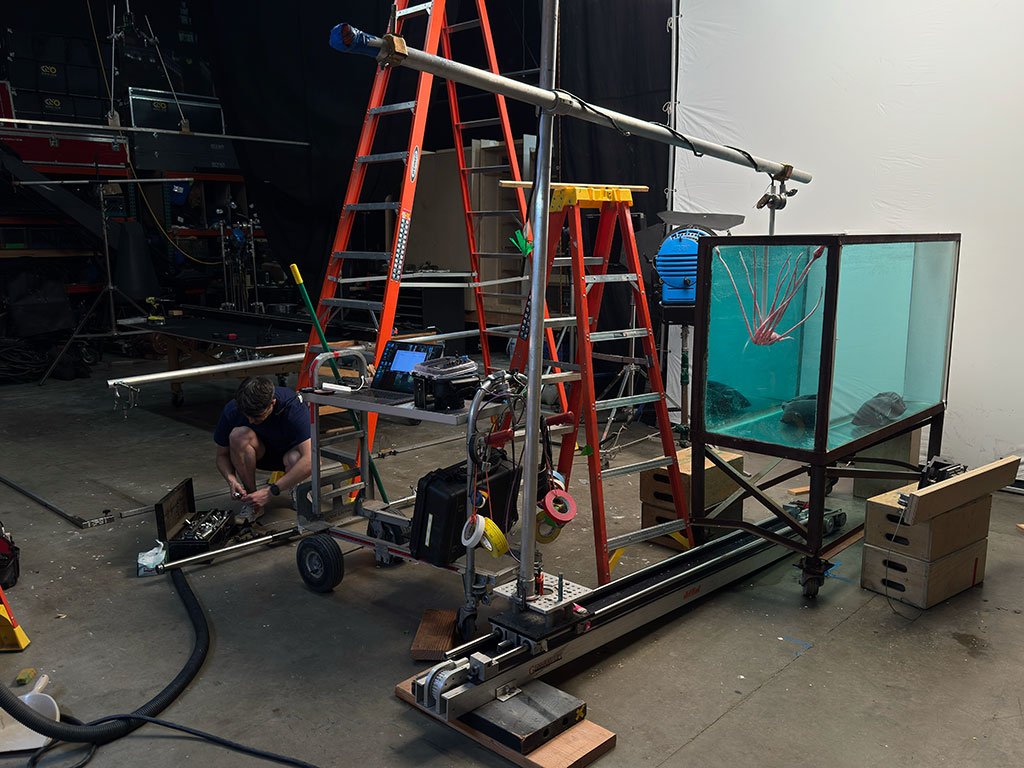
Once delivered to Blind Beagle’s stage, the puppet was introduced into a specialized water tank environment. Operating the creature required balancing buoyancy, fluid manipulation, and technical maintenance. "The squid had fiber optics. The bioluminescent ones. Those were all done in a water tank," Warren recalls. "We had to figure out how to manipulate the squid in the actual tank that we had, as well as make sure that the fiber-optic lighting was staying lit."
Rigging configurations shifted dynamically depending on the narrative requirements of each specific frame. For the title sequence reveal, the squid was mounted to an overhead dolly system equipped with a vertical support rod. This mechanical setup allowed the crew to slide the puppet backward away from the camera’s lens before abruptly reversing its momentum, creating the aggressive forward lunge that unleashes the title card splash. Other setups relied on free-flowing overhead rods, allowing the creature to mimic organic swimming patterns suspended above the miniature landscape.
Physical manipulation of the puppet was a collaborative, hands-on performance. Gene Warren handled the physical articulation of the squid’s movements, while Christopher Warren operated the camera. Additional support on the stage was provided by crew members Brandon Knight-Warren and Brian Bradford.
Behind-the-Scenes Collaboration and Industry Implications
Despite the technical hurdles of keeping fiber-optic systems powered underwater and managing smoke density on stage, the production environment was characterized by levity and creative freedom. "There definitely were some moments of laughter when you’re trying to get a squid to act on stage," Warren admits.
He reserves particular praise for Meyer’s directorial style, noting that her clear creative vision created an optimal workflow for the special effects crew. "She knew what she wanted to do, but she was willing to explore," Warren says. "And it’s always fun when you work with a director that’s just chill and like, ‘Show me what you got,’ and then, ‘Nope, this is what I want,’ and then you go do it. It was a fun shoot. Really fun."
Meyer’s fascination with giant squids—rooted in the real-world mystery and unexplored nature of deep-sea cephalopods—served as a thematic touchstone that united the production team throughout the shoot. "We joked about that on set a lot, about how cool they are and how unexplored they are," Warren adds. "They are amazing creatures."
As modern cinematic landscapes increasingly lean toward homogenized digital workflows, the reliance on physical miniatures, water tanks, smoke machines, and practical creature puppets in films like The Wrong Girls highlights a continuing appetite for tactile filmmaking. By choosing to build a physical world for Frankie and Molly’s psychedelic misadventures, NEON and Dylan Meyer have ensured that the film’s visual identity remains distinct, grounding surreal comedy in the rich, imperfect charm of traditional special effects artistry.