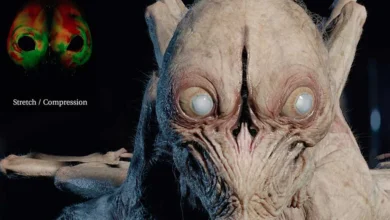
Laika’s Wildwood Continues Strong Domestic Box Office Performance Entering Third Weekend


Laika’s latest stop-motion feature, Wildwood, is currently navigating its third weekend in domestic theaters, solidifying its position as a resilient performer in an increasingly crowded autumn film landscape. As of November 6, 2026, the film has secured a domestic box office total of $32.8 million. With the production currently screening in 2,693 locations, industry projections suggest a weekend intake of approximately $5 million, which would push its domestic cumulative total to roughly $38 million. This trajectory marks a significant milestone for the Portland-based animation studio, as the film demonstrates a noteworthy capacity to retain audiences following its wide release last month.
A Chronology of Performance
The release of Wildwood has been characterized by steady, calculated growth rather than the front-loaded volatility often seen in modern tentpole releases. Upon its initial debut, the film faced the inherent challenges of the stop-motion medium—a painstaking, labor-intensive craft that requires long lead times and high production costs.
During its second week of release, the film displayed unusual strength, bucking traditional weekday trends to ascend to the top of the domestic box office on Tuesday, October 29. This mid-week surge served as a vital indicator of the film’s "legs," suggesting that word-of-mouth engagement was successfully driving theater attendance. Despite a 2,693-theater footprint—which represents only an 8% decline from its opening frame—the film has managed to sustain interest among both core animation enthusiasts and general family audiences.
Contextualizing Laika’s Box Office Legacy
To understand the significance of Wildwood’s current performance, one must look at the historical data of the Laika library. Since the studio’s inception, its films have occupied a distinct niche, often prioritizing artistic integrity and technical innovation over the mass-market formulas favored by larger conglomerate studios.
The $32.8 million currently earned by Wildwood has already nearly doubled the $16.6 million total domestic gross of the studio’s 2019 feature, Missing Link. By the conclusion of its third weekend, if the projected $38 million mark is met, the film will be within striking distance of the lifetime domestic grosses of Kubo and the Two Strings ($48 million) and The Boxtrolls ($50.8 million).

While the film still has a considerable distance to cover to reach the heights of the studio’s breakout hits—ParaNorman ($56 million) and the modern classic Coraline ($75.3 million in its original 2009 run)—it is important to note the shifting economic landscape of theatrical distribution. The modern theatrical environment is significantly more fragmented than it was during the releases of Laika’s earlier catalog, making Wildwood’s sustained hold particularly impressive.
The PG-13 Variable
A critical factor influencing Wildwood’s box office ceiling is its PG-13 rating. In the landscape of animated features, which are traditionally marketed toward younger demographics, a PG-13 rating introduces a hurdle that many of Laika’s previous films did not encounter. While this rating grants the filmmakers greater creative latitude to explore the complex, darker, and more atmospheric themes central to the Wildwood narrative, it inherently narrows the target demographic for casual family outings.
Industry analysts have observed that despite this classification, the film has successfully bridged the gap to reach a broader audience. The ability to maintain such low week-over-week declines suggests that the film’s mature narrative depth is attracting an older demographic that typically avoids animated features, effectively offsetting the loss of the youngest segment of the market.
Strategic Distribution Partnerships
The distribution strategy for Wildwood has been unconventional, spearheaded by a partnership with Fathom Entertainment. This collaboration represents a tactical pivot for Laika, moving away from the traditional, high-volume studio release models that often rely on massive marketing spend and immediate saturation.
In a recent industry discussion, Fathom CEO Jason Brenek provided insight into the motivations behind this distribution model. According to Brenek, Laika’s internal leadership—following years of navigating the traditional Hollywood studio ecosystem—sought a more direct connection to their primary audience. By maintaining a creative hand in the distribution process, Laika has been able to cultivate a more bespoke theatrical experience.
"They knew that they had the base of an audience that they were serving," Brenek noted. "They also felt, after working within the studio system, the traditional Hollywood system, for the entirety of their existence, that they wanted to have a creative hand in how to reach that audience, how to actually bring their content to their biggest fans."

This approach reflects a broader trend in the film industry where specialized studios are increasingly bypassing standardized distribution protocols in favor of strategies that prioritize long-term brand equity over opening-weekend dominance.
Economic Implications and Artistic Legacy
With a reported production budget of $100 million, Wildwood is not currently profitable by traditional Hollywood accounting standards, which typically require a film to generate double its production budget in global theatrical returns to reach a break-even point after marketing and exhibition costs. However, Laika’s business model is inherently distinct from its peers.
The studio operates under a unique ownership structure that prioritizes the development of an enduring artistic legacy. Rather than relying solely on initial theatrical revenue, Laika manages its intellectual property as a long-term asset, leveraging its catalog through various secondary markets, physical media, and exhibition opportunities. The company’s focus on the "long tail" of film exploitation means that theatrical performance is viewed as the foundational step of a much longer lifecycle, rather than the singular metric of success.
Future Outlook
As Wildwood moves toward the latter half of its theatrical run, the industry will be watching closely to see if it can maintain its momentum against upcoming seasonal blockbusters. The film’s success thus far suggests that there remains a robust appetite for premium stop-motion animation, provided the project is handled with the deliberate care and strategic positioning that Laika has employed.
For the animation industry at large, the performance of Wildwood serves as a case study in the viability of mid-budget, high-quality feature animation in an era dominated by franchise sequels and computer-generated spectacles. By leveraging its dedicated fanbase and opting for a distribution strategy that prioritizes community engagement, Laika has effectively signaled that even in a challenging box office climate, there is space for ambitious, auteur-driven storytelling that refuses to compromise on its medium or its message.
Whether or not the film ultimately surpasses the lifetime totals of its predecessors, its current performance is a testament to the enduring appeal of the tactile, physical artistry that defines the Laika brand, confirming that the studio remains a vital force in the contemporary animation landscape.