Sir Patrick Stewart: A Life in Animation and the End of an Era for a Master of the Craft

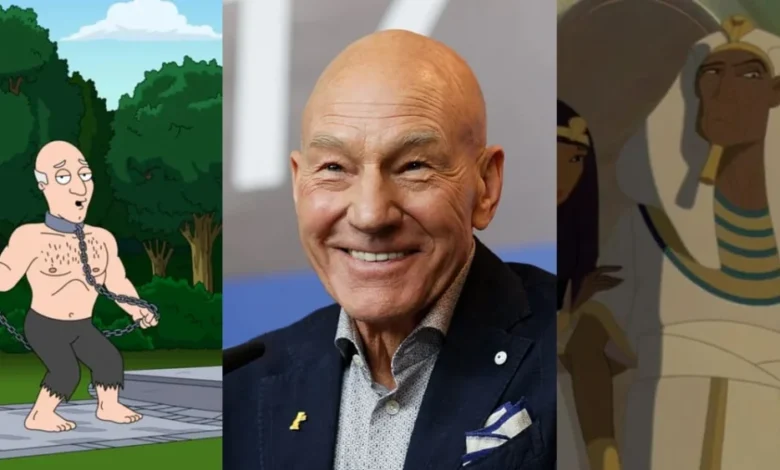
Sir Patrick Stewart, the celebrated stage and screen icon whose authoritative baritone and peerless comedic timing defined a generation of animation, died on Wednesday, October 28, 2026, at his home in Los Angeles. He was 86 years old. His representatives confirmed that the actor had been living with Alzheimer’s disease and Lewy body dementia, conditions that he had largely kept private during his final years. The announcement of his passing on Thursday has prompted an outpouring of tributes from the global entertainment community, marking the loss of an artist who transcended the traditional boundaries between high-brow theater and pop-culture voice performance.
A Legacy Beyond the Bridge and the Classroom
While Stewart is permanently etched in the cultural consciousness as Captain Jean-Luc Picard of Star Trek: The Next Generation and Professor Charles Xavier in the X-Men franchise, his contributions to the world of animation were equally profound, if more eclectic. His voice was an instrument of immense versatility, capable of conveying the gravitas of a monarch, the sharp wit of a satirist, and the absurd whimsy required for unconventional roles.
His career in animation spanned over four decades, beginning in the early 1980s and continuing well into the mid-2020s. This body of work is characterized by a deliberate departure from the typecasting often associated with his live-action roles. Stewart viewed animation not as a secondary pursuit to his work with the Royal Shakespeare Company or his film career, but as a primary, vital form of modern storytelling. In a 2011 interview, he famously asserted that animation was the "most exciting area of film," a sentiment he maintained throughout his life by seeking out projects that challenged his range and dismantled his established image as a stoic, intellectual leader.
Chronology of a Versatile Career
Stewart’s voice-acting trajectory began in earnest with the 1982 cult classic The Plague Dogs, directed by Martin Rosen. In this somber and harrowing adaptation of Richard Adams’ novel, Stewart provided a chilling, memorable performance that set him apart from the lighthearted tropes of animation at the time. This was followed by a string of high-profile roles that showcased his ability to inhabit disparate archetypes.
- 1994: Stewart voiced "Adventure" in The Pagemaster, demonstrating his talent for personifying abstract concepts.
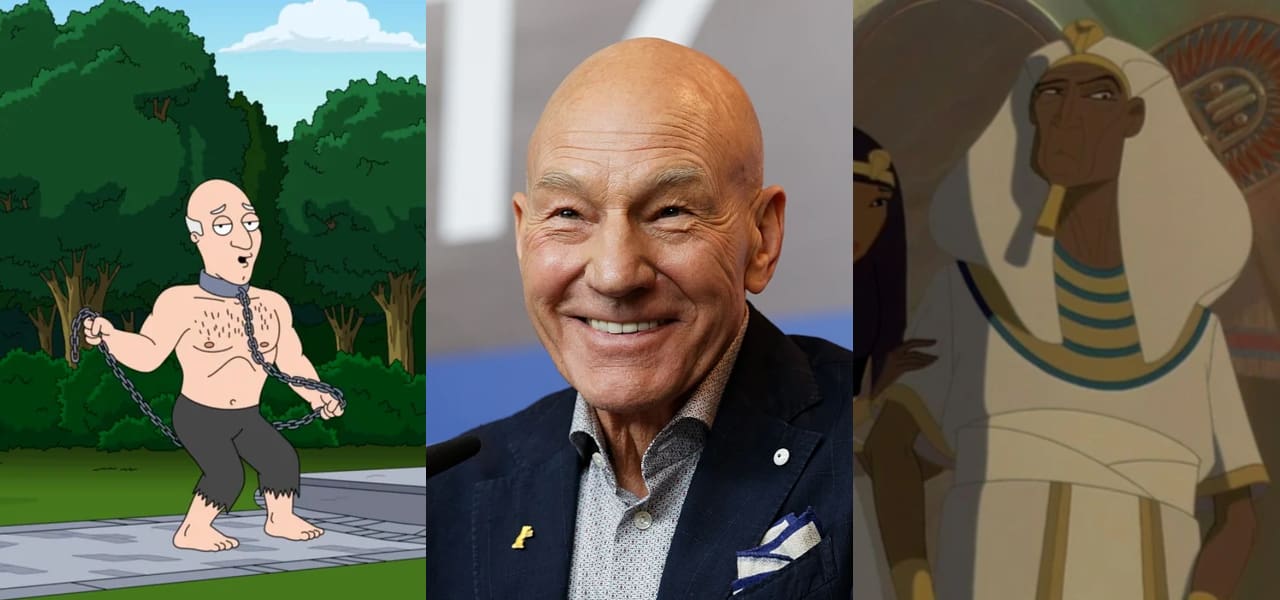
- 1998: His performance as Pharaoh Seti in DreamWorks’ The Prince of Egypt remains a benchmark for animated villainy, blending paternal warmth with terrifying moral rigidity.
- 2001–2007: Stewart moved into the realm of family-oriented features, including Jimmy Neutron: Boy Genius, Chicken Little, and the TMNT reboot, proving his appeal to younger audiences.
- 2005: He cemented his status in global cinema by participating in English-language dubs for two anime masterpieces: Hayao Miyazaki’s Nausicaä of the Valley of the Wind and Katsuhiro Otomo’s Steamboy.
- 2005–2026: His most significant television role, CIA Deputy Director Avery Bullock in American Dad!, ran for over two decades. Bullock served as a subversive reflection of his live-action personas, transforming his familiar, resonant voice into a tool for portraying a man of chaotic, often unhinged, authority.
The Anatomy of the Avery Bullock Phenomenon
Perhaps no role better encapsulated Stewart’s sense of humor than Avery Bullock. As a CIA official who was both sexually liberated and morally bankrupt, Bullock was the antithesis of the virtuous Jean-Luc Picard. Stewart often expressed that this role was one of the most enjoyable of his career. The absurdity of a senior intelligence officer—played with a posh, unmistakably British accent—engaging in increasingly bizarre and illicit behaviors provided a masterclass in comedic juxtaposition.
Seth MacFarlane, the creator of American Dad! and a frequent collaborator, noted that Stewart’s ability to elevate script material was unparalleled. "He was that rare actor who could take any bit of dialogue and elevate it, making a good writer sound great, and a great writer sound masterful," MacFarlane wrote in a statement. The collaboration between the two spanned multiple series, including Family Guy and Ted, and served as a testament to Stewart’s humility, despite his status as a legendary theatrical performer.
Embracing the Absurd: From Shakespeare to Emoji
Stewart’s willingness to participate in projects like The Emoji Movie (2017), where he provided the voice for the Poop emoji, highlighted his evolving philosophy toward his career. He explicitly stated that in his later years, he sought diversity in his work, rejecting the rigidity of a single image. He found a unique, ironic delight in bringing Shakespearean gravitas to the most mundane or ridiculous of animated concepts, viewing it as a necessary subversion of his own public persona.
This trend extended to his extensive work in video games, where he provided voice-over work for iconic titles such as The Elder Scrolls IV: Oblivion and Castlevania: Lords of Shadow. In each instance, Stewart treated the digital medium with the same professional rigor he applied to a stage performance of Hamlet or Macbeth.
The Impact of His Departure
The loss of Patrick Stewart is not merely the loss of an actor; it is the loss of a bridge between the classical traditions of British theater and the burgeoning, high-tech landscape of 21st-century animation. His legacy will likely be studied by voice actors for years to come, particularly regarding his ability to maintain a distinctive presence while adapting to vastly different narrative environments.

From a data-driven perspective, Stewart’s involvement in projects often signaled a shift in prestige for animated features. When he signed on to a project, it frequently elevated the perceived quality of the voice-acting ensemble. His career coincided with the industry’s transition from traditional hand-drawn animation to complex computer-generated imagery (CGI), and he remained a consistent, stabilizing force throughout that technological evolution.
Official Responses and Public Sentiment
The entertainment industry has responded with a sense of profound finality. While Stewart was a global icon, the tributes shared by his colleagues emphasize his grounded nature. Despite his knighthood and his monumental status in the sci-fi and fantasy genres, those who worked with him consistently described him as a novice at heart—always eager to learn and perpetually humble when stepping onto a new set.
Beyond the tributes, there is a clear recognition that the industry has lost a rare talent who refused to be defined by his greatest successes. As the world mourns, the focus remains on the vast, diverse, and often hilarious body of work he leaves behind. He is survived by his wife, singer-songwriter Sunny Ozell, and his two children, Daniel and Sophia.
In reflecting on his life, one is reminded of his own words regarding his work: he found joy in the work itself, regardless of the medium or the character. Whether he was commanding a starship, ruling an ancient kingdom, or simply providing the voice for a sentient emoji, Sir Patrick Stewart brought a level of dedication that transformed the medium of animation, ensuring that his voice will continue to resonate with audiences for generations to come. The era of the "classically trained voice" in animation has lost its most prominent standard-bearer, leaving a void in the landscape of modern performance that will be difficult, if not impossible, to fill.
Related posts: