John Legend brings his signature sound to the digital age with the release of the John Legend Electric Piano on Splice INSTRUMENT

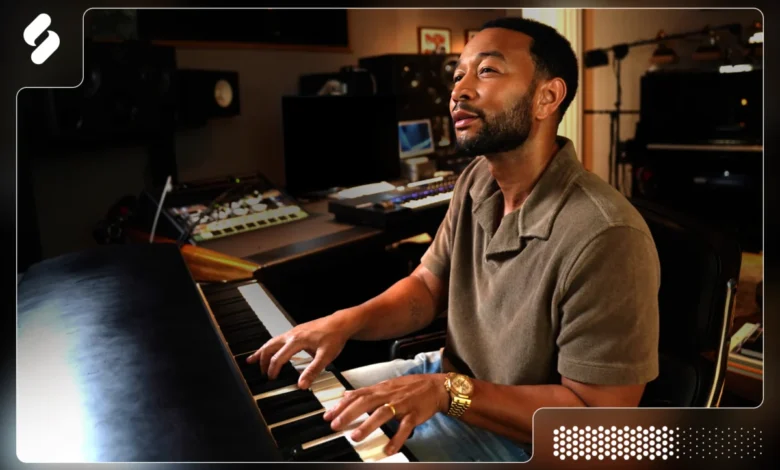
One year after the successful launch of the Ordinary People Piano on the Splice INSTRUMENT platform, Grammy-winning artist John Legend has expanded his digital footprint by releasing a meticulously sampled version of his personal electric piano. This instrument, which the artist famously transported in the trunk of his Honda Accord during his early career, has now been digitized through a collaboration with Spitfire Audio, offering producers access to the same warm, vintage textures that defined Legend’s rise to global stardom.
The Evolution of the Digital Soundscape
The introduction of the John Legend Electric Piano marks a significant milestone in the ongoing integration of high-fidelity physical hardware with cloud-based production tools. The project involved a rigorous sampling process conducted by engineers at Spitfire Audio, who captured the instrument’s nuances across thousands of velocity layers and dynamic ranges. This process ensures that the software instrument retains the tactile, "woozy," and organic character of the physical unit currently housed in Legend’s Los Angeles home.
For Legend, the instrument is more than a production tool; it is a historical artifact of his own musical development. He cites the "golden era" of electric piano music—specifically the work of Stevie Wonder, Donny Hathaway, and Roberta Flack—as the primary influence on his own sound. Legend frequently points to Stevie Wonder’s run of albums between 1972 and 1976, including Talking Book, Music of My Mind, Fulfillingness’ First Finale, and Songs in the Key of Life, as the benchmark for excellence in keyboard-driven soul music.
Chronology of a Collaboration
The partnership between John Legend and Splice follows a deliberate, multi-year strategy to bridge the gap between legacy analog hardware and modern software workflows.
- Pre-2004: John Legend utilizes his personal electric piano during his formative years, transporting the heavy equipment manually to various venues and recording sessions.
- October 2025: Splice launches the "Ordinary People Piano" on the INSTRUMENT platform, signaling a shift toward artist-curated, high-fidelity sample libraries.
- Early 2026: Engineering teams from Spitfire Audio begin the multi-month process of sampling Legend’s vintage electric piano, focusing on sustain, decay, and the unique mechanical harmonics of the instrument.
- October 2026: The official release of the John Legend Electric Piano, making the curated sounds available for subscription-based access on Splice INSTRUMENT.
The Philosophy of Craft in an Automated Era
Beyond the technical specifications of the new instrument, Legend’s public discourse surrounding the release has focused on the necessity of human collaboration and the retention of "friction" in the creative process. In an era where Generative AI is increasingly capable of synthesizing musical styles, Legend advocates for a "low-tech" approach to professional development.
Legend argues that the act of music creation is fundamentally social. By encouraging younger artists to engage in school musicals, vocal lessons, and collaborative performance, he emphasizes that the value of an artist lies not just in the final audio output, but in the experience of connecting with other human beings. He suggests that the "friction" inherent in learning an instrument—the mistakes, the physical practice, and the struggle to achieve virtuosity—is exactly what prevents music from becoming sterile or repetitive.
Implications for Intellectual Property and AI
A central theme of the current discourse in the music industry, which Legend addressed during the product launch, is the unauthorized use of artist likeness and sound profiles in Large Language Models (LLMs). As AI tools become more adept at generating "artist-type" music, the industry faces a growing conflict regarding the ownership of creative legacies.
Legend draws a clear distinction between the traditional influence one artist has on another—which he characterizes as a natural, human form of "training"—and the systematic scraping of data by machines. He notes that while human inspiration is the lifeblood of artistic evolution, the mechanical reproduction of a creator’s work without compensation or consent constitutes an exploitative practice.
"Every artist needs to make sure that they’re in control of their intellectual property, their legacy, and making sure that it’s valued and compensated in the world," Legend stated. This stance aligns with a broader movement among high-profile musicians and industry bodies to push for legislative protections that govern how AI models are trained on copyrighted musical works.
Market Context and Technical Detail
The Splice INSTRUMENT platform operates on a model that seeks to democratize access to high-end studio gear that was previously reserved for those with the budget for professional studio space and rare vintage maintenance. By partnering with companies like Spitfire Audio—known for their orchestral and high-end cinematic libraries—Splice aims to provide a "professional-grade" alternative to the low-fidelity samples that have dominated the entry-level production market.
The technical success of this collaboration hinges on the "round-robin" sampling technique, which prevents the "machine-gun effect"—a common issue in digital piano libraries where repeated notes sound identical, resulting in an unnatural, synthetic feel. By recording the instrument thousands of times at varying volumes and articulations, the team has managed to preserve the subtle mechanical imperfections that give the piano its warmth.
Strategic Analysis of the Partnership
For Splice, the partnership with John Legend serves as a strategic differentiator in a crowded market of sample-based platforms. By tying the software to the identity and physical equipment of a recognizable, critically acclaimed artist, the company creates a premium value proposition that transcends basic utility.
Furthermore, the emphasis on the "story" behind the instrument—the Honda Accord, the weight of the equipment, and the influence of Stevie Wonder—serves to humanize the digital product. This narrative-driven approach is increasingly common in the creative software industry, as companies move away from purely functional marketing toward brand-aligned storytelling.
Future Outlook
As the music industry continues to grapple with the dual challenges of technological disruption and the need for new revenue streams, the model of "Artist-as-Curator" appears to be gaining traction. By providing their signature sounds to the public through professional platforms, artists like Legend are establishing a new standard for how legacy sounds are preserved and disseminated.
For the next generation of producers, the takeaway from Legend’s latest project is two-fold: technology should be leveraged to enhance, rather than replace, the pursuit of individual craft, and the protection of intellectual property must remain a priority for any artist entering the modern digital economy. The John Legend Electric Piano is not merely a tool for sound design; it is a case study in how heritage hardware can be successfully transitioned into the cloud without losing the soul of the performance.
The instrument is currently available to users of the Splice INSTRUMENT platform, with the company offering temporary trial periods to encourage adoption among independent creators. Whether this shift toward high-fidelity, artist-branded digital instruments will fundamentally alter the landscape of music production remains to be seen, but the trend clearly points toward a future where the line between the studio and the laptop continues to blur.