Bridging Cultures and Pipelines: Alissar Kobeissi on the Evolution of Global Animation and Her Journey to Sony Pictures Imageworks

The landscape of modern animation is undergoing a seismic transformation, driven by cross-cultural narratives, technological hybridization, and a growing recognition of animation as a versatile medium rather than a restricted genre. At the forefront of this evolution is Palestinian-Lebanese multimedia animator Alissar Kobeissi. Currently a Senior Animator at Sony Pictures Imageworks, Kobeissi’s career trajectory—from watching Arabic-dubbed cartoons in the Middle East to shaping character performances for major Hollywood studios—offers a unique lens through which to examine the globalization of the animation industry, the democratization of production pipelines, and the blurring lines between two-dimensional artistry and three-dimensional execution.
Early Influences and the Path to Professional Animation
Growing up in the United Arab Emirates, Kobeissi’s early exposure to animation was shaped by a distinct blend of international programming. Like many children of her generation across the Middle East, she consumed anime titles such as Pokémon, Nobody’s Boy: Remi, and Romeo’s Blue Skies, which were localized and broadcast across the Pan-Arab television network Spacetoon. Concurrently, western animation consumed on VHS tapes—most notably Disney’s Mulan, received on a childhood birthday—instilled a deep-seated fascination with character-driven storytelling, cultural resonance, and visual aesthetics.
This foundational passion directed her academic pursuits toward the Académie Libanaise des Beaux-Arts (ALBA) in Beirut, where she earned a Bachelor’s degree in Computer Graphics and Interactive Media. Her curriculum at ALBA was multidisciplinary, encompassing traditional gouache painting, computer programming languages like JavaScript, art history, and typography. The turning point toward a specialized career in 3D character animation occurred when she witnessed a digital donkey rotate within LightWave 3D software. Motivated by this technical marvel, she enrolled in an online 3D character animation course provided by AnimSchool, laying the groundwork for her eventual entry into the professional studio system.

The Breakthrough and Studio Pipeline Integration
Kobeissi’s professional breakthrough arrived following a period of rigorous self-improvement and portfolio development. By mastering specific acting shots and character mechanics, she caught the attention of industry leaders, including Kevin Webb, then head animator at Sony Pictures Imageworks, and Patrick Delage at Illumination. Her studio career commenced in 2018 at Sony Pictures Imageworks on Smallfoot, followed by a tenure at Illumination working on Sing 2. Over the years, her credits expanded to include contributions to projects produced by Skydance Animation and Walt Disney Animation Studios.
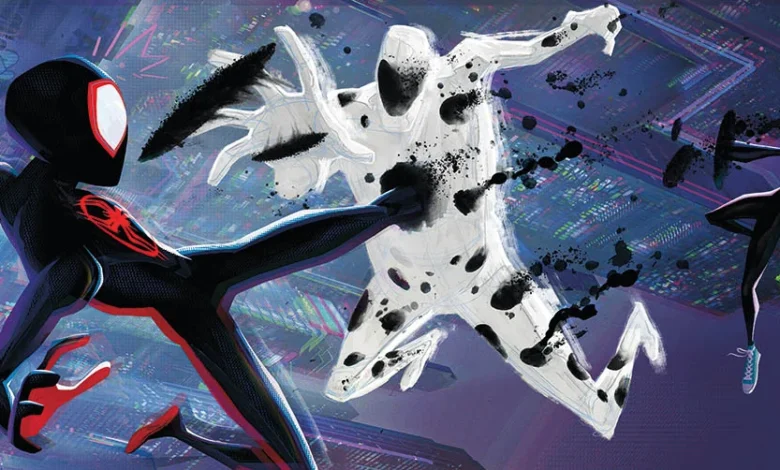
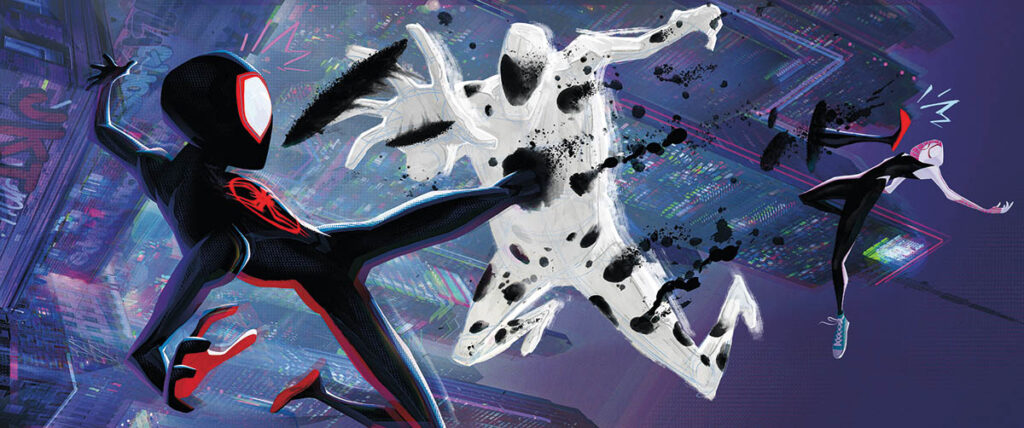
Having worked across multiple major Hollywood facilities, Kobeissi offers a comparative perspective on studio production pipelines. While individual operations maintain proprietary toolsets tailored to specific projects, the underlying structural frameworks remain remarkably consistent. However, the demands of contemporary visual storytelling frequently necessitate structural innovation. For instance, during the production of the critically acclaimed feature Spider-Man: Across the Spider-Verse, Sony Pictures Imageworks established an entirely new department specifically designed to bridge the operational gap between layout and animation. In previous entries, animators had absorbed substantial layout responsibilities within their individual shots; the creation of this intermediate department redistributed the workload without compromising production efficiency.
The Convergence of 2D and 3D Techniques in Modern Animation
The contemporary animation industry is characterized by the systematic erosion of traditional boundaries between two-dimensional and three-dimensional media. The industry-wide success of visually distinct projects—such as the comic-inspired aesthetic of the Spider-Verse franchise, the gaming-influenced visual language of Arcane, and the stylized anime hybridization seen in emerging cinematic features—demonstrates a global appetite for hybrid aesthetics.

Kobeissi notes that anime and international artistic movements have played a critical, if indirect, role in shaping contemporary western pipelines. As global audiences become more sophisticated, studios are increasingly willing to experiment with textures, linework, and framing that mimic hand-drawn art within a 3D space. Projects like Blue Eye Samurai and various independent international shorts exemplify how 3D spatial consistency can be leveraged to support, rather than override, 2D artistic sensibilities.
Furthermore, Kobeissi emphasizes that the technical foundation of 3D animation relies heavily on traditional artistic disciplines. Utilizing digital tools such as Wacom tablets, animators frequently generate thumbnail sketches and draw directly over 3D reference poses to push stylization, line of action, and silhouette readability. This iterative process ensures that technology serves the artistic intent rather than dictating the final performance.
Navigating Technical Complexity and Effects-Driven Character Animation
Achieving authentic character performances requires careful observation of real-world physics and human nuance. Kobeissi underscores that animators cannot rely entirely on imagination to replicate the intricate details of physical movement. Instead, reference footage and live-action observation serve as baseline tools, which are subsequently stylized to match the emotional demands of a narrative.
This technical challenge is magnified when dealing with effects-driven characters. During her work on the VR short film Reimagined Volume III: Young Thang, Kobeissi animated a protagonist composed entirely of water. Every acting choice and emotional beat required a corresponding physical simulation of fluid dynamics, demanding close collaboration between the animation and effects departments. By establishing clear silhouettes, poses, and character intent—such as visualizing wind forces interacting with hair during a dramatic confrontation—the animation department provides crucial foundational data to downstream technical teams, ensuring narrative coherence across complex pipelines.

The Democratization of Storytelling and the Rise of Streaming Platforms
The demographic profile of animation audiences has shifted significantly over the past decade. Animation is increasingly recognized by mature audiences as a medium rather than a genre, opening the door for complex, issue-driven storytelling. Films such as Persepolis, The Breadwinner, and Flee demonstrate that animation can effectively address heavy sociopolitical themes, real-world conflict, and adult psychological drama in a digestible and impactful format.
This maturation coincides with a decentralization of the global animation industry. Historically concentrated within traditional hubs in North America, Japan, and Western Europe, the medium is experiencing a geographic expansion. Streaming platforms, most notably Netflix, have invested heavily in diverse international content, enabling smaller studios worldwide to produce high-tier animation.
Kobeissi remains actively connected to her regional roots through involvement in initiatives like Beirut Animation Nights, a festival showcasing works by Lebanese artists. Despite historical limitations in infrastructure and educational resources within the Middle East, a new generation of regional creators is utilizing accessible digital tools to produce diverse narratives. This wave of international production highlights a broader industry trend: the decoupling of high-end animation from major metropolitan studio centers.
Future Prospects and Industry Challenges
Looking ahead, Kobeissi identifies both encouraging opportunities and persistent structural challenges within the major studio system. While the medium has grown bolder in its narrative ambitions and stylistic experimentation, a distinct division often remains between the foundational creative decisions made at the executive level and the day-to-day execution performed by artists within large pipelines.
Bridging the gap between the artist and the overarching narrative represents a key objective for experienced animators seeking to influence the future trajectory of the medium. Although internal short-film programs historically provided a platform for studio artists to explore holistic storytelling, fluctuations in corporate strategy have sometimes limited these opportunities. Nevertheless, the ongoing democratization of software, the rise of independent international studios, and the expanding scope of streaming distribution suggest that the future of animation will be defined by greater stylistic fluidity, cultural diversity, and narrative depth.
Related posts: