Turning Doomscrolling Into Study Sessions: How Startup ScrollEd Is Gamifying Education Through Short-Form Feeds

Modern society has spent decades bemoaning the rise of digitally addled minds, pointing accusing fingers at endless social media feeds and shrinking attention spans as the primary culprits behind plummeting reading comprehension and academic fatigue. Cultural critics frequently argue that the constant pull of algorithmic doomscrolling has fundamentally rewired the human brain, making traditional pathways of learning—such as sitting down with a dense academic textbook or preparing rigorously for comprehensive examinations—feel nearly impossible for younger generations. Yet, a growing faction of entrepreneurs and technologists is beginning to ask a radical counter-question: What if the solution to digital distraction is not to eliminate scrolling altogether, but rather to completely reclaim and redirect what we are scrolling through?
This exact premise forms the foundational bet of ScrollEd, an innovative Palo Alto-based startup making waves in the competitive educational technology landscape. As a proud participant in the prestigious TechCrunch Disrupt Startup Battlefield 200 competition, ScrollEd is pitching a paradigm-shifting concept to educators, investors, and students alike: if modern learners refuse to open a traditional textbook, the textbook must adapt by opening itself up directly to them within the familiar, addictive architecture of a vertical video feed.
Bridging the Gap Between Entertainment and Education
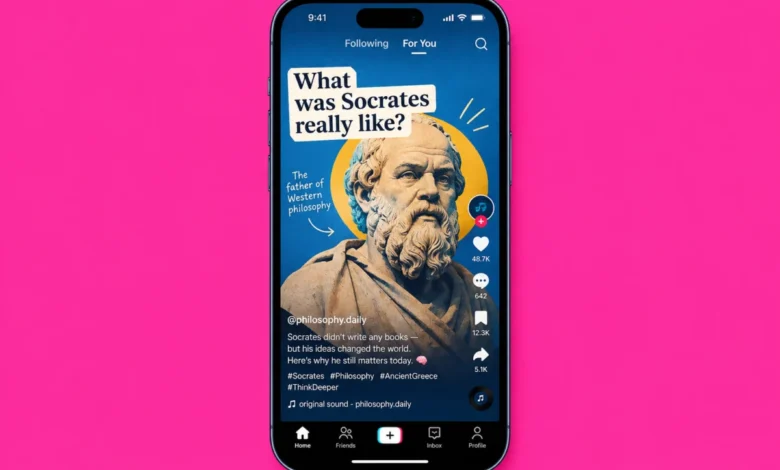
Founded to tackle the modern paradox of high information availability paired with low attention retention, ScrollEd has developed a proprietary application capable of transforming any dry, text-based document—ranging from complex academic PDFs and heavy university textbooks to dense corporate compliance manuals—into an interactive, vertical media feed. Operating on mechanics heavily popularized by platforms like TikTok, Instagram Reels, and YouTube Shorts, ScrollEd converts static lines of text into a dynamic multimedia experience.
As users scroll vertically through the application, the underlying educational content is dynamically parsed and served via artificial intelligence in a blend of bite-sized video, crisp audio narration, summarized text, and interactive quizzes. The navigational logic mirrors the exact muscle memory developed by millions of social media users daily: swiping up instantly surfaces a new topic or progressive lesson module, while swiping sideways allows the user to dive deeper into sub-topics, supplementary explanations, and contextual details related to the current subject. To ensure active comprehension rather than passive absorption, an interactive quiz or knowledge check point naturally awaits the user at the conclusion of each content cluster.
The psychological intent behind this design is not to exploit dopamine pathways for endless mindless consumption, but rather to harness the existing habits of digital natives constructively. According to Utsav Gupta, co-founder of ScrollEd, the inspiration for the platform stemmed from direct observations of how younger demographics consume media and interact with information in the digital age.
“The younger generation is increasingly going short-form, vertical feed only—especially the 18-year-olds we’ve spoken to—and this poses challenges for any kind of media that requires depth,” Gupta explained in an interview. “We want to meet them where they are. We just have to be deliberate about how we use it and choose not to maximize engagement on the platform.”
Rather than treating the short-form feed format as an enemy of education, ScrollEd’s architecture treats it as a high-efficiency gateway. “A short video can make you curious; following that curiosity can mean searching for another explanation or leaving the app,” Gupta noted, elaborating on the typical friction points of modern research. “We wanted going deeper to be as easy as moving to the next video.”
The Origin Story and Academic Roots
The narrative of ScrollEd’s inception is deeply intertwined with the very demographic it aims to serve. The startup was bootstrapped throughout the year by co-founders and spouses Utsav Gupta and Rebecca Neff, who initially conceived of the project after experiencing a shared sense of digital fatigue. Like millions of students and professionals worldwide, the couple found themselves falling into the familiar, unsatisfying trap of late-night doomscrolling before bed—consuming endless streams of superficial content while feeling an undercurrent of unproductivity.
Crucially, both founders bring rigorous academic and technical perspectives to the venture. Gupta is currently pursuing advanced studies in artificial intelligence and human purpose at Stanford University, grounding the startup’s technological capabilities in cutting-edge machine learning research and human-computer interaction theories. Meanwhile, Neff brings vital engineering execution to the table as a computer science student at the University of Pennsylvania. This combination of elite academic grounding and firsthand experience with student burnout provided the ideal breeding ground for an ed-tech tool designed with genuine empathy for the learner’s mindset.
Target Markets and Institutional Strategy
While ScrollEd is fundamentally structured to appeal to individual students seeking a more engaging way to study or consume non-fiction literature, its commercial roadmap extends far beyond the consumer app store. The startup has strategically targeted three distinct market segments: individual lifelong learners who simply “want something better to scroll on,” corporate training and human resources departments seeking efficient employee onboarding solutions, and formal educational institutions looking to modernize their curriculum delivery.
To capture these diverse markets, ScrollEd has adopted a hybrid freemium business model. On the consumer side, users can access a foundational free feed containing curated educational content. For power users, the platform offers a paid subscription tier known as ScrollEd Pro, unlocking advanced personalization, extended lesson libraries, and deeper analytical tools.
Concurrently, the startup is rolling out annual institutional licenses targeted at universities, K-12 school districts, and enterprise training divisions. Under this enterprise model, organizations pay to seamlessly upload and distribute their proprietary educational materials, training modules, and course syllabi through ScrollEd’s proprietary conversion infrastructure. In return, institutional clients receive comprehensive administrative dashboards that provide rich data analytics, tracking metrics on student engagement, lesson progress, quiz performance, and comprehension bottlenecks in real-time.
The TechCrunch Disrupt Launch and Future Roadmap
The official public debut of ScrollEd’s consumer business marks a major milestone in the startup’s young history, taking place on the high-profile stage of TechCrunch Disrupt in downtown San Francisco. Selected as part of the fiercely contested Startup Battlefield 200 cohort—a showcase highlighting the world’s most promising early-stage technology companies—ScrollEd is positioning its platform not merely as an educational tool, but as a direct cultural challenge to traditional social media algorithms.
“We’re hoping to ‘disrupt’ social media and short-form,” Gupta joked ahead of the event, highlighting the ambitious dichotomy at the heart of the company’s mission.
Looking ahead past the conference, ScrollEd’s operational roadmap for the coming months is both aggressive and structured. The immediate priority centers on executing a successful consumer launch, aggressively expanding the platform’s internal lesson library, and refining a rigorous source-checking and fact-validation workflow to ensure the AI-generated educational content remains academically accurate and reliable. Simultaneously, the startup is actively developing pilot programs with select educational institutions to test and validate enterprise-level deployments.
Over the long term, ScrollEd’s technical team is laying the foundational infrastructure necessary to build adaptive learning algorithms. This infrastructure will eventually allow educators to dynamically assess individual learners’ strengths and weaknesses in real-time, automatically tailoring the vertical feed to adapt to each student’s unique learning pace, comprehension style, and knowledge gaps.
Broader Implications for Education and Digital Culture
As artificial intelligence continues to reshape the boundaries of traditional pedagogy, startups like ScrollEd represent a fascinating evolution in how humanity interacts with structured knowledge. For centuries, the format of education has remained relatively rigid—relying on bound books, linear lectures, and static PDFs. However, as cognitive habits shift toward rapid, visual, and interactive consumption patterns, educational institutions face an existential crisis regarding student engagement.
Critics of gamified learning often express concern that reducing complex academic texts into bite-sized, swipeable cards risks diluting the depth of critical thinking and eroding the capacity for sustained, deep reading. Educational psychologists frequently warn that over-relying on micro-learning formats might hinder long-term memory consolidation and diminish the ability to parse nuanced, multi-layered arguments.
Conversely, proponents of platforms like ScrollEd argue that traditional academic formats are failing precisely because they refuse to evolve alongside human behavior. By meeting digital natives within their preferred medium—without sacrificing academic rigor, verifiable sourcing, or interactive assessment—adaptive ed-tech platforms may offer a viable bridge across the generational digital divide. If technology is capable of engineering human attention spans away from productive thought, proponents argue, it can just as easily be harnessed to engineer them back.
Ultimately, ScrollEd’s overarching corporate ambition reaches far beyond the boundaries of standard educational software. As Gupta succinctly summarized during the startup’s launch preparations, the ultimate vision for the company is deceptively simple yet profoundly ambitious: “The ambition is a social network that’s better for you.” Whether modern students and institutions will embrace the vertical scroll as the future classroom remains to be seen, but platforms like ScrollEd are undeniably redefining the terms of the digital engagement debate.