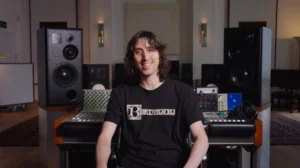
Phoenix is the culmination of a lifetime of loving synthesizers and synthesis, BT tells us.


The release of Phoenix, a sophisticated hybrid synthesizer developed through a collaboration between legendary producer BT and the acclaimed software developer Spitfire Audio, marks a significant milestone in the evolution of digital sound design. This instrument represents the convergence of decades of pioneering technical research and the specialized sampling capabilities of Spitfire Audio, offering a comprehensive toolkit for composers, producers, and sound designers working in contemporary film, gaming, and studio environments.
The Architect of Glitch: A Brief History of BT
Brian Transeau, professionally known as BT, has maintained a career defined by technical innovation that has consistently blurred the lines between high-fidelity orchestral composition and cutting-edge electronic manipulation. His influence on modern production began long before the ubiquity of digital workstations. At age fourteen, his experimentation with physical tape manipulation—cutting and splicing analog magnetic tape to create rhythmic stutters—laid the groundwork for what would eventually become the industry-standard "stutter edit" technique.
BT’s career trajectory has been marked by several pivotal moments:
- The 1990s: Establishing himself as a pioneer in trance and progressive house, his early works introduced complex, granular textures to dance music.
- The 2000s: His work on This Binary Universe (2006) was critically acclaimed for its technical ambition, featuring a 110-piece orchestra integrated with intricate, glitch-based electronic elements, effectively redefining the possibilities of hybrid soundscapes.
- Film Scoring: Beyond his studio albums, BT has contributed to the soundscapes of high-profile franchises such as The Fast and the Furious and Monster, establishing his reputation as a composer capable of bridging traditional cinematic tension with electronic dynamism.
The Technical Genesis of Phoenix
The development of Phoenix is presented as the realization of a lifelong objective for BT. In the industry, the term "hybrid synthesizer" generally refers to software or hardware that blends traditional wavetable, subtractive, or FM synthesis with sampled organic sources. Phoenix utilizes the robust Spitfire Audio engine, which is known for its high-fidelity playback and deep integration with orchestral sound libraries.
The technical specifications of Phoenix are designed to handle both rapid rhythmic sequencing and long-form cinematic pads. By incorporating granular synthesis alongside traditional oscillators, the instrument allows users to manipulate audio at the micro-level—a hallmark of BT’s production style. The software is built to function within standard Digital Audio Workstations (DAWs), such as Ableton Live, Logic Pro, and Cubase, making it accessible for both professional scoring stages and home-based studios.
The Collaborative Framework
Spitfire Audio, based in the United Kingdom, has become a standard-bearer for premium virtual instruments, largely due to its focus on "humanized" performance. The partnership with BT was reportedly born from a shared philosophy: that tools should not merely function as static machines, but as reactive instruments that respond to the nuances of a human performer.
Official documentation from the development team suggests that the partnership focused on the "living" nature of the software. Rather than a static release, Phoenix is positioned as an evolving platform. BT has confirmed that the instrument will receive scheduled updates and expansion packs over the next twelve months, ensuring that the sound palette remains current and responsive to the evolving requirements of modern music production.
Industry Impact and Creative Implications
The release of Phoenix comes at a time when the demand for high-quality, "hybrid" cinematic sounds is at an all-time high. Modern streaming platforms and the expansion of the independent video game market have created a need for composers who can produce orchestral-grade music within tight deadlines. Instruments like Phoenix serve to reduce the friction between technical implementation and creative output.
Industry analysts note that as software instruments become more powerful, the barrier to entry for complex sound design is lowered, but the demand for "signature" sounds—sounds that are not easily replicable—increases. By providing a platform that draws from BT’s specific sonic library, Spitfire Audio is offering users access to a curated aesthetic that has defined the sound of Hollywood action and electronic composition for twenty years.
Masterclass and Educational Outreach
To support the launch, the creators have released a comprehensive video masterclass. In this session, BT provides a 30-minute deep dive into the architecture of the synth, focusing on how he layers textures to create tension and resolution. This pedagogical approach is consistent with the current trend of software manufacturers acting as educational hubs, providing high-level tutorials that allow users to maximize the value of their investment.
J Scott Rakozy, a prominent composer and sound designer, has also provided an independent overview of the instrument, noting that the "nuance" within the interface allows for a level of expressive control that is often missing from more rudimentary synthesizers. Rakozy’s analysis underscores the importance of the instrument’s interface, which is designed to minimize menu-diving and prioritize tactile, immediate control over parameters.
Future Projections and Longevity
The longevity of a virtual instrument in a saturated market is typically determined by its workflow integration and the quality of its sound engine. By committing to a year-long roadmap of updates, the collaboration between BT and Spitfire Audio is attempting to mitigate the issue of "software fatigue," where users quickly grow bored of static sound banks.
From an analytical standpoint, the success of Phoenix will be measured by its adoption rate among professional composers who require reliability and sonic depth. If the instrument manages to integrate seamlessly into existing orchestral templates—a significant hurdle for most hybrid synths—it is likely to become a staple in the scoring world.
Concluding Perspectives
The release of Phoenix is more than a product launch; it is a synthesis of historical technique and modern software capability. For the end-user, the instrument offers a direct line to the methods of one of the most technically proficient producers in the industry. As BT noted during the launch, the goal is to provide a tool that inspires rather than dictates the creative process.
As the industry moves toward more sophisticated, AI-assisted, and hybrid sound design techniques, instruments that prioritize the human element—the "love and attention to detail" mentioned by the developers—remain the gold standard. Whether in a blockbuster film score, a competitive video game, or a solo electronic production, the impact of Phoenix will likely be felt in the textures of modern media for the foreseeable future.
For those looking to integrate these tools into their workflow, the focus remains on the "living" nature of the software, with the community encouraged to engage with the developers through official channels to guide the evolution of future patches. The collaboration signifies a maturing of the virtual instrument market, where the identity of the designer is as critical as the capability of the code.
Related posts: