The LED Revolution: A Decade of Illumination Innovation
The trajectory of LED development has been nothing short of astounding, establishing these semiconductor light sources as the undisputed industry standard for contemporary productions. Early LED panels, while offering benefits over incandescent bulbs, often struggled with color accuracy and lacked the punch of their HMI counterparts. However, continuous innovation in chip design, phosphor coatings, and driver electronics has dramatically improved their performance. Today, modern LED fixtures boast exceptional color rendering indices (CRI) and television lighting consistency indices (TLCI), often exceeding 95, ensuring accurate color reproduction crucial for high-fidelity visual content.
Beyond raw performance, the miniaturization and increased power efficiency of LEDs have been game-changers. This has paved the way for small, affordable, and incredibly powerful units that are now more accessible and capable than ever before. These compact powerhouses can serve myriad roles on set, from subtle eye lights that add sparkle to a subject’s gaze, to practical background fills that sculpt depth and mood, or vibrant color accents that define a scene’s aesthetic. The market is now replete with options that deliver professional-grade results without necessitating a prohibitive investment, empowering independent creators and seasoned professionals alike to elevate their visual storytelling.
Evolution of Lighting in Film and Video Production
Historically, film and video sets relied heavily on tungsten, HMI, and fluorescent fixtures. Tungsten lights, while producing warm, continuous light, generated significant heat and consumed substantial power. HMIs offered daylight-balanced output but were complex, expensive, and required heavy ballasts. Fluorescents provided soft, diffused light but often suffered from color spikes and limited dimming capabilities. The transition to LED technology addressed many of these limitations, offering:
- Energy Efficiency: LEDs consume a fraction of the power of traditional lights, reducing electricity costs and enabling battery-powered operation for extended periods.
- Reduced Heat Output: Lower heat emission makes sets more comfortable, safer, and allows fixtures to be placed closer to subjects or in confined spaces without discomfort or risk.
- Color Control: Modern RGBWW (Red, Green, Blue, Warm White, Cool White) LEDs provide granular control over hue, saturation, and intensity (HSI mode), as well as a broad correlated color temperature (CCT) range, allowing precise matching of ambient light or creative color manipulation.
- Durability and Lifespan: LEDs are solid-state devices, inherently more robust and boasting significantly longer operational lifespans compared to traditional bulbs.
- Portability: The compact nature of LED components facilitates the design of lightweight, small-form-factor lights that are easy to transport and set up.
These advancements have had a profound impact on production workflows, enabling faster setups, greater creative flexibility, and often, smaller crews, particularly beneficial for agile productions like documentaries, corporate videos, and online content creation.
Key Players and Accessible Innovation
Several manufacturers have been at the forefront of this revolution, consistently pushing the boundaries of what small, affordable LED lights can achieve. Companies like Aputure, Nanlite, Lume Cube, and Amaran have carved out significant niches by offering products that balance performance, durability, and cost-effectiveness. Their competitive innovation has led to a rich ecosystem of lighting solutions catering to diverse needs and budgets. Let’s delve into some of the standout handheld options that exemplify this trend.
Aputure MC: The Pocket-Sized Powerhouse
The Aputure MC stands as a testament to the power of miniaturization in professional lighting. Often dubbed a "credit card" sized light, its diminutive form factor belies its impressive capabilities and versatility. This pocket-sized fixture is equipped with full RGBWW capabilities, allowing users to select any color temperature within its bi-color range of 3200K-6500K, alongside 100 levels of saturation adjustment across the full HSI spectrum. This broad color flexibility makes it indispensable for a multitude of tasks, from providing a precise eye light to adding subtle color accents to backgrounds or practical elements.
A significant design advantage of the Aputure MC is its integrated diffusion case, which not only protects the unit but also provides a soft, pleasing light quality directly out of the box, mitigating the harshness often associated with small LED sources. Furthermore, the light features a magnetic back, a practical innovation that allows it to be effortlessly mounted to any metallic surface, eliminating the need for cumbersome stands or clamps in many situations. This magnetic attachment streamlines setup times and opens up creative placement possibilities in tight or unconventional spaces. The MC’s integration with Aputure’s robust Sidus Link app provides seamless wireless control over all parameters, including CCT, HSI, and a suite of built-in effects, ensuring precise adjustments without physically touching the light. Users consistently report stable connections and lag-free operation, enhancing its utility on fast-paced sets. Its compact size, robust feature set, and reliable app control make the Aputure MC a staple in many filmmakers’ kits, serving as an invaluable tool for accents, practicals, or discreet fill.
Lume Cube RGB Panel Pro: On-Camera and Event Illumination
The Lume Cube RGB Panel Pro is engineered with the demanding requirements of event videography and content creation in mind. Its robust construction and powerful output make it an ideal on-camera light, particularly when mounted to a camera cage for handheld operation at weddings, corporate events, or live streams. Featuring 263 LEDs, the unit boasts a substantial 1000 Lumen output, providing ample illumination for close-up subjects or for adding significant ambient light.
Beyond its power, the RGB Panel Pro excels in versatility and endurance. Its full RGB capabilities allow users to dial in any color, making it perfect for creative background lighting in vlogs or YouTube content, where matching a specific brand aesthetic or mood is paramount. One of its most compelling features is its exceptional battery life, a critical factor for event videographers who cannot afford frequent battery changes. The light is capable of sustaining up to 4 hours of operation at 50% brightness and 2.5 hours at full 100% output, ensuring reliable performance throughout extended shooting periods. Like the Aputure MC, the Lume Cube RGB Panel Pro offers smartphone app control, allowing for convenient remote adjustments of color and intensity, further enhancing its usability in dynamic shooting environments. Its combination of brightness, color versatility, and impressive battery longevity positions it as a top choice for mobile and event-based productions.
Nanlite LumiPad 11: The Ultra-Thin Fill Light
Nanlite has rapidly emerged as a formidable force in the lighting industry, earning accolades for its range of reliable, powerful, and competitively priced fixtures, including its acclaimed Forza series. Their smaller offerings, such as the LumiPad 11, continue this tradition of impact and practicality. This ultra-thin bi-color LED panel distinguishes itself with an exceptionally slim profile, measuring a mere 1.4 inches thick, and a featherlight weight of just 0.6 lbs. These characteristics make it an ideal choice for quick setups, run-and-gun scenarios, and any situation where portability and minimal footprint are paramount.
While the LumiPad 11 may not serve as a primary key light for large subjects, it excels in its designated role as a versatile fill or backlight. Its soft, diffused output is perfect for subtly lifting shadows, providing a gentle eye light, or adding separation to a subject from the background. The bi-color capability allows for seamless integration with existing lighting conditions, offering color temperatures from 3200K to 5600K. Nanlite’s commitment to delivering practical, powerful lights at reasonable prices, coupled with consistent innovation and robust product warranties, underscores its strong reputation in the market. The LumiPad 11 embodies this philosophy, providing an effective and easily deployable lighting solution for a range of production needs.
Aputure MT Pro: The Mini Tube for Creative Accents
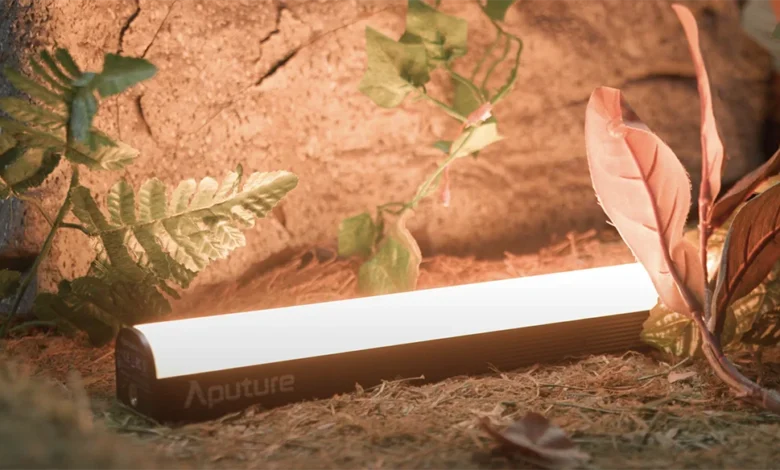
The Aputure MT Pro represents the next generation of compact, full-color LED tube lights, designed to be an indispensable tool for creative lighting effects and practical accents. Building upon the success of earlier mini tube lights, the MT Pro offers enhanced pixel density and superior color accuracy, making it a powerful addition to any lighting kit. Its small form factor allows for an unfathomable array of creative applications that are often only realized on set when a specific, hidden light source is needed.
This mini tube light excels at providing subtle illumination in challenging or confined spaces. It can be discreetly hidden behind plants, tucked under cabinets, nestled within bookshelves, or integrated into set dressing to add depth, dimension, and a dynamic splash of color. For interview setups, the MT Pro is particularly effective at filling up dead space in the background, adding visual interest, or providing a soft, ambient glow that separates the subject from the environment. Its full RGBWW capabilities, coupled with precise HSI control and a wide CCT range, allow for virtually any color or temperature to be dialed in. Like other Aputure products, it integrates seamlessly with the Sidus Link app for advanced wireless control, including customizable effects and pixel mapping, further expanding its creative potential. The MT Pro’s ability to provide a "hidden extra light" makes it a favorite for adding that crucial "bit of flare" that elevates the overall production value.
Nanlite PavoTube II 6C: Versatility in a Compact Tube
Mirroring the functionality and creative potential of the Aputure MT Pro, the Nanlite PavoTube II 6C is another exceptional mini tube light, perfectly suited for the fast-paced demands of documentary, corporate, and independent film work. Its design prioritizes speed and efficiency, making it ideal for productions with minimal setup time. Powered by an internal Li-ion battery, the PavoTube II 6C can operate for approximately 65 minutes at full brightness, providing sufficient runtime for most interview segments or talking head shots.
The light boasts an impressive adjustable color temperature range from 2700K to 7500K, complete with green-to-magenta adjustment, allowing for precise color matching to various ambient light sources or creative color shifts. With a high CRI of 98, it ensures accurate and flattering skin tones. This makes it an excellent choice for quickly establishing a warm, cool, or specifically colored accent to enhance the overall quality of a shot. Beyond its static lighting capabilities, the PavoTube II 6C includes a suite of built-in programmable effects, such as cop car lights, flame, lightning, camera flashes, and "explosions." These practical effects can be invaluable for enhancing realism or adding dynamic visual interest to scenes without the need for complex rigging or post-production. The portability, robust battery life, and creative versatility of the PavoTube II 6C make it, alongside the Aputure MT Pro, an essential tool for filmmakers who require adaptable and powerful lighting solutions on the go.
Amaran AL-MX: The Indestructible Bi-Color Brick
The Amaran AL-MX, often affectionately referred to as "the brick" due to its robust construction and solid feel, is a heavy-duty bi-color LED light designed to withstand the rigors of professional use in almost any environment. While slightly heavier than some other options on this list, its durability and powerful output make it a reliable choice when a resilient, high-output light is needed.
The AL-MX is remarkably bright for its size, capable of outputting up to 1100 lux at 0.5 meters in its "Boost Mode." It’s important to note that sustained use of Boost Mode will naturally drain the internal battery more quickly, a common trade-off for increased power. Its bi-color range (2800K-6500K) ensures flexibility in matching ambient light or creating specific moods. This light has proven invaluable in diverse scenarios, from outdoor landscape photography shoots requiring supplementary illumination in low-light conditions to serving as a makeshift key light for self-filming, or providing ample interior lighting for vehicle shots. Its solid aluminum housing not only dissipates heat effectively but also provides exceptional protection against bumps and drops, making it a trustworthy companion for adventurous filmmakers and photographers who often find themselves working in challenging outdoor or uncontrolled environments. The Amaran AL-MX is a testament to the idea that a small light can still be a powerhouse, delivering reliability and brightness when it matters most.
Broader Impact and Implications
The proliferation of these advanced, affordable, and portable LED lighting solutions has had far-reaching implications across the media production industry.
- Democratization of Filmmaking: Professional lighting, once a significant barrier for independent creators due to cost and complexity, is now within reach. This allows a wider range of voices to produce visually compelling content, fostering innovation and diversity in storytelling.
- Enhanced Creative Freedom: The ability to easily place and control light sources in previously inaccessible locations, combined with precise color control, empowers filmmakers to experiment with lighting design more freely, creating sophisticated looks with minimal effort.
- Streamlined Production Workflows: Quick setup times, extended battery life, and wireless control significantly reduce the time and effort required for lighting, allowing crews to focus more on creative execution and less on technical logistics. This is particularly valuable for fast-paced productions.
- Market Competition and Innovation: The success of these budget-friendly lights has spurred intense competition among manufacturers, driving continuous innovation in brightness, color accuracy, battery technology, and smart features. Consumers benefit from a rapidly evolving market that consistently offers improved products.
- Educational Impact: Film schools and workshops can now equip students with practical, professional-grade lighting tools at a lower cost, providing hands-on experience that mirrors contemporary industry practices.
In conclusion, the evolution of handheld LED lights represents a pivotal moment in the history of media production technology. These compact, versatile, and budget-friendly devices are not merely accessories; they are fundamental tools that empower creators to achieve professional results, pushing the boundaries of visual storytelling and ensuring that quality illumination is no longer an exclusive luxury, but an accessible standard. The continued innovation in this sector promises an even brighter future for filmmakers and content creators worldwide.
Related posts: