Bambu Lab Launches Early Black Friday 3D Printer Sale With Significant Discounts Across Core Product Lineup


The annual retail phenomenon known as Black Friday has officially arrived ahead of schedule within the additive manufacturing sector. Bambu Lab, a prominent innovator in the high-speed 3D printing market, has preemptively launched its promotional campaign, which is slated to remain active through December 1. This strategic move signals an aggressive push to capture market share during the most critical shopping window of the year, offering substantial price reductions on its flagship hardware, including the P2S, X2D, and the high-performance H2C.
The Strategic Shift in Early Holiday Retail
Traditionally, Black Friday promotions were confined to the final Friday of November, following the American Thanksgiving holiday. However, the retail landscape has shifted toward a "Black November" model, where companies introduce deep discounts weeks in advance to mitigate supply chain bottlenecks and capitalize on early consumer spending. For Bambu Lab, this early start serves a dual purpose: it incentivizes hobbyists to upgrade their equipment before the peak holiday season and allows professional users to reconcile their annual equipment budgets before the calendar year concludes.
The current sale highlights the company’s focus on the "AMS" (Automatic Material System) ecosystem. By bundling its printers with the AMS 2 Pro—a sophisticated peripheral that enables multi-material and multi-color printing while simultaneously drying filament—Bambu Lab is positioning itself as a leader in the complex, high-demand segment of the consumer 3D printing market.
Breakdown of Key Promotional Hardware
The cornerstone of this year’s sale is the Bambu Lab P2S. Originally retailing at $749, the unit is currently available for $649. Designed as a robust, enclosed system with a build volume of 256 x 256 x 256mm, the P2S is marketed as an entry-to-mid-level professional tool. It offers out-of-the-box support for multi-color printing, making it a highly attractive option for designers and small-scale manufacturers who require efficiency without the complexity of industrial-grade machinery.
For those requiring more advanced technical capabilities, the X2D and H2C models have also seen price adjustments. The X2D serves as a mid-tier solution that integrates active chamber heating—capable of reaching 65°C—and a dual-nozzle system. This makes it particularly effective for projects requiring specialized support materials, such as breakaway supports for complex geometries or high-temperature filaments like polycarbonate or nylon.
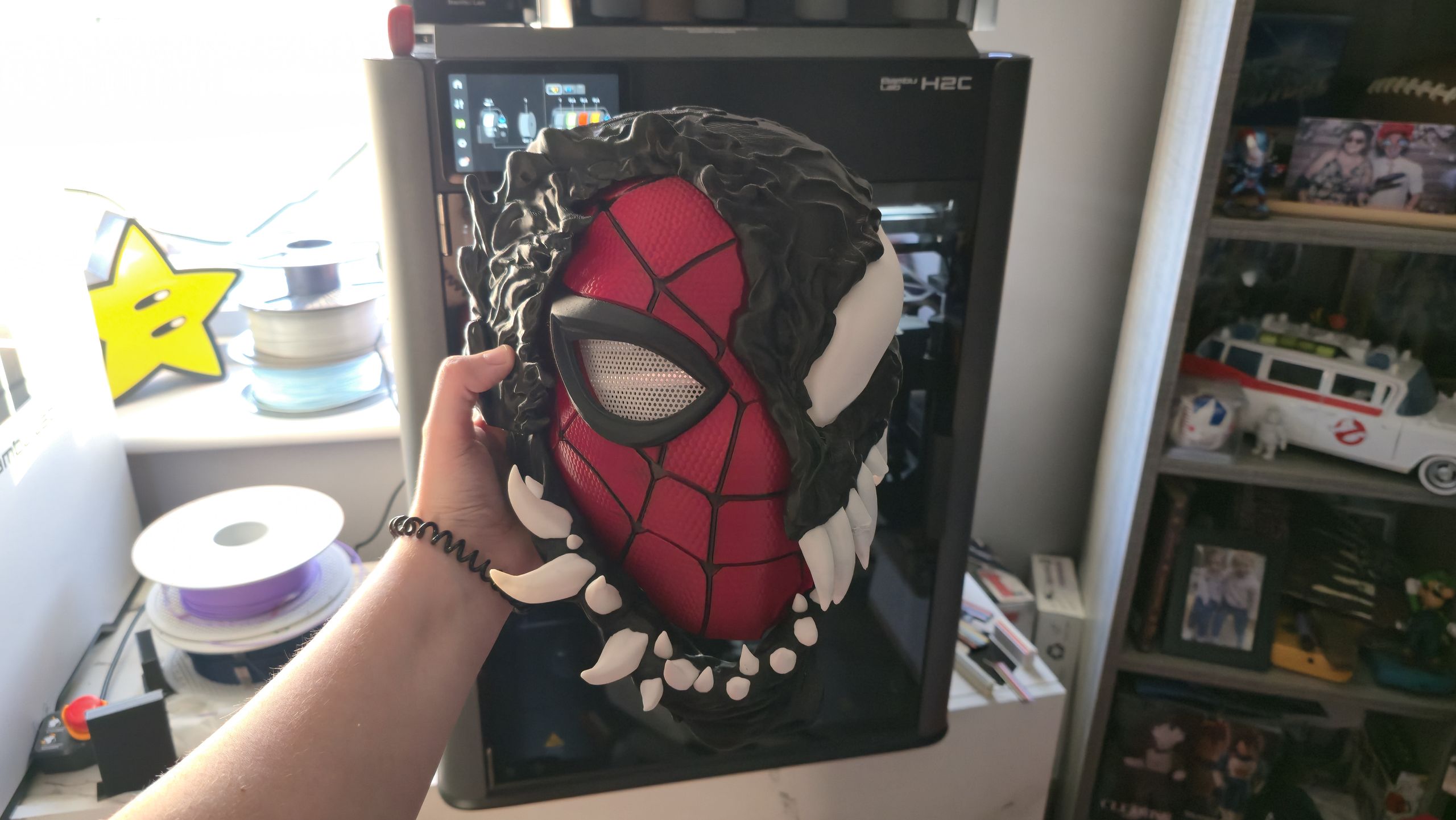
The H2C represents the pinnacle of the current promotion. With a price point significantly higher than the P2S, it is engineered for heavy-duty, commercial-grade throughput. The H2C distinguishes itself through a specialized hotend-swapping mechanism that drastically reduces "purge waste"—the excess material typically discarded during filament color changes. In controlled environments, users have reported that print jobs which previously required three days on legacy high-speed systems can now be completed in roughly 24 hours on the H2C.
Technical Context and Industry Implications
The surge in demand for multi-material printing has forced a shift in how 3D printer manufacturers approach product design. Historically, multi-color prints were limited to manual filament changes or the use of multiple extruders, both of which were prone to failure. Bambu Lab’s integration of the AMS 2 Pro addresses the core pain point of moisture sensitivity in filaments, which is a major contributor to failed prints in home and office environments.
The inclusion of AI-based error detection in these bundles is another significant development. By utilizing onboard cameras and machine learning algorithms, these printers can identify "spaghetti" failures—where a print detaches from the build plate—and pause the process, alerting the user via a mobile application. This level of automation is transforming 3D printing from a tinkering-heavy hobby into a reliable production tool.
Industry analysts note that these price cuts reflect a broader maturation of the desktop 3D printing market. As competition increases from manufacturers like Creality, Prusa, and QIDI, companies are under pressure to not only improve print speed and quality but to provide a cohesive software-to-hardware experience. Bambu Lab’s current sale is an indicator that the "speed race" in 3D printing has effectively been won, and the focus is now on workflow integration and material versatility.
Chronology of the Sales Event
- November 1: The promotional page goes live, signaling the start of the early Black Friday campaign.
- Mid-November: Anticipated peak of consumer interest as holiday gift-buying intensifies.
- November 29 (Black Friday): The traditional date for the climax of the sales event, though Bambu Lab’s strategy implies a flattening of the discount curve to ensure consistent demand.
- December 1: The official conclusion of the sale, marking the transition to standard pricing and year-end inventory management.
Consumer Considerations: Choosing the Right Machine
When selecting a unit from the current discounted lineup, potential buyers are encouraged to evaluate their specific technical requirements rather than solely focusing on price.
For the average consumer or creative professional, the P2S offers the best value-to-performance ratio. Its ability to handle standard materials like PLA, PETG, and ABS with minimal calibration makes it a versatile "workhorse." However, users who work primarily with engineering-grade filaments or complex, large-scale assemblies should prioritize the X2D. The active chamber heating is not merely a convenience feature; it is essential for preventing warping in materials with high thermal expansion coefficients.
For professional studios, architectural firms, or businesses integrating 3D printing into their manufacturing workflow, the H2C remains the definitive choice. The efficiency gains in reduced material waste and print time represent a long-term operational cost saving that outweighs the higher initial capital expenditure.
Broader Impact on the Maker Movement
The democratization of high-speed, multi-color 3D printing is significantly impacting the design and prototyping industries. By reducing the barrier to entry for high-fidelity, full-color prototypes, Bambu Lab and its competitors are enabling designers to iterate faster. This has profound implications for sustainable manufacturing, as it allows for the creation of functional, end-use parts on-demand, potentially reducing the need for large-scale injection molding for low-volume production runs.
Furthermore, the integration of drying systems into the print workflow addresses one of the most common, yet overlooked, issues in additive manufacturing: filament degradation. By normalizing the use of desiccated, climate-controlled filament storage, manufacturers are ensuring that the quality of the final output remains consistent, regardless of the user’s environmental conditions.
As the industry moves into the final quarter of the year, the impact of these early sales will likely be felt in the volume of new content and projects shared across the community-driven platforms such as MakerWorld and Printables. As more users gain access to advanced multi-material hardware, the complexity and quality of open-source designs are expected to rise accordingly, creating a feedback loop that benefits the entire ecosystem.
Potential buyers are advised to monitor official channels and verify shipping times, as high demand during the Black Friday period often leads to extended fulfillment windows. With the sale ending on December 1, the window for securing these price points is limited, making early decision-making a prudent strategy for those looking to outfit their workshops for the coming year.