The Ultimate Guide to Choosing the Best Camera Straps and Holsters for Professional and Enthusiast Photographers

While the modern digital camera is a masterpiece of engineering, the stock strap included by manufacturers in the retail box rarely aligns with the professional demands of high-stakes photography. For decades, the standard-issue nylon neck strap has been a point of contention for working professionals, often failing to address the ergonomic, security, and stylistic needs of those operating in diverse environments ranging from high-pressure red carpets to multi-day wilderness expeditions. As the photography industry has shifted toward lighter mirrorless systems and increasingly heavier high-resolution glass, the requirement for specialized carrying solutions has grown into a significant market segment.
The Evolution of Camera Carrying Systems
The history of camera support began with simple leather cords, evolving alongside the medium itself. During the mid-20th century, as cameras became more portable, the neck strap became the industry standard. However, the rise of the "prosumer" market in the early 2000s and the subsequent transition to digital SLR systems introduced a new challenge: weight management. In 2010, the emergence of modular carrying systems marked a turning point. Manufacturers began to recognize that a wedding photographer shooting for 12 hours required an entirely different mechanical solution than a street photographer capturing candid moments.
Data from recent industry surveys suggests that nearly 65% of professional photographers replace their factory-supplied straps within the first year of ownership. The primary drivers for this shift include chronic neck and shoulder fatigue, the need for rapid deployment to ensure no missed shots, and the desire for modularity when switching between multiple camera bodies.

Categorizing Professional Carrying Solutions
Modern camera support systems are generally bifurcated into three primary categories: passive carrying systems (traditional neck and sling straps) and active support systems (holsters and clips). Each offers distinct trade-offs in terms of weight distribution, accessibility, and physical security.
The Versatility of Sling and Neck Straps
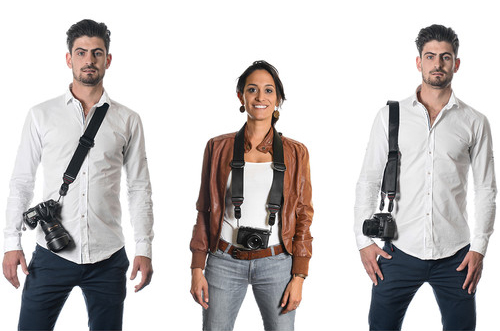
The sling strap, an evolution of the traditional neck strap, has become the preferred choice for many professionals. By traversing the torso, these straps shift the weight of the camera from the cervical spine to the shoulder and back, significantly reducing strain.

The Peak Design Slide and Slide Lite represent the current industry benchmark in this category. These systems utilize an innovative anchor-link mechanism that allows for near-instantaneous detachment. From an engineering perspective, the use of internally padded nylon webbing allows the strap to glide across clothing when moving the camera to the eye, yet provides sufficient friction to remain secure when in a resting position.
In contrast, traditional neck straps, while ubiquitous, remain the standard for minimalist setups. However, for those utilizing heavy telephoto lenses, the lack of load distribution can lead to long-term orthopedic issues. Decorative straps, often crafted from premium leather or silk, occupy a niche space. While aesthetically superior, they often lack the technical fail-safes—such as reinforced stitching or high-tensile-strength hardware—found in professional-grade gear.

Specialized Holsters and Dual Systems
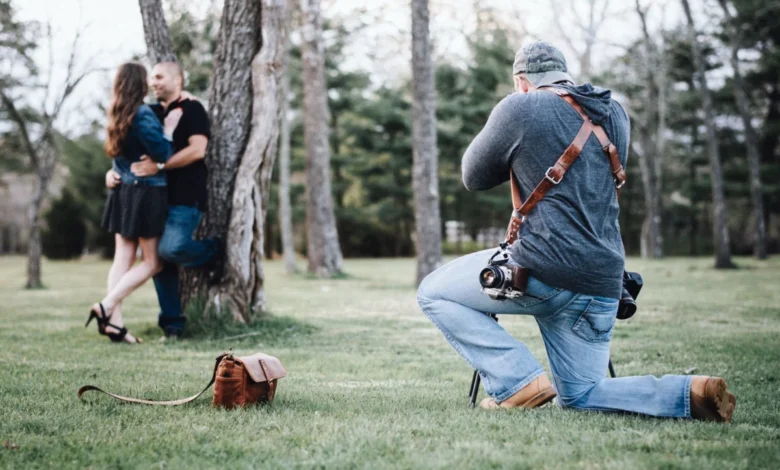
For event and wedding photographers who often carry two or more bodies simultaneously, the "dual-holster" system has become the gold standard. The Holdfast Gear Money Maker, for instance, functions by distributing the weight of multiple cameras across the wearer’s shoulders and back, mimicking a harness design. This design is rooted in the principles of ergonomics; by centralizing the load near the body’s center of gravity, it minimizes the torque applied to the lower lumbar region.
Independent reviews and testimonials from industry professionals indicate that these systems can reduce perceived load by up to 30% compared to traditional double-neck-strap setups. Furthermore, the inclusion of "sail-clip" style hardware provides a redundant security measure, ensuring that even if one attachment point fails, the camera remains tethered.

Hip-Mounted Systems: The Quick-Draw Advantage
The rise of hip-mounted holsters, such as the SpiderPro series, represents a fundamental shift in how photographers interact with their equipment. These systems utilize a belt-mounted locking mechanism that anchors the camera directly to the photographer’s hip.
The primary advantage of this system is the elimination of the "pendulum effect"—the tendency of a camera to swing and strike objects or the photographer’s body while walking. By keeping the camera static against the hip, the photographer achieves a higher degree of mobility. From a workflow perspective, this allows for a "quick-draw" motion that is significantly faster than lifting a camera from a shoulder-slung position.

Supporting Data and Performance Metrics
When evaluating these systems, it is essential to consider the load-bearing capacity of the hardware. Many professional clips, such as the Peak Design Capture Clip, are rated to withstand over 200 pounds of force. This is not because a camera weighs that much, but to ensure durability against impact forces if the photographer trips or falls.
Market analysis shows that the "modular" trend is driving future growth. Professionals are increasingly seeking systems that allow them to move a camera from a belt clip to a tripod plate without the need to unscrew hardware. The integration of Arca-Swiss compatible plates across these systems is a critical feature that allows for seamless integration with existing professional tripod heads.

Official Industry Stance and Safety Considerations
While manufacturers provide safety ratings, they universally emphasize the importance of user maintenance. A strap is a mechanical component prone to wear and tear. Industry guidelines suggest that photographers inspect their anchor points, quick-release buckles, and mounting screws every 30 days of active use.
"The safety of the equipment is only as strong as the weakest link," notes one industry technical consultant. "Whether it is a $500 hobbyist setup or a $15,000 professional rig, the failure of a single screw or clip can be catastrophic. We always advocate for the use of secondary safety tethers, especially when working in high-altitude or crowded environments."

Broader Implications for the Photography Workflow
The adoption of a specialized strap or holster system has implications beyond mere comfort; it directly impacts creative output. A photographer who is not distracted by physical pain or the fear of gear damage is demonstrably more focused on composition, lighting, and subject interaction.
Furthermore, the "professional aesthetic" of leather holsters versus the "technical utility" of nylon clips often influences client perception. In high-end wedding photography, the unobtrusive nature of a well-designed leather harness can be viewed as an extension of the professional’s brand identity, whereas the rugged utility of a hip-holster may be better suited for wildlife or photojournalism.

Conclusion: Selecting the Right System
The selection process should be dictated by the specific "kit" weight and the physical environment of the shoot. For the photographer carrying a single, lightweight mirrorless body, a simple cuff or wrist strap may suffice. Conversely, the professional field photographer requires a robust, modular system that can handle heavy glass and provide long-term comfort.
Before making an investment, photographers are encouraged to conduct a "range of motion" test. A system that works well while standing may prove cumbersome when kneeling or crouching to get a low-angle shot. Additionally, verify that the chosen system does not interfere with battery doors or memory card slots, as this can lead to unnecessary delays during critical moments.

Ultimately, the best camera strap is the one that becomes an extension of the photographer—one that provides absolute security while remaining entirely invisible in the workflow. By prioritizing ergonomics and mechanical reliability over aesthetic trends, photographers can ensure that their gear remains protected and their focus remains fixed on the subject. As the technology behind these accessories continues to evolve, the emphasis remains clear: the goal is to bridge the gap between the photographer’s vision and the mechanical realities of their equipment.